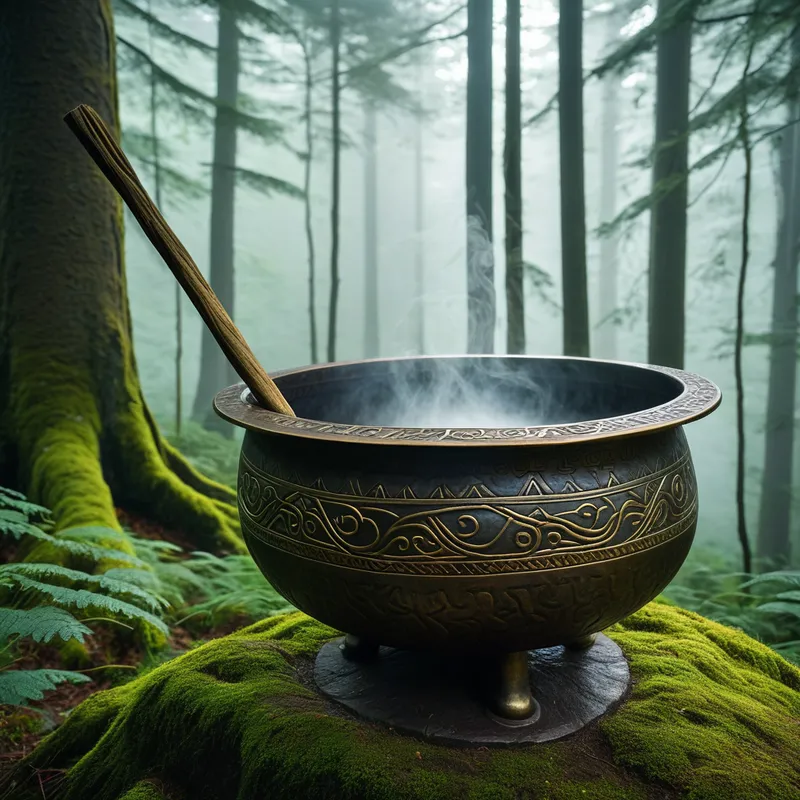
The Cauldron of Memory Myth Meaning & Symbolism
A warrior, stripped of his past by a goddess, must drink from a magical cauldron to remember his true name and destiny, or be lost forever.
The Tale of The Cauldron of Memory
Listen. The wind carries more than the scent of peat and salt. It carries a sigh, the sigh of a man who has lost his name. In the time when the world was younger and the veil between the realms was thin as morning mist, there was a warrior of great renown. His name was Fionn mac Cumhaill, and his deeds were sung from coast to coast. But pride is a sharp blade, and it can cut the one who wields it.
On a hunt in the deep, whispering woods of the Sídhe, Fionn pursued a stag of impossible silver. The chase led him far from his men, through glens that folded in on themselves and under trees that remembered the first dawn. The stag vanished into a pool of still, black water. From that pool emerged not a beast, but a woman. She was The Morrígan in one of her many guises, her eyes holding the depth of the pool and the cold fire of stars. She offered him a drink from a simple clay cup. Parched and enchanted, Fionn drank deep.
The water was not water. It was the taste of fog, of erasure. As it passed his lips, his past unspooled like a dropped skein of yarn. The memory of his first sword, the sound of his father’s voice, the name his mother whispered to him—all dissolved into a formless grey mist within his mind. He stood on the bank, a hollow man. He knew how to breathe, how to walk, but he did not know who he was. The goddess watched, her expression unreadable. “You sought the quarry of the otherworld,” she said, her voice like stones grinding in a stream. “Now you are its prey. Wander, and be nothing.”
Years passed as days in his numb confusion. He became a ghost in his own life, a silent figure performing tasks, following the shapes of old habits without their soul. His companions saw a stranger behind their leader’s eyes. The world became a flat, meaningless page.
Then, a whisper came to him in a dream, from the mouth of a salmon that swam in the pool of his lost self. “Find the Cauldron of Ceridwen, but know it by another name: the Cauldron of Memory. It lies in the deepest hollow of the land, guarded by the one who took what you seek. To drink from it is to drink fire and ice, truth and terror. You will remember not only your glory, but your shame. Not only your love, but your loss. The choice is the final test.”
Driven by a spark he could not name, the nameless one embarked on a journey inward, to the heart-hill of the goddess’s domain. He faced no monstrous beasts, but the chilling emptiness of his own absence. He finally stood again before the black pool. The Morrígan awaited, and beside her sat a cauldron of ancient, pitted bronze. No fire burned beneath it, yet a light shimmered from its contents—a liquid mirror of molten starfall and dark earth.
“To drink is to be remade,” she intoned. “The self you knew will drown in this brew. What emerges may not be the man who entered the woods. Will you choose the peace of emptiness, or the agony of becoming?”
The warrior, whose hands remembered the grip of a sword though his mind did not, stepped forward. He did not hesitate. He cupped his hands, plunged them into the cauldron’s searing-cold essence, and brought the liquid memory to his lips.
It was a river, a flood, a collapsing sky. He remembered his name—Fionn—and it was a lightning strike. He remembered his father’s death, and it was a wound reopened. He remembered a betrayal he had committed, and it was a poison. He remembered the love of his people, and it was a warmth that thawed the frozen years. He fell to his knees, weeping tears that were both bitter and sweet, as the fragmented mosaic of his soul reassembled itself, not as it was, but as it truly is—a whole thing, beautiful and broken, known.
He looked up, his eyes clear for the first time in an age. The goddess nodded, a faint, almost human smile touching her lips. “You are no longer prey,” she said. “You are the hunter who has caught his own soul. Go, and lead with the wisdom of the one who has been lost and found.”
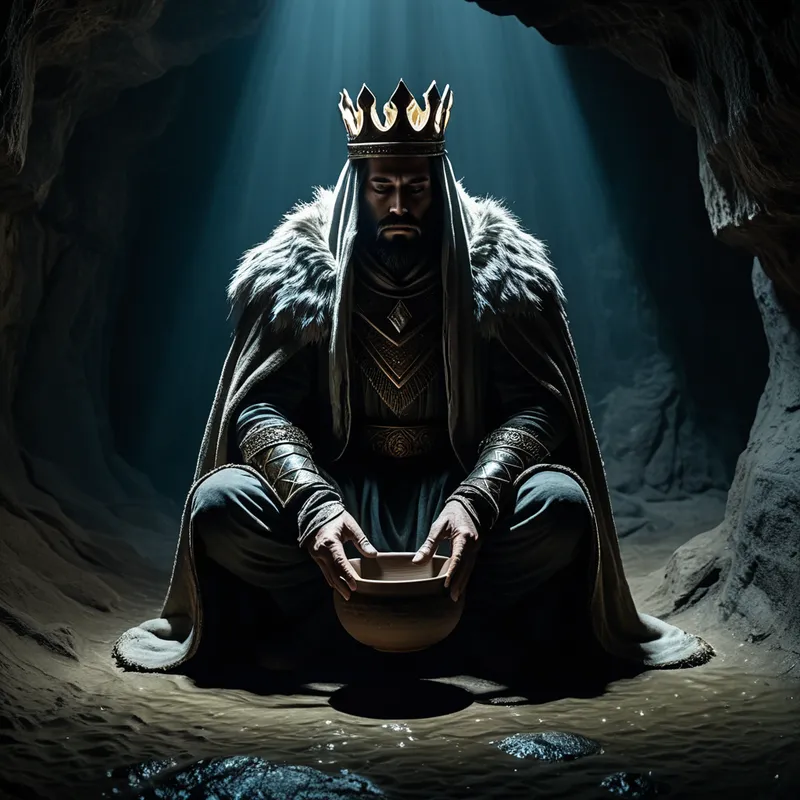
Cultural Origins & Context
This tale, while weaving together motifs from the Fenian and Mythological Cycles of Irish lore, is not a singular, canonical myth. It is a synthesis, a bardic composition that draws its truth from deep wells. The cauldron is a central symbol in the Celtic world, appearing as the Cauldron of the Dagda (plenty), the Cauldron of Rebirth, and most pertinently, the Cauldron of Ceridwen which gifted the awen, the fiery spirit of poetic inspiration and prophetic wisdom.
These stories were the living software of a pre-literate, oral culture. They were not mere entertainment but the vessels for history, law, cosmology, and psychology. A fili or bard would perform such tales, not recite them verbatim. Each telling was an act of remembrance and re-creation, adapting the core pattern—the loss, the quest, the transformative vessel—to speak to the current tribe, king, or spiritual crisis. The function was initiatory: to model the process of losing one’s social or personal identity (through battle, exile, or spiritual crisis) and the arduous journey to recover a more integrated, sovereign self.
Symbolic Architecture
The myth’s power lies in its stark mapping of a universal psychic process. The warrior is the conscious ego, identified with his deeds and social role. The goddess represents the autonomous, transformative power of the unconscious psyche—the Self. Her act is not cruelty, but a necessary dissolution.
The ego must be dissolved in the waters of the unconscious before it can be reconstituted in a truer form. Forgetting is not an accident; it is an initiation.
The stolen memories are the contents of the personal unconscious—repressed traumas, forgotten potentials, and unlived lives. The cauldron itself is the vas hermeticum, the sealed container where the chaotic elements of the psyche are “cooked” into a unified essence. It is the crucible of the heart, where opposites—pride and humility, love and loss, shame and glory—are held together under the intense heat of conscious attention until they transmute into wisdom. The final drink is the act of assimilation, a painful re-owning of all that one is.
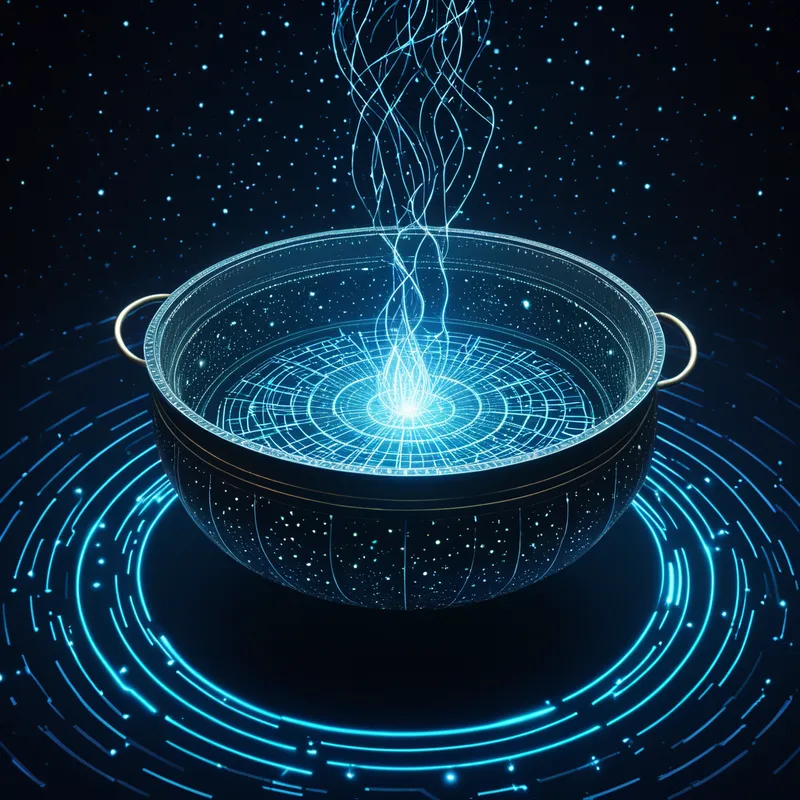
The Dreamer’s Resonance
When this myth stirs in the modern soul, it often surfaces in dreams of profound disorientation. You may dream of being in your childhood home but not recognizing it, or of meeting family members as strangers. You may dream of searching frantically for a lost object of immense but undefined importance—a key, a book, a name written on fading paper. Somatic sensations accompany this: a literal feeling of emptiness in the chest, a tightness in the throat as if words are trapped, or a pervasive foggy-headedness upon waking.
This is the psyche signaling a critical juncture. You are being called to remember something you have consciously or unconsciously agreed to forget. This “something” is not a simple fact, but a cluster of feeling-toned experiences—a neglected talent, a buried grief, a core aspect of your identity sacrificed for acceptance or safety. The dream state is the black pool; the forgetting is the goddess’s cup. The psychological process is one of regression—not as a failure, but as a strategic retreat of psychic energy from a rigid, outdated conscious attitude back into the unconscious, where it can be re-formed and re-emerge with renewed vitality.
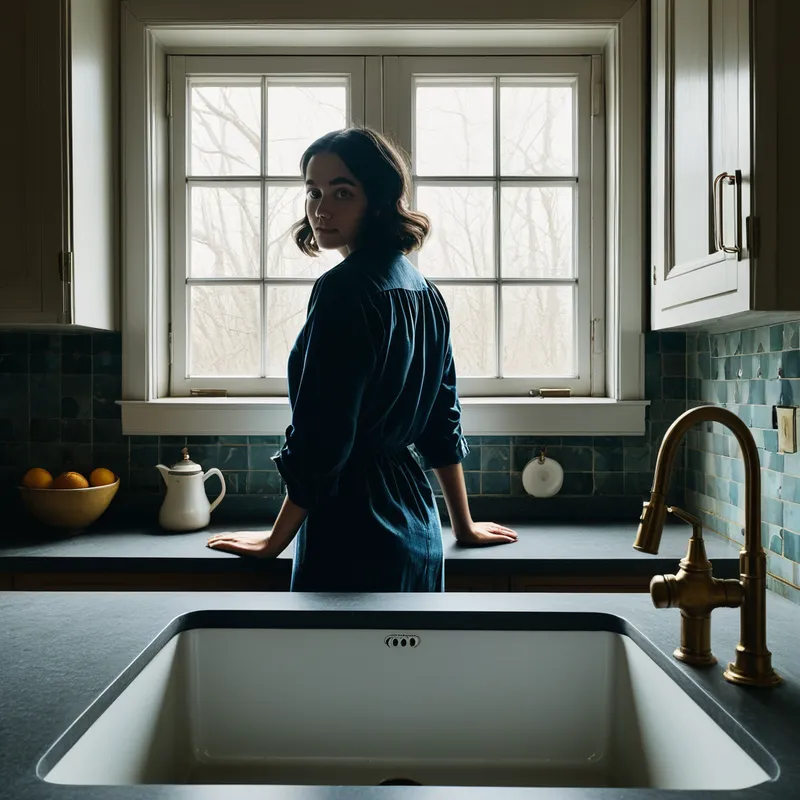
Alchemical Translation
For the modern individual, the path of the Cauldron is the path of individuation. Our culture offers endless cups of amnesia: distraction, numbing, rigid identification with job titles, roles, or ideologies. The first step is the shocking, often involuntary “drink”—a crisis, a burnout, a depression, a profound loss that strips away who we thought we were. We become the orphaned warrior, wandering a meaningless landscape.
The quest is not outward for a new identity, but inward for the crucible where all identities are melted down.
The journey to the “deepest hollow” is the disciplined, terrifying work of introspection—therapy, journaling, meditation, creative expression—where we confront the guardian of our lost memories: our own resistance, our fear of pain, our attachment to a smaller, safer self. The Cauldron is the therapeutic vessel, the analytic hour, the blank page, the silent meditation cushion. To “drink from it” is to consciously engage with the retrieved material: to feel the old grief fully, to write the forgotten story, to speak the shameful truth.
The transmutation occurs not when we simply recall a memory, but when we can hold its emotional truth in full consciousness without being shattered by it. The gold produced is not a happy ending, but authenticity. It is the capacity to lead your life (the returned warrior’s mandate) not from a script, but from the integrated wisdom of a self that has reclaimed its shadows and its light. You remember your true name—not the one given, but the one earned in the tasting of your own bitter and sweet brew.
Associated Symbols
Explore related symbols from the CaleaDream lexicon: