
The Castle of the Fisher King Myth Meaning & Symbolism
A wounded king, a barren land, and a knight who must ask the right question to heal both. The myth of the Grail's guardian and the wasteland's curse.
The Tale of The Castle of the Fisher King
Listen, and I will tell you of a wound that became a world, and a question that was a key.
The land was called the Waste Land. Rivers ran slow and thick, trees bore no fruit, and the spring had fled from the soil. The people moved like shadows, their hearts as fallow as their fields. At the heart of this desolation, surrounded by murky waters and tangled forests, stood the Castle of [the Fisher King](/myths/the-fisher-king “Myth from Arthurian culture.”/). He was called this not for sport, but for necessity; a grievous wound in his thigh, which would not close and yet would not kill him, allowed him no activity but to sit in a small boat and fish the dark waters for his sustenance. His pain was the land’s pain; his stagnation, its curse.
Into this twilight realm came a knight, often he is called [Galahad](/myths/galahad “Myth from Arthurian culture.”/), or sometimes the simpler [Perceval](/myths/perceval “Myth from Arthurian culture.”/). Travel-weary and guided by chance or fate, he saw the castle appear as if from a mist, its towers beckoning. He was welcomed not as a stranger, but as an expected guest. Within, the castle was a paradox of grandeur and decay. Tapestries whispered of past glories, and the air was thick with the scent of old incense and a deeper, unnameable melancholy.
The [Fisher King](/myths/fisher-king “Myth from Arthurian culture.”/), propped on his couch of silks, received the knight. His face was noble but pale, his eyes holding the weight of centuries. A solemn procession began. A maiden entered, bearing a spear from whose tip a single drop of blood eternally fell. Then came youths with candles, and finally, a maiden of ethereal bearing carrying the [Holy Grail](/myths/holy-grail “Myth from Arthurian culture.”/) itself. It shone with a light that was not of torch or sun, and from it issued a fragrance that promised healing for all ills. It passed through the hall, and as it did, miraculous foods and wines appeared before the knight.
He watched, awe-struck and silent. He burned with curiosity, with a sense of a sacred ritual unfolding. A voice within him, born of a forgotten courtesy, whispered he should ask, “Whom does [the Grail](/myths/the-grail “Myth from Arthurian culture.”/) serve?” or “What ails you, lord?” But another voice, born of a knightly training that prized silence over presumption, clamped his tongue. Fear of committing a faux pas was greater than the impulse of compassion. He let the moment pass. The [Grail](/myths/grail “Myth from Christian culture.”/) vanished. The feast ended.
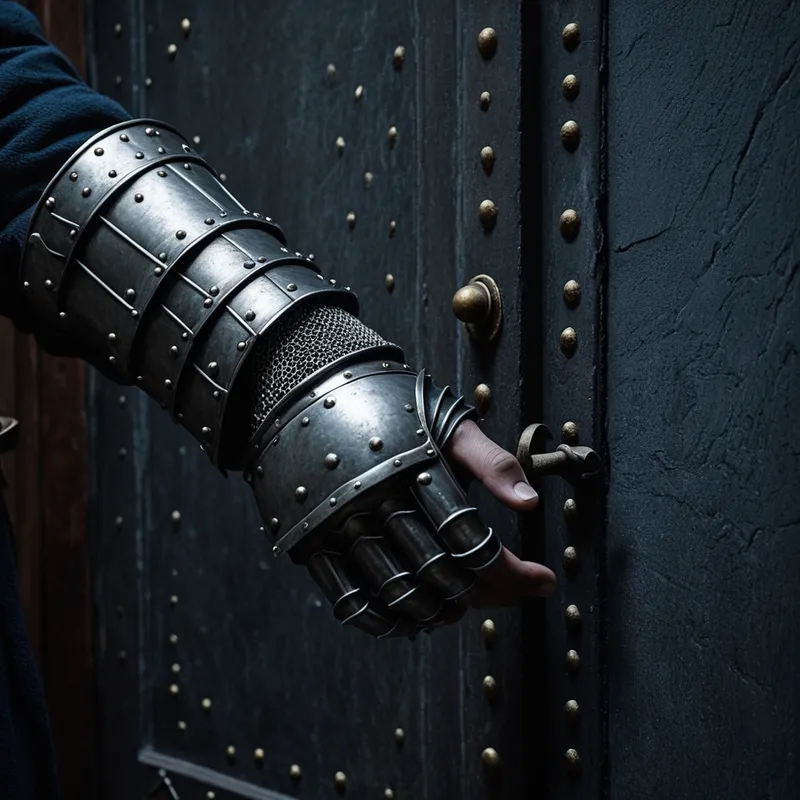
He awoke the next morning to a silent, empty castle. His armor lay beside him, but no squire, no lord, no maiden greeted him. He rode out across the drawbridge, and as he turned to look back, the castle had vanished into [the mist](/myths/the-mist “Myth from Celtic culture.”/). Only then did a crone or a wise hermit find him on the road and speak the terrible truth: “Because you asked nothing, the King remains unhealed. The land remains barren. You held the key, but did not turn it.”
The tale tells that the knight must then wander for years, lost and seeking redemption, until he finds his way back to that elusive castle to ask the healing question, to complete what was left incomplete.
Cultural Origins & Context
The myth of the Fisher King is not one story, but a haunting melody woven through the grand tapestry of the Arthurian Cycle. Its most famous iterations are found in Chrétien de Troyes’ unfinished 12th-century romance Perceval, or the Story of the Grail and later in the Queste del Saint Graal. It exists in the borderlands between Celtic mythology, Christian mysticism, and feudal romance.
Originally, the figure likely draws from deeper Celtic wellsprings—the concept of a sacred king whose vitality is directly tied to the fertility of his land, a concept known as the Maimed King. The wound in the thigh, a euphemism for a sexual or generative injury, makes this connection explicit. The story was passed down by troubadours and scribes in courtly circles, serving not just as entertainment but as a profound moral and spiritual puzzle for the knightly class. It asked: what is true chivalry? Is it prowess in battle, or is it the courage to ask the vulnerable, compassionate question? It functioned as a critique of empty ritual and a call to conscious participation in the mysteries of life and spirit.
Symbolic Architecture
The Castle of the Fisher [King](/symbols/king “Symbol: A symbol of ultimate authority, leadership, and societal order, often representing the dreamer’s inner power or external control figures.”/) is the [psyche](/myths/psyche “Myth from Greek culture.”/) itself—a magnificent, fortified [structure](/symbols/structure “Symbol: Structure in dreams often symbolizes stability, organization, and the framework of one’s life, reflecting how one perceives their environment and personal life.”/) built around a central, unhealed wound. The [King](/symbols/king “Symbol: A symbol of ultimate authority, leadership, and societal order, often representing the dreamer’s inner power or external control figures.”/) is the ruling principle of that [psyche](/myths/psyche “Myth from Greek culture.”/), [the ego](/myths/the-ego “Myth from Jungian culture.”/) or the animating [spirit](/symbols/spirit “Symbol: Spirit symbolizes the essence of life, vitality, and the spiritual journey of the individual.”/), rendered passive and impotent by its injury. The Waste Land is the resulting [life](/symbols/life “Symbol: The symbol of ‘Life’ represents a journey of growth, interconnectedness, and existential meaning, encompassing both the joys and challenges that define human experience.”/): outwardly functional, perhaps even ornate, but devoid of genuine [fertility](/symbols/fertility “Symbol: Symbolizes creation, growth, and abundance, often representing new beginnings, potential, and life force.”/), joy, and creative flow.
The wound is not the tragedy; the silence is. The unasked question is the true wasteland.
The Grail represents the transcendent function, the healing wholeness of the Self. It is present within the castle—the healing is always potentially present within the psyche—but it cannot be activated by force or taken by right. It must be approached through [relationship](/symbols/relationship “Symbol: A representation of connections we have with others in our lives, often reflecting our emotional state.”/), symbolized by the question. The bleeding [spear](/symbols/spear “Symbol: The spear often symbolizes power, aggression, and the drive to protect or conquer.”/) (often linked to the [Lance](/symbols/lance “Symbol: A long thrusting weapon symbolizing focused energy, penetration, direction, and masculine power. It represents both aggression and protection.”/) of Longinus) is the piercing [truth](/symbols/truth “Symbol: Truth represents authenticity, honesty, and the quest for knowledge beyond mere appearances.”/), the painful [awareness](/symbols/awareness “Symbol: Conscious perception of self, surroundings, or internal states. Often signifies awakening, insight, or heightened sensitivity.”/) that must be integrated with the containing grace of the Grail. The [knight](/symbols/knight “Symbol: The knight symbolizes honor, chivalry, and the pursuit of noble causes, reflecting the ideal of the noble warrior.”/), whether Perceval or Galahad, represents the emerging [consciousness](/symbols/consciousness “Symbol: Consciousness represents the state of awareness and perception, encompassing thoughts, feelings, and experiences.”/), the part of us that journeys [inward](/symbols/inward “Symbol: A journey toward self-awareness, introspection, and the exploration of one’s inner world, thoughts, and unconscious mind.”/). His failure is the failure of consciousness to engage deeply with its own suffering.
The Dreamer’s Resonance
When this myth stirs in modern dreams, it rarely appears as a medieval tableau. Instead, one dreams of finding a hidden room in their own house, filled with strange, potent technology they don’t know how to operate. They dream of a prestigious job that feels utterly empty, or a relationship where a crucial conversation is perpetually avoided. The somatic feeling is one of paralysis in the face of opportunity—a tightness in the chest, a throat that cannot speak.
This is the dreamer encountering their own inner Fisher King. The “castle” might be their career, their identity, or their body. The “wound” is the core vulnerability—a trauma, a grief, a shame—that has been sealed off. The dream signals that the conscious attitude (the knight) has come into proximity with this wounded core. The anxiety and missed connection in the dream mirror the psyche’s frustration: consciousness is at [the threshold](/myths/the-threshold “Myth from Folklore culture.”/) but is still operating by old, inadequate rules of conduct (“don’t be rude,” “don’t make a scene”). The dream is a rehearsal for the courage to ask, “What is really wrong here?”
Alchemical Translation
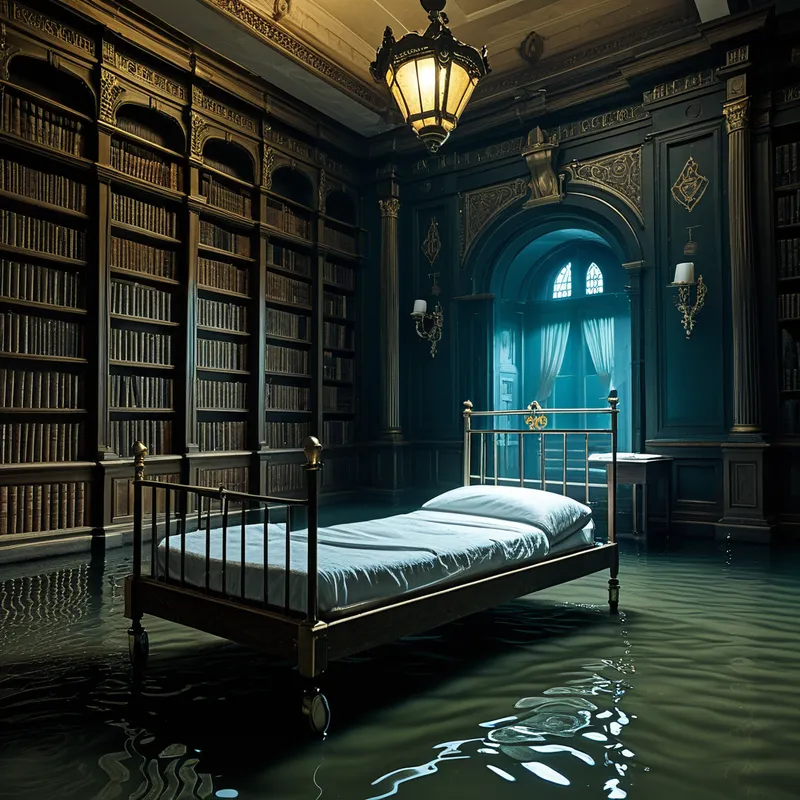
The alchemical process modeled here is the Individuation journey, specifically the stage of [Nigredo](/myths/nigredo “Myth from Alchemical culture.”/), the blackening or putrefaction. The Waste Land is [the Nigredo](/myths/the-nigredo “Myth from Alchemical culture.”/)—a state of depression, stagnation, and felt meaninglessness that precedes transformation.
The knight’s initial journey is the call to this work. The feast is the presentation of the symbols of transformation (Grail and Spear). His failure is inevitable, for no consciousness is immediately ready to integrate such profound depths. His subsequent wandering is the necessary circumambulation of the problem. He must develop, suffer, and mature.
Healing begins not with an answer, but with a question directed toward the heart of the pain.
The triumphant return and the asking of the question is the Albedo. It is the moment of conscious, compassionate engagement with one’s own wound. This question is the Coniunctio of spear and chalice—the marriage of penetrating awareness (the question) with receptive compassion (the intention to serve). When the question is asked, the wound closes, the waters flow, and the land greens. Psychologically, this is the moment a core complex is finally integrated; energy bound in maintaining the wound is released into life, creativity, and relationship. The Fisher King is healed, the knight is matured, and [the Wasteland](/myths/the-wasteland “Myth from Arthurian culture.”/) becomes a Garden. The castle is no longer a prison of pain, but a vessel of life.
Associated Symbols
Explore related symbols from the CaleaDream lexicon: