
The Cap of Invisibility Myth Meaning & Symbolism
A tale of a humble weaver who crafts a cap that grants invisibility, leading him through a journey of temptation, loss, and ultimate self-discovery.
The Tale of The Cap of Invisibility
Listen, and I will tell you of a [thing](/myths/thing “Myth from Norse culture.”/) woven not from wool, but from silence. In a time when the forest’s edge was [the world](/myths/the-world “Myth from Tarot culture.”/)’s end, there lived a weaver named Ansel. His fingers were clever, but his heart was heavy with a loneliness as deep as a well. He did not weave for lords or ladies, but for the simple folk of his village, his patterns speaking of hearth and harvest, but never of his own quiet sorrow.
One autumn, when [the wind](/myths/the-wind “Myth from Various culture.”/) spoke secrets through the bare branches, a strange thing happened. A traveler, cloaked in the grey of twilight, left a spindle of thread at Ansel’s door. It was a thread the color of a shadow at noon—neither black nor grey, but a living absence of light. Compelled by a force older than reason, Ansel took it to his loom. For seven nights he worked, not sleeping, barely eating, his shuttle moving with a will of its own. He was not weaving cloth; he was weaving the space between breaths, the moment between a footfall and its sound.
On the seventh dawn, he held not a garment, but a simple cap. It was unadorned, humble. Yet, when he placed it upon his head, the world changed. The solid oak of his door became a faint, watery suggestion. The fire in his grate guttered into a memory of warmth. He looked at his own hands and saw the floorboards through them. He had not vanished; the world had simply forgotten to perceive him. He was wrapped in a cloak of unbeing.
At first, it was a game. He moved through [the market](/myths/the-market “Myth from Various culture.”/) like a ghost, hearing unguarded words, seeing unguarded deeds. He learned secrets that soured the milk and twisted the bread. The power was intoxicating, a sweet, cold wine. He began to take small things—a ripe apple, a silver coin left unattended. The taking was easy, for who can accuse the wind?
But the cap demanded a price. The longer he wore it, the colder he grew. The laughter of children became a distant echo. The smell of baking bread held no comfort. He was becoming a permanent resident of the in-between, a citizen of the overlook. The final test came when he stood invisible in his own cottage, watching his neighbor, a kind woman who had often shared her soup, weep alone at her table. His heart, or the ghost of it, ached to offer comfort. But to be seen was to be known, and to be known was to be vulnerable. He remained a silent, chilling draft in the corner.
One bitter night, a real storm raged, the kind that speaks with the voice of old gods. A great oak, the heart-tree of the village, split and threatened to crush the smithy where the village’s only newborn slept. Without thought, driven by a spark his long invisibility had not extinguished, Ansel ran. He tore the cap from his head and threw his visible, fragile body against the door, shouting the alarm. He was seen, he was heard, and [the child](/myths/the-child “Myth from Alchemy culture.”/) was saved.
In the grateful clamor that followed, the cap was forgotten in the mud. When Ansel returned at dawn to look for it, he found only the frayed, ordinary threads of his own earlier work, soaked through and useless. The magic thread was gone, spent perhaps in that one moment of chosen visibility. He was merely Ansel the weaver again, cold, tired, and utterly, profoundly seen.

Cultural Origins & Context
The tale of the Cap of Invisibility is a hardy perennial of European folklore, with roots stretching from the Celtic mist to the Grimm’s forests. It was never a myth of gods, but of the human hearth. Told by firelight, it served as a communal story for villages where everyone was known, and privacy was a rare currency. The spinner of the tale was often a grandmother or a traveling storyteller, using it not as mere entertainment, but as a social compass.
Its function was multifaceted. For children, it was a warning against sneaking and petty theft. For the community, it was a narrative reinforcement of a core social contract: to be part of the village was to be seeable, accountable, and thus protected. The cap represented the ultimate antisocial act—the removal of oneself from the web of mutual gaze and responsibility. The story taught that power gained through absolute secrecy corrupts the bonds that make life meaningful, leaving the wielder isolated in a self-made wilderness.
Symbolic Architecture
The myth’s power lies not in the fantastical object, but in the profound [human](/symbols/human “Symbol: The symbol of a human represents individuality, complexity of emotions, and social relationships.”/) dilemma it materializes. The cap is the perfect [symbol](/symbols/symbol “Symbol: A symbol can represent an idea, concept, or belief, serving as a powerful tool for communication and understanding.”/) for the [psyche](/myths/psyche “Myth from Greek culture.”/)’s [capacity](/symbols/capacity “Symbol: A measure of one’s potential, limits, or ability to contain, process, or achieve something, often reflecting self-assessment or external demands.”/) for [dissociation](/symbols/dissociation “Symbol: A psychological separation from one’s thoughts, feelings, or identity, often experienced as a journey away from the self during trauma or stress.”/) and hiddenness.
The Cap of Invisibility is not a tool for hiding from others, but a spell for hiding from oneself. It is the glamour we weave to make our own shadows intangible.
Ansel, the craftsman, represents the conscious ego, the part of us that fashions our [identity](/symbols/identity “Symbol: Identity represents the sense of self, encompassing personal beliefs, cultural background, and social roles.”/). The mysterious grey thread is the raw [material](/symbols/material “Symbol: Material signifies the tangible aspects of life, often representing physical resources, desires, and the physical world’s influence on our existence.”/) of the [shadow](/symbols/shadow “Symbol: The ‘shadow’ embodies the unconscious, repressed aspects of the self and often represents fears or hidden emotions.”/)—all we refuse to acknowledge in ourselves: our envy, our cowardice, our secret desires for power without consequence. When Ansel weaves this [shadow](/symbols/shadow “Symbol: The ‘shadow’ embodies the unconscious, repressed aspects of the self and often represents fears or hidden emotions.”/)-stuff into his daily [life](/symbols/life “Symbol: The symbol of ‘Life’ represents a journey of growth, interconnectedness, and existential meaning, encompassing both the joys and challenges that define human experience.”/) (the cap), he [doesn](/symbols/doesn “Symbol: The word ‘doesn’ typically points to a lack or feeling of uncertainty regarding action or inactivity in one’s life.”/)’t integrate it; he uses it to escape. He becomes invisible, not powerful. [The ego](/myths/the-ego “Myth from Jungian culture.”/), having identified with [the shadow](/myths/the-shadow “Myth from Jungian culture.”/)’s capacity for concealment, begins to lose its substance. The warmth of [connection](/symbols/connection “Symbol: Connection symbolizes relationships, communication, and bonds among individuals.”/), the “fire in the grate,” gutters out. This is the precise psychological cost of living in denial, of maintaining a false self that cannot be truly seen or touched.
The [climax](/symbols/climax “Symbol: The peak moment in a narrative or musical composition, representing resolution, transformation, or ultimate expression.”/)—the saving of the [child](/symbols/child “Symbol: The child symbolizes innocence, vulnerability, and potential growth, often representing the dreamer’s inner child or unresolved issues from childhood.”/)—is the [eruption](/symbols/eruption “Symbol: A sudden, violent release of pent-up energy or emotion from beneath the surface, often representing transformation or crisis.”/) of the Self. It is the innate, organizing principle of the psyche forcing a [choice](/symbols/choice “Symbol: The concept of choice often embodies decision-making, freedom, and the multitude of paths available in life.”/): remain forever in the cold [limbo](/symbols/limbo “Symbol: A state of transition, uncertainty, or suspension between decisions, outcomes, or phases of life.”/) of hiddenness, or re-enter the painful, vulnerable, and vital world of [relationship](/symbols/relationship “Symbol: A representation of connections we have with others in our lives, often reflecting our emotional state.”/). Throwing off the cap is the ultimate act of self-[acceptance](/symbols/acceptance “Symbol: The experience of being welcomed, approved, or integrated into a group or situation, often involving validation of one’s identity or actions.”/).

The Dreamer’s Resonance
When this myth pattern stirs in the modern dreamscape, it rarely appears as a literal cap. Instead, one might dream of being a ghost in their own home, unable to make a sound. Or of wearing glasses that make everyone else transparent while the dreamer remains solid and exposed. The somatic experience is often one of chilling cold, muffled sound, or a frustrating, gelatinous quality to the air.
Psychologically, this dream signals a active process of introversion that has tipped into isolation. The dreamer is likely navigating a situation where they feel using deception, omission, or emotional withdrawal is safer than authentic engagement. They are weaving their own cap. The dream is the psyche’s dramatic presentation of the consequence: a growing sense of existential loneliness, of being disconnected from the lifeforce of their own emotions and relationships. It is a critical alarm from [the Self](/myths/the-self “Myth from Jungian culture.”/), indicating that the strategy of invisibility is now causing more suffering than the vulnerability it seeks to avoid.
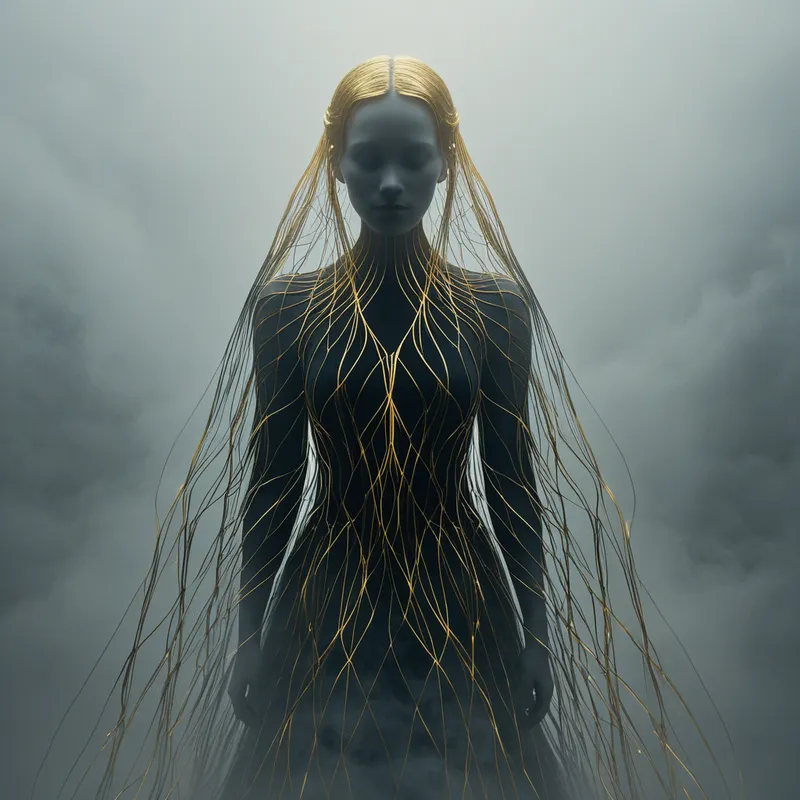
Alchemical Translation
The myth models the alchemical [nigredo](/myths/nigredo “Myth from Alchemical culture.”/), the blackening, and the subsequent albedo. Ansel’s descent into the cold, grey world of invisibility is the [nigredo](/myths/nigredo “Myth from Alchemical culture.”/)—the confrontation with the shadowy, leaden aspects of the self. He wallows in the [prima materia](/myths/prima-materia “Myth from Alchemical culture.”/) of his own hidden motives.
The alchemical fire is not found in the hidden flame, but in the courage to be seen shivering in the cold. Transmutation begins the moment the cap is discarded.
The act of throwing off the cap to save the child is the first spark of the albedo. The “child” here is the nascent, vulnerable, but authentic Self—the new life that can only grow in the light of consciousness. Saving it requires sacrificing the shadow-tool. This is the core of psychic transmutation: the conscious, willful choice to exchange the temporary, isolating power of the hidden wound for the enduring, connective power of integrated wholeness.
For the modern individual, the “cap” might be a defensive personality mask, a career built on inauthenticity, or a relationship sustained by silence. The alchemical process demands we recognize this fabric of invisibility we have woven. The myth does not promise the cap’s magic will be replaced with heroic power. Ansel ends the story simply as “Ansel the weaver again”—but now, he is a weaver who has felt the thread of shadow and chosen, instead, to weave with the threads of a visible, responsible life. His [triumph](/myths/triumph “Myth from Roman culture.”/) is not in slaying a dragon, but in reclaiming his place at [the hearth](/myths/the-hearth “Myth from Norse culture.”/), his right to cast a shadow in the firelight, and his capacity to be warmed by it.
Associated Symbols
Explore related symbols from the CaleaDream lexicon: