
The Cailleach's Hearth Myth Meaning & Symbolism
The ancient Celtic goddess of winter guards a sacred, dying hearth. A mortal's quest to rekindle it becomes a journey of inner transformation and renewal.
The Tale of The Cailleach’s Hearth
Listen, and hear the tale of the Cailleach’s hearth, when the world was locked in the bone-white grip of the longest winter. The wind did not whisper; it screamed, scouring the hills bare. The rivers stood silent, armoured in glass. In the high places, where the rock claws at the sky, there was a cavern. Not a cave of darkness, but a hall of grey stone and older ice, where the air itself was sharp enough to cut hope.
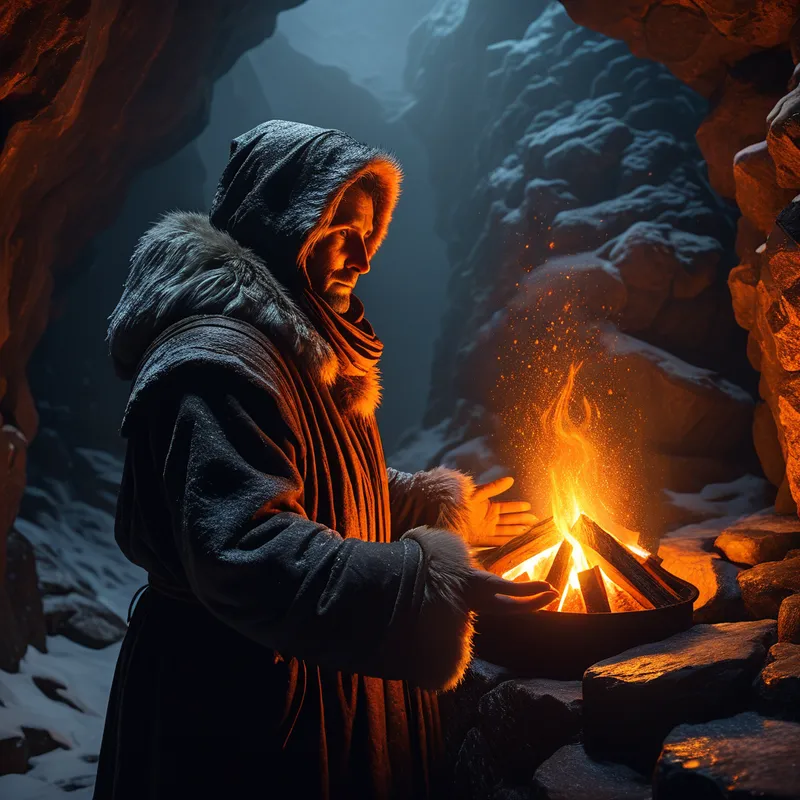
Here dwelt the Cailleach, the Old Woman of the Stones. Her hair was the colour of the last storm cloud before the freeze, her eyes the blue of deep glacier ice. She was the winter, and the winter was her. At the heart of her stone hall was a hearth, a great, gaping mouth of granite. Once, it had roared with a fire that was not merely heat, but the slow, dreaming pulse of the land itself. Now, it held only a memory of warmth. A single ember, no larger than a hazelnut, glowed with a stubborn, fading light. Its breath was thin, a sigh of smoke that barely rose.
The people in the glens below were fading with the light. Their own fires guttered. Stories died on frozen lips. The soul of the world was cooling. The Cailleach sat on her throne of frost-veined rock, her hand upon the cold mantle. She watched the ember. To let it die was the natural order—the final sleep. To tend it was an endless vigil against the inevitable.
Into this stillness came a seeker. Not a warrior with a bright sword, but a woman from the valley, her cloak stiff with rime, her purpose a fragile warmth in her chest. She had followed the silent call of the dying light. She stood in the mouth of the cavern, feeling the immense, weary power of the Hag. She had no offering of gold or grain, only her presence, and a question that hung in the frozen air like breath.
The Cailleach did not turn. Her voice was the crack of ice on a deep loch. “You come to beg for spring. There is none here. Only the long letting-go.”
The woman stepped forward, her boots echoing on the stone. “I did not come to beg for spring,” she said, her voice thin but clear. “I came to see the fire that remembers summer.”
A stillness deeper than winter fell. The Cailleach turned her glacial gaze. The ember chose that moment to flicker, dimming perilously. Without a word, the woman moved. She did not reach for the ember with her bare, frozen hands. Instead, she knelt before the vast hearth and began to breathe—slow, steady, focused breaths, directing the stream of her own living warmth toward the dying coal. She gave it not fuel, but breath. Not a thing, but an action.
For three days and nights, she breathed. Her body grew stiff, her mind hazy with cold and exhaustion. The Cailleach watched, a statue of winter. On the third night, as the woman’s breath grew faint, the ember, as if recognizing a kindred spark of endurance, drank her offering. A tiny tongue of flame, gold and blue, licked upwards. It caught on a dry, forgotten sprig of heather at the hearth’s edge.
The new flame was small, but it was alive. It did not roar; it hummed. The Cailleach let out a sigh that was not wind, but the sound of a mountain shifting. She reached not for the fire, but for the woman, pulling her back from the edge of freezing. “You did not bring a new fire,” the Hag said, her voice now the rumble of stone deep in the earth. “You awakened the old one. It was waiting for the right breath.”
And as the small flame grew, steady and sure, the ice at the mouth of the cavern began to weep. The long winter was not broken, but it had been reminded of the contract. The hearth was tended.
Cultural Origins & Context
The figure of the Cailleach is one of the most potent and enduring in the Gaelic mythic imagination, particularly in Scotland, Ireland, and the Isle of Man. She is a liminal deity, a sovereign of the wild places—the mountains, storms, and winter itself. Stories of her were not preserved in grand epics but in the oral tradition, told by the hearths she was said to govern, passed down through generations of communities whose lives were intimately tied to the seasonal cycle.
This specific narrative of the hearth functions as a seasonal etiological tale, explaining the turn from the deepest winter towards the eventual spring. It was likely told during the darkest months, a ritualized story to enact hope and endurance. The teller would have been a seanchaí (storyteller) or perhaps an elder, grounding the community in a mythic reality where human action—represented by the seeker—plays a crucial role in the cosmic order. The societal function was profound: it modeled resilience, taught that the “fire” of community, culture, and life itself requires active, breath-by-breath tending, especially when the natural world seems bent on extinguishing it. It places the responsibility for renewal not on a distant hero, but on the courageous, sustained attention of the individual within the collective.
Symbolic Architecture
At its core, this myth is a profound map of a psychic process. The Cailleach represents the ultimate Shadow and the Crone archetype. She is not evil, but necessary—the force of dissolution, rest, and harsh truth. Her cavern is the inner sanctum of the unconscious, a place of frozen potential and ancient memory.
The hearth is the sacred center, the axis mundi of the soul. Its dying ember is the latent, almost-extinguished core of vitality, passion, or purpose.
The seeker embodies the conscious ego, venturing into the unknown depths of the psyche. Her journey is not one of conquest, but of encounter and offering. The critical symbolic action is not fighting the winter (which is impossible), nor stealing fire (which is Promethean and defiant), but breathing on the ember. Breath (anail in Gaelic, related to anima, soul) is spirit made visible. It is the offering of one’s own life force, one’s attentive consciousness, to something older and greater than oneself. The triumph is not the arrival of spring, but the rekindling of the covenant between the conscious self and the deep, often terrifying, nourishing powers of the unconscious.

The Dreamer’s Resonance
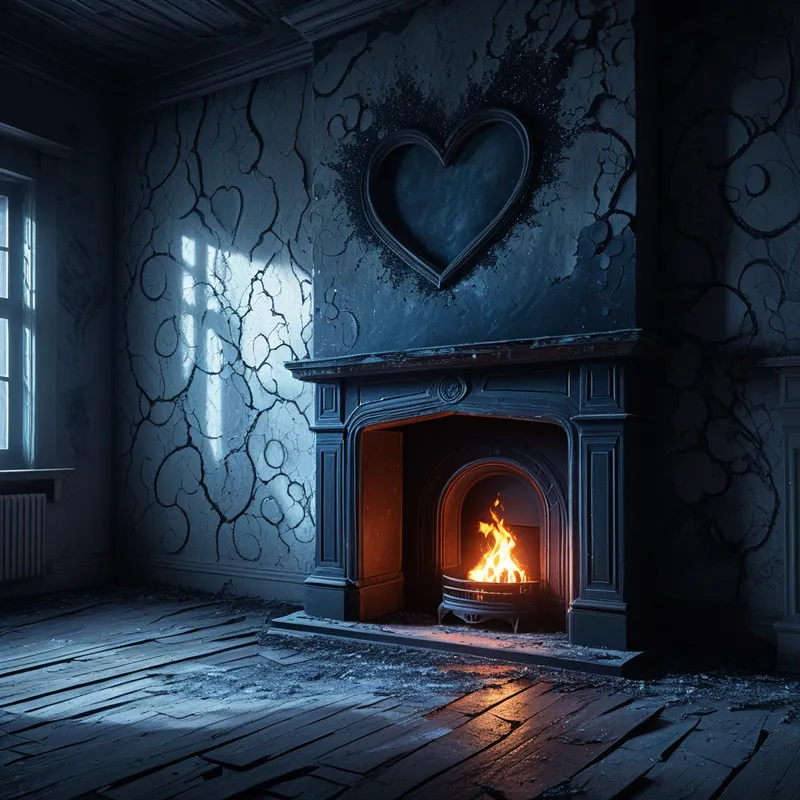
When this mythic pattern stirs in modern dreams, it speaks to a season of the soul. To dream of a vast, cold, empty fireplace in a strange, stony place is to experience a somatic reality of psychic depletion. The dreamer may feel the “winter” in their life: a creative block, emotional numbness, a loss of faith or direction. The dying ember is that one remaining spark of feeling, interest, or hope that feels too fragile to act upon.
The appearance of a formidable, ancient female figure (who may not be named as the Cailleach but carries her energy) indicates that the psyche is bringing the dreamer face-to-face with a profound, perhaps feared, aspect of their own inner authority or hardened experience. The dream process itself is the act of “breathing.” The sustained attention of recalling and working with such a dream is the modern equivalent of kneeling before that inner hearth. The resolution in the dream—if the ember brightens—is not a magical fix, but a somatic signal that the process of tender, consistent inner attention has begun to restore circulation to a frozen part of the psyche.
Alchemical Translation
The alchemical process mirrored here is nigredo—the descent into darkness, the confrontation with the materia prima in its most base, cold state. The Cailleach’s cavern is the alchemist’s sealed vessel. The seeker’s journey is the beginning of the work.
The transmutation occurs not through force, but through sufferation—the patient, enduring application of gentle heat. The breath is the spiritus that mediates between body and soul.
For the modern individual pursuing individuation, the myth models a crucial lesson: salvation from psychic winter does not come from violently rejecting the “Crone” or the “Shadow” (depression, inertia, grief), nor from waiting passively for rescue. It comes from a courageous, humble pilgrimage to the heart of that frozen state. One must offer one’s conscious attention—the breath of awareness—to the last remaining ember of authentic feeling, no matter how small. This is the slow, inner work of tending. The rekindled flame that results is not the old life restored, but a new, more conscious relationship to one’s own depths. The Cailleach, the fierce goddess of winter, is revealed also as the guardian of the hearth; the force that nearly extinguishes the flame is also the necessary condition for its most sacred tending. In this reconciliation lies the true alchemy—the transformation of winter’s endurance into the quiet, unshakeable warmth of a soul that has learned to feed its own sacred fire.
Associated Symbols
Explore related symbols from the CaleaDream lexicon: