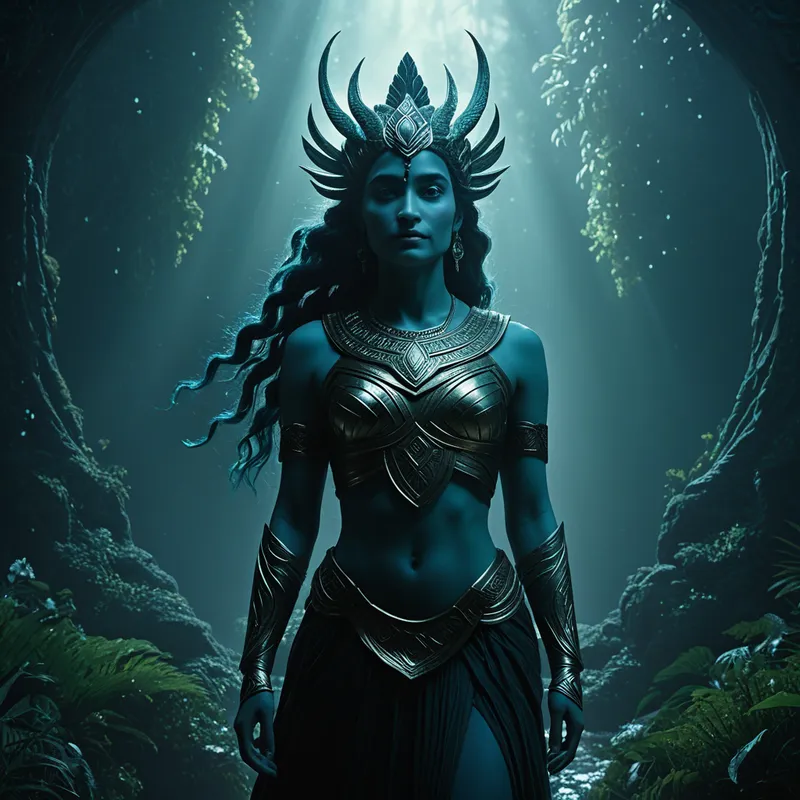
The Bridge Between Worlds
A mystical bridge in Sufi tradition that connects earthly existence with divine realms, testing seekers' faith and symbolizing spiritual ascent.
The Tale of The Bridge Between Worlds
In the silent hour before dawn, when [the world](/myths/the-world “Myth from Tarot culture.”/) hangs between sleep and waking, the seeker stands at the edge of a vast and formless chasm. This is the Sirat, the bridge finer than a hair and sharper than a sword, stretched across [the abyss](/myths/the-abyss “Myth from Kabbalistic culture.”/) of hellfire, leading to the gardens of divine proximity. It is not a bridge of stone or wood, but one woven from the substance of deeds and the fiber of the heart.
The journey begins not with a step, but with a letting go. The seeker, having traversed the long path of the Tariqa, arrives at this ultimate threshold stripped of worldly identity. Below, the fires of Nafs—the lower self, with its passions, illusions, and attachments—roar and churn, casting deceptive shadows. The bridge itself is invisible to the eye of certainty, felt only by the foot of faith.
To cross is to be tested in the essence of one’s being. For the righteous, whose [inner light](/myths/inner-light “Myth from Buddhist culture.”/) has been polished by remembrance and love, the bridge widens until it becomes a broad, sunlit avenue. Their passage is swift, a joyous reunion. But for those burdened by the weight of hypocrisy, cruelty, or heedlessness, the bridge contracts. It becomes a razor’s edge over an inferno. Some falter, tumbling into the fires of their own creation—not for eternal punishment, say the mystics, but for a necessary, agonizing purification. The fire burns away what remains of the false self, leaving only the essential core, which may yet continue its ascent.
This crossing is the final, terrifying, and glorious alchemy. It is the moment where the soul’s secret is laid bare. There is no companion here, no guide save the echo of the divine name in one’s chest. The seeker does not walk to God but walks on God, for in this ultimate metaphysics, the bridge itself is a manifestation of divine judgment and mercy, a single thread of consciousness spanning the distance between human frailty and divine unity.
Cultural Origins & Context
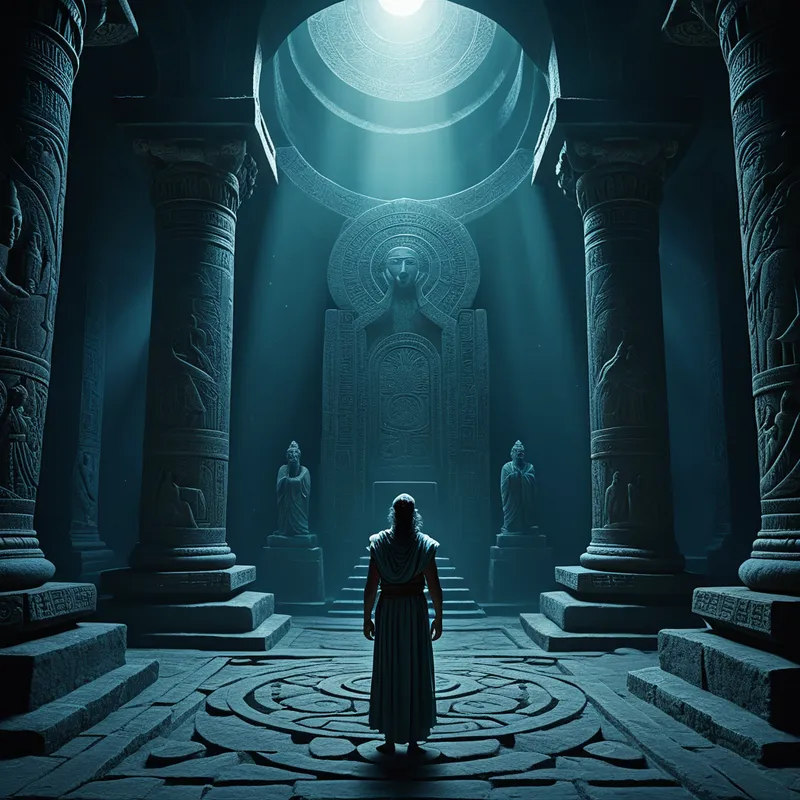
The Sirat al-Mustaqim, often translated as “the Straight Path,” is a profound concept in Islam, mentioned in the opening Surah of the Quran. In exoteric theology, it signifies the path of righteous belief and action. Within the esoteric universe of Sufism, this path crystallizes into a potent eschatological and psychological image: the literal bridge of the afterlife.
This mythic bridge is deeply embedded in the Islamic narrative of the Day of Judgment, a moment of ultimate accountability. Sufi masters, however, interiorized this cosmic geography. For them, the afterlife is not merely a future event but a parallel reality accessed through inner states. The scholars of the soul, like Rumi, Ibn Arabi, and Al-Ghazali, taught that the bridge is crossed every moment. Each breath, each choice between compassion and ego, is a step upon it. The hellfire below is the burning anguish of separation from the Beloved, and the paradise beyond is the bliss of annihilation of [the self](/myths/the-self “Myth from Jungian culture.”/) in the divine.
Thus, the Bridge Between Worlds exists in a liminal space between orthodox eschatology and mystical psychology. It is a master symbol that validates the literal beliefs of the tradition while simultaneously providing a sophisticated map for the soul’s journey in this life. It grounds the Sufi’s intense spiritual practice in a cosmic drama, making the inner work of polishing the heart a matter of ultimate consequence.
Symbolic Architecture
The [architecture](/symbols/architecture “Symbol: Architecture in dreams often signifies structure, stability, and the framing of personal identity or life’s journey.”/) of the Sirat is a precise spiritual calculus. Its fineness—“finer than a [hair](/symbols/hair “Symbol: Hair often symbolizes identity, power, and self-expression, reflecting how we perceive ourselves and how we wish to be perceived by others.”/)“—speaks to the exquisite sensitivity of conscience required for the [journey](/symbols/journey “Symbol: A journey in dreams typically signifies adventure, growth, or a significant life transition.”/). It is a [path](/symbols/path “Symbol: The ‘path’ symbolizes a journey, choices, and the direction one’s life is taking, often representing individual growth and exploration.”/) of [subtlety](/symbols/subtlety “Symbol: Subtlety in arts and music represents nuanced expression, delicate details, and layered meanings that require attentive perception.”/), where grossness of [character](/symbols/character “Symbol: Characters in dreams often signify different aspects of the dreamer’s personality or influences in their life.”/) cannot pass. Its sharpness—“sharper than a sword”—indicates its function as a discriminator, severing [truth](/symbols/truth “Symbol: Truth represents authenticity, honesty, and the quest for knowledge beyond mere appearances.”/) from falsehood, essence from [accident](/symbols/accident “Symbol: An accident represents unforeseen events or mistakes that can lead to emotional turbulence or awakening.”/).
The bridge is not a test imposed from without, but the soul’s own state made manifest. Its width is the width of your certainty; its stability is the stability of your faith.
The [chasm](/symbols/chasm “Symbol: A deep fissure in the earth representing a profound division, transition, or psychological gap between states of being.”/) it spans is the Alam al-Khalq, the world of creation, perceived as separate from the Alam al-Amr, the world of the divine command. The bridge is the connecting principle itself: [the Logos](/myths/the-logos “Myth from Biblical culture.”/), the Muhammadan [Reality](/symbols/reality “Symbol: Reality signifies the state of existence and perception, often reflecting one’s understanding of truth and life experiences.”/) (al-Haqiqah al-Muhammadiyya), or the Perfect [Human](/symbols/human “Symbol: The symbol of a human represents individuality, complexity of emotions, and social relationships.”/) (al-Insan al-Kamil), who serves as the [isthmus](/symbols/isthmus “Symbol: A narrow land bridge connecting two larger landmasses, symbolizing connection, transition, and vulnerability between distinct states or phases.”/) between [heaven](/symbols/heaven “Symbol: A symbolic journey toward ultimate fulfillment, spiritual transcendence, or connection with the divine, often representing life’s highest aspirations.”/) and [earth](/symbols/earth “Symbol: The symbol of Earth often represents grounding, stability, and the physical realm, embodying a connection to nature and the innate support it provides.”/). To walk it is to actualize this primordial [connection](/symbols/connection “Symbol: Connection symbolizes relationships, communication, and bonds among individuals.”/) within oneself.
The fire below is multifaceted. It is the hell of divine [wrath](/symbols/wrath “Symbol: Intense, often destructive anger representing repressed emotions, moral outrage, or survival instincts.”/) for the unjust, but for the mystic, it is equally the fire of divine love, which burns away [the ego](/myths/the-ego “Myth from Jungian culture.”/). Rumi’s poetry is replete with this imagery: “Love is the fire that burns away everything but the Beloved.” [The fall](/myths/the-fall “Myth from Biblical culture.”/) from the bridge, then, can be reframed not as damnation, but as a plunge into a transformative [crucible](/symbols/crucible “Symbol: A vessel for intense transformation through heat and pressure, symbolizing spiritual purification, testing, and alchemical change.”/).
The Dreamer’s Resonance
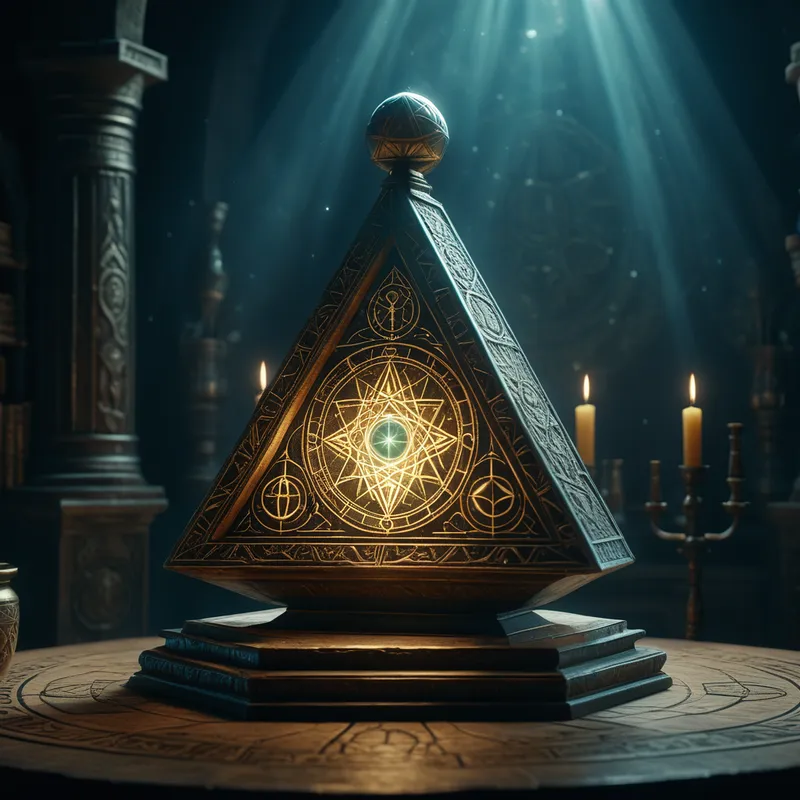
In the landscape of the modern [psyche](/myths/psyche “Myth from Greek culture.”/), the Bridge Between Worlds resonates as the archetypal crisis of transition. It is the terrifying, narrow passage every individual must traverse in moments of profound life change: the end of a relationship, the loss of a loved one, a career collapse, or a deep psychological breakdown. The familiar world has fallen away behind, and the new one is not yet visible ahead. One stands on a precarious ledge over an inner abyss of fear, grief, and identity dissolution.
This is the “[dark night of the soul](/myths/dark-night-of-the-soul “Myth from Christian culture.”/)” described by mystics across traditions. The ego, the constructed self, feels it is walking a razor’s edge, certain it will be annihilated. The dreamer encountering this bridge in visions or meditations is confronting this existential threshold. The psyche presents the image to communicate the peril and necessity of the transition. There is no going back; the only way is through.
The dreamer’s emotional state directly shapes the bridge. In anxiety, it may appear as a Rusted Bridge or a Glass Bridge, threatening to shatter. In a state of dissociation, it may be an Invisible Bridge, felt but not seen, requiring a blind trust. The entities encountered—whether helpful guides or menacing shadows—are projections of inner forces aiding or obstructing the transformation.
Alchemical Translation
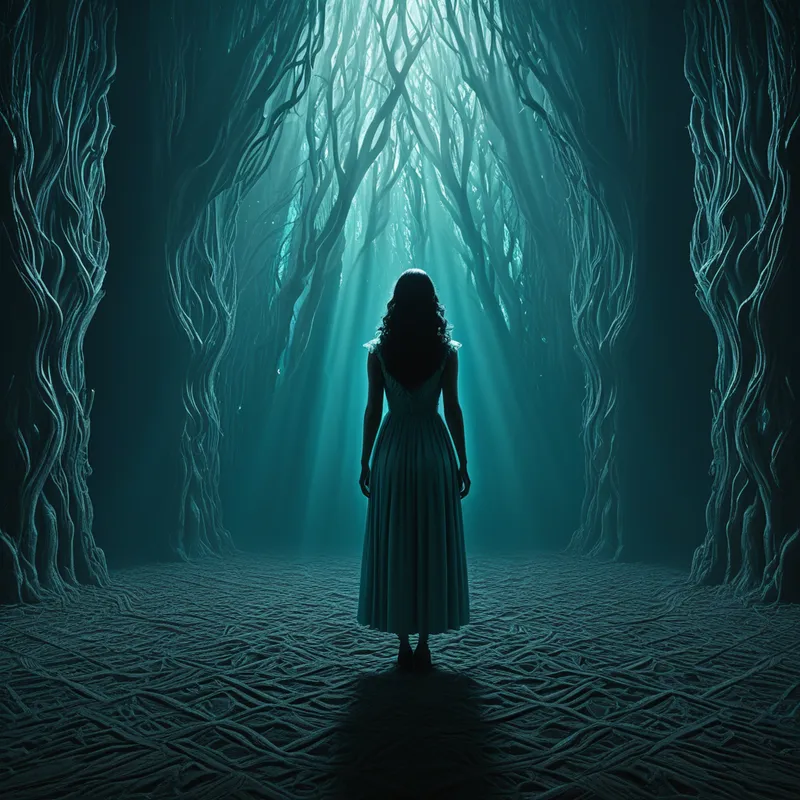
Depth psychology finds in the Sirat a perfect symbol for the individuation process. The bridge is the transcendent function, the psychic structure that emerges from the tension between conscious and unconscious, [persona](/myths/persona “Myth from Greek culture.”/) and shadow, enabling passage to a more integrated Self.
The crossing requires the death of the psychological persona. What falls into the fire is not the true self, but the accumulated, defensive identity—the “I” we mistakenly believe we are.
The “fire below” is the purifying encounter with [the shadow](/myths/the-shadow “Myth from Jungian culture.”/)—all the rejected, shameful, and powerful aspects of oneself. One cannot carry this unintegrated material across; it must be acknowledged and transformed in the heat of conscious suffering. The Heart, in its deepest sense as the seat of the Self, is both the traveler and the destination. The journey across is a movement from the ego-heart, full of personal wants and wounds, to the cosmic Heart, which contains all opposites.
This is an alchemy of consciousness. The base metal of the fragmented personality is subjected to the fire of existential crisis (the abyss) and the cutting discrimination of truth (the sharp edge), with the goal of producing the gold of the integrated individual. The paradise at the end is not a place of reward, but a state of being: psychic wholeness, where one is at home in both the inner and outer worlds, having reconciled the human and the divine within.
Associated Symbols
Explore related symbols from the CaleaDream lexicon:
- Bridge — The archetypal structure of connection and transition, representing the perilous and necessary passage between states of being, consciousness, or worlds.
- Fire — A dual symbol of destruction and purification; the consuming blaze that reduces the false self to ash, clearing [the way](/myths/the-way “Myth from Taoist culture.”/) for the essential spirit.
- Heart — The inner chamber where [the divine spark](/myths/the-divine-spark “Myth from Gnostic culture.”/) resides; the seat of true intelligence and the organ of perception for the mystical journey.
- Shadow — The totality of the unconscious psyche, containing repressed weaknesses and latent strengths, which must be faced in the abyss below the bridge.
- Transformation Cocoon — The state of liminal dissolution and restructuring that occurs during the crossing, where the old form is broken down to create the new.
- Razor’s Edge — The precise, demanding path of spiritual discipline and existential choice, where a single misstep in consciousness carries profound consequence.
- Light — The inner illumination of faith and certainty that widens the path and guides the seeker through the darkness of the transition.
- [Death](/myths/death “Myth from Tarot culture.”/) — The necessary ending of a state of being, the ego’s sacrifice required to pass from one world to the next, essential for rebirth.
- Mirror — The bridge as a reflective surface showing the seeker nothing but their own essence, stripping away all [projection](/myths/projection “Myth from Alchemical culture.”/) and illusion.
- Key — The practices, states of heart, or divine grace that unlock the passage, making the invisible bridge perceptible and traversable.