The Book of Life Myth Meaning & Symbolism
A celestial ledger holds the names of the righteous, sealed until the final judgment, where the eternal fate of every soul is revealed and inscribed.
The Tale of The Book of Life
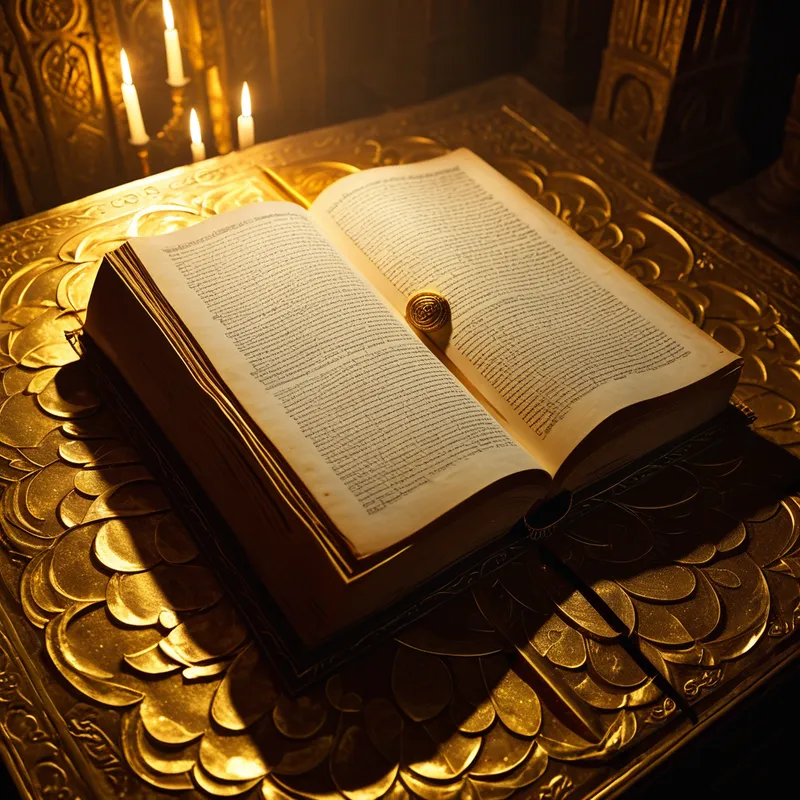
Before time was measured, in the courts beyond the stars, the book was prepared. It rests not on any shelf of earth, but upon the altar that stands before the throne of the Ancient of Days. Its binding is of a substance unknown to mortals—a living light that holds the whispers of eternity. Its pages are not of [papyrus](/myths/papyrus “Myth from Egyptian culture.”/) or parchment, but of a luminous vellum upon which nothing yet has been written, awaiting the breath of creation.
And then, the breath came. With the forming of Adam from the dust, a silent quill, dipped in the fire of divine intent, began to move. A name was inscribed. Not with ink, but with the very essence of a soul. So it began, the great recording. Through the ages of patriarchs and kings, through flood and exile, the book lay open, and the quill continued its silent work. The names of the faithful—those who walked with the unseen—were added. The names of the rebellious were… not erased, for they were never written. The book held only the names of the living, those whose spirits were tuned to the music of the divine.
The conflict brewed not in heaven, but on earth, in the hearts of men. A great dragon, a deceiver, sought to blot out the names, to claim the souls for his own kingdom of dust and shadow. He whispered that the book was a lie, that names could be stolen, that fate was sealed by power, not by heart. A great war echoed in the unseen realms, a war for every name upon those glowing pages.
Then comes the hour, the final turning of the age. The heavens roll up like a scroll, and silence falls upon all creation. The one who sits upon the throne, whose countenance is like the sun in full strength, speaks a word that shakes the foundations of reality. “Bring the books.” And they are brought: ledgers of deeds, records of every secret thought and hidden action. And among them, one book shines with a different light—the Book of Life.
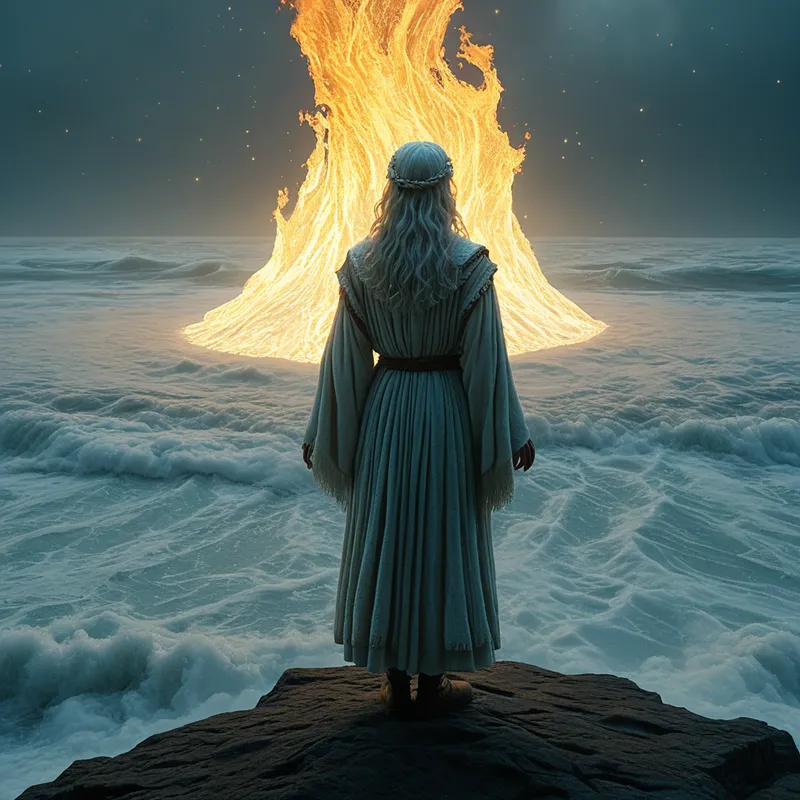
All nations, all peoples, from the greatest king to the most forgotten soul, stand upon a plain of glass mingled with fire. The other books are opened, and every life is laid bare, undeniable, illuminated in the relentless light of truth. There is no shadow in which to hide. The weight of every unkind word, every withheld mercy, every betrayal of self and other, hangs in the air. It is a moment of ultimate exposure.
Then, the keeper of the book, the Lamb who was slain, steps forward. His hands bear the wounds of love. He opens the Book of Life. The searching of the other books ceases. All eyes turn to this single volume. An angel calls out in a voice like thunder, “Is the name written?” For each soul, the moment stretches into an eternity. The search is made. And then, for some, the pronouncement comes: “Found.” The name is there, inscribed before the foundation of [the world](/myths/the-world “Myth from Tarot culture.”/). For them, [the sea](/myths/the-sea “Myth from Greek culture.”/) of glass becomes a river of life, and the fire, a welcoming warmth. For those whose names the book does not hold, there is only the terrible, silent absence of their own essence, and they depart into the outer darkness, away from the source of all life. The book is then closed, its record complete, and a new heaven and a new earth dawn, where only the names within it dwell.
Cultural Origins & Context
The myth of the Book of Life finds its roots in the ancient Near Eastern world, where the concept of divine ledgers was common. Kings kept records of their citizens, and it was a small conceptual leap to imagine a deity doing the same. Within the Hebrew tradition, it emerges explicitly in the texts of the exilic and post-exilic periods, a time of national trauma and existential questioning about identity and covenant. Prophets like Daniel and Malachi speak of a “book of remembrance” for those who fear God.
By the time of the New Testament, the symbol had crystallized. It is referenced by Paul, but finds its most potent and detailed expression in the Revelation of John, a text composed under the pressure of Roman persecution. Here, it is no longer just a record of the living, but the decisive ledger in the final, apocalyptic judgment. It served a critical societal function: for a marginalized and suffering community, it affirmed that their fidelity was seen and recorded by a higher authority than Rome. Their true identity and destiny were secure in heaven, even if their bodies were threatened on earth. The myth was passed down through homilies, art, and liturgy, a stark reminder of ultimate accountability and a profound comfort to the persecuted.
Symbolic Architecture
At its core, the Book of [Life](/symbols/life “Symbol: The symbol of ‘Life’ represents a journey of growth, interconnectedness, and existential meaning, encompassing both the joys and challenges that define human experience.”/) is the ultimate [symbol](/symbols/symbol “Symbol: A symbol can represent an idea, concept, or belief, serving as a powerful tool for communication and understanding.”/) of authentic [identity](/symbols/identity “Symbol: Identity represents the sense of self, encompassing personal beliefs, cultural background, and social roles.”/). It does not create identity, but reveals and confirms it. The name written is not merely a label; it is the [soul](/symbols/soul “Symbol: The soul represents the essence of a person, encompassing their spirit, identity, and connection to the universe.”/)’s true signature, its essential [nature](/symbols/nature “Symbol: Nature symbolizes growth, connectivity, and the primal forces of existence.”/) in alignment with the divine ground of being.
The book does not judge; it reveals what judgment is based upon—the fundamental choice of being for life or against it.
The “other books” symbolize the personal [shadow](/symbols/shadow “Symbol: The ‘shadow’ embodies the unconscious, repressed aspects of the self and often represents fears or hidden emotions.”/)—the totality of our actions, both good and ill, our compromises, our failures, and our hidden potentials. They represent the literal, historical record of [the ego](/myths/the-ego “Myth from Jungian culture.”/). The Book of Life, in contrast, symbolizes the Self—the eternal, incorruptible [kernel](/symbols/kernel “Symbol: Represents potential, hidden essence, or the core of something waiting to develop. Often symbolizes beginnings, nourishment, or unexpressed emotions.”/) of the individual that exists beyond the [flux](/symbols/flux “Symbol: A state of continuous change, instability, or flow, often representing the impermanent nature of existence and experience.”/) of time and moral success or failure. The [drama](/symbols/drama “Symbol: Drama signifies narratives, emotional expression, and the exploration of human experiences.”/) of judgment is the [moment](/symbols/moment “Symbol: The symbol of a ‘moment’ embodies the significance of transient experiences that encapsulate emotional depth or pivotal transformations in life.”/) when [the ego](/myths/the-ego “Myth from Jungian culture.”/) (the record of deeds) is confronted by, and evaluated against, [the Self](/myths/the-self “Myth from Jungian culture.”/) (the eternal name).
The [dragon](/symbols/dragon “Symbol: Dragons are potent symbols of power, wisdom, and transformation, often embodying the duality of creation and destruction.”/) who seeks to blot out names represents the forces of psychic [disintegration](/symbols/disintegration “Symbol: A symbol of breakdown, loss of form, or fragmentation, often reflecting anxiety about personal identity, control, or stability.”/), the nihilistic urge within the personal and [collective unconscious](/symbols/collective-unconscious “Symbol: The Collective Unconscious refers to the part of the unconscious mind shared among beings of the same species, embodying universal experiences and archetypes.”/) that whispers, “You are nothing. Your life has no meaning. You are only your worst actions.” The [Lamb](/symbols/lamb “Symbol: A symbol of innocence, purity, sacrifice, and new beginnings, often representing vulnerability and gentleness.”/) who opens the book represents the integrating, salvific principle—the part of the [psyche](/myths/psyche “Myth from Greek culture.”/) capable of bearing the wounds of experience and transforming them into meaning, thus validating and “saving” the true identity.
The Dreamer’s Resonance
When this myth surfaces in modern dreams, it rarely appears as a biblical pastiche. The dreamer may find themselves in a vast, bureaucratic office where a stern clerk consults an infinite filing cabinet, unable to locate their file. They may be taking a final exam for a class they never attended, or trying to recall a password that grants access to their own life. The somatic experience is one of profound anxiety, a tightening in the chest, a sense of being scrutinized and found fundamentally lacking.
This dream pattern signals a critical phase of psychological audit. The ego is being confronted with the discrepancy between who it pretends to be (the [persona](/myths/persona “Myth from Greek culture.”/)) and who it actually is ([the shadow](/myths/the-shadow “Myth from Jungian culture.”/)), and, more deeply, with the fear that it has no authentic core (the Self) at all. It is the psyche’s “day of judgment,” where the accumulated baggage of a life lived for external validation is weighed and found wanting. The dream is an urgent call from the Self to begin the work of discernment—to sift through the “other books” of one’s life story to discover if the authentic “name” still exists beneath the layers of adaptation and compromise.
Alchemical Translation
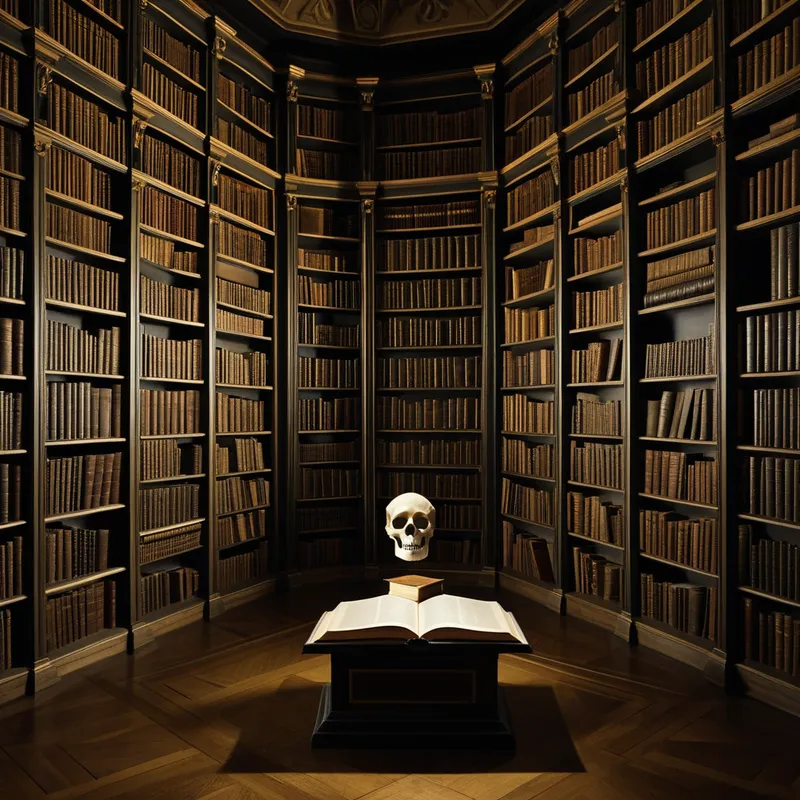
The alchemical process modeled here is the [separatio](/myths/separatio “Myth from Alchemical culture.”/) and coniunctio of the soul. The first, terrifying stage is the separatio: the opening of the “other books.” In individuation, this is the shadow-work—the ruthless, honest inventory of one’s life. Every repressed memory, every denied weakness, every inflated virtue must be brought into the light of consciousness. This is a dissolution of the persona, a feeling of being spiritually naked and judged.
The fire of judgment is not for destruction, but for refinement; it burns away the dross of the false self to reveal the gold of the true name.
The pivotal turn is the search of the Book of Life. Psychologically, this is the active seeking of the Self. It is the question, “Who am I, beneath all this history?” It requires turning away from the endless cataloging of deeds (which leads to either pride or despair) and turning inward to listen for the quiet, persistent call of one’s own unique being. Finding the name “written” is the moment of coniunctio—the ego’s alignment with the Self. It is the realization that one’s essential worth is not earned by deeds, but is inherent. The “Lamb slain” represents the necessity of sacrificing the old, ego-centric identity—the “name” given by family, culture, or trauma—to discover the name written from the foundation of the world: one’s own destiny.
The closed book at the end signifies a stabilized, integrated psyche. The conflict between ego and Self is resolved. The individual no longer lives in anxious self-scrutiny or external validation, but from a confirmed, inner authority. They dwell in the “new heaven and new earth” of a personality reborn, where life proceeds from the authentic core, and every action is an expression of the name finally recognized and claimed as one’s own.
Associated Symbols
Explore related symbols from the CaleaDream lexicon: