
The Black Prince's Ruby Myth Meaning & Symbolism
A cursed crimson gem, passed through blood and battle, binds the fate of kings to a legacy of violence and divine sanction.
The Tale of The Black Prince’s Ruby
Hear now a tale not of a single hero, but of a stone that drinks the light of kings and the shadow of empires. It begins not in a forge, but in the furnace of the earth, a droplet of the world’s own fiery blood cooled to a crimson heart. It slept in the dark, until hands that knew the weight of crowns unearthed it.
They say it was first plucked from the mines of Badakhshan, a prize for a sultan, a glittering eye for a turban. But stones have destinies beyond adornment. It traveled west on the silk roads of ambition, from one ruler’s treasury to another, a silent witness to oaths and betrayals. Its true saga, however, is bound to the fate of a prince who wore not gold, but night.
Edward of Woodstock, they called him the Black Prince, for the sable armor that drank the sun on the fields of France. At the Battle of Nájera, he fought not for his own kingdom, but for a cruel and desperate king, Don Pedro of Castile. The battle was a slaughter, a symphony of clashing steel and dying horses. When the field fell silent, stained with the wine of life, the grateful, doomed Pedro had but one thing of worth left to give.
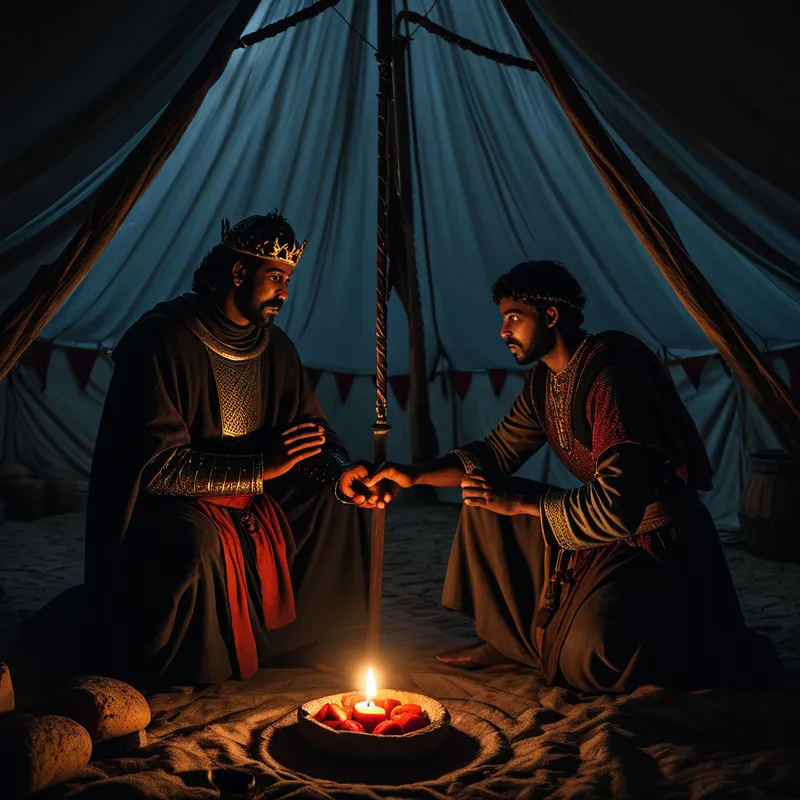
In his tent, reeking of blood and smoke, Pedro placed in the Black Prince’s gauntleted hand not a polished jewel, but a rough, pigeon’s-egg stone the color of a deep, old wound. It was uncut, massive, holding the light like a captured sunset. “For your valor,” Pedro said, but the air hummed with a heavier truth. It was payment for an army, a down payment on a throne slick with blood. The Prince accepted it, feeling its impossible weight. It was not a gem; it was a compact, sealed not with wax, but with the lives of thousands.
The Ruby returned to England, a glittering captive of war. It watched from the Prince’s helm as he grew ill, as his dreams of a crown he would never wear turned to ash. It passed to his son, who became King Richard II, a boy-king with the stone upon his brow. And it was there, at the Tournament of Westminster, that the stone’s curse—or its truth—spoke again. As Henry Bolingbroke entered the lists to defy his king, the Ruby, set in Richard’s crown, was said to have loosened and fallen to the earth. A gasp went through the crowd. The king retrieved it, but the omen was set. Within the year, Richard was deposed, imprisoned, and dead. The Ruby had slipped from one head, and found another.
Thus began its long, thirsty journey through the heart of English power. It adorned the helmet of Henry V at Agincourt, a red star in a storm of mud and death. It survived the savagery of the Wars of the Roses, passing from Lancaster to York and back again, a silent arbiter of fortune. It was nearly stolen, nearly sold, but always it returned to the crown, a bloody pupil in the golden eye of the state. It witnessed the ax fall on Anne Boleyn’s neck and the Spanish Armada scatter. It became not an ornament, but an organ of sovereignty itself—hard, brilliant, and paid for in lives.
Cultural Origins & Context
This is not a myth born of peasant folklore or monastic scribes, but one forged in the very machinery of medieval kingship. The “myth” of the Black Prince’s Ruby is a historical legend, a narrative that accreted around a real object—a magnificent spinel—as it passed through centuries of violent political change. Its storytellers were heralds, chroniclers like Jean Froissart, and the courtiers who whispered of omens.
In a culture where the king’s body was a political body, and his regalia were sacred objects imbued with divine right, the provenance of a crown jewel was paramount. The stone’s origin as spoils of war, gifted under duress, framed it within the medieval understanding of fortune and divine judgment. Its “cursed” nature—its association with the downfall of those who wore it—was a way for a pre-modern society to process the brutal, cyclical nature of dynastic struggle. It externalized the chaos of politics into a tangible, glittering object. The stone became a character in the national drama, a physical embodiment of the burdens and perils of rule, of the truth that sovereignty is never freely given, but always taken and held by force and fate.
Symbolic Architecture
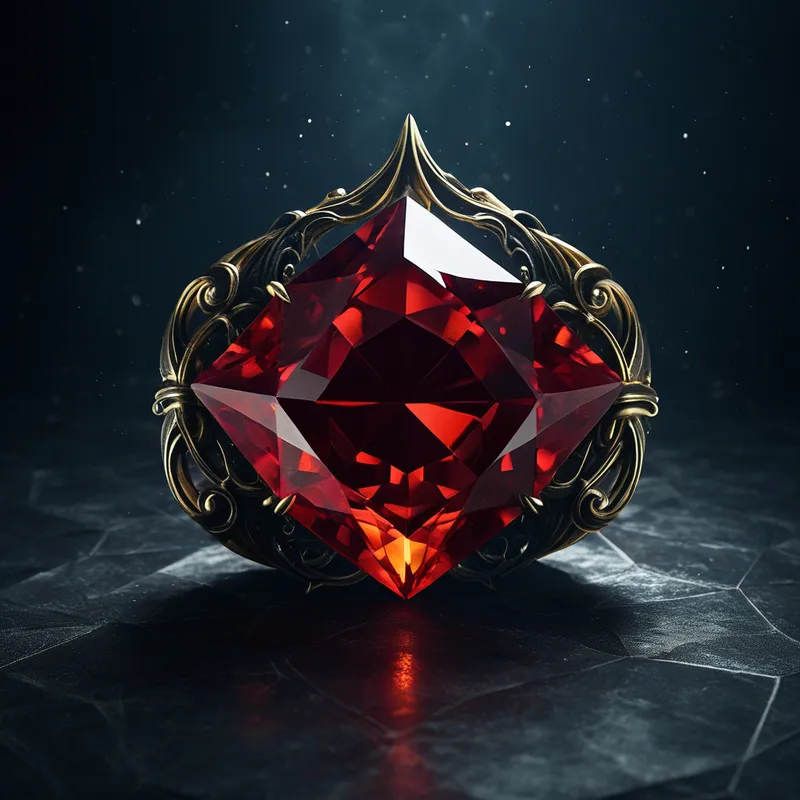
The Ruby is far more than a precious stone. It is the crystallized Shadow of the Crown. The crown represents order, law, divine sanction, and the luminous persona of the state. The Ruby is the dark, uncut truth upon which that order is built: violence, conquest, betrayal, and the blood price of power.
The gem is the silent, shining witness to the contract every ruler signs with the underworld of their own ambition and their nation’s violence.
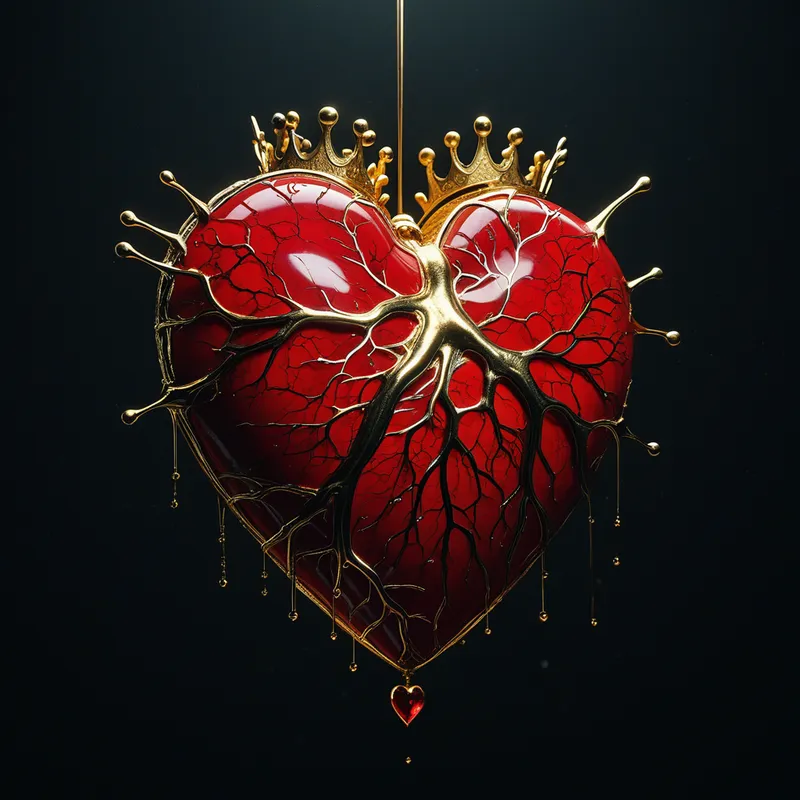
It symbolizes the inheritance of consequence. The Black Prince did not mine the stone; he won it in battle, inheriting the full weight of its previous owners’ fates and the blood spilled to secure it. This is the psychological truth of any inherited power, wealth, or trauma—we receive not only the asset, but the entire history and karma attached to it. The Ruby is also the unintegrated heart of the kingdom—a heart of stone, brilliant and cold, that pulses with the lifeblood of the realm yet remains incapable of true compassion, concerned only with its own preservation and luster.
The Dreamer’s Resonance
When this myth stirs in the modern soul, it rarely appears as a historical pageant. To dream of such a ruby is to dream of a burdensome inheritance. One might dream of finding a stunning but ominous red jewel in a parent’s attic, of being forced to wear a beautiful but heavy necklace that burns, or of receiving a magnificent gift that immediately fills the dream with a sense of dread and obligation.
Somatically, this can feel like a weight on the chest or a constriction around the head—the crown becoming a vise. Psychologically, the dreamer is confronting their own “sovereignty shadow.” What brilliant role or responsibility (the crown) have they taken on, and what uncomfortable, violent, or morally ambiguous history (the ruby) have they had to accept to claim it? This could relate to a family business built on a patriarch’s cutthroat tactics, a leadership position gained after a bitter office rivalry, or even the personal “power” one wields that is subtly based on the suppression of one’s own softer qualities. The dream asks: What is the blood price of your current authority, and are you willing to acknowledge it?
Alchemical Translation
The individuation process modeled here is the transmutation of the blood-stained inheritance into conscious sovereignty. The goal is not to reject the Ruby—for that is to live in denial of the shadowy foundations of one’s own power—nor to be dominated by its perceived curse. The alchemical work is to re-cut the stone.
The initial, rough spinel from Najera is the unconscious, amorphous shadow-complex. The finished gem in the Imperial State Crown is that same complex, consciously acknowledged, integrated, and given a place in the total structure of the Self.
First, one must claim the stone (consciousness): Acknowledge the full, uncomfortable history of one’s power, privilege, or trauma. See the blood on it. Second, one must clean it (purification): Examine it without flinching, separating historical fact from superstitious narrative. What is truly your burden, and what is ancestral karma you can choose to end? Finally, one must re-set it (integration): Place this now-conscious understanding of cost and consequence into the crown of your mature identity. The integrated Ruby no longer curses from the shadows; it warns from a place of honor. It becomes a sobering jewel of wisdom, a reminder that true authority is conscious of its roots in struggle and is therefore exercised with humility and responsibility. The curse is lifted not by removing the stone, but by changing one’s relationship to it—from one of superstitious fear to one of conscious, respectful stewardship. The ruler is then no longer a victim of the stone’s history, but the author of its new meaning.
Associated Symbols
Explore related symbols from the CaleaDream lexicon: