
The Bell of Mindfulness Myth Meaning & Symbolism
An ancient tale of a celestial bell whose pure tone shatters illusion, calling all beings back to the present moment and their true nature.
The Tale of The Bell of Mindfulness
In the time before time was counted, when the world was a tapestry of raw sensation and the minds of beings were like storm-tossed seas, there existed a realm known as the Sukhavati of Sound. It was not a place of earth or stone, but a dimension woven from the essence of listening itself. Here, the air did not move; it resonated. The light did not shine; it harmonized. And at its heart, suspended from the branches of the Tree of Awakening, hung the Bell.
It was not forged by any smith. It had coalesced from the first intention of compassion, from the vow of a Bodhisattva who saw the suffering of the world and wished for a remedy that could reach every ear. The Bell was vast, its curve like the bowl of the sky, its metal a living bronze that held the color of dusk and dawn. Upon its surface, the entire Twelve Links of Dependent Origination were inscribed, not as words, but as flowing, visual patterns that shifted when gazed upon.
Yet, the Bell was silent. A profound, waiting silence clung to it, a silence so deep it was a presence of its own. For the Bell could not be struck by hand, nor by wind. It awaited the correct moment, the perfect alignment of intention.
The story tells of a time when the cacophony of Samsara grew deafening. The clamor of desire, the shriek of aversion, the dull drone of ignorance—these sounds solidified into a thick fog that clouded the minds of all beings. They stumbled through their lives, reacting to echoes, mistaking shadows for substance, lost in stories of past and future. The Bodhisattva of Compassion, Avalokiteshvara, witnessed this and wept. A single tear, clear and heavy with boundless Metta, fell.
That tear did not fall to earth. It traced a silver path through the resonant air of Sukhavati and struck the Bell of Mindfulness.
What issued forth was not a sound that could be heard with ears alone. It was a wave of pure knowing. It was the tone of the present moment, unadorned and complete. It traveled out from the celestial realm, through the veils of reality, and into the world of beings. Where it touched, a miracle of quiet occurred. The merchant, haggling fiercely, suddenly heard the breath of the person before him. The grieving widow, lost in memory, felt the solid warmth of the ground beneath her feet. The angry king, mid-shout, tasted the true flavor of the air in his mouth.
The Bell did not erase suffering; it illuminated the space around it. Its tone was a mirror, showing each being not what they thought they were, but what they were in that very instant—a constellation of sensations, feelings, and perceptions, transient and empty of a separate self. For one clear, timeless moment, the fog lifted. The conflict was not resolved, but seen. The pain was not gone, but held in awareness. This was the Bell’s gift: not an answer, but a profound, resonant question hanging in the air of the soul: What is this?
And then, the tone faded. But the memory of that clarity, like the shimmer in the air after a bell has rung, remained as a possibility in the heart of the world.
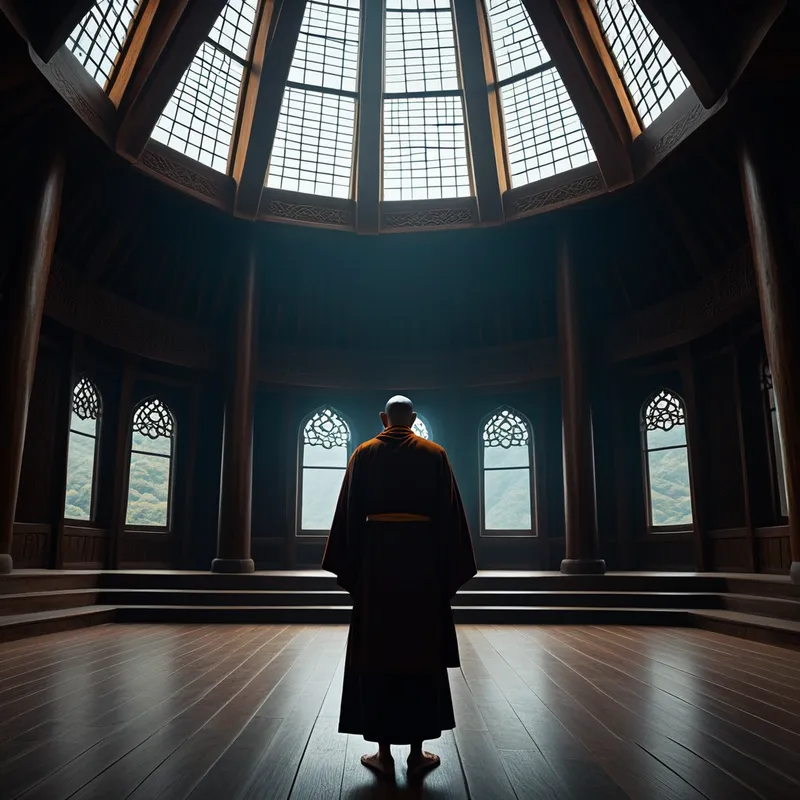
Cultural Origins & Context
The myth of the Bell of Mindfulness is not found in a single sutra but is a Jataka-like narrative that emerged from the living practice traditions of Theravada and later Mahayana Buddhism. It was passed down not as canonical scripture, but as a Dharma parable by meditation masters to their students. Often told during retreats or in moments of collective doubt, its function was pedagogical and inspirational.
It served as an embodied metaphor for the practice of Sati. In monasteries, the physical bell (ghanta) that structures the day—calling monks to meditation, meals, and rest—became a daily, mundane echo of this celestial myth. Each ring was an opportunity to “hear the Bell of Mindfulness,” to stop the mental proliferation and return to the here and now. The myth thus bridged the transcendent ideal (the perfect, awakening tone) and the practical discipline (the daily gong), grounding profound philosophy in sensory, communal ritual.
Symbolic Architecture
The Bell itself is the central symbol, a perfect vessel of transformative potential. Its hollow interior represents Sunyata—the liberating emptiness that allows for resonance. Without that empty space, there can be no sound, no awakening. The inscribed Links of Dependent Origination on its surface signify that the path to liberation is not outside our conditioned experience but is understood through it.
The Bell does not create the tone; it allows the tone of reality to manifest through its emptiness.
The tear of Avalokiteshvara is crucial. It symbolizes that the awakening call of mindfulness is not an intellectual exercise but is born from and saturated with compassionate feeling. It is karuna (compassion) that strikes the Bell of sati (mindfulness); true awareness is inherently kind, and true compassion is deeply aware.
The tone that is “not a sound” points to the direct, non-conceptual nature of mindful awareness. It bypasses the thinking mind to resonate directly with the fundamental ground of being. It does not explain reality; it is the experience of reality, unimpeded.

The Dreamer’s Resonance
When this myth surfaces in modern dreams, it often manifests during periods of psychic fragmentation or overwhelming mental noise. The dreamer may find themselves in a labyrinth of their own thoughts, a chaotic city of internal dialogue, or a suffocating fog of anxiety. The appearance of a bell—whether grand, hidden, or silent—signals a deep somatic and psychological process: the unconscious Self’s attempt to re-establish a center.
The somatic experience in the dream is key. One might feel the vibration in their bones before hearing it, or experience a sudden, profound stillness in the dream-body. This indicates the psyche working to ground consciousness back into the physical vessel, to interrupt the disembodied spiral of worry or fantasy. Dreaming of a bell that will not sound, or that one is afraid to strike, often correlates with a conscious resistance to presence—a fear of what might be found in the quiet. Conversely, dreaming of being cleansed or clarified by a pure tone suggests an active, integrative process where the ego is temporarily softened, allowing a more holistic state of being to emerge.

Alchemical Translation
For the modern individual navigating a world of relentless stimulation and identity-construction, the myth models the complete alchemy of individuation—the process of becoming a whole, integrated Self. The cacophony of Samsara is our own conditioned psyche: the internalized voices of critics, the siren calls of persona, the repressed whispers of the shadow.
The strike of the tear is the courageous act of turning inward with compassionate curiosity, touching the raw material of our experience.
The ensuing tone is the moment of insight, the Aha! that arises not from adding more thought, but from subtracting our commentary. It is the psychic transmutation where a neurotic pattern, seen with bare attention, loses its solidity and becomes merely a passing phenomenon. This is the gold of psychological freedom.
The myth teaches that this alchemical bell resides within the architecture of our own awareness. The daily practice of mindfulness—pausing to feel the breath, to truly hear a sound, to note an emotion without fusion—is the repeated, gentle striking of that inner bell. Each micro-moment of return to presence is a minor psychic transmutation, dissolving a little more of the leaden illusion of a separate, static self and revealing the golden, resonant emptiness from which all authentic experience arises. We do not become enlightened; we remember, again and again, the tone of what we already are.
Associated Symbols
Explore related symbols from the CaleaDream lexicon: