The Battle of the Sky and Sea Myth Meaning & Symbolism
A primordial myth of cosmic conflict where the Sky and Sea, once locked in a crushing embrace, are separated to create the world and the human domain.
The Tale of The Battle of the Sky and Sea
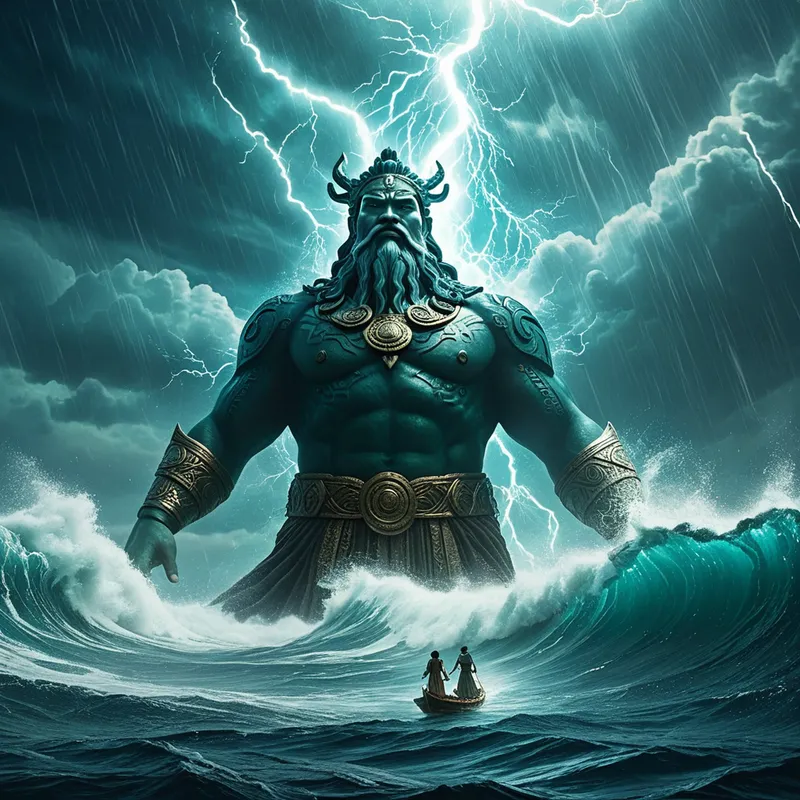
In the time before time, there was no up or down, no here or there. There was only the endless, breathless embrace of Kaptan, the Sky, and [Maguayan](/myths/maguayan “Myth from Filipino culture.”/), the Sea. Their love was not gentle, but absolute—a crushing unity where cloud was indistinguishable from foam, where thunder was the same as the tide’s roar. The world was a single, churning entity of grey mist and deep blue pressure, with no space for anything else to be.
Within that seamless whole, a tension grew. Kaptan, vast and luminous, yearned to stretch his winds, to send his lightning coursing through unbounded heights. Maguayan, deep and profound, felt the urge to plunge to abyssal quietudes, to hold mysteries in her dark, still depths. But their embrace permitted neither. Each movement of the sky was stifled by the weight of the sea; each surge of the sea was contained by the press of the sky. Love had become a prison of totality.
The tension became a grumble, the grumble a roar. From the heart of Kaptan, a fury of thwarted potential coalesced—a storm of such magnificent rage it crystallized into a being: [Lihangin](/myths/lihangin “Myth from Filipino culture.”/), the Wind. From the depths of Maguayan’s constrained passions, an equal and opposite force arose—a tempest of swirling currents that took form as Lidagat, the Sea-Wind. These were not separate children, but the very essence of their parents’ conflict given voice and will.
Lihangin, born of sky’s complaint, hurled himself against the watery firmament. Lidagat, born of the sea’s lament, rose in colossal whirlpools to meet him. Their meeting was not a battle of strangers, but a furious dialogue of separation. The Wind shrieked, tearing at the seamless blue-grey veil. The Sea-Wind howled, heaving vast mountains of water upward.
And then, the cataclysm. Kaptan, witnessing his own rage made manifest, unleashed his full might. A spear of lightning, brighter than creation, lanced from his brow. It did not strike Maguayan, but the space between them, where their children clashed. The thunderclap that followed was the first sound of distinction. It was a word of terrible power: ENOUGH.
The blast of divine force did not destroy, but divided. It pushed the Sky upward, with a great sigh of releasing pressure. It pressed the Sea downward, with a profound, echoing groan. And in the vast, new, empty space between them—a space born of sacred violence—something miraculous appeared: Lupa. The Land. Solid, brown, and quiet. It was the child of their separation, the necessary buffer born from the end of the primal embrace.
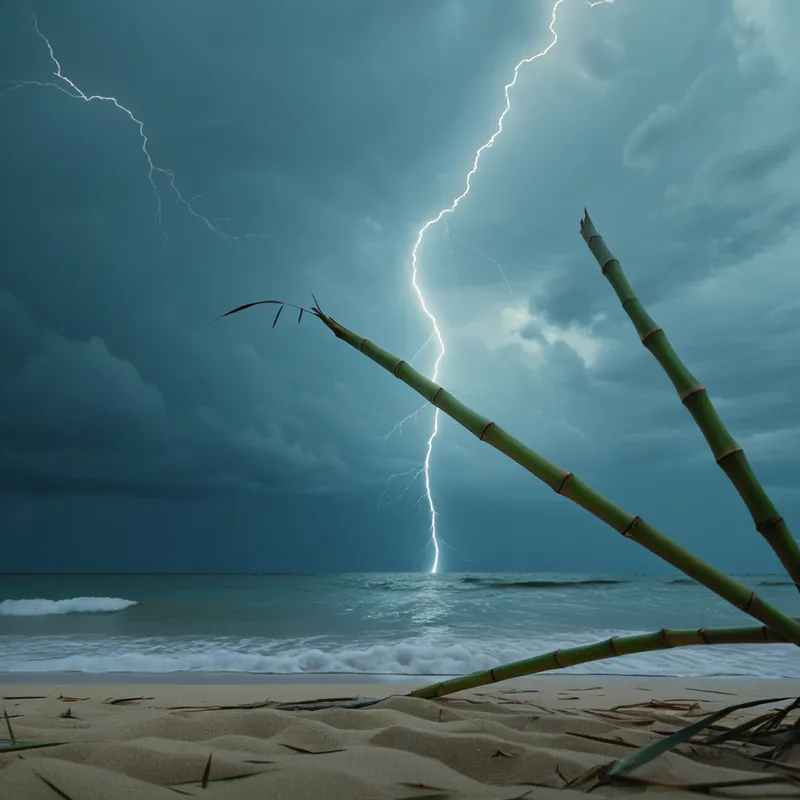
Exhausted, the elements settled into a new relationship. Kaptan hung, luminous and storm-touched, in his domain. Maguayan rested, deep and rhythmic, in hers. And upon the new land, where the first river met the first shore, a single bamboo stalk grew. From the sky, a final, gentler bolt of lightning struck it, cleaving it open. And from its halved body emerged Malakas and Maganda, looking in wonder at the world their parents’ battle had made possible—a world of space, of difference, of life.
Cultural Origins & Context
This creation myth, central to the Visayan peoples, belongs to the rich, pre-colonial oral tradition of the Philippine archipelago. It was not written in texts but carried in the memories of the babaylan and the stories told by generations around fires. Its function was profound: it explained the origin of the world not from nothingness, but from a pre-existing, relational chaos. It established a cosmic order where humans are literally born from the reconciliation of opposing elemental forces, making them children of both sky and sea, destined to live on the land that resulted from their strife.
The myth served as a foundational narrative, justifying the human condition—we live in a world of distinctions (day/night, land/sea, male/female) because a primordial unity was necessarily broken. It also modeled a form of conflict that is not annihilation but creation, a concept vital to communities navigating complex social and environmental relationships.
Symbolic Architecture
At its [heart](/symbols/heart “Symbol: The heart symbolizes love, emotion, and the core of one’s existence, representing deep connections with others and self.”/), this is not a myth of good versus evil, but of [differentiation](/symbols/differentiation “Symbol: The process of distinguishing or separating parts of the self, emotions, or identity from a whole, often marking a developmental or psychological milestone.”/) versus [fusion](/symbols/fusion “Symbol: The merging of separate elements into a unified whole, often representing integration of self, relationships, or conflicting aspects of identity.”/). The Sky and Sea represent two primordial, complementary principles in a state of undifferentiated oneness. This state, while seemingly perfect, is sterile. Nothing new can emerge from total unity.
The first act of creation is not love, but a sacred rupture. Consciousness itself is born from the courage to distinguish self from other, idea from instinct, sky from sea.
The battle, then, symbolizes the necessary and traumatic process of individuation at a cosmic scale. Lihangin and Lidagat personify the active, erupting energies that force this [separation](/symbols/separation “Symbol: A spiritual or mythic division between realms, states of being, or consciousness, often marking a transition or loss of connection.”/)—they are the archetypal forces of change and differentiation that arise when a [system](/symbols/system “Symbol: A system represents structure, organization, and interrelated components functioning together, often reflecting personal or social order.”/) (whether cosmic, psychological, or social) can no longer contain its own opposing potentials. The resulting Land (Lupa) is the tertium non datur, the third thing, the conscious ego or the lived [reality](/symbols/reality “Symbol: Reality signifies the state of existence and perception, often reflecting one’s understanding of truth and life experiences.”/) that emerges from reconciling opposites. It is the ground of being where [life](/symbols/life “Symbol: The symbol of ‘Life’ represents a journey of growth, interconnectedness, and existential meaning, encompassing both the joys and challenges that define human experience.”/), in all its complexity, becomes possible.
The Dreamer’s Resonance
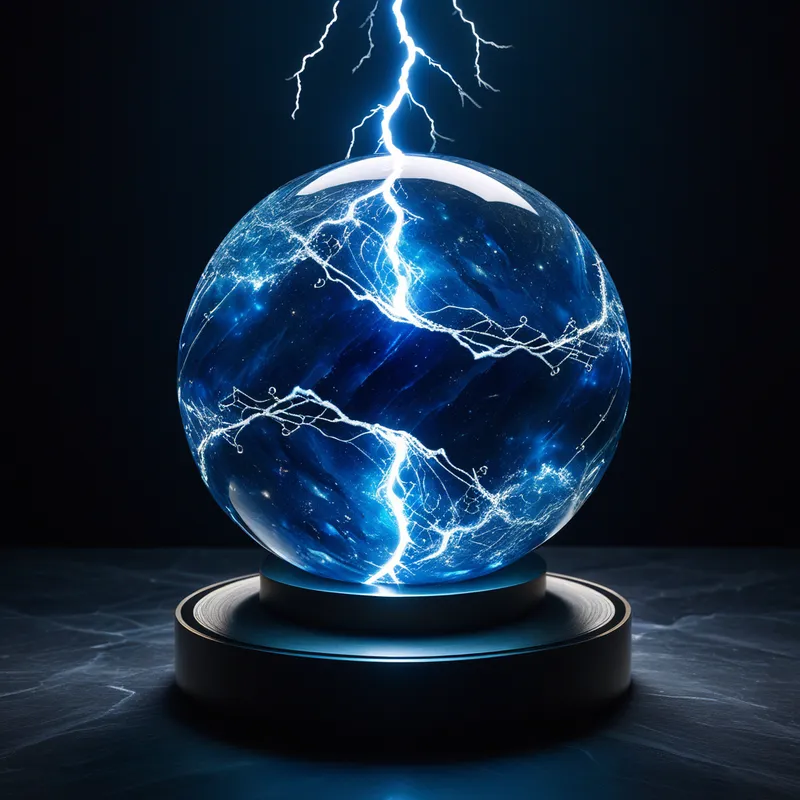
When this myth stirs in the modern psyche, it often manifests in dreams of immense, impersonal pressures. One may dream of being crushed between two vast, loving but suffocating forces, or of being in a fog where everything is sameness, yearning for a form. It can appear as a dream of a titanic, wordless argument between two parental or authority figures whose conflict somehow creates a space for the dreamer.
Somatically, this can feel like a tension headache, a tightness in the chest, or a feeling of being stuck. Psychologically, it signals a process where two fundamental parts of the self—perhaps the spiritual aspiration (Sky) and the emotional, unconscious depths (Sea)—are in a deadlock. The dream is the psyche’s enactment of the necessary “battle” to separate these fused elements, to create an inner “land”—a space for conscious identity and choice to exist between them.
Alchemical Translation
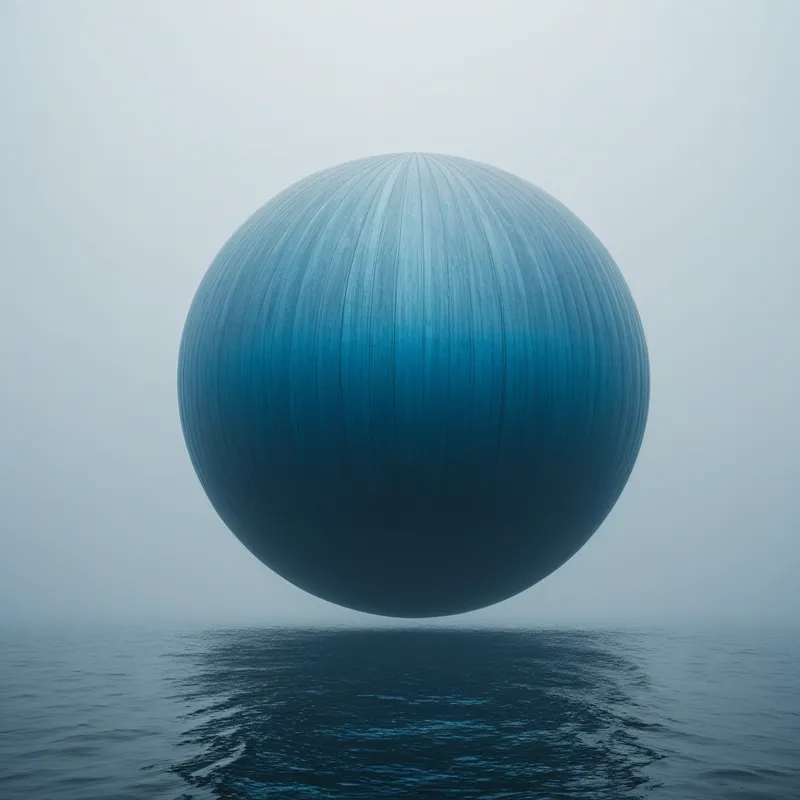
For the individual, the alchemy of this myth maps the journey from unconscious enmeshment to conscious individuality. We all begin in a psychic “sea and sky” embrace—identified with our family systems, cultural norms, or internalized complexes. Individuation requires the lightning bolt of self-awareness to strike, forcing a separation.
The goal is not to vanquish the sea or abandon the sky, but to endure the storm of their separation until the solid ground of the Self is revealed.
This process is the “Battle.” It is the difficult, often painful work of differentiating: “This is my mother’s expectation, and this is my own desire.” “This is my fear (the deep Sea), and this is my ambition (the high Sky).” The conflict feels catastrophic, but its purpose is creation. The “Land” that emerges is the integrated ego, capable of holding tensions without collapsing. The “bamboo” that grows on this new land is the resilient structure of the individual life, and the “humans” within are the nascent, authentic identities ready to inhabit their own world. The myth teaches that our very existence as conscious beings is the product of a courageous, cosmic conflict, and that to become whole, we must not fear the necessary storms within.
Associated Symbols
Explore related symbols from the CaleaDream lexicon:
- Sky — Represents the principle of spirit, consciousness, height, aspiration, and the father-world; its separation from the Sea is the first act of defining a psychic orientation.
- Ocean — Symbolizes the primordial, unconscious, emotional, and maternal depths; its pressing unity with the Sky represents the undifferentiated state of the psyche before individuation.
- Battle — The necessary, archetypal conflict that forces differentiation and creates a new space for existence; it is not destruction but a formative struggle.
- Thunder — The shocking, clarifying force of revelation or consciousness (Kaptan’s lightning) that breaks apart stuck patterns and creates decisive change.
- Earth — The Lupa, or Land, symbolizing the conscious ego, reality, and the tangible world that is born as the “child” or result of reconciling opposing forces.
- Separation — The core action of the myth, representing the psychologically essential process of distinguishing self from other, inner from outer, and one archetype from another.
- Bridge — The mediating function, like the first land, that emerges to connect and separate two opposing realms, allowing passage and relationship where there was only fusion.
- Order — The cosmic and psychological state achieved after the battle, where distinct elements have their proper place, creating a universe where life and meaning are possible.
- Chaos — The original state of Sky and Sea’s embrace; not evil, but a potent, undifferentiated totality that must be structured for creation to occur.
- Creation — The ultimate purpose and result of the battle; the bringing forth of a new, complex reality (the world, humanity) from primal simplicity through conflict.