The Bard/Scop Myth Meaning & Symbolism
The myth of the sacred poet who navigates the worlds of gods and men, shaping reality with words and retrieving lost wisdom from the underworld.
The Tale of The Bard/Scop
Listen. The fire is low, the night is deep, and [the wind](/myths/the-wind “Myth from Various culture.”/) carries the voices of the old ones. I will tell you of the one who walks between. Not a king, nor a warrior, though he has stood with both. He is the keeper of the breath that shapes [the world](/myths/the-world “Myth from Tarot culture.”/).
In the hall of the high king, where mead flows and boasts are made, a silence fell. It was a silence that crept from the corners, a cold draft that snuffed the torches one by one. The king’s name, the lineage of his fathers, the deeds that built his throne—they were fading, like frost on a morning pane. The warriors felt it in their bones; a forgetting was upon the land. The stories were unspooling, and without the thread of memory, the tapestry of the tribe would become mere rags.
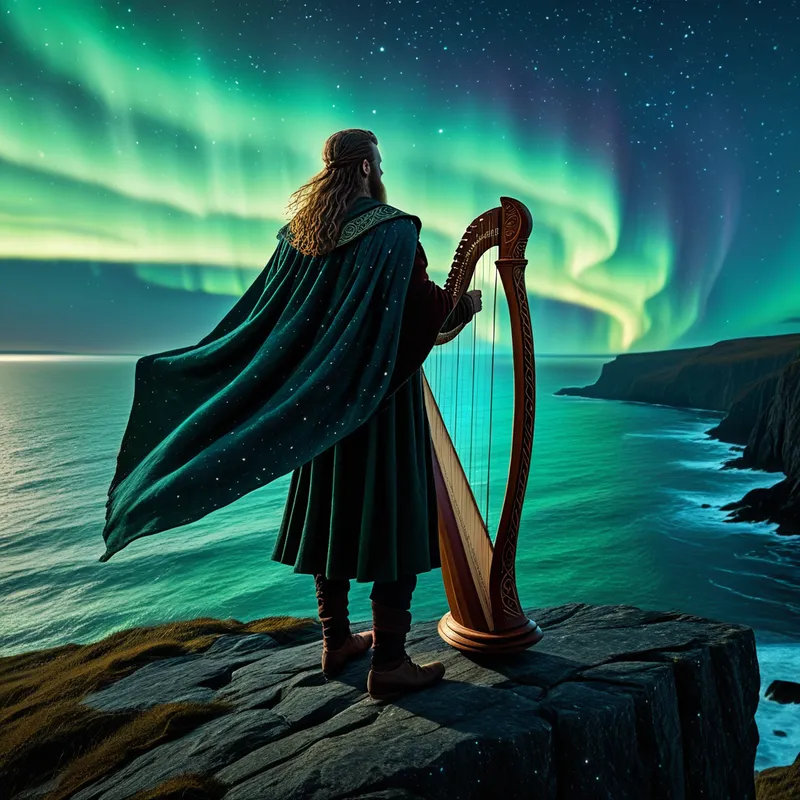
From the shadows of the hall, a figure stirred. He carried no sword, but a cruit, its wood dark with age and touch. This was Fili, the seer-poet. He did not speak to the silence; he sang into it. His voice was not loud, but it was deep, a river sound under [the earth](/myths/the-earth “Myth from Hindu culture.”/). He sang of the king’s grandfather, of the stone he lifted that no other could, of the oath sworn on the [lia fáil](/myths/lia-fil “Myth from Celtic culture.”/). As he sang, the torches guttered back to life, not with a roar, but with a steady, remembering flame. The names returned, heavy and real.
But this was only the beginning. The true forgetting, he knew, was not in the hall, but in the dark below. The deepest song, the one that held the pattern of the world, was fractured. A piece of it had fallen into the [Sídhe](/myths/sdhe “Myth from Celtic / Irish culture.”/), the realm behind [the veil](/myths/the-veil “Myth from Various culture.”/), where time flows like a wayward stream. To mend the song, he had to go where no living man should: into [the hollow hills](/myths/the-hollow-hills “Myth from Celtic culture.”/).
Guided by a melody only he could hear, a lament in a minor key, he found the entrance—a mossy cleft in an ancient oak, leading down. The air grew thick and sweet with the scent of damp earth and eternal twilight. He descended into [Niflheim](/myths/niflheim “Myth from Norse culture.”/), though the Celts would call it the belly of the goddess. Here, the shadows had weight. Phantoms of forgotten battles whispered, and the ghosts of stories half-told brushed against him like cobwebs.
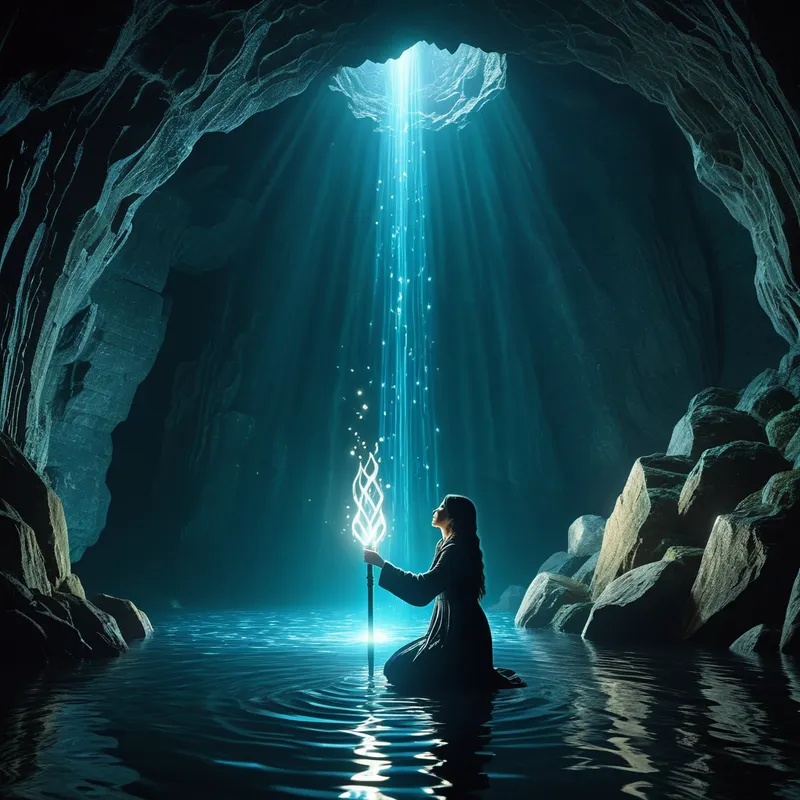
At the heart of [the underworld](/myths/the-underworld “Myth from Greek culture.”/), he found not a monster, but a well. The Well of Urðr, though its waters here sang with a Gaelic tune. In its depths swirled the lost fragment of the song—a shining, sorrowful note. But the well was guarded by its own silence, a pressure that sought to crush thought itself. To take the note was to drink the darkness that held it.
The Fili did not reach with his hand. He knelt and offered the only [thing](/myths/thing “Myth from Norse culture.”/) he had: his own song. He sang of the world above—of the bitter wind on the cliff, the taste of salt, the ache of love, the warmth of the sun that he might never feel again. He poured his mortal memory into the well. For three days and nights, his voice grew hoarse, then thin, then clear as a bell. His song became a bridge.
And the well answered. The shining note rose from the depths, not to his hand, but to his lips. He did not capture it; he married it. The lost fragment wove into his own lament, making it whole, making it new. The silence shattered like ice. He ascended, not by climbing, but by the pull of the mended melody, emerging not from the oak, but from the king’s own hearth, his clothes smelling of woodsmoke, not grave-mould.
He sat by the fire, and the new song, the complete song, fell from him. It told of kings and worms, of love and loss, of the bright world and the necessary dark. It held the memory of the forgetting within it. And those who heard it felt not just remembrance, but understanding. They felt the pattern. [The bard](/myths/the-bard “Myth from Celtic culture.”/) had not stolen from the [underworld](/myths/underworld “Myth from Greek culture.”/); he had treated with it. He had brought back the price of wisdom: the acknowledgment of the dark within the light.
Cultural Origins & Context
The figure of the bard, or the scop in Anglo-Saxon tradition, was not mere entertainment. In the pre-literate societies of the Norse and Celtic worlds, the poet was the living library, the legal scholar, the genealogist, and the spiritual intermediary. In Ireland, the Fili underwent rigorous training for up to twelve years, memorizing vast tracts of history, law, and complex poetic forms. Their words had íarmberla, a posterior power that could satirize a king into exile or heal the land.
In Norse culture, the skald’s art was a gift from the gods, most often from Óðinn himself, who had sacrificed an eye at [Mímisbrunnr](/myths/mmisbrunnr “Myth from Norse culture.”/) for a drink of its waters. Poetry was the “mead of the gods,” a potent, intoxicating force that could immortalize a warrior’s deeds, bind oaths, or shape perception. The bard’s role was thus one of supreme responsibility: to craft the narrative reality of the clan, to anchor the present in the past, and to offer the only form of immortality available—fame, spoken down the generations.
Symbolic Architecture
At its core, the [Bard](/symbols/bard “Symbol: Bards represent the power of storytelling, music, and the transmission of culture and history.”/)’s myth is about the [psyche](/myths/psyche “Myth from Greek culture.”/)’s need to integrate [memory](/symbols/memory “Symbol: Memory symbolizes the past, lessons learned, and the narratives we construct about our identities.”/) and the unconscious to create a coherent Self. The [bard](/symbols/bard “Symbol: Bards represent the power of storytelling, music, and the transmission of culture and history.”/) is [the ego](/myths/the-ego “Myth from Jungian culture.”/)-function dedicated to meaning-making. The “forgetting” in the [king](/symbols/king “Symbol: A symbol of ultimate authority, leadership, and societal order, often representing the dreamer’s inner power or external control figures.”/)’s hall represents a state of psychic disconnection, where [consciousness](/symbols/consciousness “Symbol: Consciousness represents the state of awareness and perception, encompassing thoughts, feelings, and experiences.”/) is cut off from its foundational myths and ancestral wisdom—a state of collective neurosis.
The journey to the underworld is not an escape from life, but a descent into the source of life. The forgotten song is the repressed content, the complex, the trauma, or the innate potential that consciousness has rejected.
The Well of Urðr symbolizes the deep unconscious, the [matrix](/symbols/matrix “Symbol: A dream symbol representing the fundamental structure of reality, consciousness, or the self. It often signifies feelings of being trapped, controlled, or questioning the nature of existence.”/) where personal and collective memories (the [collective unconscious](/symbols/collective-unconscious “Symbol: The Collective Unconscious refers to the part of the unconscious mind shared among beings of the same species, embodying universal experiences and archetypes.”/)) pool. The bard does not battle the [guardian](/symbols/guardian “Symbol: A protector figure representing safety, authority, and guidance, often embodying parental, societal, or spiritual oversight.”/); he sings to it. This is the critical symbolic [action](/symbols/action “Symbol: Action in dreams represents the drive for agency, motivation, and the ability to take control of situations in waking life.”/): engagement through creative [expression](/symbols/expression “Symbol: Expression represents the act of conveying thoughts, emotions, and individuality, emphasizing personal communication and creativity.”/). He offers his conscious experience—his differentiated feelings and perceptions—as a libidinal [payment](/symbols/payment “Symbol: Symbolizes exchange, obligation, and value. Represents what one gives to receive something in return, often tied to fairness, debt, or spiritual balance.”/) to the unconscious. The retrieval is not a theft, but a sacred exchange, a coniunctio that produces a third, transcendent thing: the mended song, which is the newly integrated psychic content.
The Dreamer’s Resonance
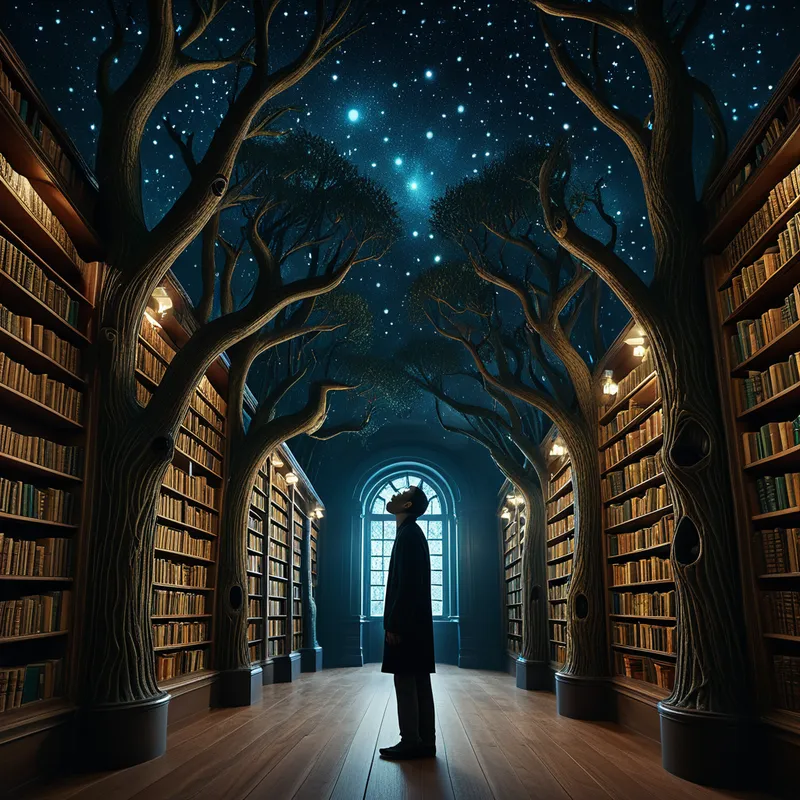
When this myth stirs in the modern dreamer, it often manifests as dreams of forgotten rooms, lost libraries, or searching for a specific, crucial piece of information or melody. There may be a somatic sense of a “knot” in the chest or throat—the unsung song. One might dream of trying to speak but producing only silence, or of hearing a beautiful, haunting tune just out of reach.
Psychologically, this indicates a process of reclaiming personal history and authentic voice. The “underworld” in the dream is the dreamer’s own shadowland—repressed memories, unprocessed grief, or disowned talents. The dream ego’s attempt to find the “lost fragment” is the psyche’s innate movement toward wholeness. The anxiety in the dream mirrors the resistance of the conscious mind to this deep, often painful, retrieval. The dream is an invitation to do what the bard did: to approach the darkness not with analysis alone, but with the offering of one’s own felt experience—to “sing” to the pain, to journal the memory, to creatively engage with the inner silence.
Alchemical Translation
The alchemical process mirrored here is [solutio](/myths/solutio “Myth from Alchemical culture.”/) (dissolution) followed by coagulatio (coagulation). The bard’s conscious identity (his known songs) is dissolved in the waters of the unconscious (the well). He loses himself in the engagement. This is the necessary death of the old, rigid ego-structure.
The new song that emerges is the lapis philosophorum, the philosopher’s stone of the psyche—not a static object, but a living, creative function that can transmute base experience into golden meaning.
For the modern individual, the myth models the path of individuation. Our “king’s hall” is the [persona](/myths/persona “Myth from Greek culture.”/), the adapted self that risks forgetting its deeper origins. The call to descend is the call of depression, creative block, or existential crisis—a signal that the psyche demands a deeper narrative. The work is to voluntarily go into that inner darkness, not to fight it, but to listen and to offer our own truth in return. The “mended song” we bring back is our unique perspective, our authentic voice, which integrates both our personal history and the archetypal patterns we share with humanity. We become the bard of our own soul, weaving the [threads of fate](/myths/threads-of-fate “Myth from Greek culture.”/)—our choices, our wounds, our joys—into a tale that is coherent, meaningful, and resilient enough to withstand the silences that inevitably come. We learn that our story must include the chapter of the descent, for that is where the missing notes are always found.
Associated Symbols
Explore related symbols from the CaleaDream lexicon: