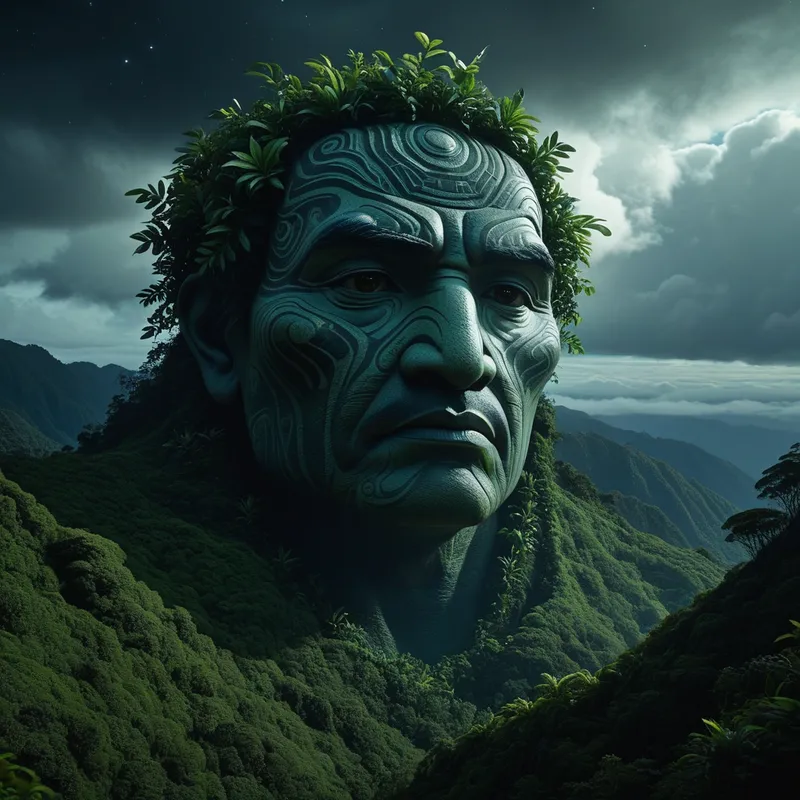
The Atua Gods of Maori Myth Meaning & Symbolism
A cosmic story of primal parents, whose forced separation births the world, establishing the sacred order of life, death, and human connection to all things.
The Tale of The Atua Gods of Maori
In the beginning, there was Te Kore, the Nothingness, a deep and potent potential. From this void came Te Pō, the Night, long and without measure. And from the Night, the great parents emerged: Ranginui, the Sky Father, and Papatūānuku, the Earth Mother.
They lay in a tight, loving embrace. Their union was so complete that no light existed between them. Their children, the first of the atua, were born into and lived within this cramped, dark world, curled between the bodies of their parents. They knew only the sound of each other's breath, the press of warm flesh, and the profound darkness of a world not yet born.
But the children grew restless. Tāne-mahuta, who would become the god of forests and birds, yearned for space to stand tall. Tangaroa felt the call of open waters. Rongo-mā-Tāne dreamed of soil where kumara might grow. Tūmatauenga stirred with a fierce energy that had no outlet. The darkness, once a womb, became a prison.
A council was held in the gloom. Whispers passed between the brothers. "We must separate them," one said. "We must let in the light," said another. One by one, they tried. Tāwhirimātea, the god of winds, hurled himself against the clasp of his parents, but could not break it. Tangaroa pushed with the force of tides, but to no avail. Tūmatauenga, in his warlike fury, attacked the bond, but even he could not sever it.
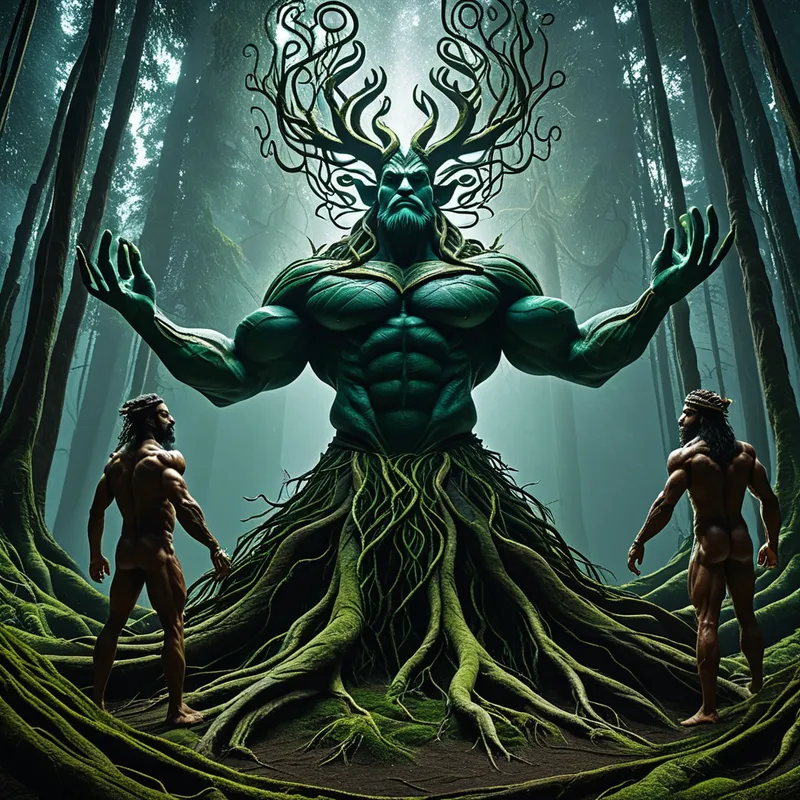
Then Tāne-mahuta rose. Instead of pushing sideways, he planted his feet firmly upon the chest of his mother, Papatūānuku. He placed his strong shoulders against the vast back of his father, Ranginui. With a groan that echoed through the primal substance of the universe, he began to push. He pushed not with rage, but with a steady, inexorable force of growth, like a great tree striving for the sun. Muscles like mighty roots and branches strained. The air grew thick with effort.
A sliver of light appeared. Then a crack. A cry of anguish tore from Ranginui and Papatūānuku as their eternal embrace was broken. Tāne pushed and pushed, until his father was forced high into the heavens, and his mother lay spread out below. Te Ao Mārama, the World of Light, flooded into being. The children blinked in the dazzling brightness, seeing each other and the world for the first time.
But the cost was written in the cosmos. Ranginui wept, and his tears became the rain that falls to kiss his beloved. Papatūānuku’s sighs became the morning mists that rise to embrace him. Their eternal grief is the weather of the world. And Tāwhirimātea, who had opposed the separation, fled to the sky with his father. In his wrath, he sends storms and hurricanes to punish his brothers below, a perpetual conflict born from that first, necessary, and tragic act of creation.
Cultural Origins & Context
This narrative, known as the whakapapa of the cosmos, is the foundational myth of Māori culture. It was not merely a story but a sacred genealogy, recited by tohunga (priests and experts) during rituals, at the birth of children, and at the opening of important meetings. Its primary function was to establish order—tikanga—and explain humanity’s place within it.
Through oral tradition, passed down with meticulous precision across generations, this myth encoded the entire Māori worldview. It explained natural phenomena (rain is Rangi’s tears), established the divine origin and therefore the sacredness of the natural world (forests are Tāne’s domain, the sea is Tangaroa’s), and defined social roles and conflicts (the strife between Tāwhirimātea and his brothers mirrors tribal conflicts). To recite the whakapapa was to affirm one’s connection to the land (Papatūānuku), the ancestors, and the gods themselves. It was a map of reality, a legal charter, and a spiritual compass all in one.
Symbolic Architecture
At its heart, this is a myth of the necessary trauma of consciousness. The primal unity of Sky and Earth represents the unconscious, undifferentiated state—the blissful, dark womb where all potentials are one and there is no separation between self and other, idea and action.
The birth of the individual psyche requires a separation from the primal unity, an act that is both creative and profoundly sorrowful.
The children, the atua, symbolize the emerging faculties of the conscious mind: Tāne is creativity, growth, and upright striving; Tūmatauenga is will, aggression, and differentiation; Tangaroa is the realm of emotion and the unconscious depths; Rongo is sustenance, peace, and community. Their imprisonment is the frustration of unlived potential. Tāne’s act is the ego’s heroic, yet guilty, assertion of itself—standing upright (differentiation) to create a world where these faculties can operate (consciousness). The resulting grief of the parents is the eternal human longing for a lost wholeness, a paradise we ourselves destroyed to become who we are.
The Dreamer's Resonance
When this myth pattern stirs in the modern dreamer, it often manifests as somatic experiences of constriction or profound, melancholic longing. You may dream of being trapped in a dark, enclosed space—a room shrinking, a hug that suffocates. This is the psyche feeling the pressure of an old, unified state that no longer serves your growth. The call is to push.
Conversely, dreams of causing a great sadness or betrayal by leaving, by succeeding, or by speaking your truth directly mirror Tāne’s dilemma. The dream ego may be flooded with guilt even as it performs a necessary act of self-assertion. The stormy emotions of a Tāwhirimātea figure—a raging parent, a furious partner in the dream—represent the internalized backlash against your own development, the part of you that clings to the old, dark comfort and resents the light of new awareness.
Alchemical Translation
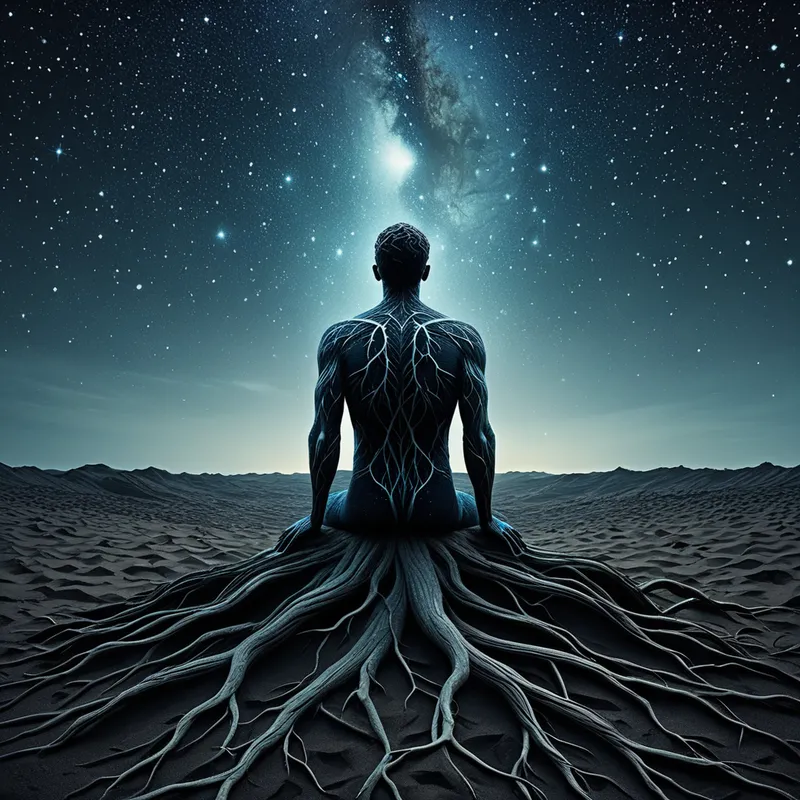
The psychic transmutation modeled here is the foundational act of individuation: the separation of the ego from the unconscious matrix. We all begin psychologically fused—with family, with cultural norms, with internalized complexes. To live our own lives, we must perform Tāne’s push.
This is not a violent rebellion, but a steady, growth-oriented force. One plants their feet on the solid ground of their own reality (the Earth Mother, the body, the personal unconscious) and pushes against the vast, overarching expectations and structures (the Sky Father, the collective, the parental complex). The resulting “world of light” is individual consciousness—the space where we can finally see ourselves and our possibilities.
The alchemical gold is not a return to the embrace, but the ability to bear the sacred tension of the separated state—to feel the rain of grief and know it as the ongoing conversation between the self we have become and the wholeness we came from.
The myth teaches that the process is never clean. The grief (Rangi’s tears) and the inner conflict (Tāwhirimātea’s storms) are permanent features of the individuated landscape. Healing comes not from ending the weather, but from understanding it as the enduring love-song between the differentiated self and the cosmic source from which it sprang. We honor both the push and the pull, the light and the longing.
Associated Symbols
Explore related symbols from the CaleaDream lexicon:
- Sky — Represents the father principle, consciousness, overarching order, and the distant, yearning aspect of the divine that we strive toward.
- Earth — Represents the mother principle, the unconscious, the grounded body, and the nurturing source from which all life and growth emerges.
- Separation — The core traumatic and creative act of the myth, symbolizing the birth of individuality, consciousness, and the space necessary for life to exist.
- Forest — The domain of Tāne, symbolizing growth, upright striving, and the creative force that mediates between earth and sky, unconscious and conscious.
- Rain — The tears of Ranginui, symbolizing the eternal grief of separation and the ongoing, nourishing connection between the separated realms.
- Storm — The wrath of Tāwhirimātea, representing the chaotic, emotional backlash that follows differentiation and the inevitable conflict between old and new orders.
- Light — Te Ao Mārama, the World of Light, symbolizing consciousness, awareness, knowledge, and the revealed world born from the act of separation.
- Darkness — Te Pō, the primal night and the close embrace, symbolizing the unconscious, potential, unity, and the womb-state before individuation.
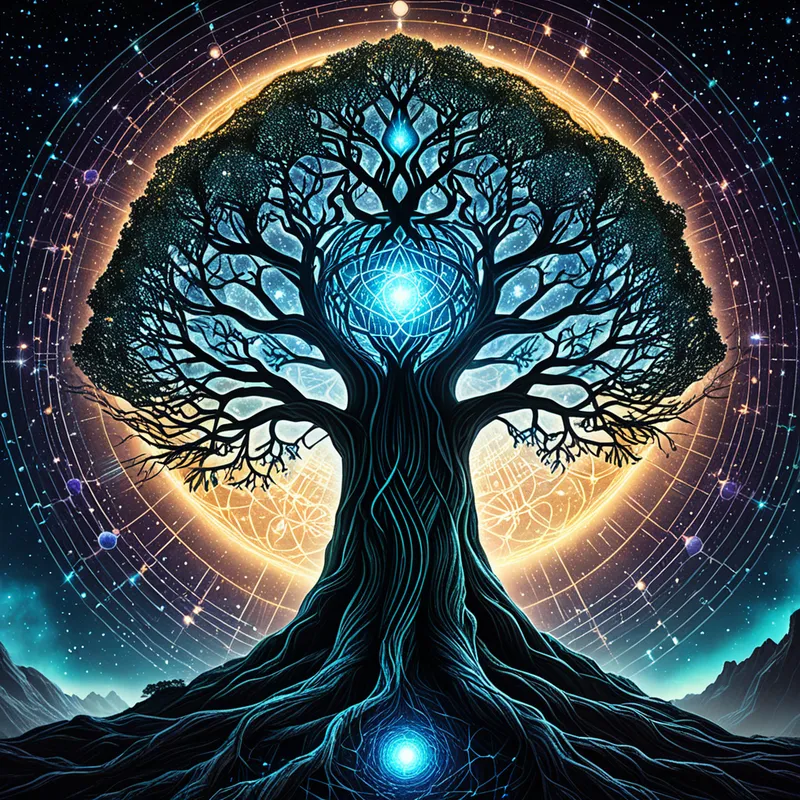
- Tree — Embodies Tāne’s method; its roots in the earth and branches in the sky make it the perfect symbol for the entity that connects and separates the primal parents.
- Mountain — Like Tāne, it stands upright, a child of the earth that touches the sky, representing the aspiration that bridges the separated realms.
- Grief — The fundamental emotional weather of the created world, signifying the cost of consciousness and the enduring love that persists across separation.
- Order — The establishment of tikanga, the sacred law and correct way of things that arises from the new arrangement of light and space.