
The Argonauts & Iolcus Myth Meaning & Symbolism
A usurped prince must reclaim his throne by retrieving a sacred relic, assembling a legendary crew for a perilous voyage into the unknown.
The Tale of The Argonauts & Iolcus
Hear now the tale of a kingdom stolen, a throne usurped, and a voyage that would carve its name into the very stars. In the sun-baked land of Iolcus, a shadow fell. The rightful king, Aeson, was overthrown by his own half-brother, the ruthless Pelias. Fearful of prophecy, Pelias let the infant heir, [Jason](/myths/jason “Myth from Greek culture.”/), live, but sent him far away to be raised by the wise centaur Chiron.
Years later, a man wearing a single sandal strode into the marketplace of Iolcus. It was Jason, come to claim his birthright. Pelias, seeing the fulfillment of the oracle’s warning, smiled a serpent’s smile. “You shall have the throne,” he said, his voice slick with false promise. “But first, bring me the [Golden Fleece](/myths/golden-fleece “Myth from Greek culture.”/). It hangs in the far-off land of Colchis, guarded by a dragon that never sleeps. Perform this glory, and all of Iolcus is yours.”
Thus, the great labor was set. Jason called upon the finest heroes of the age—[Heracles](/myths/heracles “Myth from Greek culture.”/), the divine musician [Orpheus](/myths/orpheus “Myth from Global/Universal culture.”/), the swift Zetes, and the keen-eyed Atalanta. The goddess Athena herself breathed spirit into the timber of a mighty ship, the Argo, which spoke with a prophetic voice.
Their voyage was a map of marvels and terrors. They wept on the island of Lemnos, fought [the harpies](/myths/the-harpies “Myth from Greek culture.”/) that tormented the blind seer Phineus, and dared the Symplegades, the clashing rocks that roared like thunder and sought to grind their ship to splinters. With a dove’s flight and a desperate surge of oars, they passed through, the rocks locking forever behind them, sealing their path forward and back.
In Colchis, under the gaze of the ruthless King Aeëtes, Jason’s quest seemed impossible. But here, destiny wore a different face: [Medea](/myths/medea “Myth from Greek culture.”/), the king’s daughter, a priestess of [Hecate](/myths/hecate “Myth from Greek culture.”/). Struck by Aphrodite’s arrow, she chose [the stranger](/myths/the-stranger “Myth from Biblical culture.”/) over her father. With her potent arts, she gave Jason the charms to yoke fire-breathing oxen, sow dragon’s teeth that sprouted into armed warriors, and lull the sleepless guardian dragon into a deep, enchanted slumber.
The Fleece, shimmering like captured sunlight, was theirs. But their escape was a darker mirror of the voyage out—pursued by Aeëtes’ fleet, stained by Medea’s horrific betrayal of her own brother. They returned to Iolcus, the Fleece a blazing testament. But the throne, won by such tangled means, was no seat of peace. The story ends not with a coronation, but with the slow, tragic unraveling of all that was gained, a reminder that the return is often the hardest voyage of all.

Cultural Origins & Context
The myth of [the Argonauts](/myths/the-argonauts “Myth from Greek culture.”/) is one of the oldest and most layered in the Greek tradition, predating even [the Trojan War](/myths/the-trojan-war “Myth from Greek culture.”/) in the mythological timeline. Its primary literary source is the Argonautica of Apollonius of Rhodes, a Hellenistic epic from the 3rd century BCE, but the story’s roots are far more ancient, woven from pre-Greek folktales of quests for magical objects and early heroic saga.
This was a story told and retold, a foundational narrative of the Greek worldview. It functioned as a mythic charter for exploration and colonization, mapping the dangerous yet alluring shores of the Black Sea (the [Pontus](/myths/pontus “Myth from Greek culture.”/) Euxinus) onto the consciousness of the Greek world. The Argo was the prototype of all Greek ships, and her crew, a pan-Hellenic roster of heroes from different city-states, modeled a rare moment of unity for a common, glorious goal. The myth served to explain historical contacts, legitimize distant settlements, and explore the psychological and moral complexities of encountering the radically “Other.”
Symbolic Architecture
At its [heart](/symbols/heart “Symbol: The heart symbolizes love, emotion, and the core of one’s existence, representing deep connections with others and self.”/), the voyage of [the Argo](/myths/the-argo “Myth from Greek culture.”/) is not merely a geographical [expedition](/symbols/expedition “Symbol: A purposeful journey into the unknown, representing exploration of the unconscious, life transitions, or quests for meaning.”/) but a [journey](/symbols/journey “Symbol: A journey in dreams typically signifies adventure, growth, or a significant life transition.”/) into the [depths](/symbols/depths “Symbol: Represents the subconscious, hidden emotions, or foundational aspects of the self, often linked to primal fears or profound truths.”/) of the [psyche](/myths/psyche “Myth from Greek culture.”/). The Argo itself is a [symbol](/symbols/symbol “Symbol: A symbol can represent an idea, concept, or belief, serving as a powerful tool for communication and understanding.”/) of the nascent, integrated Self—a [vessel](/symbols/vessel “Symbol: A container or structure that holds, transports, or protects something essential, representing the self, emotions, or life journey.”/) built with the aid of divine wisdom (Athena) to carry a fragmented [company](/symbols/company “Symbol: Company in dreams often represents social connections, support systems, and the dynamics of relationships in one’s waking life.”/) of potentials (the heroes) through the chaotic waters of the unconscious.
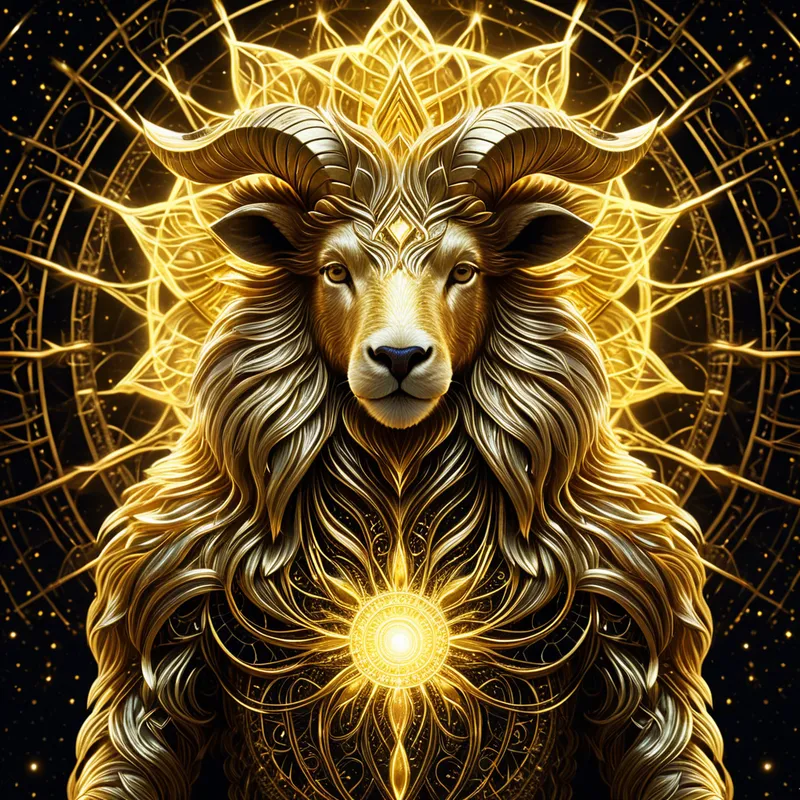
The quest is never for the object, but for the wholeness the object promises. The Fleece is a symbol of legitimate authority, but also of the integrated, radiant Self that feels forever out of reach.
Jason is an unusual [hero](/symbols/hero “Symbol: A hero embodies strength, courage, and the ability to overcome significant challenges.”/); he is not defined by supreme [strength](/symbols/strength “Symbol: ‘Strength’ symbolizes resilience, courage, and the ability to overcome challenges.”/) or divine [wrath](/symbols/wrath “Symbol: Intense, often destructive anger representing repressed emotions, moral outrage, or survival instincts.”/), but by his [ability](/symbols/ability “Symbol: In dreams, ‘ability’ often denotes a recognition of skills or potential that one possesses, whether acknowledged or suppressed.”/) to gather, to persuade, to rely on others. His is the heroism of [the ego](/myths/the-ego “Myth from Jungian culture.”/), tasked with an impossible mandate from a corrupt [authority](/symbols/authority “Symbol: A symbol representing power structures, rules, and control, often reflecting one’s relationship with societal or personal governance.”/) (the usurper Pelias, representing a flawed parental or societal complex). The Fleece represents the stolen birthright—one’s authentic [life](/symbols/life “Symbol: The symbol of ‘Life’ represents a journey of growth, interconnectedness, and existential meaning, encompassing both the joys and challenges that define human experience.”/) and [purpose](/symbols/purpose “Symbol: Purpose signifies direction, meaning, and intention in life, often reflecting personal ambitions and core values.”/)—that can only be retrieved by venturing into the farthest, most unconscious realms (Colchis).
Medea is the pivotal archetypal force. She is the embodiment of the transformative, instinctual, and often terrifying power of the unconscious—the [anima](/symbols/anima “Symbol: The feminine archetype within the male unconscious, representing soul, creativity, and connection to the inner world.”/) in its most potent form. She is the necessary guide and the inevitable price. Her magic enables the [triumph](/myths/triumph “Myth from Roman culture.”/), but her [presence](/symbols/presence “Symbol: Presence in dreams often signifies awareness or acknowledgment of something significant in one’s life.”/) ensures the [quest](/symbols/quest “Symbol: A quest symbolizes a journey or search for purpose, fulfillment, or knowledge, often representing life’s challenges and adventures.”/)’s victory is morally ambiguous, stained with [betrayal](/symbols/betrayal “Symbol: A profound violation of trust in artistic or musical contexts, often representing broken creative partnerships or artistic integrity compromised.”/). She represents the fact that reclaiming one’s [destiny](/symbols/destiny “Symbol: A predetermined course of events or ultimate purpose, often linked to spiritual forces or cosmic order, representing life’s inherent direction.”/) often requires a ruthless, primal [energy](/symbols/energy “Symbol: Energy symbolizes vitality, motivation, and the drive that fuels actions and ambitions.”/) that civilized [consciousness](/symbols/consciousness “Symbol: Consciousness represents the state of awareness and perception, encompassing thoughts, feelings, and experiences.”/) finds difficult to integrate.
The Dreamer’s Resonance
When the pattern of the Argonaut myth stirs in modern dreams, it signals a profound psychic mobilization. To dream of assembling a disparate crew suggests the ego is recognizing it cannot proceed alone; various inner capacities (strength, intuition, artistry, speed) must be recruited for a coming life-task.
Dreaming of a perilous sea voyage, especially through narrow, crushing straits ([the Symplegades](/myths/the-symplegades “Myth from Greek culture.”/)), often correlates with a somatic feeling of constriction and anxiety—a life passage where one feels tested to the limit, forced to navigate between impossible pressures. The dream of finding a magical object (the Fleece) in a guarded, distant place points to a deep yearning for a sense of authentic value and purpose that feels locked away by internal or external dragons—often patterns of fear, inertia, or old authority figures.
Most telling are dreams of a powerful, enchanting, yet potentially destructive helper (Medea). This figure manifests when the dreamer’s conscious attitude is too rigid or logical to achieve a goal, and the unconscious sends up a figure of raw, cunning, emotional power to break the deadlock. The dreamer may awaken with both awe and unease, sensing a necessary but destabilizing force has been activated within.

Alchemical Translation
The myth models the alchemical process of individuation with stark clarity. The initial state is one of [nigredo](/myths/nigredo “Myth from Alchemical culture.”/)—the blackening. Iolcus under Pelias is the psyche in a state of usurpation, where a false ruling principle (a complex, a [persona](/myths/persona “Myth from Greek culture.”/)) holds sway, and the true king ([the Self](/myths/the-self “Myth from Jungian culture.”/)) is in exile.
The call to quest is the beginning of albedo, the whitening, the arduous work of differentiation. Building the Argo is constructing a coherent consciousness capable of undertaking the journey. The voyage itself, with its succession of trials, is the confrontation with shadow elements—the seductions (Lemnos), the persecuting, harpy-like thoughts (Phineus), and the crushing, binary oppositions of life (the Symplegades).
The dragon is not slain, but enchanted. The ultimate treasure is not taken by force, but received through a pact with the deep, instinctual soul.
Colchis represents the [rubedo](/myths/rubedo “Myth from Alchemical culture.”/), the reddening, [the crucible](/myths/the-crucible “Myth from Alchemical culture.”/) of transformation. Here, the hero cannot succeed by ego alone. He must surrender to and partner with the profound, magical, and non-rational feminine principle (Medea, the [prima materia](/myths/prima-materia “Myth from Alchemical culture.”/) of the soul). The yoking of the fire-breathing oxen and the sowing of [the dragon](/myths/the-dragon “Myth from Chinese culture.”/)’s teeth are classic alchemical images for mastering fierce, primal energies and generating new life from conflict.
The retrieval of [the Golden Fleece](/myths/the-golden-fleece “Myth from Greek culture.”/) is the creation of the [lapis philosophorum](/myths/lapis-philosophorum “Myth from Alchemical culture.”/), the golden, integrated Self. But the myth, in its profound wisdom, does not end there. The bloody return and tragic aftermath illustrate the final, most difficult phase: integration. The golden prize, won in the unconscious, must be brought back and reconciled with the conscious world, a process often fraught with collateral damage and lasting consequence. The myth tells us that wholeness is not a peaceful state, but a dynamic, often painful, responsibility.
Associated Symbols
Explore related symbols from the CaleaDream lexicon: