The Argonauts Myth Meaning & Symbolism
Jason gathers Greece's greatest heroes to sail for the Golden Fleece, a perilous quest of destiny, betrayal, and the soul's impossible prize.
The Tale of The Argonauts
Hear now the tale of the first ship, the first crew, and the first impossible dream that drew heroes from every corner of the known world. It begins not with a man, but with a throne stolen. In Iolcus, a usurper king, Pelias, sat uneasy, for an oracle had warned him of a man with one sandal. And so he came, from the wild mountains, a stranger with a single shoe lost in a river’s ford. This was [Jason](/myths/jason “Myth from Greek culture.”/), rightful heir, come to claim his birthright.
But Pelias was cunning. “You shall have your kingdom,” he said, his voice slick as oil, “when you bring me that which lies in the land of Colchis, at [the world](/myths/the-world “Myth from Tarot culture.”/)’s end. Bring me [the Golden Fleece](/myths/the-golden-fleece “Myth from Greek culture.”/).” All knew the Fleece: the skin of a flying ram, hung in a sacred grove, guarded by a dragon that never slept. A quest for a fool, a death sentence for a man. Yet Jason, with the fire of the gods in his eyes, accepted.
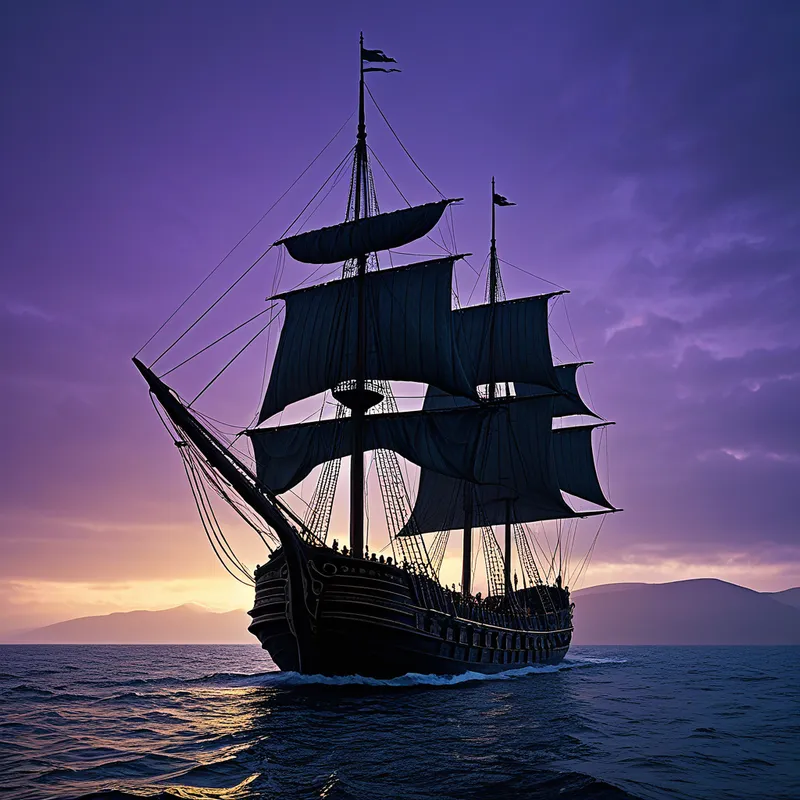
The call went out, carried by [Hermes](/myths/hermes “Myth from Global/Universal culture.”/) himself. They came: [Heracles](/myths/heracles “Myth from Greek culture.”/), the strongest who ever lived; [Orpheus](/myths/orpheus “Myth from Global/Universal culture.”/), whose music could soften the heart of [Hades](/myths/hades “Myth from Greek culture.”/); Atalanta, swift as an arrow; the winged sons of the North Wind; and dozens more, each a legend. Under the watchful eye of Athena, the shipwright Argus built the Argo, its prow hewn from the talking oak of Dodona, so [the vessel](/myths/the-vessel “Myth from Alchemical culture.”/) itself could prophesy and warn.
They sailed into the [Pontus](/myths/pontus “Myth from Greek culture.”/) Axeinos, a sea of terrors. On the island of Lemnos, they found a kingdom of women who had murdered their men. In the Symplegades, the Clashing Rocks, they released a dove and rowed for their lives as stone jaws snapped behind them, sealing the passage forever. They wept for young Hylas, stolen by [nymphs](/myths/nymphs “Myth from Greek culture.”/), and were forced to sail on without Heracles. They fought [the harpies](/myths/the-harpies “Myth from Greek culture.”/), those winged hags of foulness, and the bronze giant [Talos](/myths/talos “Myth from Greek culture.”/), whose single vein of [ichor](/myths/ichor “Myth from Greek culture.”/) was pierced by [Medea](/myths/medea “Myth from Greek culture.”/)’s cunning.
And in Colchis, at the court of the ruthless King Aeëtes, Jason faced his ultimate trial. The king set him to yoke fire-breathing bulls, sow a field with dragon’s teeth, and fight the armed men who sprang from [the earth](/myths/the-earth “Myth from Hindu culture.”/). It was here that destiny took the form of a sorceress. Medea, daughter of Aeëtes, pierced by Eros’s arrow, pledged her soul to [the stranger](/myths/the-stranger “Myth from Biblical culture.”/). With her potions, Jason was made invincible; with her spells, he put the sleepless dragon into a trance.
In the dead of night, they crept to the grove of Ares. The Fleece hung, a shimmering cascade of gold in the darkness, its light catching [the mist](/myths/the-mist “Myth from Celtic culture.”/) of [the dragon](/myths/the-dragon “Myth from Chinese culture.”/)’s breath. Jason reached out, pulled it from the tree, and its weight was the weight of a kingdom, of a curse, of a future yet unwritten. They fled, with Medea’s butchered brother scattered in their wake to delay her father’s pursuit, the Argo flying homeward on a tide of blood and magic.

Cultural Origins & Context
The saga of the Argonauts is one of the oldest and most pervasive cycles in Greek mythology, predating even [the Trojan War](/myths/the-trojan-war “Myth from Greek culture.”/) in the epic imagination. Its primary literary sources are the Argonautica of Apollonius of Rhodes (3rd century BCE) and later references in Pindar, Euripides, and others. However, the tale’s roots are far older, woven from pre-Homeric oral traditions, local hero cults, and folktales of magical quests.
The story functioned as a foundational “national” epic for the Greeks, a mythic map of the known and imagined world. The voyage of the Argo catalogued the perils of the Black Sea coast, translating very real dangers of early exploration—hostile tribes, strange customs, treacherous geography—into the language of monsters and gods. It served to define Greek heroic identity, showcasing a [pantheon](/myths/pantheon “Myth from Roman culture.”/) of regional heroes united in a single, culture-defining endeavor. Furthermore, it was a tale of colonization and contact, with the Fleece representing the ultimate prize of distant lands: wealth, knowledge, and the terrifying, enchanting “other” embodied by Medea.
Symbolic Architecture
At its core, the Argonautica is not merely an [adventure](/symbols/adventure “Symbol: ‘Adventure’ signifies exploration, discovery, and the pursuit of new experiences in one’s life journey.”/), but a profound [allegory](/symbols/allegory “Symbol: A narrative device where characters, events, or settings represent abstract ideas or moral qualities, conveying deeper meanings through symbolic storytelling.”/) for the [soul](/symbols/soul “Symbol: The soul represents the essence of a person, encompassing their spirit, identity, and connection to the universe.”/)’s [journey](/symbols/journey “Symbol: A journey in dreams typically signifies adventure, growth, or a significant life transition.”/) toward wholeness. The [Golden Fleece](/myths/golden-fleece “Myth from Greek culture.”/) is the ultimate [symbol](/symbols/symbol “Symbol: A symbol can represent an idea, concept, or belief, serving as a powerful tool for communication and understanding.”/) of the unattained Self, the luminous, seemingly external prize that is, in [truth](/symbols/truth “Symbol: Truth represents authenticity, honesty, and the quest for knowledge beyond mere appearances.”/), an internal state of [integration](/symbols/integration “Symbol: The process of unifying disparate parts of the self or experience into a cohesive whole, often representing psychological wholeness or resolution of internal conflict.”/) and sovereignty.
The quest is always for the golden core of one’s own being, which is guarded by the very chaos one must integrate.
The [crew](/symbols/crew “Symbol: A crew often symbolizes collaboration, teamwork, and collective purpose, suggesting a need for shared goals and support from others in one’s journey.”/) of the Argo represents the fragmented [psyche](/myths/psyche “Myth from Greek culture.”/). Heracles is raw instinct and [strength](/symbols/strength “Symbol: ‘Strength’ symbolizes resilience, courage, and the ability to overcome challenges.”/); Orpheus is the transcendent power of art and [connection](/symbols/connection “Symbol: Connection symbolizes relationships, communication, and bonds among individuals.”/) to the [underworld](/symbols/underworld “Symbol: A symbolic journey into the unconscious, representing exploration of hidden aspects of self, transformation, or confronting repressed material.”/); Atalanta is the [anima](/symbols/anima “Symbol: The feminine archetype within the male unconscious, representing soul, creativity, and connection to the inner world.”/), the feminine [spirit](/symbols/spirit “Symbol: Spirit symbolizes the essence of life, vitality, and the spiritual journey of the individual.”/) of independence and wildness within the masculine [quest](/symbols/quest “Symbol: A quest symbolizes a journey or search for purpose, fulfillment, or knowledge, often representing life’s challenges and adventures.”/). Jason, the somewhat passive [leader](/symbols/leader “Symbol: A leader signifies authority, responsibility, and guidance; representing aspirations for achievement or fear of following.”/), is the conscious ego, reliant on these inner powers (and the divine aid of Medea/Hecate) to succeed. The [loss](/symbols/loss “Symbol: Loss often symbolizes change, grief, and transformation in dreams, representing the emotional or psychological detachment from something or someone significant.”/) of Hylas and Heracles signifies the necessary sacrifices of youthful [innocence](/symbols/innocence “Symbol: A state of purity, naivety, and freedom from guilt or corruption, often associated with childhood and moral simplicity.”/) and brute force for the specialized, refined journey ahead.
Medea is the myth’s most complex symbol: she is the transformative power of the deep unconscious, the “sorcery” of the soul that can achieve the impossible. She is the [shadow](/symbols/shadow “Symbol: The ‘shadow’ embodies the unconscious, repressed aspects of the self and often represents fears or hidden emotions.”/) that enables the light, the ruthless, magical intelligence without which the conscious ego cannot secure its prize. Her subsequent tragedy in Corinth reveals the peril of failing to integrate this power, of using it for gain and then rejecting it.
The Dreamer’s Resonance
When the Argonaut myth stirs in the modern dreamscape, it signals a profound call to adventure from [the Self](/myths/the-self “Myth from Jungian culture.”/). To dream of assembling a disparate crew suggests a gathering of one’s inner resources—talents, instincts, forgotten strengths—for a coming life challenge. The ship, the Argo, is the vessel of the personality setting out into the unknown waters of the unconscious.
Dreams of being stuck between clashing rocks (Symplegades) mirror feelings of being caught in an impossible, crushing dilemma, where timing and courage are everything. A dream of a glowing object in a guarded forest points directly to the Fleece: a core value, a true vocation, or a state of inner peace that feels tantalizingly close yet protected by a “dragon”—often one’s own fear, addiction, or entrenched pattern. The somatic experience is often one of anxious anticipation, a tightness in the chest (the guarded grove) coupled with a pull of longing (the golden light).
Alchemical Translation
The alchemical journey of the Argonauts is a perfect model for Jung’s process of individuation. The initial state is one of usurpation (Pelias): [the ego](/myths/the-ego “Myth from Jungian culture.”/) is ruled by a complex, a false king that promises security but denies one’s true sovereignty.
The call to quest is the Self’s insistent demand for wholeness. Building the Argo is the coniunctio, the conscious construction of a vessel (the strengthened personality) capable of containing the journey. The voyage itself is the [nigredo](/myths/nigredo “Myth from Alchemical culture.”/), the blackening: confronting [the shadow](/myths/the-shadow “Myth from Jungian culture.”/) in its many forms—the destructive feminine (Lemnos), the crushing pressures of life (Symplegades), the loss of youthful ideals (Hylas).
The Fleece is not won by force, but by enchantment; the dragon of resistance is not slain, but put to sleep. Integration, not annihilation, is the goal.
Medea’s intervention represents the transformative albedo, the whitening. Her magic is the irrational, intuitive function that solves the unsolvable tasks set by the tyrannical father/king complex (Aeëtes). Securing the Fleece is the [rubedo](/myths/rubedo “Myth from Alchemical culture.”/), the reddening or attainment of the philosopher’s stone—a moment of supreme integration. Yet the return voyage, stained with betrayal (the murder of Apsyrtus), signifies that the integrated Self must now be brought back into the world of relationships and consequences, a process often messy and fraught. The myth thus maps the entire arc: from fragmented ego, through perilous confrontation with the unconscious, to the hard-won prize of a more complete Self.
Associated Symbols
Explore related symbols from the CaleaDream lexicon: