The Akedah Binding of Isaac
A foundational Hebrew story where God tests Abraham's faith by commanding him to sacrifice his son Isaac, exploring themes of obedience, divine providence, and covenant.
The Tale of The Akedah Binding of Isaac
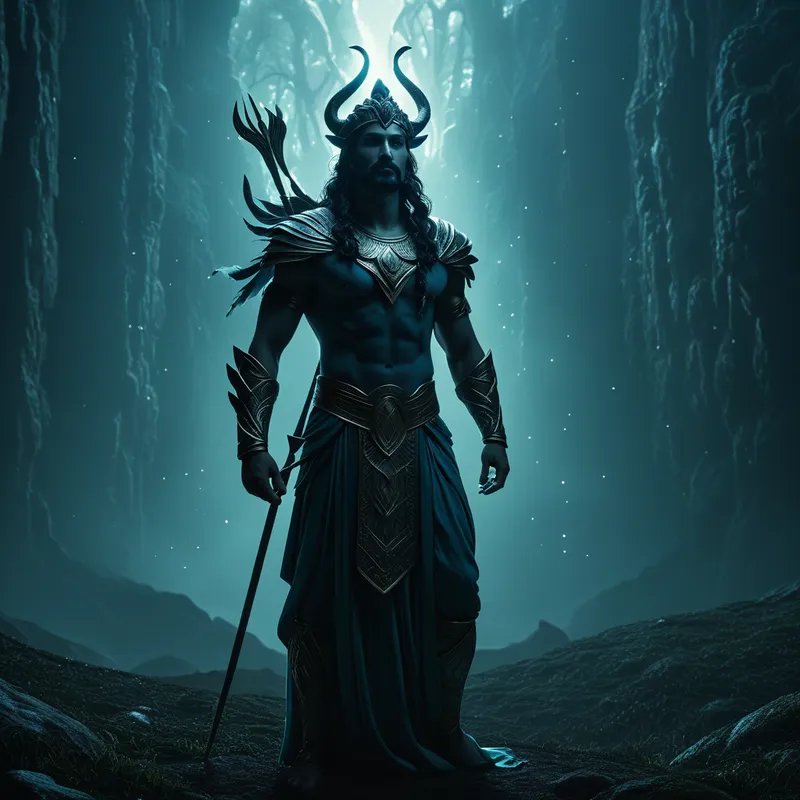
The silence that followed the divine command was a universe unto itself. It filled the space between [Abraham](/myths/abraham “Myth from Abrahamic culture.”/)’s heartbeats, a cold, absolute void where the laughter of his promised son, [Isaac](/myths/isaac “Myth from Biblical culture.”/), had once echoed. “Take your son, your only son Isaac, whom you love, and go to the land of Moriah, and offer him there as a [burnt offering](/myths/burnt-offering “Myth from Biblical culture.”/) on one of the mountains that I shall show you.” The words did not thunder; they settled like a fine, suffocating dust upon the soul of the patriarch. This was the God of the [covenant](/myths/covenant “Myth from Christian culture.”/), the one who had sworn by Himself to make [Abraham](/myths/abraham “Myth from Abrahamic culture.”/)’s descendants as numerous as the stars. And now, He demanded the singular star of that future be extinguished.
Abraham did not debate. In the pre-dawn gloom, he saddled his donkey, split wood for the offering, and with two young men and his son Isaac, began the three-day journey. We can only imagine the topography of that pilgrimage: the external path winding toward the mountain, and the internal, shattered landscape Abraham traversed in silence. Isaac, carrying the firewood on his own back, finally gave voice to the unbearable question hanging in the air. “My father! … Behold, the fire and the wood, but where is the lamb for a burnt offering?” Abraham’s reply is a masterpiece of tragic faith, a truth wrapped in a terrible hope: “God will provide for himself the lamb for a burnt offering, my son.”
They arrived. Abraham built an [altar](/myths/altar “Myth from Christian culture.”/), arranged the wood, and then—the moment that has echoed for millennia—he bound his son, the Akedah, the binding. He laid him upon the wood. The knife was in his hand, raised against [the sky](/myths/the-sky “Myth from Persian culture.”/), a sliver of metal poised to sever the covenant itself. In that suspended instant, the entire cosmic order held its breath. Then, the voice of the angel of the Lord called from heaven: “Abraham, Abraham! … Do not lay your hand on the boy or do anything to him, for now I know that you fear God, seeing you have not withheld your son, your only son, from me.”
Abraham looked up. There, caught in a thicket by its horns, was a ram. A substitute. He offered the ram instead of his son. And the voice spoke again, swearing by His own self to multiply Abraham’s offspring, to bestow blessing, all because of this obedience. They descended the mountain together, father and son. But the text holds a profound silence about their conversation on [the way](/myths/the-way “Myth from Taoist culture.”/) down. Some silences are louder than words.
Cultural Origins & Context
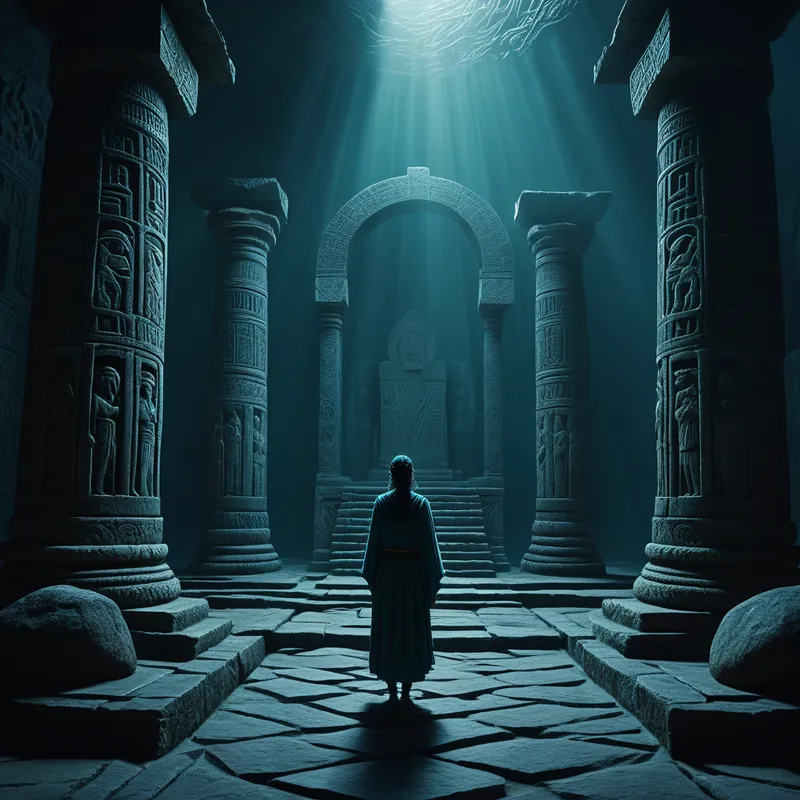
The Akedah is recorded in Genesis 22, a [cornerstone](/myths/cornerstone “Myth from Biblical culture.”/) of the Torah. Its placement is critical: it follows the long-awaited birth of Isaac to [Sarah](/myths/sarah “Myth from Biblical/Apocryphal culture.”/) in their old age, the fulfillment of God’s promise, and precedes the narrative of Sarah’s [death](/myths/death “Myth from Tarot culture.”/). It sits at the precipice of generational transition, testing not just a man’s faith but the very mechanism of the covenant’s continuation.
Scholars situate the story within a ancient Near Eastern world where child sacrifice, particularly to gods like Molech, was a known, if horrific, ritual practice. The Akedah can be read as a powerful, revolutionary polemic against this norm. The God of Israel, the story declares, does not ultimately desire human sacrifice. He provides a substitute. This establishes a profound theological boundary, differentiating Yahweh from the capricious deities of surrounding cultures. Furthermore, the story serves to legitimize the later Israelite practice of animal sacrifice as a divinely ordained substitution, with the ram standing in for the firstborn son.
Within the Hebrew canon, the Akedah becomes a foundational [reference](/myths/reference “Myth from Global/Universal culture.”/) point for understanding the nature of faith (emunah)—a faith that is not mere intellectual assent but a terrifying, active surrender to a divine will that seems to contradict its own promises. It is the ultimate test of the covenant, proving Abraham’s worthiness as the patriarch and securing the destiny of his lineage.
Symbolic Architecture
The myth is a masterpiece of symbolic compression. Every element is a [node](/symbols/node “Symbol: A point of connection, intersection, or decision in a network, representing junctions in life paths, relationships, or systems.”/) of immense psychological and spiritual [tension](/symbols/tension “Symbol: A state of mental or emotional strain, often manifesting physically as tightness, pressure, or unease, signaling unresolved conflict or anticipation.”/).
- Moriah: The “land of [vision](/symbols/vision “Symbol: Vision reflects perception, insight, and clarity — often signifying the ability to foresee or understand deeper truths.”/)” or “chosen by Yahweh.” It is not just a random [hill](/symbols/hill “Symbol: A hill represents challenges, progress, or obstacles in life’s journey, often symbolizing effort and perspective.”/); it is the place of divine [appointment](/symbols/appointment “Symbol: An appointment symbolizes commitments, schedules, and the importance of time management in personal and professional contexts.”/), the [theater](/symbols/theater “Symbol: The theater represents the performance of life, creativity, and the exploration of one’s inner self through roles and narratives.”/) where the [soul](/symbols/soul “Symbol: The soul represents the essence of a person, encompassing their spirit, identity, and connection to the universe.”/)’s deepest [drama](/symbols/drama “Symbol: Drama signifies narratives, emotional expression, and the exploration of human experiences.”/) is staged. Tradition later identifies it with the [Temple](/symbols/temple “Symbol: A temple often symbolizes spirituality, sanctuary, and a deep connection to the sacred aspects of life.”/) Mount in [Jerusalem](/myths/jerusalem “Myth from Biblical culture.”/), making it the [axis](/symbols/axis “Symbol: A central line or principle around which things revolve, representing stability, orientation, and the fundamental structure of reality or consciousness.”/) mundi, the center of [the world](/myths/the-world “Myth from Tarot culture.”/) where [heaven](/symbols/heaven “Symbol: A symbolic journey toward ultimate fulfillment, spiritual transcendence, or connection with the divine, often representing life’s highest aspirations.”/) and [earth](/symbols/earth “Symbol: The symbol of Earth often represents grounding, stability, and the physical realm, embodying a connection to nature and the innate support it provides.”/) meet—and are almost torn asunder.
- The Three-Day [Journey](/symbols/journey “Symbol: A journey in dreams typically signifies adventure, growth, or a significant life transition.”/): A universal [motif](/symbols/motif “Symbol: A recurring thematic element, pattern, or design in artistic or musical works, representing underlying ideas or emotional currents.”/) of descent, [incubation](/symbols/incubation “Symbol: A period of internal development, rest, or hidden growth before emergence, often associated with healing, creativity, or transformation.”/), and transformation. This is Abraham’s [journey](/symbols/journey “Symbol: A journey in dreams typically signifies adventure, growth, or a significant life transition.”/) into the [heart](/symbols/heart “Symbol: The heart symbolizes love, emotion, and the core of one’s existence, representing deep connections with others and self.”/) of darkness, a necessary [period](/symbols/period “Symbol: Periods in dreams can symbolize cyclical patterns, renewal, and the associated emotions of loss or change throughout life.”/) of [gestation](/symbols/gestation “Symbol: A period of development and preparation before a significant birth or emergence, symbolizing potential, transformation, and the journey toward manifestation.”/) for the horrific act he believes is required. It is the time between the command and its execution, where [faith](/symbols/faith “Symbol: A profound trust or belief in something beyond empirical proof, often tied to spiritual conviction or deep-seated confidence in people, ideas, or outcomes.”/) is lived in agonizing [suspense](/symbols/suspense “Symbol: A state of mental uncertainty or excitement about an outcome, often created through narrative tension in arts and music.”/).
- The Binding (Akedah): More than physical restraint, this is the binding of the will, of [destiny](/symbols/destiny “Symbol: A predetermined course of events or ultimate purpose, often linked to spiritual forces or cosmic order, representing life’s inherent direction.”/), of love to duty. Isaac is bound, but so is Abraham—bound by his [oath](/symbols/oath “Symbol: A solemn promise or vow, often invoking a higher power or sacred principle, binding individuals to specific actions or loyalties.”/), his [history](/symbols/history “Symbol: History in dreams often represents the dreamer’s past experiences, lessons learned, or unresolved issues that continue to influence their present.”/), his understanding of God. It is a ritualized [suspension](/symbols/suspension “Symbol: A state of being held in limbo, neither progressing nor regressing, often representing unresolved tension or transitional phases in life.”/) of natural law, where the [father](/symbols/father “Symbol: The father figure in dreams often symbolizes authority, protection, guidance, and the quest for approval or validation.”/) becomes [priest](/symbols/priest “Symbol: A priest symbolizes spirituality, guidance, and the quest for understanding the deeper meanings of life.”/) and executioner.
- The [Thicket](/symbols/thicket “Symbol: A thicket represents a natural enclosure, often symbolizing protection and the primal need for a safe haven.”/) & The Ram: The thicket is [chaos](/symbols/chaos “Symbol: In Arts & Music, chaos represents raw creative potential, uncontrolled expression, and the breakdown of order to forge new artistic forms.”/), the unpredictable undergrowth of [fate](/symbols/fate “Symbol: Fate represents the belief in predetermined outcomes, suggesting that some aspects of life are beyond human control.”/). The ram, caught by its horns—a [symbol](/symbols/symbol “Symbol: A symbol can represent an idea, concept, or belief, serving as a powerful tool for communication and understanding.”/) of power and dedication—emerges from this [chaos](/symbols/chaos “Symbol: In Arts & Music, chaos represents raw creative potential, uncontrolled expression, and the breakdown of order to forge new artistic forms.”/) as a divine provision. It represents the unexpected alternative, the archetypal substitute who takes the place of the beloved. It is grace interrupting the trajectory of law.
The knife raised is the human soul poised at the absolute limit of comprehension, where logic and love fail. The angel’s cry is the psyche’s own saving intervention, the Self halting the ego’s literalistic, devastating obedience to a misunderstood command.
Isaac carries the wood for his own sacrifice. This is the unbearable weight of the parental complex, the unconscious burden passed down that the child must bear, walking willingly toward a fate they do not yet understand.
The Dreamer’s Resonance
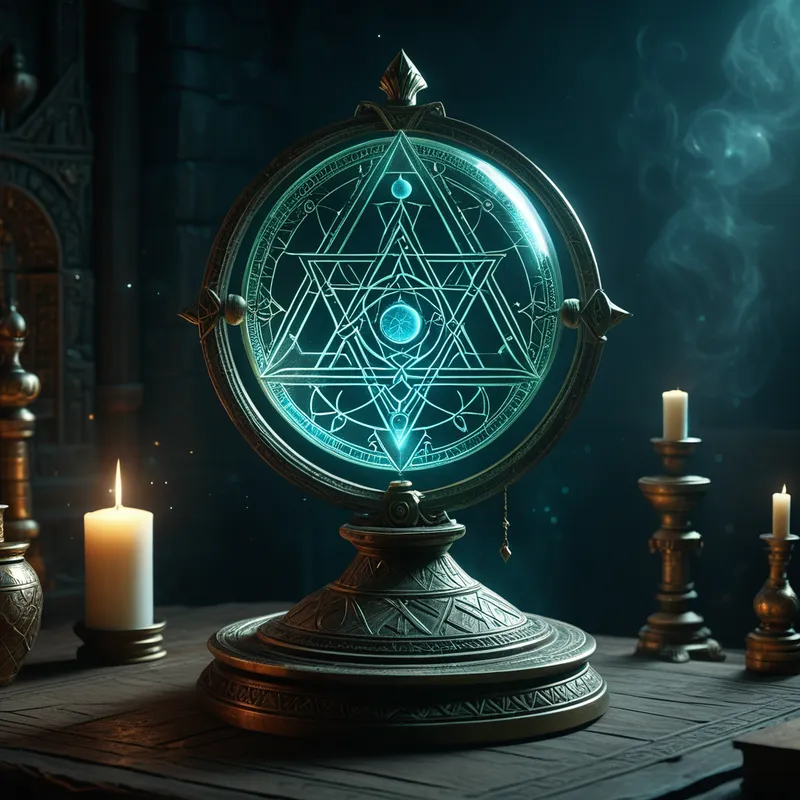
To encounter the Akedah in a dream is to touch the raw nerve of ultimate choice. It speaks to a moment in the dreamer’s life where two irreconcilable values are in mortal conflict. The “Isaac” in the dream may represent one’s cherished creation: a relationship, a career, a talent, a deeply held identity, or one’s own inner child. The “divine command” is the compelling, often ruthless, inner voice of what feels like destiny, duty, or a necessary sacrifice for a perceived higher order.
Are you Abraham, feeling compelled to destroy what you love most because an inner tyrant demands proof of loyalty? Or are you Isaac, trusting and ascending the mountain, unaware you are the offering? The dream asks: What am I being asked to sacrifice, and by whom? Is this voice truly divine, or is it the echo of a punitive superego, a cultural demand, or a fearful literalism? The binding is the feeling of being trapped in an impossible situation, paralyzed between love and a brutal imperative. The resolution—or lack thereof—in the dream points to the [psyche](/myths/psyche “Myth from Greek culture.”/)’s current capacity to find the “ram in the thicket,” the creative third way that spares the essential self while honoring the call to transformation.
Alchemical Translation
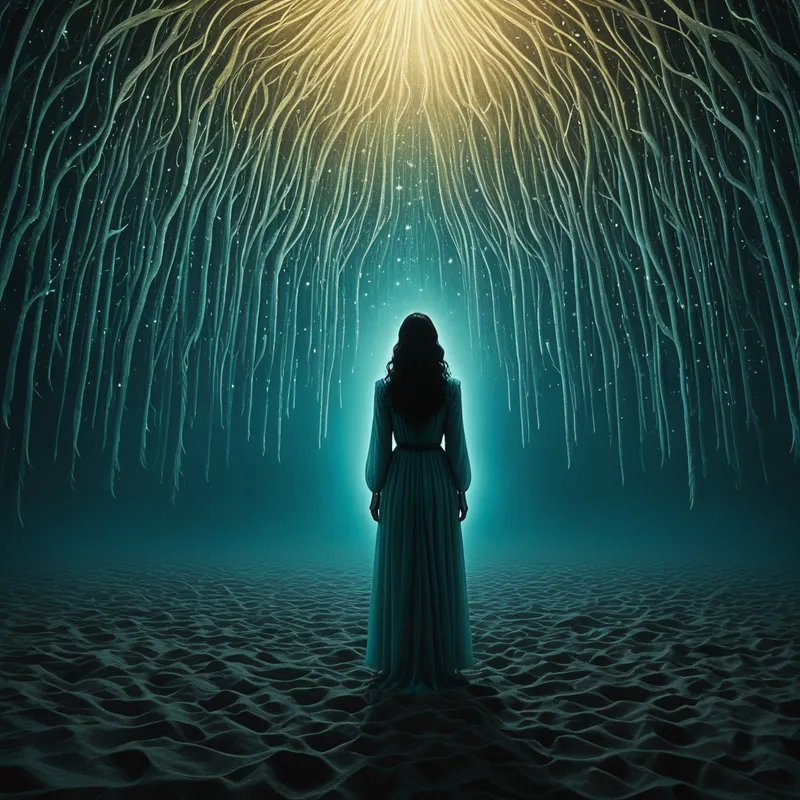
The Akedah is the alchemical [nigredo](/myths/nigredo “Myth from Alchemical culture.”/), the blackening, the supreme dissolution. [The prima materia](/myths/the-prima-materia “Myth from Alchemical culture.”/)—the loving father-son relationship, the promise of future life—is placed in [the crucible](/myths/the-crucible “Myth from Alchemical culture.”/) of an unthinkable command. All that Abraham knew of God, all that he hoped for, is burned away in the fire of this test. This is the mortificatio, the symbolic death where the old understanding of the covenant must die.
The raising of the knife is the peak of the [separatio](/myths/separatio “Myth from Alchemical culture.”/), the tearing apart of heart from heart, of promise from fulfillment. But in that very moment of absolute tension, the [coniunctio](/myths/coniunctio “Myth from Alchemical culture.”/)—[the sacred marriage](/myths/the-sacred-marriage “Myth from Various culture.”/)—occurs. Not between opposites in the psyche, but between human obedience and divine mercy. The divine intervenes not to cancel the test, but to complete it on a higher level. The ram is the lapis, the philosopher’s stone, the unexpected product of the ordeal. It is the realization that the true sacrifice God desires is not the literal death of the beloved, but the death of [the ego](/myths/the-ego “Myth from Jungian culture.”/)’s attachment, the surrender of the will. The “burnt offering” becomes the burning away of Abraham’s need to possess the promise, freeing it to exist as a gift, not a possession.
The story is not about a God who desires child sacrifice, but about the human psyche that believes He does. The alchemical gold produced is the revelation that the divine nature is ultimately providential, not predatory, but we must pass through the fire of believing otherwise to know it.
Isaac is spared, but he is not unchanged. He has seen the knife in his father’s hand. Every true initiation carries this shadow: the knowledge that one was brought to the brink of annihilation. The descent from the mountain is the integration of this shadow into life, carrying both the wound and the redemption.
Associated Symbols
Explore related symbols from the CaleaDream lexicon:
- Sacrifice — The surrender of something of great value to a higher power or purpose, often as a test of devotion or a catalyst for transformation.
- Knife — An instrument of severance, decision, and sacrifice, capable of cutting ties, making incisions into truth, or enacting a painful but necessary separation.
- Mountain — The sacred meeting place between heaven and earth, representing the arduous ascent toward revelation, trial, and ultimate perspective.
- Ram — The archetypal substitute and vessel of atonement, representing divine provision that emerges at the critical moment to take the place of the intended victim.
- Binding/Fetters ([Gleipnir](/myths/gleipnir “Myth from Norse culture.”/)) — The state of being restrained by oath, duty, or circumstance, a necessary constraint that paradoxically tests and defines the strength of what is bound.
- Father — The archetypal principle of law, structure, authority, and covenant, whose commands and blessings shape destiny and test loyalty.
- Child — The embodied promise of the future, innocence, potential, and that which is most vulnerable yet most cherished within us or our care.
- Faith — The active, often terrifying trust in an unseen order or promise, a commitment that proceeds even when all evidence and emotion seem to contradict it.
- Altar — The consecrated space of meeting and offering, where the profane is made sacred through ritual surrender and the elements of one’s life are placed before the divine.
- Starlit Sacrifice Site — A place of profound and lonely decision, illuminated by the cold, distant light of fate, where an ultimate offering is made under the watchful cosmos.