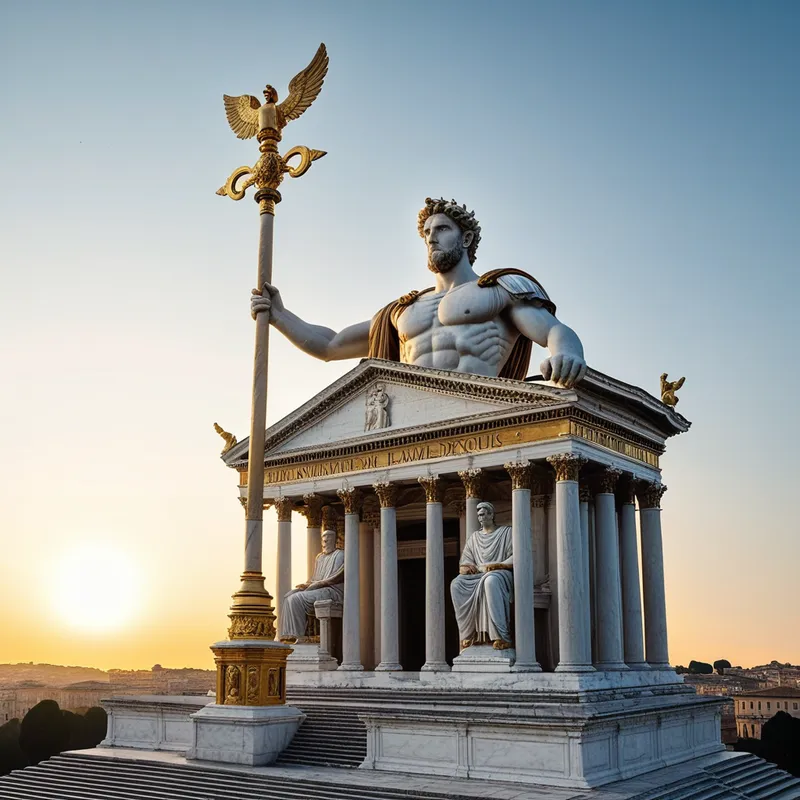
Temple of Jupiter Optimus Maximus Myth Meaning & Symbolism
The myth of Rome's central temple, a sacred pact between heaven and earth, establishing cosmic order and the soul of an empire.
The Tale of Temple of Jupiter Optimus Maximus
Hear now the tale not of a man, but of a stone. Not of a battle, but of a boundary. It begins in the breathless space between a vow and its fulfillment, in the heart of a city that was more an idea than a place.
The air on the Capitoline Hill was thick with the smell of turned earth and sacred herbs. Below, the fledgling Rome of kings churned—a tangle of huts and ambitions. But here, on this rocky summit, King Tarquinius Priscus stood with the augurs. Their eyes were not on the city, but on the empty sky above the hill, waiting for a sign. This was to be the templum in its truest sense: a space cut from the heavens, a rectangle of divine permission surveyed by the flight of birds. The king had vowed a house for Jupiter Optimus Maximus, a domicile so grand it would bind the god's favor to Rome for all eternity.
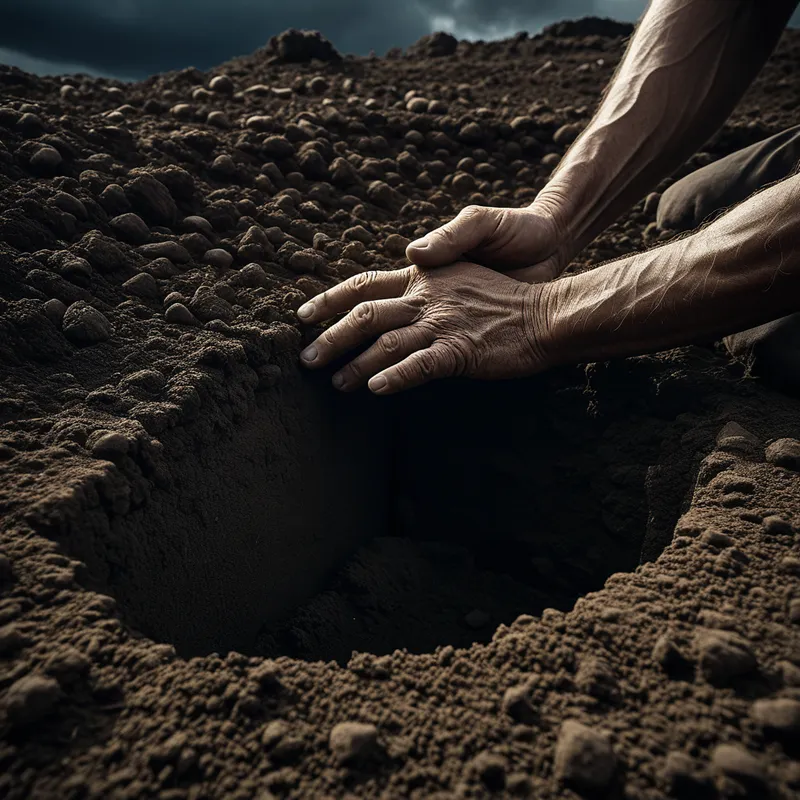
But the earth itself resisted. The ground, tasked to hold the weight of heaven, sank. The foundations swallowed the labor of seasons. The king consulted the oracles, who spoke in riddles of a head. The meaning was found in a gruesome omen: a human head, perfectly preserved, was unearthed from the trench. The augurs declared it not a horror, but the ultimate sign: this spot was the caput mundi, the head of the world. The earth had yielded its secret; the temple would stand, and Rome would be its brain, its commanding will.
The work became a sacred fever. Stone was brought from the quarries of Veii, timber from the forests of the Ciminian range. The scale was unimaginable—a triple-cella shrine not just for Jupiter, but for his divine consort Juno Regina and his wise daughter Minerva. This was to be a divine family dwelling at the city's core. The final, most sacred act was the fixing of the temple's threshold. A pit, the mundus, was dug. Into it, the first citizens cast handfuls of earth from their ancestral lands, and offerings of first fruits. Then it was sealed. This was the navel, the point of contact between the upper world, the middle world of the living, and the underworld. The temple was not just on the hill; it was the axis of the cosmos.
When the last column was raised and the terracotta statue of Jupiter, painted crimson and crowned with victory, was placed within, the city fell silent. Then, at the dedication, the thunder rolled. Not from a storm, but from the people—a roar of awe that shook the very foundations they had built. The god was home. Rome now had a center that could hold the weight of its destiny.
Cultural Origins & Context
This was not a myth of the remote, heroic past, but the foundational narrative of the Roman state itself. The story of the Temple's founding was embedded in the annals of the city, recounted by historians like Livy. It was a political and theological myth, told not by bards at a fireside but by senators, priests, and generals to legitimize Rome's divine mandate and its relentless expansion.
The Temple was the ultimate symbol of the pax deorum, the "peace of the gods." Its annual rituals, especially the triumphus, were direct enactments of this myth. A triumphant general, painted like Jupiter's statue, would ascend the hill to lay his laurels before the god, momentarily becoming the human embodiment of Jupiter's favor before ritually shedding that divine identity. The myth explained why Rome was supreme: because its central, sacred space was established with perfect ritual correctness, securing an unbreakable cosmic contract. It was the story Rome told itself about why it ruled the world.
Symbolic Architecture
Psychologically, the Temple of Jupiter Optimus Maximus is not merely a building, but a blueprint for the structure of the conscious Self. It represents the ego's attempt to create a stable, ordered center of identity and authority within the chaos of the unconscious and the external world.
The tripartite cella for Jupiter, Juno, and Minerva is a profound symbol of a unified psychic governance. Jupiter represents the sovereign principle of consciousness, will, and law (the Superego in Freudian terms). Juno represents the relational, connective, and protective aspects of the psyche (the anima, or the relational complex). Minerva represents strategic intellect, wisdom, and crafted skill (the cognitive function). Together, they form a ruling triad of a complete psyche.
The foundation trench that would not hold is the unconscious refusing to support a conscious structure built on shaky ground. The omen of the head (caput) is the moment the unconscious yields its own wisdom, declaring, "Here, and only here, built upon the recognition of my primordial reality, can your conscious world securely stand."
The mundus, the sealed pit at the temple's heart, is the ultimate symbol. It is the acknowledged but contained connection to the chthonic depths—the repressed memories, instincts, and shadow material. A healthy psyche does not deny this underworld; it builds its central authority directly above it, with a sealed but known passage between the realms.
The Dreamer's Resonance
When this myth stirs in the modern dreamer, it manifests as dreams of monumental architecture, central rooms, or foundational crises. One might dream of building a great house only to have the basement flood or the walls crack, mirroring Tarquin's sinking foundations. This somatic experience speaks to a feeling that one's conscious identity or life's work is built on an unstable premise—perhaps a career, relationship, or self-image that lacks authentic depth.
Dreams of being in a vast, official building like a capitol or courthouse, feeling either empowered or dwarfed by its authority, directly invoke the Temple's energy. These are dreams of confronting the internalized "ruling principle." Is it just and wise, or tyrannical and brittle? A dream where the central statue in such a place is crumbling or blind indicates a crisis in one's inner authority, a failure of the Jupiter principle. The dream calls for a re-consecration, a return to the foundational "augury" to ask what the deep Self will truly support.
Alchemical Translation
The alchemical process modeled here is that of coagulatio—the making solid. It is the operation by which spirit and intention are given enduring form. The myth charts the individuation journey of moving from a scattered, reactive state (the early Roman huts) to a centered, self-governed one (the ordered city with its sacred axis).
The first stage is the vow (Tarquin's promise). This is the conscious intention of the ego to create order, to "build a temple"—to integrate the personality, achieve a goal, or establish a principle. The second, crucial stage is the resistance of the depths (the sinking earth). This is the necessary confrontation with the shadow and the unconscious, which rejects simplistic, ego-driven plans. The old foundations must fail for the true ones to be discovered.
The third stage is the ominous gift (the buried head). This is the coniunctio with the shadow, where the unconscious yields not terror, but its core wisdom—the caput mundi of the personal psyche. The dreamer realizes their center must be built upon the acknowledgment of their own primal, perhaps buried, truth (the "head").
The final alchemical act is the sealing of the mundus. This is the integration where the dark, fertile material of the unconscious is not eliminated, but contained and sanctified as the foundation of the new, conscious structure. The individual becomes like the Temple: a being with a public, ruling identity (the colonnade and cella) consciously supported by, and in respectful communication with, a private, profound depth (the sealed pit). They achieve a stable, resilient form, capable of weathering both internal storms and external sieges, having aligned their personal sovereignty with the laws of their own deepest nature.
Associated Symbols
Explore related symbols from the CaleaDream lexicon: