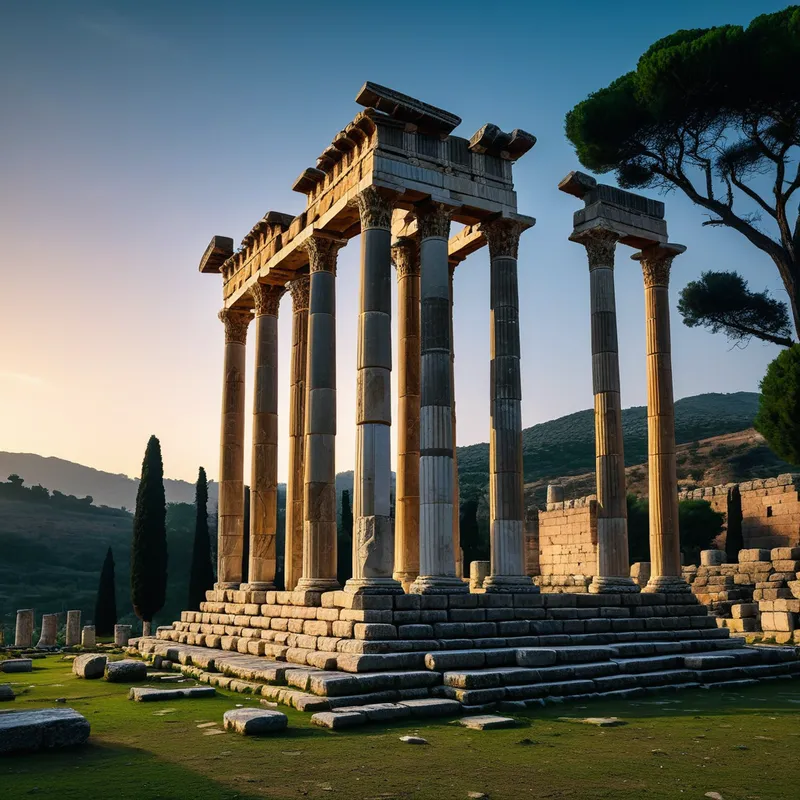
Temple of Artemis Myth Meaning & Symbolism
A story of a sacred boundary, a goddess of the wild, and the sanctuary where the untamed and the civilized meet in profound, terrifying harmony.
The Tale of the Temple of Artemis
Listen, and let the scent of cypress and salt air carry you back. Before the first marble block was laid, before the name Ephesus echoed in the agora, there was only the wild. A swampy, fertile plain where the river met the sea, a place of tangled reeds, prowling beasts, and a presence so vast it stilled the heart. This was the domain of Artemis, not yet carved in stone, but alive in the whisper of the wind through the rushes, in the swift flight of the arrow, in the fierce protection of all things untamed.
The people came, drawn by the richness of the land and the deep, humming power of the place. They were afraid, as all humans are before the raw face of nature. They saw not a goddess, but a terrifying force—the sudden storm, the unexplained stillness of the hunt, the mysterious blood of life and death. To approach her directly was unthinkable. So, a man of vision arose, a king or a hero lost to time, who understood that one does not command such a power; one asks for a truce. He sought not to conquer the wild, but to invite it to dwell beside them.
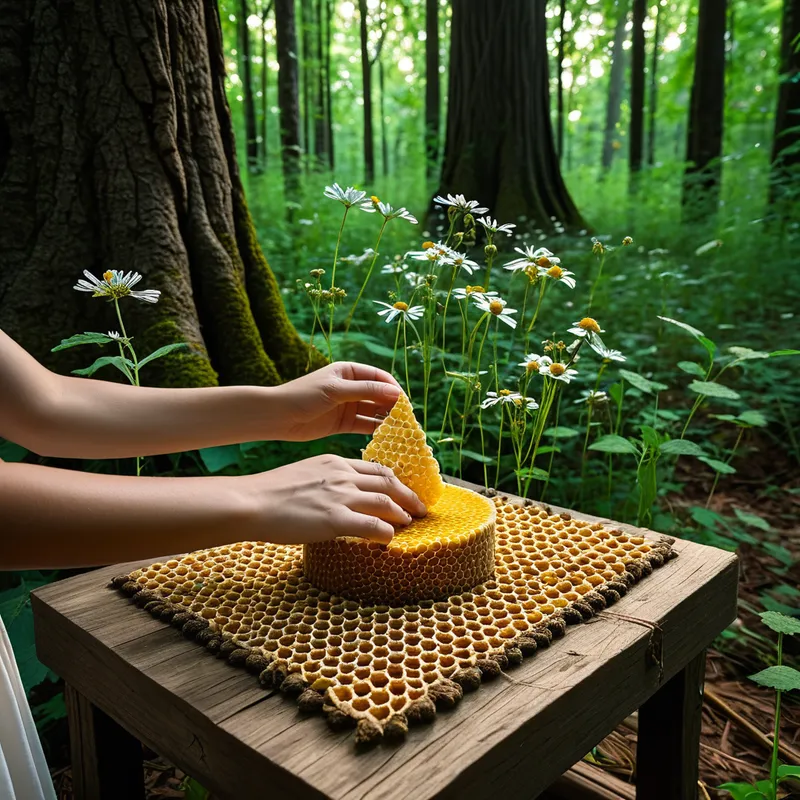
He ventured into the heart of the grove, the air thick with the smell of damp earth and blooming myrtle. He did not bring weapons or boasts. He brought an offering of purest honey, wild barley, and the shed antler of a stag. He spoke words not of petition, but of recognition. “Mistress of the Beasts, Lady of the Liminal Spaces,” he might have whispered, “we wish to build a home here, not over your domain, but within your grace. Grant us a place where your spirit may rest, and we will honor it as your own.”
And the sign came. Not with thunder, but with a profound silence. A she-bear, massive and calm, emerged from the thicket. Instead of charging, she circled the offered antler, then lay down beside it, her breath fogging in the cool air. A swarm of bees, sacred to the goddess, descended, not to sting, but to weave a humming canopy over the spot. This was the temenos, the sacred cut, the sanctuary granted.
From that moment, the work began. The first temple was not of marble, but of fragrant cedar and gnarled olive wood, built around that very grove. It was a boundary and a bridge. Outside its precincts, the city grew—laws, markets, walls. Inside, the wild was preserved, curated, and worshipped. The great statue of Artemis Ephesia was erected, her body a tapestry of life, adorned with bees, bulls, stags, and griffins. Her temple became a refuge for the hunted, a bank for the wealth of nations, and a beacon for those seeking transformation. It stood for centuries, a testament to the pact: civilization could flourish, but only by keeping a sacred hearth for the untamed world within its very heart.
Cultural Origins & Context
The Temple of Artemis at Ephesus was not merely a building; it was one of the Seven Wonders of the Ancient World, and its mythos was woven from both tangible history and deep religious need. Ephesus was a thriving Ionian Greek city, but it stood on older, Anatolian ground, steeped in the worship of a great Mother Goddess like Cybele. The Greek colonists syncretized their own Artemis with this powerful local deity, resulting in the unique, iconic form of Artemis Ephesia.
The myth of the temple’s founding served a crucial societal function. It was a charter myth, explaining and legitimizing the city’s right to exist in that specific, powerful location. It transformed a potentially hostile wilderness into a divinely-sanctioned homeland. The story was passed down through ritual, through the annual festivals like the Artemisia, and through the guides who showed pilgrims the sacred stone (likely a meteorite or ancient baetyl) believed to be the original cult object around which the temple was built. It declared that Ephesus was not built despite the wild, but because of a sacred agreement with it.
Symbolic Architecture
Psychologically, the Temple of Artemis represents the temenos of the soul—a consecrated inner space reserved for the wild, instinctual, and autonomous aspects of the psyche that we label the anima or the natural Self. Artemis herself symbolizes a specific form of feminine power: not the domestic or the romantic, but the fiercely independent, goal-oriented, and protective force of nature in its unadulterated form.
The sanctuary is not where we cage the wild, but where we agree to meet it on its own terms.
The temple’s structure is a profound symbol. Its famous columns, standing open to the sky, represent a conscious container that does not suffocate the contents. The wild grove enclosed within its perimeter signifies that instinct and nature are not eradicated in the process of individuation, but given a honored, central place. The many breasts of Artemis Ephesia symbolize nourishing, generative power, but a nourishment that is non-personal, universal, and tied to the fertility of the entire natural world. The temple was also a place of asylum, symbolizing the psyche’s need for a zone of inviolability, where vulnerable or hunted aspects of the self can find safety from the inner critic or societal pressures.
The Dreamer’s Resonance
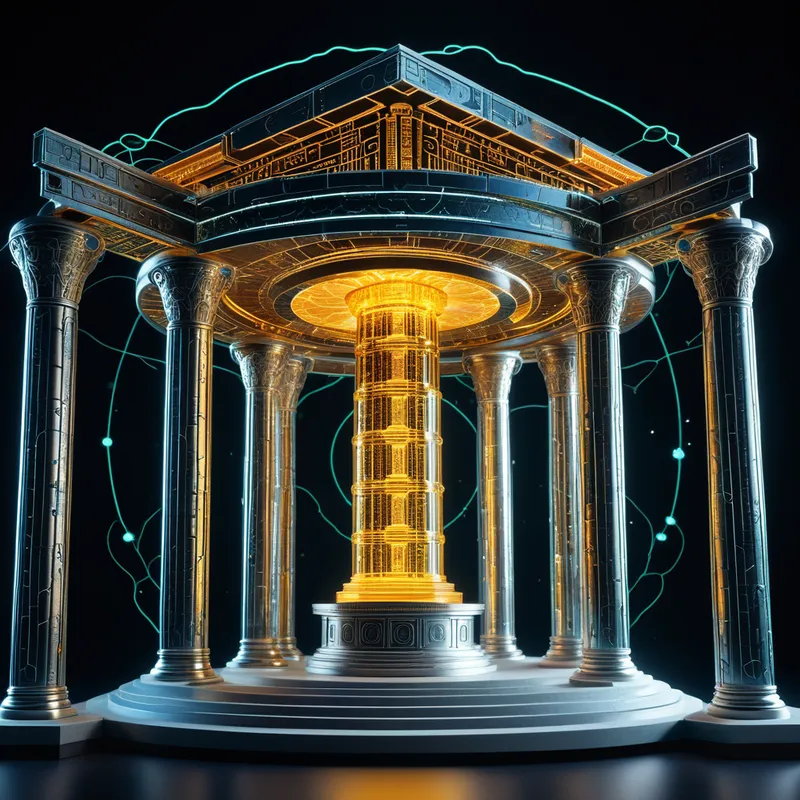
When the Temple of Artemis appears in modern dreams, it rarely manifests as a literal, historical building. Instead, one dreams of discovering a room within a room—a hidden garden inside a corporate office, an ancient forest glade suddenly visible through a bedroom wall, or a pristine, untouched natural shrine in the midst of an urban sprawl. These dreams signal a somatic and psychological process of re-sanctification.
The dreamer is likely experiencing a life that feels over-civilized, over-regulated, or devoid of authentic instinct. There is a longing for a space of pure being, free from performance or expectation. The appearance of the temple-sanctuary in a dream is the psyche’s attempt to rebuild that temenos. It is an act of psychic ecology. Accompanying emotions can range from awe and profound peace to anxiety—the fear that this rediscovered wild space will be violated or cannot be sustained. Animals appearing in such dreams, especially stags, bears, or bees, are direct emanations of the Artemisian energy, guides to this inner sanctuary.
Alchemical Translation
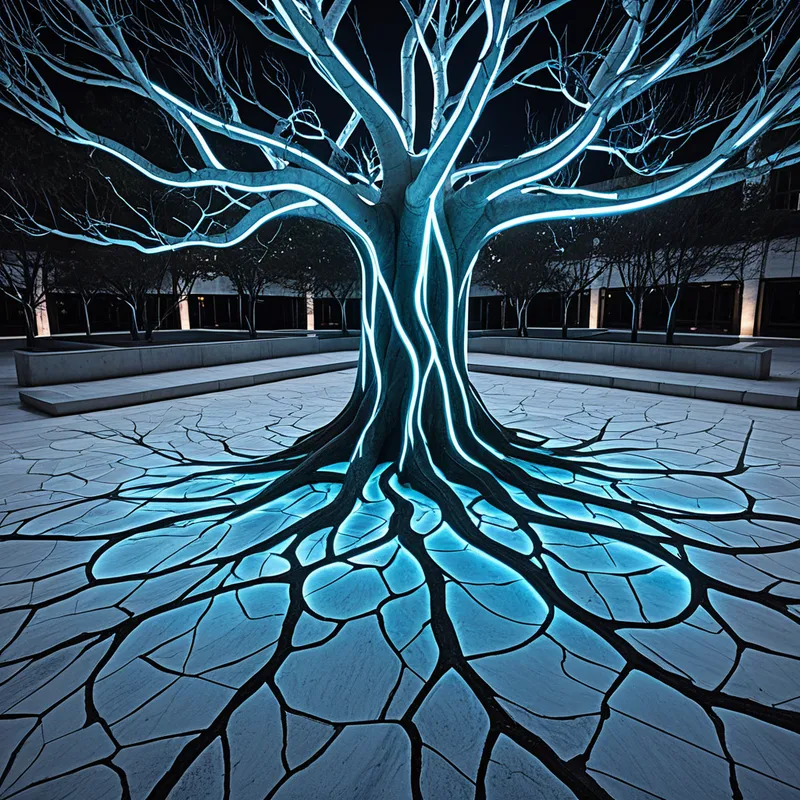
The alchemical process modeled by this myth is not one of dramatic conquest, but of sacred negotiation and integration. The prima materia, the base material of the soul, is the chaotic, fertile, and potentially frightening swamp of undifferentiated instinct and raw potential (the wild grove). The goal of individuation is not to drain this swamp and build a city upon it, which leads to a brittle, one-sided consciousness. Instead, the alchemical work is to delineate a sacred space within it.
The work is to become both the city and the grove, the architect and the worshipper, the boundary and the boundless.
The “king” in the myth represents the emerging ego-consciousness that has the courage to approach the unconscious not as an enemy to be slain, but as a sovereign power to be recognized. The offering signifies the sacrifice of arrogance—the willingness to give up total control. The resulting temple is the lapis philosophorum, the philosopher’s stone of this operation: a psyche that is structured and conscious (the civilized city) yet whose core is a thriving, sacred, and autonomous wilderness (the temple precinct). This is the alchemical coniunctio oppositorum—the marriage of culture and nature, consciousness and the unconscious. The individual who achieves this does not tame their wildness; they become the guardian of its sanctuary, and in doing so, are made whole. The light that shines from this inner temple is not the harsh glare of rational order alone, but the dappled, silver light of the moon through ancient trees.
Associated Symbols
Explore related symbols from the CaleaDream lexicon: