Susanoo Myth Meaning & Symbolism
The story of the tempestuous deity Susanoo, whose chaotic exile leads to a heroic confrontation with a great serpent and the discovery of a sacred sword.
The Tale of Susanoo
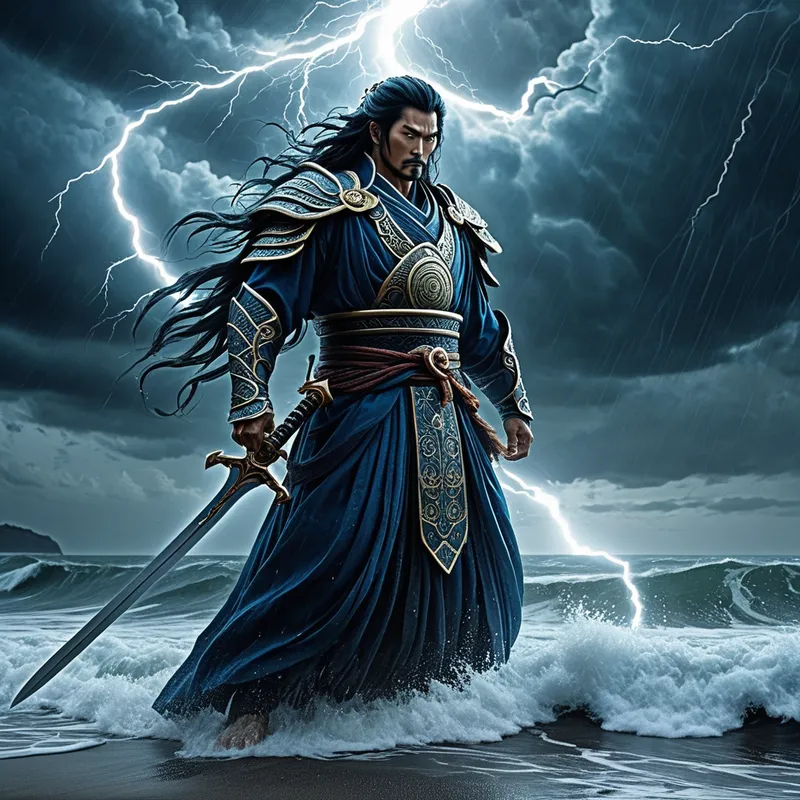
Hear now the tale of the wild one, the brother born of the primal waters. In the High Plain of Heaven, where the light of Amaterasu brought gentle order, there dwelt her brother, Susanoo. His spirit was the untamed gale, his breath the thunderclap, his tears the deluge. Where his sister wove the world with light, he unraveled it with passion. A great restlessness seized him, a divine melancholy that manifested as rage. He rampaged across the celestial rice fields, broke the sacred irrigation ditches, and in a final, profane act, flung a flayed heavenly pony through the roof of his sister’s sacred weaving hall.
The world plunged into darkness. Amaterasu, in grief and terror, retreated into the Ama-no-Iwato, sealing the light of the sun away from the world. The gods pleaded, they laughed, they placed a mirror before the cave, but still she would not emerge. It was only when the goddess Ame-no-Uzume danced with such wild, ecstatic abandon that the very heavens shook with divine laughter, that Amaterasu peeked out, saw her own radiant reflection, and was drawn back into the world. Light was restored, but the source of the chaos had to be dealt with.
The council of gods, the Yaoyorozu-no-Kami, pronounced their judgment. Susanoo, the bringer of chaos, was cast down. His beard was shorn, his fingernails ripped out, and he was exiled from the ordered realms, descending to the raw, untamed land of Izumo.
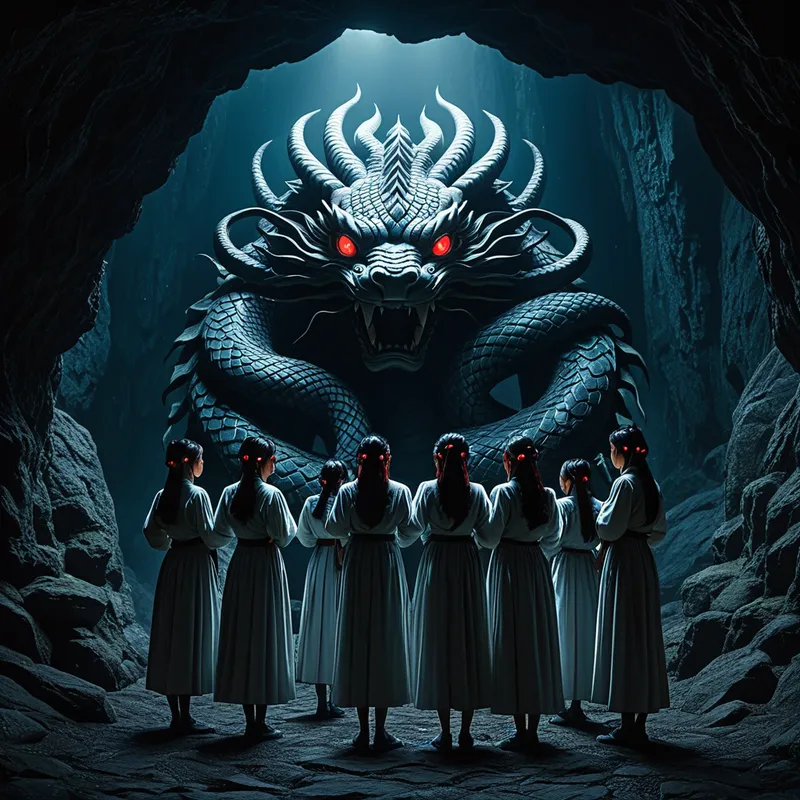
There, by a river, he heard a sound woven from human despair. An old man and woman wept, clinging to their last daughter. Each year, a monstrous serpent, the Yamata-no-Orochi, had come and devoured seven of their eight daughters. The final maiden, Kushinada-hime, was next. In that moment, the exiled god’s chaotic fury found a direction. His wildness, once a scourge upon heaven, became a weapon for earth. He transformed Kushinada-hime into a sacred comb and placed her in his hair. He instructed the parents to brew eightfold sake and prepare eight gates.
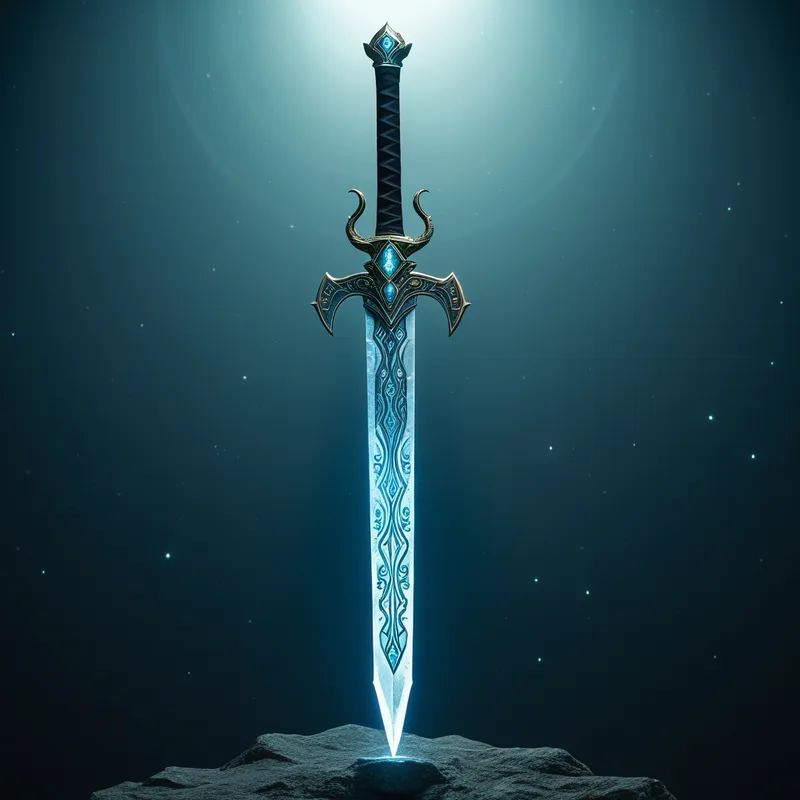
The serpent came, its eight heads drinking from each vat until it sank into a deep, drunken stupor. Then Susanoo, the storm incarnate, drew his sword Ame-no-Habakiri and fell upon the beast. He sliced through the scaled flesh, the river running red. As he cut into the fourth tail, his blade struck something hard. Within the serpent’s flesh, he found a magnificent sword, the Kusanagi-no-Tsurugi. This sacred blade, born from the body of chaos itself, he later offered to the heavens as a token of reconciliation. From the chaos of exile, a hero was forged.
Cultural Origins & Context
The myth of Susanoo is preserved in Japan’s oldest chronicles, the Kojiki (712 CE) and the Nihon Shoki (720 CE). These texts were not mere storybooks; they were political and cosmological foundations, commissioned by the imperial court to establish a divine lineage connecting the emperor to the sun goddess Amaterasu. Within this framework, Susanoo occupies a critical, ambivalent space.
He is the necessary “other,” the divine principle that exists outside the central, solar order of the ruling lineage. His stories originate from the Izumo region, a powerful cultural and political rival to the Yamato court (from which the imperial line emerged). The myth can be read as a symbolic integration of the Izumo cultural sphere into the Yamato cosmological narrative. Susanoo’s exile to Izumo and his subsequent heroic deeds there legitimize the region’s importance while simultaneously subordinating its chief deity to the heavenly order. The myth was performed and transmitted by ritual specialists, serving to explain natural phenomena (storms, eclipses), validate social order, and illustrate the proper relationship between the chaotic forces of nature and the human need for structure and purification.
Symbolic Architecture
Susanoo is the archetype of the unintegrated masculine spirit—all raw potency without conscious direction. He is not evil, but unbound. His initial rampage in heaven represents the destructive potential of unmediated emotion, creativity, or libido that threatens a fragile, established order (Amaterasu’s realm).
Exile is not merely punishment; it is the necessary descent where undifferentiated chaos is forced to encounter a concrete form of suffering, and in doing so, finds its purpose.
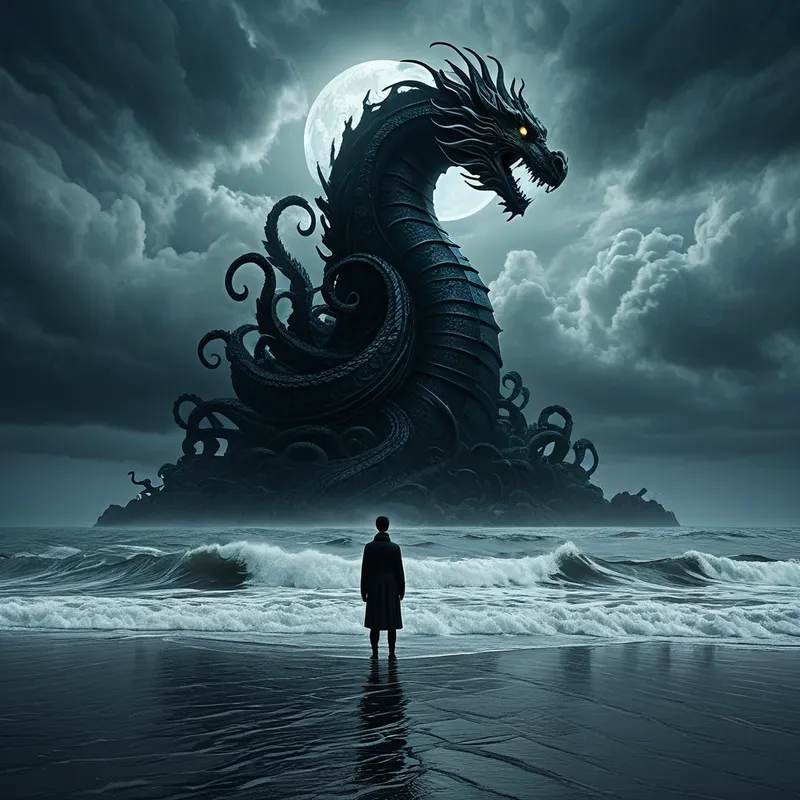
The Yamata-no-Orochi is the perfect symbolic counterpart to Susanoo’s own nature. It is chaos made manifest in the earthly realm—a devouring, repetitive, unconscious pattern (taking a maiden every year). Susanoo’s victory is not the triumph of order over chaos, but the conscious harnessing of chaotic energy to confront a more literal, monstrous form of chaos. He uses trickery (the sake) and direct force. The discovery of the Kusanagi-no-Tsurugi within the serpent is the ultimate alchemical symbol: the treasure hard to attain, the transcendent function, is found within the conquered shadow. The sacred is extracted from the profane; wisdom is born from confronting the monster.
The Dreamer’s Resonance
When the pattern of Susanoo stirs in the modern psyche, it often manifests in dreams of violent weather, sudden eruptions of anger, or feelings of profound exile and misunderstanding. One might dream of being cast out of a family or group for being “too much”—too emotional, too loud, too disruptive. The somatic experience is one of churning in the gut, a pressure in the chest, a restless energy with no outlet.
This is the psyche signaling that a powerful, instinctual force is demanding recognition. The Yamata-no-Orochi in a dream might appear as a suffocating bureaucracy, a repetitive addiction, or a relationship pattern that “devours” one’s vitality year after year. The dreamer is at the riverbank with the weeping parents, feeling powerless before a cyclical monster. The Susanoo energy is the call to stop weeping and start brewing the “eightfold sake”—to engage strategically, to intoxicate the monster with its own appetite, to prepare for a confrontation. The dream asks: What repetitive devourer in your life requires you to harness your own tempestuous power to face it?
Alchemical Translation
The myth of Susanoo is a masterful map of psychic transmutation. It begins with the nigredo, the blackening: the chaotic, destructive outburst that leads to exile from the familiar “heaven” of the persona or conscious identity. This painful ejection is the first, brutal step of individuation—the conscious self can no longer contain the unconscious pressure.
The hero is not the one who never causes damage, but the one who learns to aim their power at the true dragon, not the celestial rice paddies.
The descent to Izumo is the confrontation with the shadow in the real world. It is no longer about internal conflict alone, but about how one’s unintegrated parts cause suffering out there. Seeing the grief of the old couple (empathy) provides the crucible. The chaotic force finds an object worthy of its strength. The brewing of the sake represents the albedo, the whitening: the conscious, careful preparation and strategy required to engage the unconscious pattern (the serpent). The battle itself is the rubedo, the reddening: the fierce, passionate engagement where the sword of consciousness (Ame-no-Habakiri) cuts through the tangled, multi-headed complexity of the problem.
The final gift, the Kusanagi-no-Tsurugi, is the lapis philosophorum, the philosopher’s stone. It is the new, enduring capability forged in the fight. By confronting the personal or collective “serpent,” one does not simply defeat it; one extracts from that very struggle a sacred tool—a sharpened insight, a resilient strength, a creative power (the sword) that can then be offered back to the “heavens,” integrating the redeemed rebel energy into the totality of the self. The storm god becomes a culture hero, not by ceasing to be a storm, but by directing his lightning at the darkness that truly needs to be slain.
Associated Symbols
Explore related symbols from the CaleaDream lexicon: