Supay God of Death Myth Meaning & Symbolism
A myth of the chthonic lord Supay, ruler of Uku Pacha, who governs death, riches, and the fertile darkness from which all life returns.
The Tale of Supay God of Death
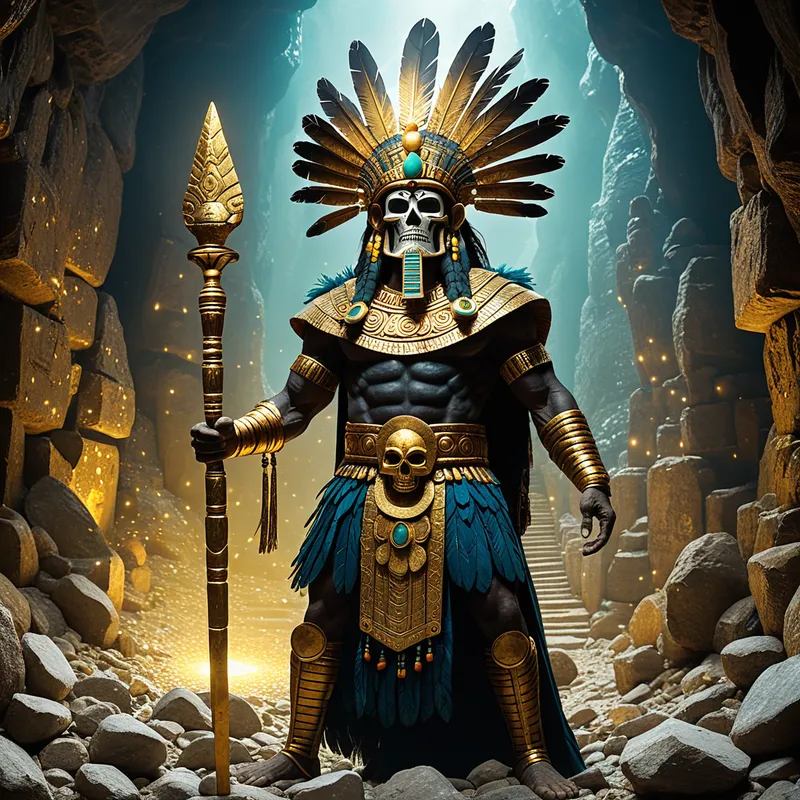
Beneath the sacred peaks of the Andes, where the condor’s shadow paints the stone, the world is not three, but one. Yet within that one, there are realms. Hanan Pacha arches above, a vault of sun and storm. Kay Pacha is our waking breath, the terraced mountain and the bustling ayllu. And below, in the deep, silent belly of the Pachamama, lies Uku Pacha. This is the domain of Supay.
He is not a specter of bone, but a lord of substance. His body is the density of the mountain core, his eyes the gleam of untouched ore in total darkness. His voice is the grind of continental plates, his breath the cool, moist exhalation from the deepest springs. He dwells in a palace not of despair, but of immense, quiet potential—a cavern where crystals grow in secret and the roots of all things drink from dark waters.
The people of Kay Pacha knew his name. They spoke it with care, for he was the receiver of all that descended. When a life’s thread was cut by time or fate, the camac would begin its journey. Not upward, toward the blinding sun, but downward, along the roots of being, into the embrace of the earth. Supay awaited. He was not a torturer, but a sovereign. In his realm, the spirits of the dead, the mallquis, resided. They were not lost; they were stored, like precious seed in a granary of shadow.
And the earth yielded its treasures to his command. The veins of silver, the nodules of gold that shone in the firelight—these were the sweat and tears of Supay, the jewels of Uku Pacha offered to the world above. To seek them was to petition him, a dangerous negotiation. Miners would whisper prayers and leave offerings of chicha and coca, hoping to appease the lord of the deep, to borrow his wealth without incurring his wrath. For Supay could be generous, but he was always just. To take without respect was to invite the cave-in, the sudden chill, the disappearance into the eternal dark.
His story is not one of battle with the sun god Inti, but of essential balance. Inti ruled the day, the visible, the growth upward. Supay ruled the night, the hidden, the gestation within. One could not exist without the other. The seed must fall into the dark earth (the realm of Supay) to be broken open by its density, so that it might someday climb toward the sun (the realm of Inti). Supay was the necessary counterpart, the keeper of the past, the holder of the pattern from which new life is woven. He was the great integrator, to whom all things eventually returned, to be sorted, dissolved, and prepared for the cycle’s turn.
Cultural Origins & Context
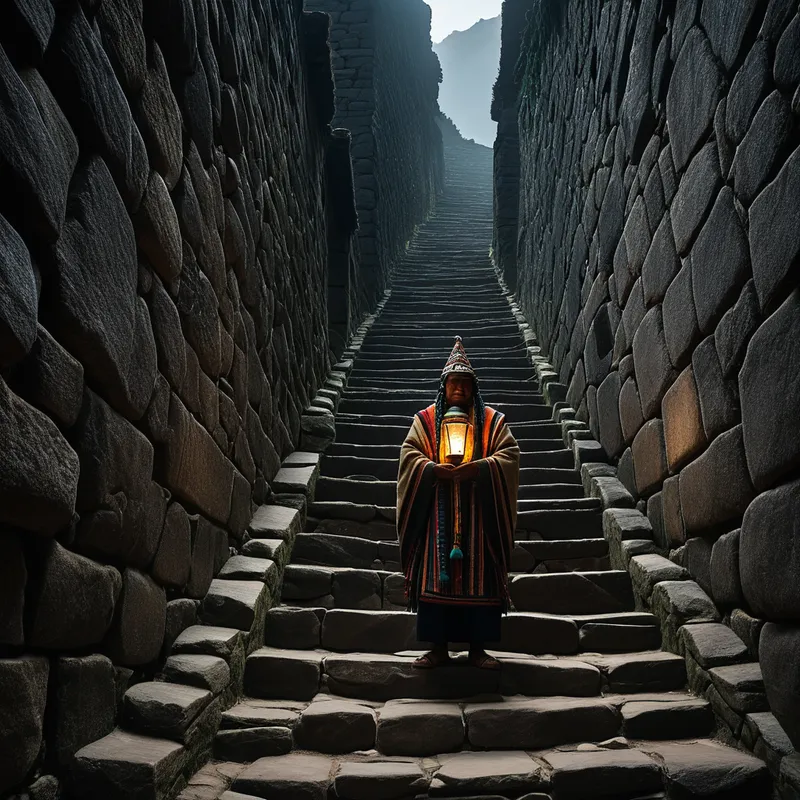
The myth of Supay emerges from the profound Incan cosmological vision, a worldview where death was not an end but a transition within a continuous, sacred cycle. This narrative was not penned in codices but woven into the fabric of daily ritual, agricultural practice, and state ceremony. It was told by the amautas (wise teachers) and enacted by the priests who performed the essential capcocha ceremonies.
Supay’s primary societal function was as a cosmological balance point. The Inca state, the Tawantinsuyu, was obsessed with order, duality, and reciprocity (ayni). Just as the Sapa Inca ruled Kay Pacha, Supay ruled Uku Pacha. His acknowledged sovereignty provided a structured, sacred place for death and the ancestors, preventing them from becoming restless, chaotic ghosts. By giving Supay his due—through offerings in mines, during funerary rites, and at certain festivals—the community maintained harmony with the entire cosmos, ensuring fertility from the earth and safe passage for the dead.
After the Spanish conquest, the figure of Supay underwent a syncretic transformation. Colonial priests, seeking to demonize indigenous religion, mapped Supay directly onto the Christian Devil. This association tragically distorted his original complex nature as a necessary, if fearsome, lord of the underworld into a purely evil figure. Yet, in the enduring folk beliefs of the Andes, echoes of his older, more integral role persist, often blending with figures like El Tío in Bolivian mines, who remains a capricious guardian of mineral wealth.
Symbolic Architecture
At its core, the myth of Supay is an archetypal map of the [underworld](/symbols/underworld “Symbol: A symbolic journey into the unconscious, representing exploration of hidden aspects of self, transformation, or confronting repressed material.”/) [journey](/symbols/journey “Symbol: A journey in dreams typically signifies adventure, growth, or a significant life transition.”/), not as a [punishment](/symbols/punishment “Symbol: A dream symbol representing consequences for actions, often tied to guilt, societal rules, or internal moral conflicts.”/), but as a phase of the natural order. He symbolizes the psychic principle of the [shadow](/symbols/shadow “Symbol: The ‘shadow’ embodies the unconscious, repressed aspects of the self and often represents fears or hidden emotions.”/) and the chthonic, [material](/symbols/material “Symbol: Material signifies the tangible aspects of life, often representing physical resources, desires, and the physical world’s influence on our existence.”/) base of existence.
Supay is the god of the fertile dark, the psychic soil where the seeds of experience are composted into wisdom. He represents the part of the self that must be descended into, and acknowledged, before true wholeness can be achieved.
He is the ruler of all that is below [consciousness](/symbols/consciousness “Symbol: Consciousness represents the state of awareness and perception, encompassing thoughts, feelings, and experiences.”/): repressed memories, instinctual drives, inherited patterns, and the raw, unlived potential that feels too dense or “dark” to bring into the light of day. The glittering minerals in his [realm](/symbols/realm “Symbol: The symbol of ‘Realm’ often signifies the boundaries of one’s consciousness, experiences, or emotional states, suggesting aspects of reality that are either explored or ignored.”/) symbolize the latent value and power hidden within this shadow material—the “gold in the dark.” His [role](/symbols/role “Symbol: The concept of ‘role’ in dreams often reflects one’s identity or how individuals perceive their place within various social structures.”/) as [receiver](/symbols/receiver “Symbol: The symbol of a ‘receiver’ typically signifies the act of receiving messages, connections, or energies from others.”/) of the dead signifies the necessary process of letting aspects of our [identity](/symbols/identity “Symbol: Identity represents the sense of self, encompassing personal beliefs, cultural background, and social roles.”/) die and fall into the unconscious, where they can be reconfigured by the deep, slow intelligence of the psyche.
The realm of Uku Pacha itself is a [symbol](/symbols/symbol “Symbol: A symbol can represent an idea, concept, or belief, serving as a powerful tool for communication and understanding.”/) of the objective psyche, the autonomous, impersonal [layer](/symbols/layer “Symbol: Layers often symbolize complexity, depth, and protection in dreams, representing the various aspects of the self or situations.”/) of the unconscious that operates according to its own ancient laws, much like the geological processes of the [earth](/symbols/earth “Symbol: The symbol of Earth often represents grounding, stability, and the physical realm, embodying a connection to nature and the innate support it provides.”/).
The Dreamer’s Resonance
When the pattern of Supay stirs in the modern dreamer, it often manifests as dreams of descent: finding secret basements, discovering hidden rooms in one’s house, exploring caves, or being pulled underground. There is a somatic weight to these dreams—a feeling of gravity, density, and often a sacred awe or primal fear.
Psychologically, this signals a call from the unconscious to engage with material that has been buried or ignored. It is the psyche’s initiation into a necessary phase of nigredo, the alchemical blackening. The dreamer may be processing a profound loss, a career ending, the close of a relationship, or a deep depression—not as a failure, but as a descent into their personal Uku Pacha. The figure of Supay in a dream, whether as a dark sovereign, a miner’s spirit, or simply an overwhelming presence in the earth, represents the autonomous, structuring principle of the unconscious that now demands audience. It is the Self insisting that one confront what has been relegated to the shadows to retrieve the vital energy and insight trapped there.
Alchemical Translation
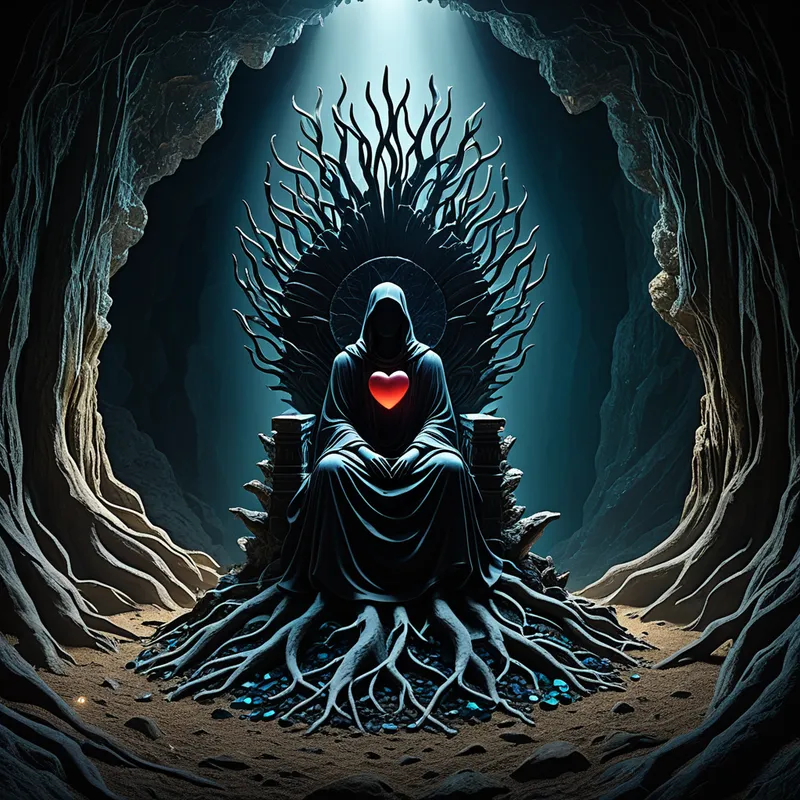
The myth of Supay provides a profound model for the process of psychic individuation, specifically the stage of confronting and integrating the shadow. The journey is not one of slaying a monster, but of presenting oneself at the court of the underworld king.
The alchemical work is not to defeat the darkness, but to learn its governance, to pay its toll of honest self-scrutiny, and to receive its buried treasure in return.
First, one must make the descent—the conscious willingness to enter a period of introspection, depression, or withdrawal from the “sunlit” world of persona and achievement (Kay Pacha). This is the sacrifice of old certainties.
Second, one encounters the sovereign—the Supay within. This is the confrontation with one’s own capacity for darkness, greed, fear, and all the rejected parts of the personality. The task here is not to be destroyed by this recognition, but to acknowledge its power and its right to exist. This is the ritual offering to Supay.
Third, one receives the treasure—the integration. The latent energies trapped in the shadow—creativity, assertiveness, profound resilience—are liberated and made available to the conscious personality. The “gold” of Supay becomes a resource for the ego. The spirit that descended (the old identity) is transformed and can now contribute to the psyche as a vital ancestor, a source of depth and rootedness.
Finally, this process enables rebirth. Having honored the lord of the underworld, the individual does not remain there. They return to the middle world (Kay Pacha) transformed, carrying the wisdom of the deep within them. They now understand that life and death, light and dark, are not opposites but interdependent phases of a single, sacred cycle of becoming.
Associated Symbols
Explore related symbols from the CaleaDream lexicon:
- Death — The central domain of Supay, representing not finality but the essential transition, dissolution, and composting phase within the eternal cycle of existence.
- Cave — The entrance to Uku Pacha and the dwelling of Supay, symbolizing the descent into the unconscious, the womb of the earth, and the place of hidden revelation.
- Earth — As Pachamama, she is the living body containing Uku Pacha; Supay is her deep, chthonic power, governing the fertile darkness from which all life springs.
- Gold — The treasure of Supay’s realm, symbolizing the latent, incorruptible value and potential for transformation that is found only by journeying into the psychic depths.
- Shadow — The psychological counterpart to Supay, representing the totality of the unconscious personality, containing both feared weaknesses and untapped power.
- Journey — The necessary descent into the underworld, a non-negotiable archetypal voyage required for harvesting wisdom and achieving psychological wholeness.
- Rebirth — The inevitable consequence of a true engagement with Supay’s realm; the new form that emerges after the old self has been dissolved in the dark earth.
- Mountain — The Andean axis mundi; its peak reaches Hanan Pacha, but its immense, hidden root-mass is the very substance of Supay’s underworld kingdom.
- Stone — The primal material of Supay’s domain, representing density, permanence, the bones of the earth, and the foundational truths of the psyche.
- Root — The connective tissue between the middle world and the underworld, symbolizing ancestral lineage, hidden foundations, and the nourishing tap into deep, instinctual sources.
- Sacrifice — The essential offering made to Supay, representing the conscious surrender of ego attachments required to safely navigate the underworld and receive its gifts.
- Ritual — The structured, respectful approach to the powers of the deep, as performed by Inca miners and priests, modeling how to consciously engage with profound unconscious forces.