Standing Stones Myth Meaning & Symbolism
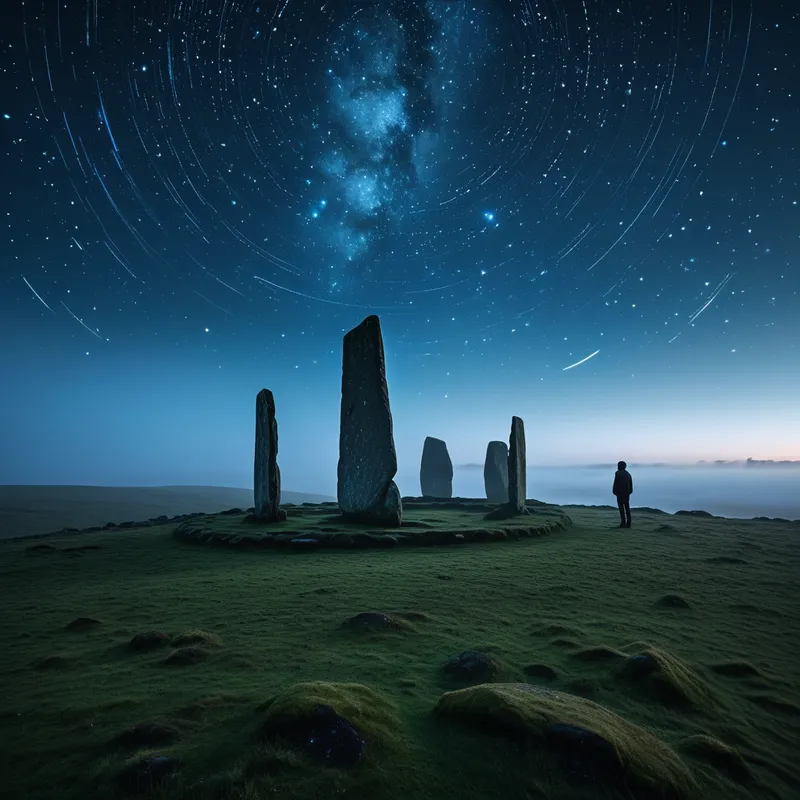
A myth of giants, gods, and the human desire to create a permanent mark on the world, etched in stone against the turning of time.
The Tale of Standing Stones
Listen, and I will tell you of a time before time was counted in seasons, when [the world](/myths/the-world “Myth from Tarot culture.”/) was raw and the air thrummed with the breath of the Fir Bolg. In that age, the land was a giant’s playground, its hills their couches, its rivers their tears of laughter. But they were a fading race, their footsteps growing lighter with each passing moon. They felt the turning of the great wheel, the approach of a new age—the age of the Tuatha Dé Danann, and after them, the age of mortal men.
A deep sorrow settled in the heart of the greatest of them, a being whose name was the sound of grinding rock. He looked upon the wild, beautiful land and saw that he and his kind would leave no mark upon it. [The wind](/myths/the-wind “Myth from Various culture.”/) would forget their sighs; the grass would grow over their footprints. They would become a whisper, then a silence. This thought was a cold stone in his belly.
So, he called to his kin, his voice a landslide in the mountains. “We who shaped these valleys with our play, we who drank lakes dry, shall we vanish like mist? No. We will make a memory that even time cannot erase. We will pull the bones of [the earth](/myths/the-earth “Myth from Hindu culture.”/) and set them upright, so that when we are gone, our presence will still be felt in the loom of shadow and the channeling of light.”
And so, they began. They walked to the sacred places, the nodes where the telluric currents of the goddess ran strong. There, they knelt—these mountains given form—and dug their fingers deep into the soil, down to the bedrock. With a groan that shook the heavens, they wrenched the great slabs free. The earth bled clay and spring [water](/myths/water “Myth from Chinese culture.”/).
They carried the stones across the land, not as burdens, but as offerings. Each step was a prayer, each labored breath a chant. They raised them not with ropes and ramps, but with sheer will and a love for the world they were leaving. They set them in circles, in rows, in solitary majesty. Some they capped with lintels, creating doorways that framed the sunrise, the moonrise, the turning stars.
The work was their elegy. As they lifted the final stones into place, their strength, their very essence, seeped into the rock. The last giant stood in the center of a perfect circle on a vast, open plain. As the first dawn of the new age broke, he placed his hands upon the central stone, poured the remainder of his spirit into it, and turned to dust on the wind. The stones stood. Silent. Permanent. A testament carved not in history, but in geography. A promise that even in departure, one can leave a signature for eternity.
Cultural Origins & Context
The myth of the Standing Stones, as a narrative of their creation, is a tapestry woven from fragments. The ancient Celts did not leave written records of their sacred stories; these were the province of the Druids and bards, who committed vast cycles of lore to memory. What we understand as the “Celtic” myth of the stones is therefore a reconstruction, pulled from later Irish and Welsh manuscripts, folk traditions, and the powerful, silent testimony of the monuments themselves—[Stonehenge](/myths/stonehenge “Myth from Celtic culture.”/), Drombeg, Avebury.
These sites predate the Celtic cultures by millennia, yet they were adopted and mythologized by them. The Celts saw in these ancient stones the work of a previous, more powerful race, often associating them with their own mythic predecessors like the Fir Bolg or the god-like Tuatha Dé Danann. The societal function was multifaceted: the stories explained the inexplicable (how could humans move such stones?), sanctified the landscape, and provided a cosmic anchor. The stones were calendars, temples, and territorial markers, but above all, they were connectors—between the people and their gods, between the earthly and [the Otherworld](/myths/the-otherworld “Myth from Celtic culture.”/), between the present community and the ancestral past.
Symbolic Architecture
At its [heart](/symbols/heart “Symbol: The heart symbolizes love, emotion, and the core of one’s existence, representing deep connections with others and self.”/), the myth is not about [construction](/symbols/construction “Symbol: Construction symbolizes creation, building, and the process of change, often reflecting personal growth and the need to build a solid foundation.”/), but about [inscription](/symbols/inscription “Symbol: A permanent mark, carving, or writing on a surface, often carrying messages, records, or artistic expression meant to endure.”/). The Standing [Stone](/symbols/stone “Symbol: In dreams, a stone often symbolizes strength, stability, and permanence, but it may also represent emotional burdens or obstacles that need to be acknowledged and processed.”/) is the ultimate [symbol](/symbols/symbol “Symbol: A symbol can represent an idea, concept, or belief, serving as a powerful tool for communication and understanding.”/) of the [human](/symbols/human “Symbol: The symbol of a human represents individuality, complexity of emotions, and social relationships.”/)—and, in the myth, the pre-human—[psyche](/myths/psyche “Myth from Greek culture.”/)‘s struggle against transience.
The stone is the ego’s desperate, beautiful attempt to make a permanent mark on the flowing river of time.
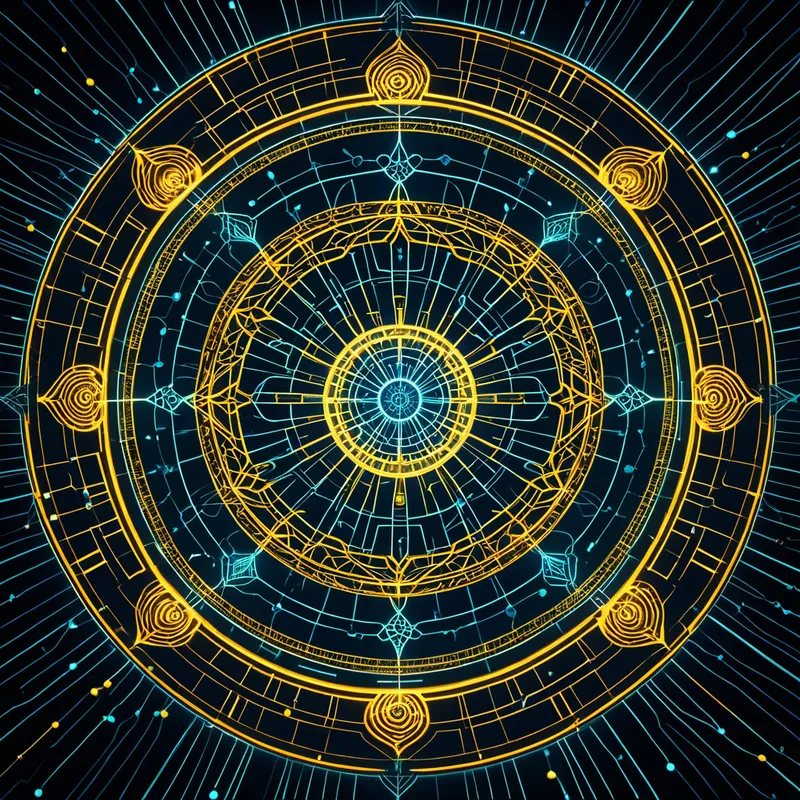
The giant represents the primordial Self, the raw, unconscious force of being that precedes individual [identity](/symbols/identity “Symbol: Identity represents the sense of self, encompassing personal beliefs, cultural background, and social roles.”/). His sorrow is the first glimmer of [consciousness](/symbols/consciousness “Symbol: Consciousness represents the state of awareness and perception, encompassing thoughts, feelings, and experiences.”/)—the [awareness](/symbols/awareness “Symbol: Conscious perception of self, surroundings, or internal states. Often signifies awakening, insight, or heightened sensitivity.”/) of [mortality](/symbols/mortality “Symbol: The awareness of life’s finitude, often representing transitions, impermanence, or existential reflection in dreams.”/), of [impermanence](/myths/impermanence “Myth from Buddhist culture.”/). The act of raising the stone is the heroic, creative act of the emerging ego: to take the raw [material](/symbols/material “Symbol: Material signifies the tangible aspects of life, often representing physical resources, desires, and the physical world’s influence on our existence.”/) of the unconscious (the [earth](/symbols/earth “Symbol: The symbol of Earth often represents grounding, stability, and the physical realm, embodying a connection to nature and the innate support it provides.”/), the bedrock) and shape it into a form that declares “I Am Here.” The circle formation is a [mandala](/symbols/mandala “Symbol: A sacred geometric circle representing wholeness, the cosmos, and the journey toward spiritual integration.”/), a symbol of wholeness and containment, creating sacred [space](/symbols/space “Symbol: Dreaming of ‘Space’ often symbolizes the vastness of potential, personal freedom, or feelings of isolation and exploration in one’s life.”/) from chaotic land. It is a psychic [boundary](/symbols/boundary “Symbol: A conceptual or physical limit defining separation, protection, or identity between entities, spaces, or states of being.”/), a [temenos](/myths/temenos “Myth from Greek culture.”/), where the inner world can be reflected and examined safely.
The giant’s [dissolution](/symbols/dissolution “Symbol: The process of breaking down, dispersing, or losing form, often representing transformation, release, or the end of a state of being.”/) into the stone is the critical alchemical [moment](/symbols/moment “Symbol: The symbol of a ‘moment’ embodies the significance of transient experiences that encapsulate emotional depth or pivotal transformations in life.”/). It signifies that true, enduring creation requires a sacrifice of the [creator](/symbols/creator “Symbol: A figure representing ultimate origin, divine power, or profound authorship. Often embodies the source of existence, innovation, or personal destiny.”/)‘s isolated, temporal form. The [personality](/symbols/personality “Symbol: Personality in dreams often symbolizes the traits and characteristics of the dreamer, reflecting how they perceive themselves and how they believe they are perceived by others.”/) must give way to the work. [The ego](/myths/the-ego “Myth from Jungian culture.”/) must learn that its immortality lies not in its perpetual existence, but in what it brings into lasting form.
The Dreamer’s Resonance
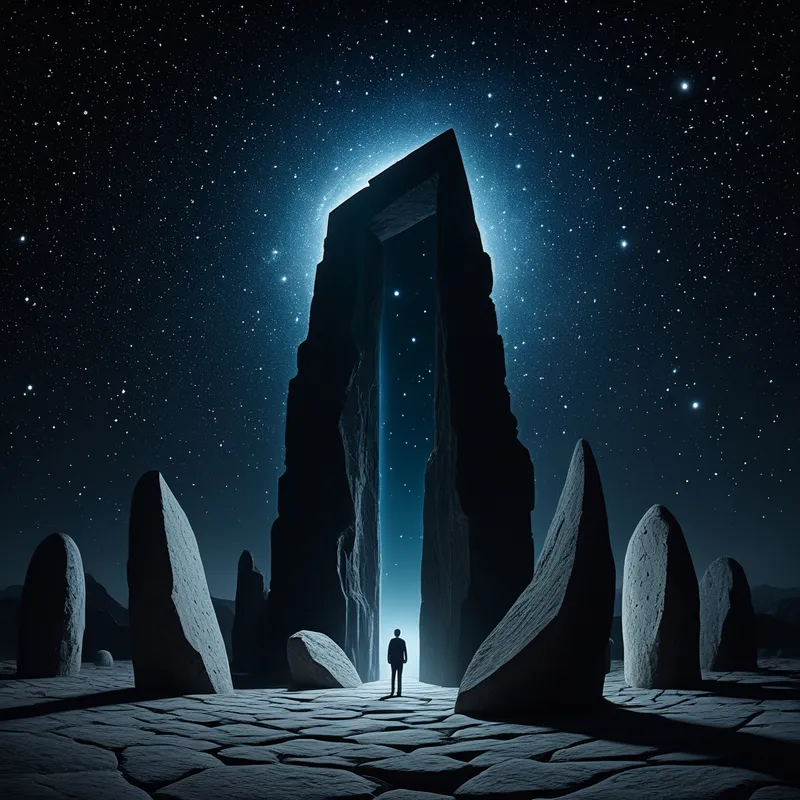
When the Standing Stones appear in modern dreams, they rarely arrive as tourist attractions. They emerge from the dreamer’s personal bedrock. To dream of approaching, touching, or being within a circle of Standing Stones signals a profound engagement with the process of individuation—the Jungian path toward psychological wholeness.
The somatic feeling is often one of awe mixed with deep anxiety—the “numinous tremor.” The stones feel both alien and intimately familiar. This dream marks a moment where the dreamer’s psyche is attempting to erect something permanent within themselves. It might appear during life transitions—after a great loss, at the start of a creative endeavor, or when confronting one’s own legacy. The stones represent core, non-negotiable aspects of [the Self](/myths/the-self “Myth from Jungian culture.”/) that the dreamer is being called to acknowledge and “set in stone”: a value, a truth, a talent, or a memory so foundational it must become a permanent landmark in their inner geography. The struggle to move or raise the stone in the dream mirrors the real, often exhausting, psychological work of integrating this aspect.
Alchemical Translation
The myth provides a precise model for psychic transmutation. The [prima materia](/myths/prima-materia “Myth from Alchemical culture.”/) is the unformed Self, the “giant” of our potential, burdened by the knowledge of its own fleeting nature. The [nigredo](/myths/nigredo “Myth from Alchemical culture.”/), or blackening, is the giant’s sorrow—the depressive, crushing awareness of mortality and meaninglessness.
The alchemical fire is not in a furnace, but in the strain of the muscles lifting rock against gravity—the conscious effort to create form from chaos.
The albedo, or whitening, is the cleansing act of choice and labor: selecting the site, moving the stone, purifying the intention. The raising of the stone is the citrinitas, the yellowing or dawning of consciousness, as the ego successfully manifests a symbol of itself. Finally, the [rubedo](/myths/rubedo “Myth from Alchemical culture.”/), the reddening or culmination, is the giant’s sacrifice. Here, the ego achieves its highest purpose not by enduring, but by surrendering its identification with the personal self and merging with the timeless, symbolic structure it has created.
For the modern individual, this translates to the work of building a life of meaning. We are all giants, sensing our finitude. Our “stones” are the lasting works we create—not just art or children, but the integrity of our character, the love we offer, the truths we live by. The alchemy lies in pouring our mortal energy into these forms, knowing that we, the temporary vessels, will pass on. But the circle stands. The alignment with the solstice sun remains. We achieve a kind of immortality not by living forever, but by creating something that, in its essence, does. The myth of the Standing Stones is an invitation to build your circle, to perform your labor of love, and in the final act, to let go, becoming not a forgotten ghost, but the very wind that sings through the stones.
Associated Symbols
Explore related symbols from the CaleaDream lexicon: