Spider Myth Meaning & Symbolism
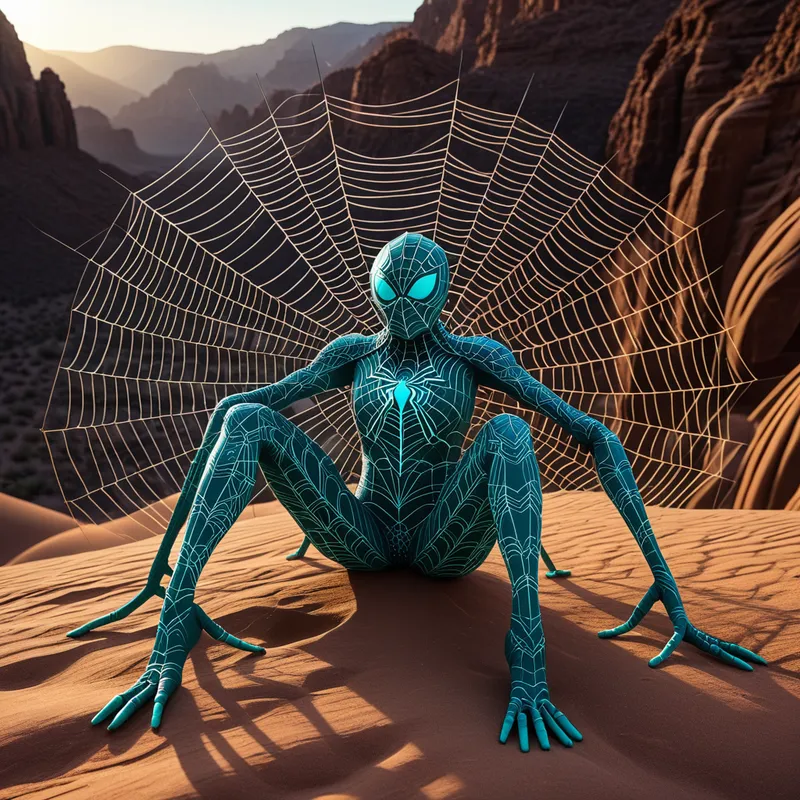
The story of Spider Grandmother, who wove the world from thought and taught that all life is connected in a sacred, delicate web.
The Tale of Spider
In the time before time, when [the world](/myths/the-world “Myth from Tarot culture.”/) was dark [water](/myths/water “Myth from Chinese culture.”/) and swirling mist, there was a thought. And the thought had a voice. It was the voice of [Spider Grandmother](/myths/spider-grandmother “Myth from Native American culture.”/), who existed in the place between the silence and the first sound.
She was alone in [the void](/myths/the-void “Myth from Buddhist culture.”/), but within her being she held the patterns of all that could be. With a breath that was not a breath, she drew from the substance of her own spirit a thread—fine as a sunbeam, strong as a mountain root. She began to sing, a low, humming song of becoming, and as she sang, she wove. She wove a line from the East, the place of dawn and clarity. She wove a line from the South, the place of warmth and growth. She crossed them with threads from the West, the place of water and introspection, and from the North, the place of wind and wisdom.
A web took form in the darkness, a glittering lattice of potential. Upon this first web, she placed a tiny ball of clay, singing life into it. This became the First World, a damp, subterranean realm. But it was confined. So Spider Grandmother, with the help of her twin grandsons, Monster Slayer and Child of the Waters, guided the people upward. They climbed a great reed, a ladder woven from her own silk and the people’s prayers, piercing the roof of one world to emerge into the next.
Again and again, they journeyed. Through the Second World, the Third World, each with its own lessons and dangers. The people sometimes forgot the song, sometimes fought amongst themselves, staining the worlds with discord. Spider Grandmother never forced. She watched, she advised in whispers on [the wind](/myths/the-wind “Myth from Various culture.”/), and she continued to weave the pathways. Finally, they emerged into this, the Fourth World, the Glittering World.
It was vast and beautiful, but harsh and empty. The people were afraid. Spider Grandmother looked upon them with infinite patience. She did not give them fire. She did not give them corn. Instead, she sat beside a young woman who was weeping from hunger. Silently, Spider Grandmother took the woman’s hands and placed within them a spindle and thread. She guided her fingers to twist, to pull, to connect. She showed her how to weave a blanket for warmth, a pouch to carry seeds, a net to catch the wind’s whispers.
“See,” Spider Grandmother’s voice seemed to come from the loom itself. “The world is a web. You are not upon it. You are of it. Your thoughts are threads. Your actions are knots. Weave with care, for what you make, you are also made by.”
And so, she faded from their sight, not as a body, but as a presence felt in the tension of a well-strung bow, the pattern on a pot, the connection between one heart and another. She became the web itself.
Cultural Origins & Context
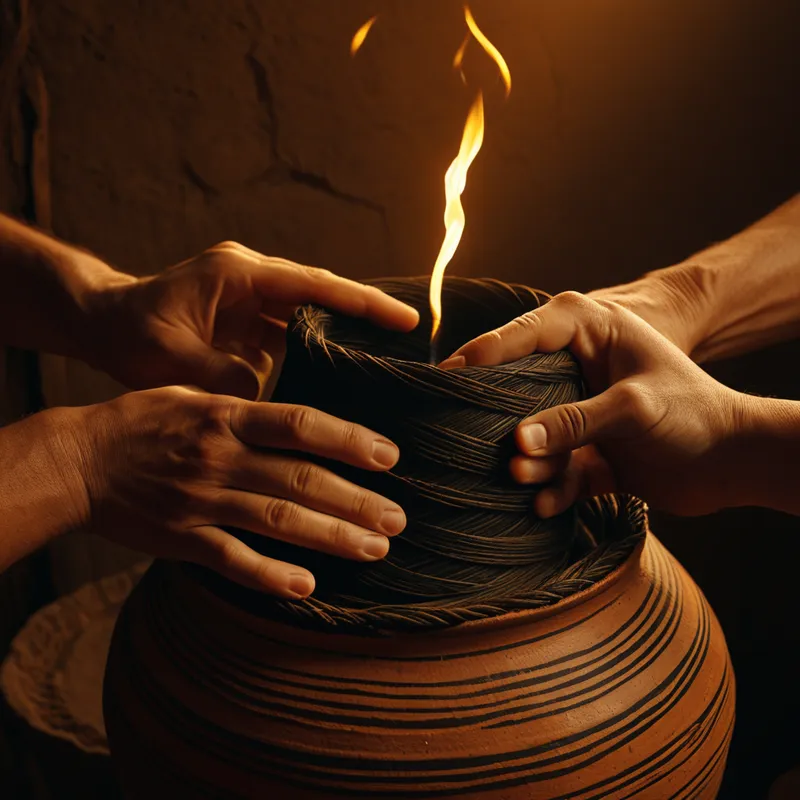
The figure of Spider Grandmother, known as Kokyangwuti or Na’ashjé’ii Asdzą́ą́, is a cornerstone of the oral traditions of many Southwestern Pueblo peoples, including the Hopi and Navajo, as well as other nations. This is not a single, monolithic myth, but a living constellation of stories passed down through generations, often by grandmothers to grandchildren by [the hearth](/myths/the-hearth “Myth from Norse culture.”/) fire or during the long tasks of weaving and pottery-making.
Her stories served as the original instructional manuals and philosophical texts. They explained cosmic origins (the emergence through multiple worlds), established moral and social codes (the consequences of chaos in earlier worlds), and provided the sacred rationale for vital technologies like weaving, agriculture, and pottery. She was not a distant deity to be worshipped, but a foundational ancestor and a practical teacher. The myth functioned as a cultural DNA, encoding the principles of interconnectedness, creative responsibility, and the patient, iterative work of building a sustainable world.
Symbolic Architecture
[Spider](/symbols/spider “Symbol: Represents creativity, feminine energy, and the weaving of destiny, as well as potential feelings of entrapment or anxiety.”/) [Grandmother](/symbols/grandmother “Symbol: The symbol of ‘Grandmother’ often represents wisdom, nurturing, and heritage, reflecting the influence of maternal figures in one’s life.”/) is the archetypal Creatrix, but her method is distinct. She does not command worlds into existence ex nihilo; she weaves them from the pre-existing substance of thought and [relationship](/symbols/relationship “Symbol: A representation of connections we have with others in our lives, often reflecting our emotional state.”/). This is the myth’s central, profound [symbol](/symbols/symbol “Symbol: A symbol can represent an idea, concept, or belief, serving as a powerful tool for communication and understanding.”/): [reality](/symbols/reality “Symbol: Reality signifies the state of existence and perception, often reflecting one’s understanding of truth and life experiences.”/) as a web.
The web is not a trap, but a tapestry of meaning. Every strand is a relationship; every intersection, a moment of choice or consciousness.
The spider’s [body](/symbols/body “Symbol: The body in dreams often symbolizes the dreamer’s self-identity, personal health, and the relationship they have with their physical existence.”/) itself is a map: the cephalothorax (head and body as one) representing the unity of thought and [action](/symbols/action “Symbol: Action in dreams represents the drive for agency, motivation, and the ability to take control of situations in waking life.”/), the abdomen holding the generative [source](/symbols/source “Symbol: The origin point of something, often representing beginnings, nourishment, or the fundamental cause behind phenomena.”/) of the thread—the unconscious potential. Her eight [legs](/symbols/legs “Symbol: Legs in dreams often symbolize movement, freedom, and the ability to progress in life, representing both physical and emotional support.”/) speak of balance, reaching in all the sacred directions simultaneously. The act of weaving the worlds is the act of cosmogenesis, mirrored in the [human](/symbols/human “Symbol: The symbol of a human represents individuality, complexity of emotions, and social relationships.”/) acts of weaving [cloth](/symbols/cloth “Symbol: Cloth often symbolizes protection, comfort, and transformation, serving as a barrier and a medium for expression in dreams.”/), crafting [stories](/symbols/stories “Symbol: Stories symbolize the narratives of our lives, reflecting personal experiences and collective culture.”/), or building [community](/symbols/community “Symbol: Community in dreams symbolizes connection, support, and the need for belonging.”/). The fragile, sticky thread symbolizes the vulnerable yet resilient [nature](/symbols/nature “Symbol: Nature symbolizes growth, connectivity, and the primal forces of existence.”/) of [life](/symbols/life “Symbol: The symbol of ‘Life’ represents a journey of growth, interconnectedness, and existential meaning, encompassing both the joys and challenges that define human experience.”/) and [connection](/symbols/connection “Symbol: Connection symbolizes relationships, communication, and bonds among individuals.”/). To be “caught in the web” is not to be prey, but to become aware of one’s inescapable and sacred place in the network of all being.
The Dreamer’s Resonance
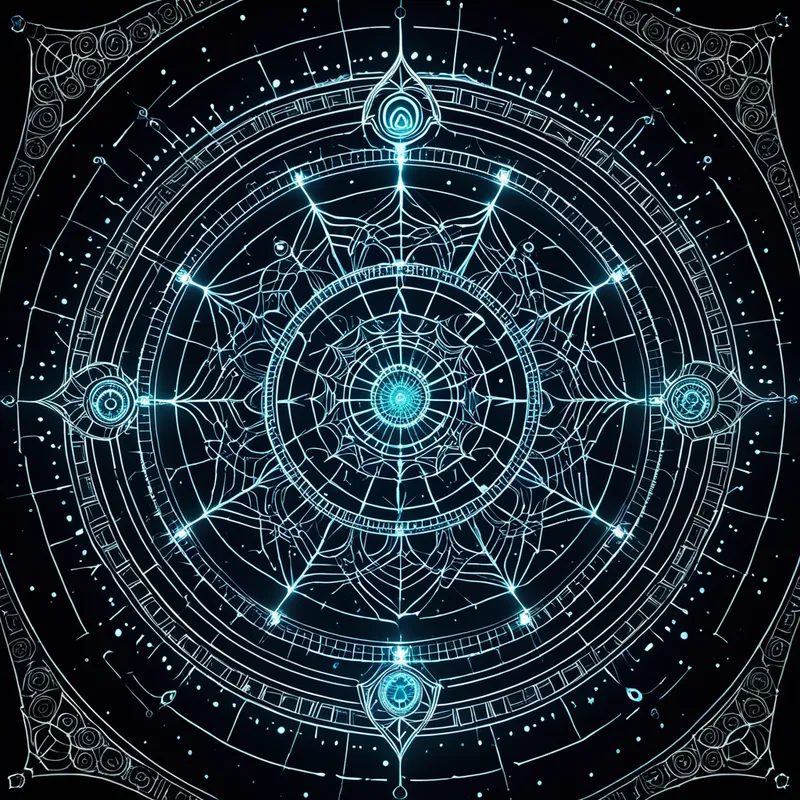
When the pattern of Spider Grandmother weaves into modern dreams, it often signals a profound process of psychic integration. Dreaming of weaving, or of being in a vast, intricate web, points to the dreamer’s dawning awareness of the complex system of relationships that define their life—familial, professional, social, and internal.
A dream of a benevolent spider often arises during times of creative incubation or when one is learning a new, intricate skill. It is the [psyche](/myths/psyche “Myth from Greek culture.”/)’s encouragement to patiently spin one’s own thread of purpose. Conversely, a dream of a broken web, or of being entangled in a chaotic, sticky net, may reflect feelings of being trapped by obligations, enmeshed in dysfunctional dynamics, or experiencing a “creative block” where one’s inner threads are knotted and snarled. The somatic sensation is often one of delicate tension—a palpable sense of interconnected pulls and responsibilities. The dream calls for a Spider Grandmother-like consciousness: to step back, see the larger pattern, and begin the careful work of mending or consciously re-weaving one’s connections.

Alchemical Translation
The myth’s alchemical journey is not a hero’s quest to slay a dragon, but a patient, iterative ascent through worlds—a metaphor for the stages of individuation. The initial, formless void (massa confusa) is the unexamined life. Spider Grandmother’s first thought is the spark of ego-consciousness.
The work of the soul is not to escape the web, but to become a conscious weaver at its nodal point.
Each “world” the people ascend through represents a former psychological state that has become too limiting or conflicted. The crises that force the emergence are our own psychological upheavals—breakdowns that precede breakthroughs. The climbing of the reed is the arduous, focused effort of therapy, introspection, or spiritual practice that leads to a new plane of awareness.
Finally, arriving in the Glittering World (the nascent Self), one faces the ultimate alchemical task: not to receive a finished gift, but to learn to spin and weave from one’s own center. This is the transmutation. The base material of raw experience, memory, and emotion (the clay, the fluff) is spun into the golden thread of insight, which is then woven into the fabric of a coherent, responsible, and connected life. The modern individual, guided by the inner Spider, learns that they are both the weaver and a single, vital strand in a web of meaning far greater than themselves. Their [triumph](/myths/triumph “Myth from Roman culture.”/) is not dominance, but conscious, creative participation.
Associated Symbols
Explore related symbols from the CaleaDream lexicon: