Sir Lancelot and Sir Gawain Myth Meaning & Symbolism
A myth of two knights, one of perfect love and one of perfect loyalty, whose conflict reveals the tragic fracture within the ideal of Camelot.
The Tale of Sir Lancelot and Sir Gawain
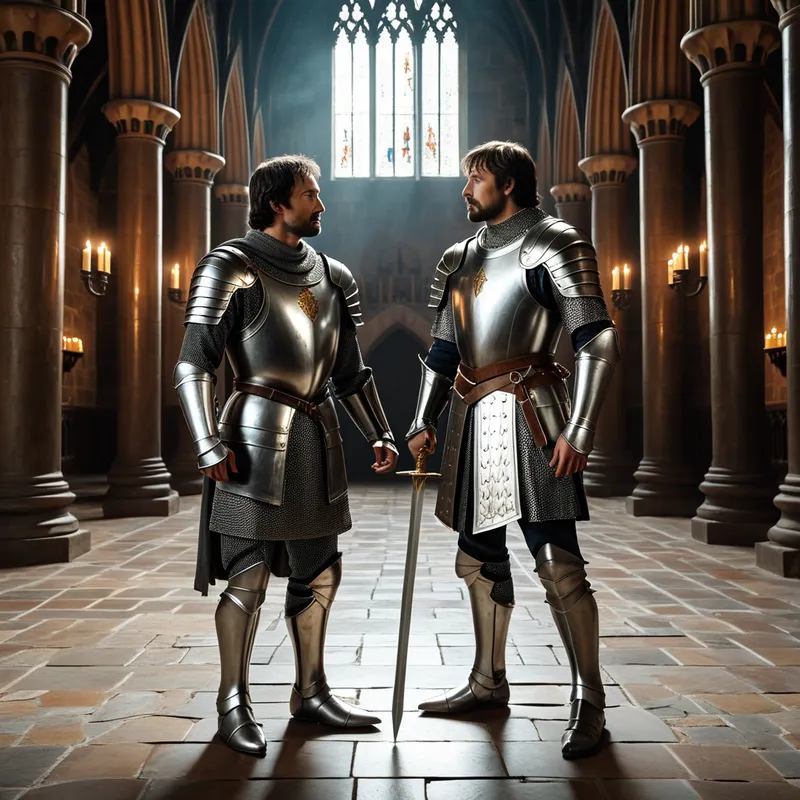
Listen, and hear the tale of the sundering of [the world](/myths/the-world “Myth from Tarot culture.”/)’s heart. In the high hall of Camelot, where the light of an impossible ideal shone brightest, there stood two pillars of that light. One was [Sir Lancelot](/myths/sir-lancelot “Myth from Arthurian culture.”/) du Lac, whose sword-arm was the terror of evil and whose heart was a vessel for a love so profound it bent the very laws of chivalry. The other was [Sir Gawain](/myths/sir-gawain “Myth from Arthurian culture.”/), of the fierce temper and unbreakable word, in whom the sun’s strength waxed and waned with the day, a knight bound not by passion, but by the iron chains of blood and oath.
For years, they were brothers-in-arms, their friendship a jewel in [the crown](/myths/the-crown “Myth from Various culture.”/) of the [Round Table](/myths/round-table “Myth from Arthurian culture.”/). They rode side by side, their laughter echoing in the forests of Logres, their valor a single shield for the realm. But in the secret chambers of the heart, a poison grew. [Lancelot](/myths/lancelot “Myth from Arthurian culture.”/) loved the Queen, [Guinevere](/myths/guinevere “Myth from Arthurian culture.”/), and she him. It was a love that sang of divinity yet walked in [the shadow](/myths/the-shadow “Myth from Jungian culture.”/) of treason. The court whispered, the ideal cracked, but the world held its breath.
The breath was released in a storm of steel and betrayal. The affair was discovered. Guinevere was condemned to the fire. Then came Lancelot’s terrible rescue—a whirlwind of violence at the execution pyre. In the chaos, in his desperate fight to save his love, Lancelot’s sword, once the protector of the innocent, struck down men he once called brothers. Among the slain were the unarmed brothers of Gawain: Gareth and Gaheris, who bore no weapons against him.
From that moment, the music of Camelot became a dirge. Gawain’s grief was not a soft weeping, but a hardening into something crystalline and deadly. The sun of his strength became the relentless, unforgiving sun of vengeance. His love for Lancelot turned to ash, and from that ash rose a single, burning command: [justice](/myths/justice “Myth from Tarot culture.”/). He swore an oath on the blood of his kin that he would pursue Lancelot to the ends of [the earth](/myths/the-earth “Myth from Hindu culture.”/).
Arthur, his king and uncle, heart torn between his wife, his friend, and his nephew, was forced to war. The fellowship shattered. The great quest for the [Holy Grail](/myths/holy-grail “Myth from Arthurian culture.”/) was forgotten, replaced by the siege of Lancelot’s castle. There, at the walls of Joyous Gard, the two greatest knights met, not as brothers, but as embodiments of broken vows.
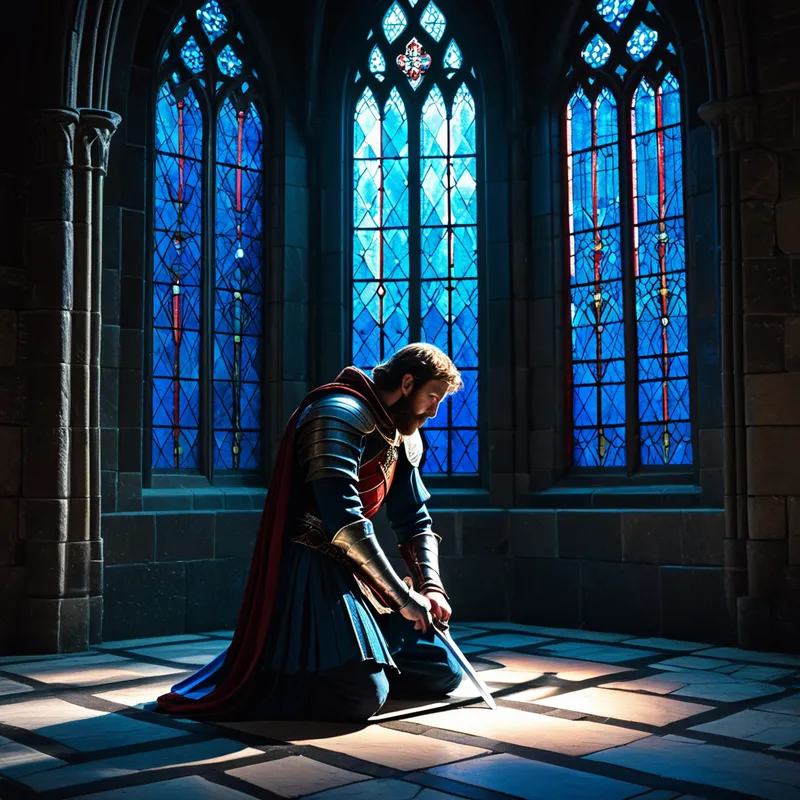
Their final combat was not a glorious tournament melee, but a grim, personal apocalypse. They fought for days, the clash of their swords the only language left between them. Lancelot, the superior warrior, refused to strike the killing blow against his former friend, fighting only to defend himself, his every parry a plea. Gawain, fueled by a wrath that made him invincible until noon, pressed the attack, his blows falling like judgments. In the end, Gawain fell, struck a grievous wound by Lancelot. As he lay dying, not on the battlefield but later in his castle, the fever of vengeance broke. With the clarity of death approaching, he saw the ruin his oath had wrought. He wrote a letter to Lancelot, forgiving him, begging him to return and save Arthur from the coming darkness. But the call came too late. The pillar of loyalty and the pillar of love had broken each other, and the roof of the world fell in upon them all.
Cultural Origins & Context
The myth of Lancelot and Gawain is not a single story but a symphony of tragedy composed over centuries. Its earliest notes are found in the 12th-century French romans of Chrétien de Troyes, where Lancelot first emerges as the paramount, almost mystical lover-knight. Gawain, however, is older, a figure of immense stature from Welsh and earlier Celtic lore, often representing solar prowess and tribal loyalty. The myth as we know it—the friendship, the betrayal, the fatal conflict—was crystallized in the monumental 15th-century English compilation, Le Morte d’Arthur by Sir [Thomas](/myths/thomas “Myth from Christian culture.”/) Malory.
Passed down not by bards of an oral tradition but by clerks and poets in courts and monasteries, the tale functioned as a profound societal mirror for the late medieval world. It explored the crisis of chivalric ideology. What happens when the sacred codes of loyalty to one’s lord, brotherhood in arms, and courtly love enter into fatal contradiction? The story served as a warning and a lament, showing how the very virtues that built Camelot contained the seeds of its destruction. It asked its audience a devastating question: can a human heart faithfully serve two absolute, yet conflicting, gods?
Symbolic Architecture
At its core, this myth is not about two men, but about two irreconcilable principles within the [human](/symbols/human “Symbol: The symbol of a human represents individuality, complexity of emotions, and social relationships.”/)—and particularly the masculine—[psyche](/myths/psyche “Myth from Greek culture.”/). Lancelot embodies the [Anima](/symbols/anima “Symbol: The feminine archetype within the male unconscious, representing soul, creativity, and connection to the inner world.”/), the [soul](/symbols/soul “Symbol: The soul represents the essence of a person, encompassing their spirit, identity, and connection to the universe.”/)-oriented principle. His driving force is the transformative, personal, and often transgressive power of Love (Eros). He represents the individual’s [quest](/symbols/quest “Symbol: A quest symbolizes a journey or search for purpose, fulfillment, or knowledge, often representing life’s challenges and adventures.”/) for wholeness through a deep, soulful [connection](/symbols/connection “Symbol: Connection symbolizes relationships, communication, and bonds among individuals.”/), even if it defies collective law.
Lancelot is the heart that chooses its own beat, even if it arrhythmically dooms the body.
Gawain embodies the [Persona](/symbols/persona “Symbol: The social mask or outward identity one presents to the world, often concealing the true self.”/) and the tribal superego. His driving force is Honor, Duty, and Loyalty to the collective [structure](/symbols/structure “Symbol: Structure in dreams often symbolizes stability, organization, and the framework of one’s life, reflecting how one perceives their environment and personal life.”/) ([Logos](/myths/logos “Myth from Christian culture.”/)). He represents [the law](/symbols/the-law “Symbol: Represents external rules, societal order, moral boundaries, and the tension between personal freedom and collective structure.”/), the clan, the unbreakable [word](/symbols/word “Symbol: Words in dreams often represent communication, expression, and the power of language in shaping our realities.”/) given. He is the pillar that holds the roof of society up, rigid and uncompromising.
Their fatal conflict symbolizes the civil war that erupts when the soul’s deepest longing (Lancelot’s love) commits a perceived atrocity against the [family](/symbols/family “Symbol: The symbol of ‘family’ represents foundational relationships and emotional connections that shape an individual’s identity and personal development.”/) of the conscious [identity](/symbols/identity “Symbol: Identity represents the sense of self, encompassing personal beliefs, cultural background, and social roles.”/) (Gawain’s brothers). The psyche cannot integrate this. The conscious, duty-bound self (Gawain) must declare war on the soulful, feeling function (Lancelot), leading to the devastation of the entire psychic [kingdom](/symbols/kingdom “Symbol: A kingdom symbolizes authority, belonging, and a sense of identity within a larger context or community.”/) (Camelot).
The Dreamer’s Resonance
When this myth stirs in the modern dreamer, it signals a profound interior conflict between two foundational aspects of [the self](/myths/the-self “Myth from Jungian culture.”/). To dream of being torn between two knights, or of being one pursued relentlessly by the other, speaks to a lived experience of impossible choice.
Dreaming from the “Lancelot” position may involve sensations of exquisite love paired with crushing guilt, of possessing a great gift that is also a curse. The somatic feeling is one of piercing heartache, a radiant warmth in the chest shadowed by a cold dread in the gut. One is in love with one’s own authenticity, yet it feels like betrayal to the people or principles one once held sacred.
Dreaming from the “Gawain” position is characterized by a cold, righteous fury, a sense of betrayal so deep it becomes an identity. The body may feel rigid, armored, fueled by a burning, acidic energy in the solar plexus. It is the dream of the absolutist, the keeper of oaths, who discovers that the world’s complexity has violated his black-and-white code, and now his entire being is bent on a vengeance that feels like justice. The dreamer is undergoing a crisis of integrity, where forgiveness feels like a surrender of the self.
Alchemical Translation
The alchemical process modeled here is the mortificatio—the necessary death of a prior state of psychic organization. The perfect, but naive, union of Lancelot and Gawain as brothers-in-arms represents the initial, unstable compound of the personality. The revelation of the affair is the [separatio](/myths/separatio “Myth from Alchemical culture.”/), where the components (soul-love and tribal-duty) are violently split apart. Their war is [the nigredo](/myths/the-nigredo “Myth from Alchemical culture.”/), the blackening, the darkest night of the soul where these powerful forces seek to annihilate each other.
The triumph is not in victory, but in the wound that opens the heart to a truth beyond both principles.
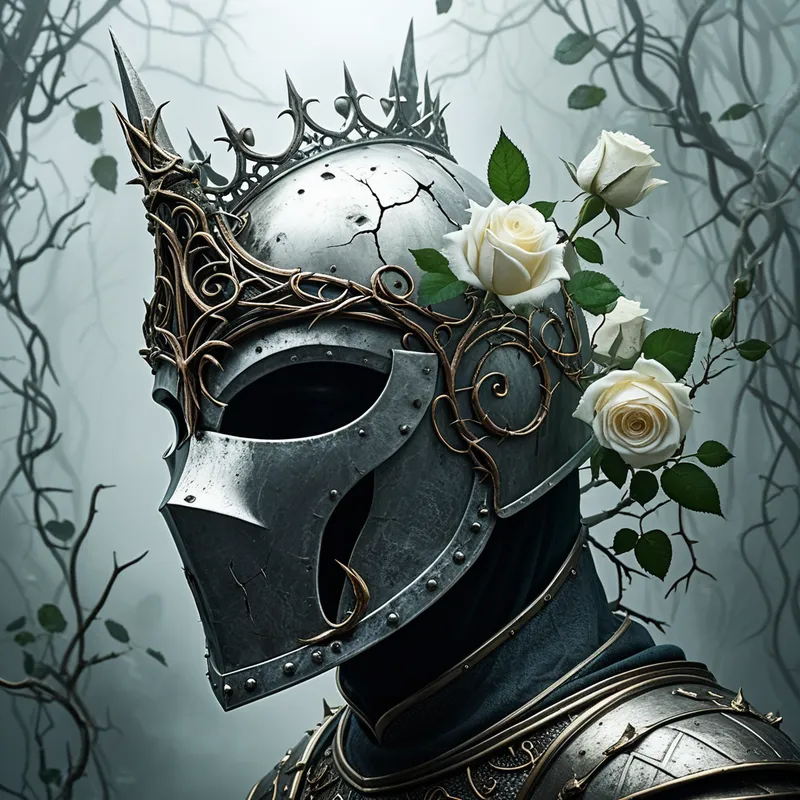
Gawain’s dying forgiveness is the critical turning point—the albedo or whitening. It represents the moment when the rigid, conscious attitude ([the ego](/myths/the-ego “Myth from Jungian culture.”/)’s demand for justice) is humbled by proximity to death and finally releases its absolute claim. It sees the humanity of its enemy. This forgiveness is the first hint of a higher synthesis, a consciousness that can hold both love and law without one having to destroy the other.
For the modern individual, the myth instructs that individuation often requires the tragic, seemingly irreparable fracture of our inner Camelot. We must live through the civil war between our deepest loves and our sworn duties. The goal is not to crown Lancelot or Gawain as the victor, but to reach Gawain’s deathbed realization: to forgive oneself and the other for the inevitable betrayals that occur when a complex soul navigates a world of simple rules. The healed psyche is one that carries the memory of both the lover and the warrior, the transgression and the oath, integrated not in perfect harmony, but in a sorrowful, hard-won peace.
Associated Symbols
Explore related symbols from the CaleaDream lexicon: