Sir Galahad's Shield Myth Meaning & Symbolism
A sacred shield, destined for the purest knight, reveals itself only to one who has never failed his own soul.
The Tale of Sir Galahad’s Shield
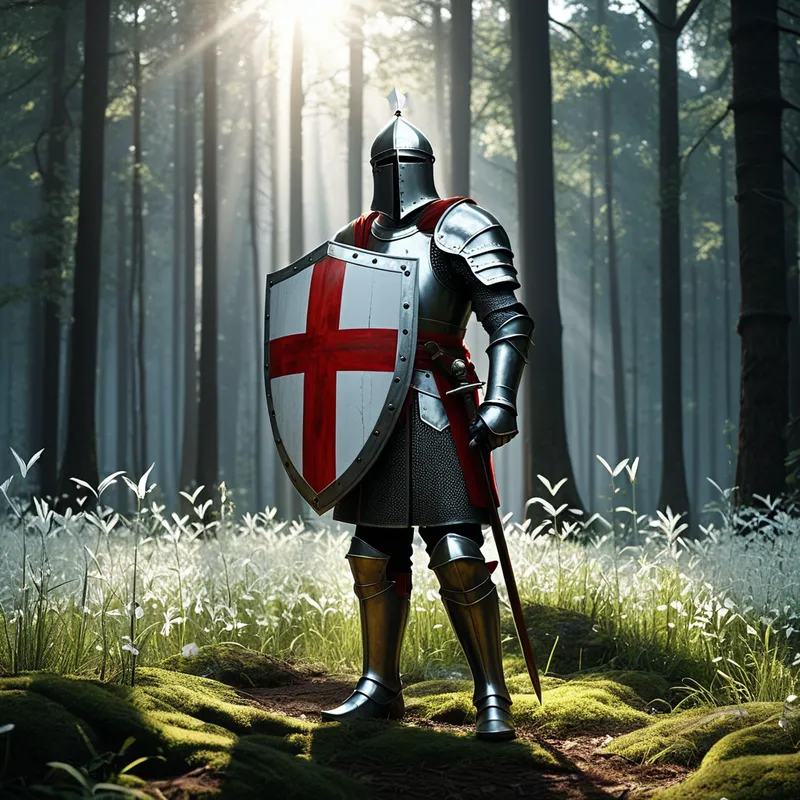
Listen, and I will tell you of a shield that was not forged by mortal hands, but woven from destiny itself. In the days when the sun of [King Arthur](/myths/king-arthur “Myth from Global/Universal culture.”/) hung high, yet cast long shadows, there came a whisper on [the wind](/myths/the-wind “Myth from Various culture.”/). It spoke of a sacred relic, a shield of surpassing power, hidden away since the time of [Merlin](/myths/merlin “Myth from Arthurian culture.”/). It was said this shield bore a cross of the reddest crimson upon a field of purest white, and that it was fated for one knight alone—the knight who was the flower of all chivalry, whose heart was a flawless mirror to the divine.
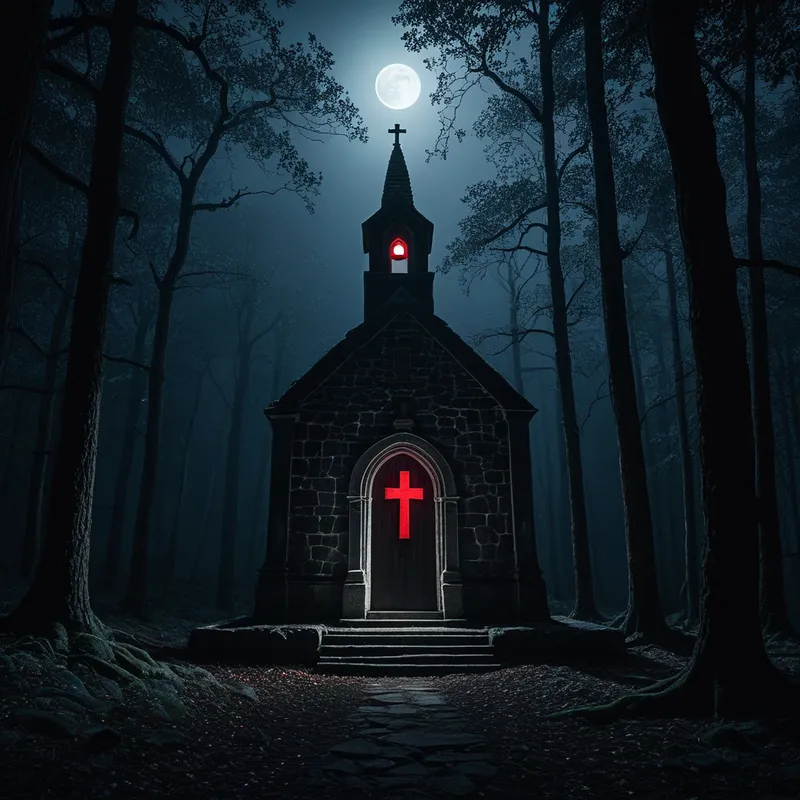
The quest for this shield fell not to the boldest or the strongest first, but to a good and worthy knight named [Sir Lancelot](/myths/sir-lancelot “Myth from Arthurian culture.”/). Guided by a holy hermit, he journeyed to a lonely, ancient chapel, deep within a whispering wood where the trees seemed to remember the old gods. The air was thick with silence and the scent of damp stone. Within the desolate chapel, lit only by a single, dusty beam of light, the shield hung above a stone altar. It was beautiful, yes, but as [Lancelot](/myths/lancelot “Myth from Arthurian culture.”/) reached for it, a voice like cracking ice spoke from the shadows. A spectral, armored knight, pale as death, emerged and struck him a blow so fierce it laid the great Lancelot low for a month. The shield was not for him. His love for Queen [Guinevere](/myths/guinevere “Myth from Arthurian culture.”/), however noble in its passion, was a flaw in the perfect glass of his soul.
Years passed. Then came [Sir Galahad](/myths/sir-galahad “Myth from Arthurian culture.”/). He arrived at the same chapel, not seeking glory, but following a quiet, internal compass. The place knew him. The gloom seemed to part. As he approached the altar, the white shield did not merely hang; it invited. He took it, and no phantom knight opposed him. Instead, a miracle unfolded. A venerable, ancient monk appeared, as if stepping from the very walls. His voice was the rustle of sacred pages.
He told the tale of the shield’s making. Long ago, in the days of [Joseph](/myths/joseph “Myth from Biblical culture.”/) of Arimathea, a devout king named Evelake had been wounded in battle. [Joseph](/myths/joseph “Myth from Biblical culture.”/), with a cloth that had touched [the Holy Grail](/myths/the-holy-grail “Myth from Global/Universal culture.”/) itself, healed him. In his fervent gratitude, Evelake had a shield made. [Joseph](/myths/joseph “Myth from Biblical culture.”/), blessing it, prophesied that it would remain untouched until the coming of [Galahad](/myths/galahad “Myth from Arthurian culture.”/), the last of Evelake’s line. Upon the shield, [Joseph](/myths/joseph “Myth from Biblical culture.”/) traced a cross with his own finger—and the wood bled, staining the symbol an eternal, sacred red. This was no tool of war; it was a testament to faith, a covenant in wood and paint, waiting through centuries for the one heart pure enough to carry its meaning without breaking.
Galahad lifted the shield. It did not feel heavy with age, but light with purpose. Later, in his first battle bearing it, the truth of its power was shown. A foe struck the shield, and the attacker was thrown back, broken, while Galahad stood unmoved. The shield did not protect the body; it protected the destiny of the one who bore it, turning violence back upon those who served it with impure intent. It was the armor of the soul, and Galahad, the flawless vessel, had been found.
Cultural Origins & Context
The tale of Galahad’s shield is woven into the later, more explicitly spiritual strands of the Arthurian canon, primarily found in the 13th-century Vulgate Cycle and Sir [Thomas](/myths/thomas “Myth from Christian culture.”/) Malory’s Le Morte d’Arthur. This was an era when the earlier Celtic warrior myths of Arthur were being systematically Christianized by monastic scribes and courtly poets. The shield’s story functions as a crucial piece of theological world-building, connecting the [Holy Grail](/myths/holy-grail “Myth from Arthurian culture.”/) lineage directly to the pinnacle of Arthurian knighthood.
Told in hushed tones in scriptoriums and recited in noble halls, the myth served a dual societal function. For the aristocracy, it reinforced an idealized, almost impossible code of conduct: knighthood was not merely martial prowess, but a state of spiritual grace. For the religious institutions, it legitimized the Arthurian saga as a vehicle for Christian parable, baptizing the old pagan heroes of Britain into a new, divine narrative. The shield becomes a narrative device that validates Galahad’s unique status, setting him apart even from his magnificent father, Lancelot, and marking him as the singular, predestined agent of [the Grail Quest](/myths/the-grail-quest “Myth from Arthurian culture.”/).
Symbolic Architecture
The [shield](/symbols/shield “Symbol: A symbol of protection, defense, and boundaries, representing personal security, resilience, and the need to guard against external threats or emotional harm.”/) is an [icon](/symbols/icon “Symbol: A sacred image or revered figure representing divine presence, artistic genius, or cultural authority, often serving as a focal point for devotion or identity.”/) of the Self in its most integrated and potent form. The white field represents the purified [consciousness](/symbols/consciousness “Symbol: Consciousness represents the state of awareness and perception, encompassing thoughts, feelings, and experiences.”/), the [tabula rasa](/myths/tabula-rasa “Myth from Alchemical culture.”/) wiped clean of personal sin and the stains of unconscious compulsion. The red cross is the [mark](/symbols/mark “Symbol: A ‘mark’ often symbolizes identity, achievement, or a defining characteristic in dreams.”/) of the lifeblood of [spirit](/symbols/spirit “Symbol: Spirit symbolizes the essence of life, vitality, and the spiritual journey of the individual.”/), the conscious suffering and sacrifice required to achieve that purity. It is not a cross of [torment](/symbols/torment “Symbol: A state of intense physical or mental suffering, often representing unresolved inner conflict, guilt, or psychological distress.”/), but of triumphant [identity](/symbols/identity “Symbol: Identity represents the sense of self, encompassing personal beliefs, cultural background, and social roles.”/).
The shield is not a wall to hide behind, but a mirror that only the true self can bear to see.
Sir Lancelot’s failure is profoundly symbolic. He represents the heroic ego at its [zenith](/symbols/zenith “Symbol: The highest point in the sky or life’s peak moment, representing spiritual culmination, achievement, and divine connection.”/)—brilliant, passionate, and ultimately flawed. His love, though grand, is a form of attachment that anchors him to the worldly [realm](/symbols/realm “Symbol: The symbol of ‘Realm’ often signifies the boundaries of one’s consciousness, experiences, or emotional states, suggesting aspects of reality that are either explored or ignored.”/). The shield rejects him because the integrated Self cannot be claimed by the ambitious ego; it must be recognized by the [soul](/symbols/soul “Symbol: The soul represents the essence of a person, encompassing their spirit, identity, and connection to the universe.”/) that has achieved alignment. Galahad’s success is not an [action](/symbols/action “Symbol: Action in dreams represents the drive for agency, motivation, and the ability to take control of situations in waking life.”/), but a state of being. He does not “win” the shield; he is the shield manifested. The phantom [knight](/symbols/knight “Symbol: The knight symbolizes honor, chivalry, and the pursuit of noble causes, reflecting the ideal of the noble warrior.”/) who strikes Lancelot is the personified judgment of his own unresolved [shadow](/symbols/shadow “Symbol: The ‘shadow’ embodies the unconscious, repressed aspects of the self and often represents fears or hidden emotions.”/), the consequence of an unintegrated [life](/symbols/life “Symbol: The symbol of ‘Life’ represents a journey of growth, interconnectedness, and existential meaning, encompassing both the joys and challenges that define human experience.”/).
The Dreamer’s Resonance
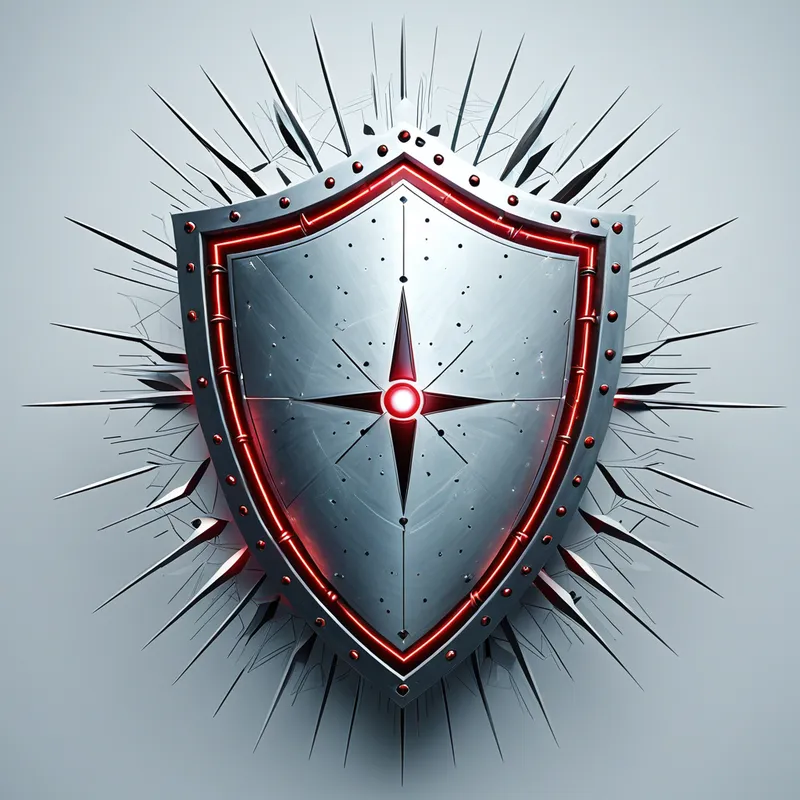
To dream of Galahad’s shield is to encounter a symbol of one’s own latent integrity. It often appears in dreams during periods of profound ethical or existential testing—when one is faced with a choice between personal desire and a deeper, more difficult truth. The somatic experience in the dream is key: does the shield feel impossibly heavy, or light as air? Does its red cross glow warmly or bleed ominously?
Such a dream signals a psychic initiation. The dreamer is being confronted with the question: what, in your life, are you not pure enough in intent to carry? What sacred responsibility or personal truth have you avoided because you fear your own flaws will cause you to fail it, as Lancelot failed? The shield in a dream does not offer protection; it offers a criterion. Its appearance suggests the unconscious is presenting the ideal of the integrated Self, not as a condemnation, but as a [north star](/myths/north-star “Myth from Various culture.”/) for the soul’s navigation. The anxiety or awe felt upon touching it in the dreamscape is the friction between the current ego-state and the potential wholeness of [the Self](/myths/the-self “Myth from Jungian culture.”/).
Alchemical Translation
The myth models the alchemical process of individuation—the journey toward psychic wholeness. The initial state is represented by King Evelake: wounded, incomplete, and in need of grace ([the Grail](/myths/the-grail “Myth from Arthurian culture.”/) cloth). The application of the transcendent substance (the [Grail](/myths/grail “Myth from Christian culture.”/)) begins the healing, but the work is not complete until the artifact of that transformation (the shield) is passed to its ultimate heir.
Lancelot’s attempt is the [nigredo](/myths/nigredo “Myth from Alchemical culture.”/), the blackening. It is the necessary, humbling failure of [the ego](/myths/the-ego “Myth from Jungian culture.”/) when it tries to seize the treasure of the Self through will alone. This failure is not a defeat, but a crucial purification by fire, burning away the illusion that the heroic [persona](/myths/persona “Myth from Greek culture.”/) is [the summit](/myths/the-summit “Myth from Taoist culture.”/) of development.
The alchemy occurs not in the claiming of the shield, but in the lifelong preparation of the vessel meant to carry it.
Galahad embodies the final stages: albedo (the whitening, the purity of the field) and [rubedo](/myths/rubedo “Myth from Alchemical culture.”/) (the reddening, the cross of conscious, lived spirit). His entire life is a preparatio. For the modern individual, the myth instructs that the goal is not to become a sinless paragon, but to engage in the relentless inner work of aligning one’s actions with one’s deepest, most authentic truth. The “shield” we seek is not an external reward, but the earned, unshakable capacity to stand in our own truth, our own destiny, so completely that the conflicts of [the world](/myths/the-world “Myth from Tarot culture.”/) break against us without causing us to betray ourselves. We are all, in our own quests, both Lancelot—tested and found wanting—and potential Galahads, preparing our inner chapel for a relic we may only glimpse in dreams.
Associated Symbols
Explore related symbols from the CaleaDream lexicon: