
Simon Peter Myth Meaning & Symbolism
A fisherman is renamed 'the Rock' by a divine teacher, endures a crisis of faith through denial, and emerges transformed as a foundational pillar.
The Tale of Simon Peter
Listen, and hear the tale of the man who was a rock, and the rock that was a man.
In the time when [the world](/myths/the-world “Myth from Tarot culture.”/) was thick with gods and empires, by the grey, wind-whipped waters of Kinneret, there lived a man of the nets. His name was Simon, son of [Jonah](/myths/jonah “Myth from Christian culture.”/), and his world was the smell of fish and wet rope, the groan of wood on [water](/myths/water “Myth from Chinese culture.”/), the rhythm of the cast and the haul. He was a man of substance and storm, his heart as deep and as changeable as [the sea](/myths/the-sea “Myth from Greek culture.”/) he worked.
Then came the Messiah, walking the shoreline not as a king but as a teacher. His voice cut through the morning mist, not with command, but with invitation: “Follow me, and I will make you [fishers of men](/myths/fishers-of-men “Myth from Biblical culture.”/).” And Simon, this man of the tangible world, felt the nets slip from his hands. He left the boat, the familiar sway of [the deck](/myths/the-deck “Myth from Tarot culture.”/), the known weight of the catch, for a path with no map.
This teacher saw not just the man, but the core within. “You are Simon,” he said, his gaze holding the weight of mountains. “You shall be called [Peter](/myths/peter “Myth from Biblical culture.”/).” A new name, a prophecy etched into his very being. [Peter](/myths/peter “Myth from Biblical culture.”/) walked on water at the call of that voice, only to sink when he remembered [the wind](/myths/the-wind “Myth from Various culture.”/). He proclaimed his teacher the Christ with thunderous conviction, only to be rebuked as a stumbling block moments later. He was a man of magnificent, flawed faith, a cliff of devotion constantly eroded by the sea of his own fear.
The crisis came in [the shadow](/myths/the-shadow “Myth from Jungian culture.”/) of the olive trees, in the high priest’s courtyard. Firelight danced on anxious faces. A servant girl’s glance, a pointed finger, a simple question in the cold night air: “You were with him.” Once. Twice. A third time, with an oath and a curse: “I do not know the man!” The words hung in the air, bitter and final. And then, cutting through the gloom, the crow of a rooster. The sound was a sword. Peter met his teacher’s gaze across the chaos, and in that moment, the rock shattered. He went out and wept such tears that could erode stone.
But the tale does not end in ash. At dawn, after the unthinkable had passed, the teacher—alive again—found his broken disciple on another shore. Not with accusation, but with a charcoal fire and a simple, devastating question, asked three times: “Simon, son of Jonah, do you love me?” With each choked affirmation—“You know that I love you”—the shattered pieces were gathered. “Feed my lambs. Tend my sheep.” The commission was given not to the flawless hero, but to the forgiven friend. The rock, fractured by its own failure, was cemented back together with a love stronger than death. He who had denied the foundation was commanded to become it.

Cultural Origins & Context
The myth of Simon Peter is woven into the foundational texts of Christianity, primarily the four canonical Gospels and the Acts of the Apostles. It was an oral tradition long before it was written, circulating among early communities who saw in Peter not a distant saint, but a mirror. He was the most prominent of the Apostles, a leader in the nascent [Jerusalem](/myths/jerusalem “Myth from Biblical culture.”/) church, and by tradition, the first bishop of Rome.
His story functioned as powerful pastoral theology. For early followers, often persecuted and uncertain, Peter’s journey validated human frailty within the divine narrative. It was a story told to comfort the cowardly, to assure the denier that failure was not the end of the road, but a potential turning point. It established a model of leadership based not on innate perfection, but on redeemed brokenness and rehabilitated trust. The passing down of this myth, especially the detail of the threefold denial and threefold restoration, served as a potent ritual of memory, linking every believer’s personal failures to the possibility of transformative grace.
Symbolic Architecture
At its [heart](/symbols/heart “Symbol: The heart symbolizes love, emotion, and the core of one’s existence, representing deep connections with others and self.”/), the myth of Peter is an alchemical [drama](/symbols/drama “Symbol: Drama signifies narratives, emotional expression, and the exploration of human experiences.”/) of [identity](/symbols/identity “Symbol: Identity represents the sense of self, encompassing personal beliefs, cultural background, and social roles.”/). Simon, the natural man defined by [family](/symbols/family “Symbol: The symbol of ‘family’ represents foundational relationships and emotional connections that shape an individual’s identity and personal development.”/) and trade, is transfigured into Peter, the symbolic entity tasked with an impossible cosmic function. The rock is not a [symbol](/symbols/symbol “Symbol: A symbol can represent an idea, concept, or belief, serving as a powerful tool for communication and understanding.”/) of rigid, unmoving perfection, but of foundational reliability formed through fracture.
The most solid foundation is often the one that has known its own capacity to crumble.
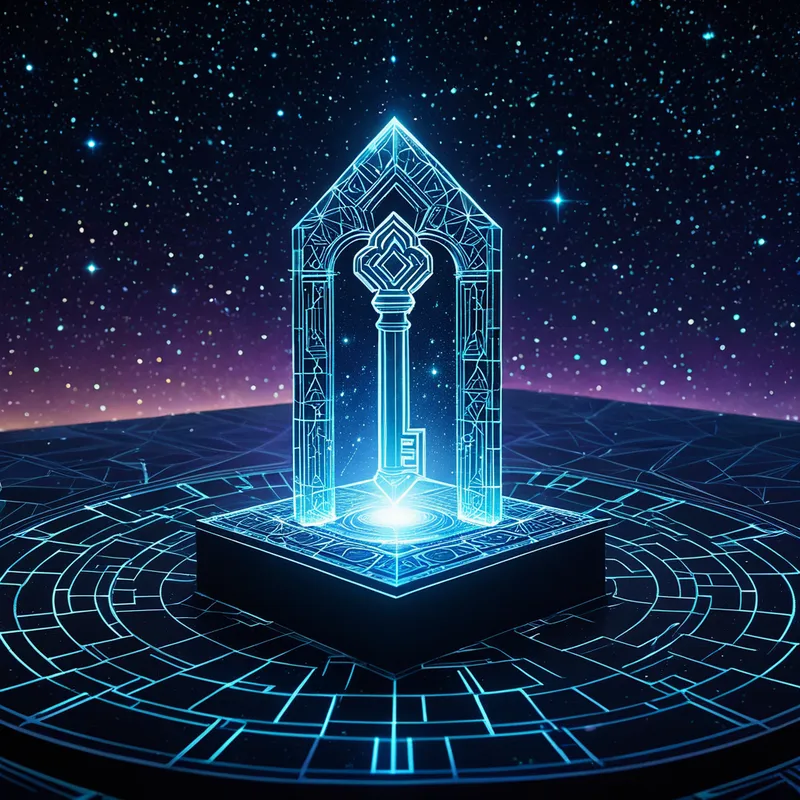
The key given to Peter (“I will give you the keys of the [kingdom](/symbols/kingdom “Symbol: A kingdom symbolizes authority, belonging, and a sense of identity within a larger context or community.”/) of [heaven](/symbols/heaven “Symbol: A symbolic journey toward ultimate fulfillment, spiritual transcendence, or connection with the divine, often representing life’s highest aspirations.”/)”) symbolizes conscious [authority](/symbols/authority “Symbol: A symbol representing power structures, rules, and control, often reflecting one’s relationship with societal or personal governance.”/) and the power of discernment—but it is an authority earned through the humiliating [loss](/symbols/loss “Symbol: Loss often symbolizes change, grief, and transformation in dreams, representing the emotional or psychological detachment from something or someone significant.”/) of all self-certainty. The rooster’s crow is the alarm of the conscience, the shocking, external signal that forces [the ego](/myths/the-ego “Myth from Jungian culture.”/) to confront its own [betrayal](/symbols/betrayal “Symbol: A profound violation of trust in artistic or musical contexts, often representing broken creative partnerships or artistic integrity compromised.”/) of the deeper Self. The threefold questioning by the resurrected [teacher](/symbols/teacher “Symbol: The symbol of the teacher in dreams often represents guidance, wisdom, and the process of learning or self-discovery.”/) is not a punitive inquisition, but a sacred, surgical reconstruction of the [personality](/symbols/personality “Symbol: Personality in dreams often symbolizes the traits and characteristics of the dreamer, reflecting how they perceive themselves and how they believe they are perceived by others.”/), rebuilding the [relationship](/symbols/relationship “Symbol: A representation of connections we have with others in our lives, often reflecting our emotional state.”/) on the very [site](/symbols/site “Symbol: The concept of a ‘site’ in dreams often represents a specific location associated with personal memories, emotional experiences, or stages in one’s life.”/) of its ruin.
Psychologically, Peter embodies the ego in relation to the Self. He is the part of us that enthusiastically accepts a calling, attempts the miraculous, makes grand declarations of loyalty, and then, under the pressure of survival and social [threat](/symbols/threat “Symbol: A threat in dreams often reflects feelings of vulnerability, anxiety, or fear regarding one’s safety or well-being. It can indicate unresolved conflicts or the presence of external pressures.”/), utterly disintegrates. His [journey](/symbols/journey “Symbol: A journey in dreams typically signifies adventure, growth, or a significant life transition.”/) maps the necessary [death](/symbols/death “Symbol: Symbolizes transformation, endings, and new beginnings; often associated with fear of the unknown.”/) of the ego’s idealized [image](/symbols/image “Symbol: An image represents perception, memories, and the visual narratives we create in our minds.”/) of itself, so that a more authentic, grounded [consciousness](/symbols/consciousness “Symbol: Consciousness represents the state of awareness and perception, encompassing thoughts, feelings, and experiences.”/) can be established.
The Dreamer’s Resonance
When this myth stirs in the modern [psyche](/myths/psyche “Myth from Greek culture.”/), it often manifests in dreams of profound personal failure or betrayal. One might dream of denying a core value or a loved one to fit in with a hostile crowd. The somatic feeling is one of gut-wrenching shame, a hot flush of recognition, often accompanied by a startling sound (like a bell or alarm) that crystallizes the moment of truth.
This is not merely a nightmare of guilt. It is the psyche staging the “Peter moment”: the crisis where the [persona](/myths/persona “Myth from Greek culture.”/)—[the mask](/myths/the-mask “Myth from Various culture.”/) we wear to navigate the world—cracks under pressure and reveals the cowardice or compromise beneath. The dream is a painful but necessary gift. It forces the dreamer to confront the gap between who they aspire to be and who, in a moment of weakness, they fear they truly are. The weeping that follows in the dream-state is the beginning of the alchemical [solutio](/myths/solutio “Myth from Alchemical culture.”/)—the dissolving of the old, brittle structure of the ego, making it pliable for reconstitution.

Alchemical Translation
The individuation process modeled by Peter’s myth is the opus of turning leaden failure into golden foundation. It follows a precise, brutal, and redemptive sequence.
First, the Naming (Calcinatio): The conscious ego (Simon) is called by [the Self](/myths/the-self “Myth from Jungian culture.”/) to a higher purpose and given a new, symbolic identity (Peter). This is the fiery inspiration that burns away lesser ambitions. Then comes the Testing (Solutio): The ego attempts to operate from this new identity but fails spectacularly, dissolving in the waters of its own fear and social pressure. The denial is the nadir, the leaden state of utter worthlessness.
The cornerstone is not laid upon smooth, untouched ground, but upon the leveled ruins of previous attempts.
The Confrontation (Coagulatio): The crow of the rooster is the coniunctio of inner truth and outer reality. This shocking confrontation causes the dissolved elements to begin to re-coagulate, not as they were, but around the hard, painful kernel of admitted truth. Finally, the Restoration (Sublimatio): The Self returns not to punish, but to rehabilitate. The threefold questioning is a ritual of re-membering. By consciously reaffirming commitment (“Do you love me?”) on the exact site of the betrayal, the fractured psyche is reintegrated at a higher level. The commission—“Feed my sheep”—transmutes the personal failure into a social function. The redeemed ego is no longer the boastful “rock,” but the servant who, having known his own fragility, can now provide stable, compassionate ground for others.
Thus, the myth teaches that the path to becoming a true foundation—for oneself or for a community—leads directly through the courtyard of one’s own most devastating denial. The rock is made solid not by never breaking, but by being lovingly pieced back together, its very fractures now holding the light.
Associated Symbols
Explore related symbols from the CaleaDream lexicon: