Shape-shifter Tales Myth Meaning & Symbolism
Ancient tales of beings who cross the skin of the world, teaching that form is a choice and identity a river, not a stone.
The Tale of Shape-shifter Tales
Listen. The world is not as solid as your hands tell you. In the time when the pines whispered older secrets and the rivers sang maps to the spirit world, there walked those who knew this truth. They were the ones who could step through the skin of things.
Consider Coyote, but not just as a beggar or a fool. In the beginning-days, when the People were new and the world still soft, Coyote walked on two legs, his eyes holding the fire of both man and beast. He would come to a village not as a stranger, but wearing the face of a forgotten cousin, his laughter a little too knowing. He taught through chaos. He would steal the sun only to learn its heat was not for keeping, or marry a star and find her light too cold for a earth-bound heart. His shifts were lessons written in misadventure, reminding all that hunger, curiosity, and love could wear a thousand coats.
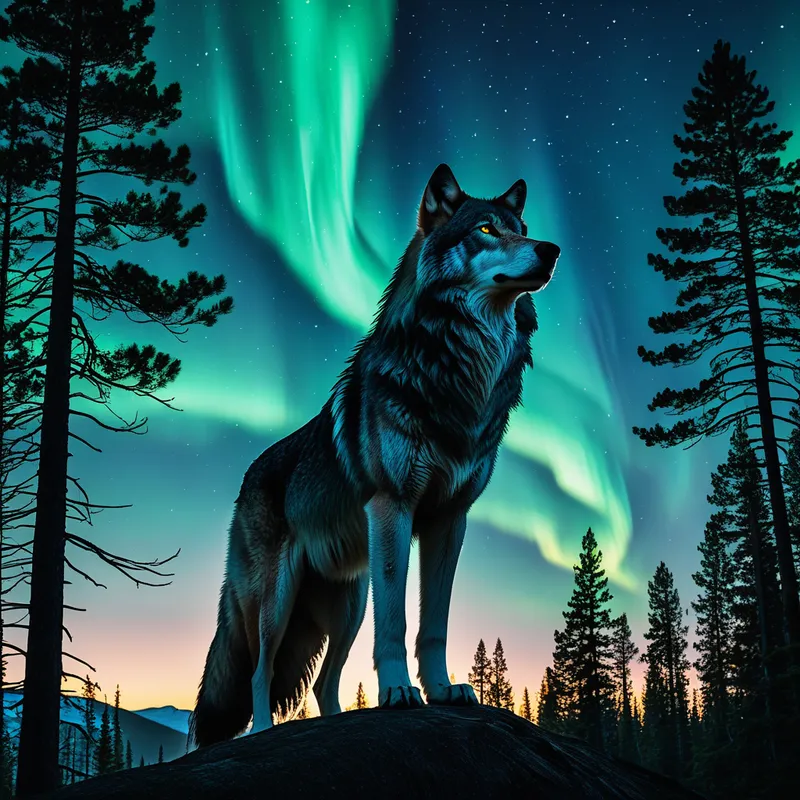
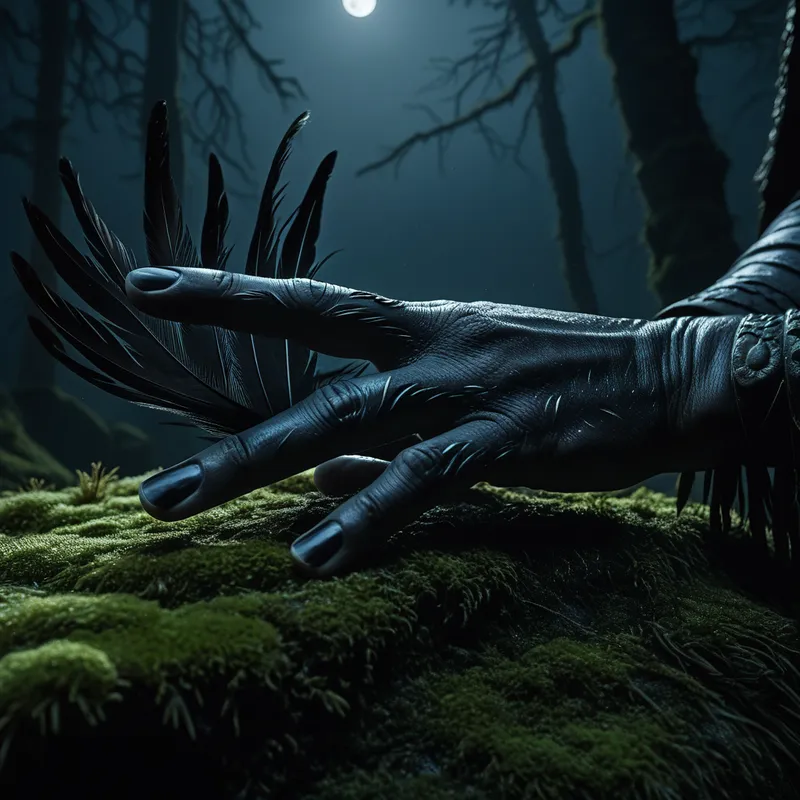
Then there is the Skinwalker, a tale told in lower tones when the fire burns low. This is not a gift, but a hard-won, terrible craft. It speaks of one who sought power in the deepest solitude, who learned the songs that untie the spirit from its single form. They say such a one would go to a place of power at night, draped in the pelt of the wolf or the bear. They would sing the old, twisting words, and the change would come—not a gentle flow, but a wrenching of bone and a stretching of sinew, until the human stood on four legs, seeing the world through amber, predatory eyes. This power was a heavy burden, a path that often led away from the warmth of the hearth forever.
And from the mist-shrouded coasts of the Northwest come stories of the Killer Whale People. A man, a great fisherman, respected by the sea, might one day simply not return from the waves. His family would mourn. But later, a pod of orcas would linger unusually close to the shore, and one, marked with a pattern reminiscent of the man’s tattoo, would breach with a profound, knowing gaze. He had not drowned; he had remembered an older pact, and put on the sleek, powerful skin of the ocean’s chief. His transformation was a homecoming, a return to a primordial family, teaching that our forms are but temporary lodgings for an eternal spirit.
Cultural Origins & Context
These tales are not mere folklore; they are the living breath of a worldview. For countless Indigenous nations across the continent—from the Navajo (Diné) in the Southwest to the Lakota on the Plains, and the Tlingit in the Northwest—the universe is understood as a profoundly interconnected web of relations. In this web, the boundaries between “human,” “animal,” “plant,” and “spirit” are seen as permeable, negotiated, and often ceremonial.
Shape-shifter stories served as the narrative embodiment of this philosophy. They were not told for simple entertainment around the fire (though they enthralled), but as foundational teaching tools. Elders used them to explain the natural world: why Coyote’s fur is tipped with grey (from the ashes of a stolen fire), or to instill cultural values about the ethical use of power, the consequences of hubris, or the importance of kinship that extends beyond the human tribe.
The transmission was oral, sacred, and context-specific. A story about a Skinwalker (or yee naaldlooshii) carries immense weight and caution within Navajo culture, speaking to taboos and the dangers of witchcraft. In contrast, a tale of an ancestor becoming one of the Killer Whale People might be a story of comfort and connection, told to affirm a clan’s lineage and its sacred relationship with a particular animal species. The function was always to bind the community to the land, its creatures, and the unseen order of things.
Symbolic Architecture
At its core, the shape-shifter myth dismantles the tyranny of the fixed self. It is a profound psychological symbol for the fluidity of identity and the multiplicity of potentials within a single being.
The shape-shifter is the living question: “Who am I, if I am not only this?”
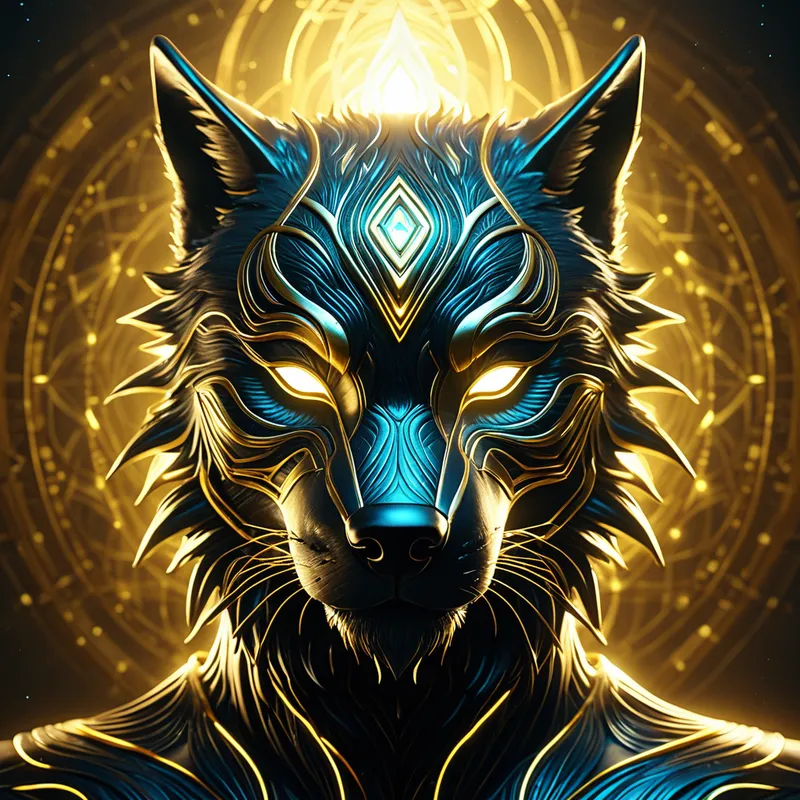
The act of transformation symbolizes the ultimate adaptability of consciousness. To wear another skin is to gain its perspective, its wisdom, and its limitations. Coyote’s foolishness in a wolf’s body teaches us about the perils of acting from an unintegrated instinct. The Skinwalker’s lonely power speaks to the alienation that comes from using transformation for separation rather than connection. The animal forms are not costumes, but archetypal energies: the Bear’s healing solitude, the Raven’s trickster intelligence, the Wolf’s loyal ferocity.
The myth also represents the shadow—the parts of ourselves we disown, fear, or deem “not me.” The shape-shifter makes the shadow tangible, giving it form and agency. It says the wild, instinctual, “animal” self is not separate from the human; it is a layer of our being that can be engaged with, learned from, and, with great respect and integrity, sometimes embodied.
The Dreamer’s Resonance
When the shape-shifter enters the modern dreamscape, it signals a profound somatic and psychological process of metamorphosis. The dream ego is being challenged to expand beyond its familiar contours.
To dream of your own body shifting—hands becoming paws, voice turning to a growl or a birdsong—is often the psyche’s direct experience of a changing identity. It can feel terrifying, exhilarating, or both. This is not psychosis, but the unconscious working to integrate repressed energies. The specific animal is a crucial message: a snake may speak to healing and rebirth, a deer to gentleness and vulnerability, a predator to reclaimed assertiveness.
Dreaming of encountering a shape-shifter, especially a menacing one, often personifies an external force or an internal complex that feels destabilizing and unpredictable—a job, a relationship, or a buried trauma that “changes shape” and eludes your grasp. The dream is an invitation to stop trying to pin it down in a single, understandable form, and instead to learn its nature, its rules of transformation. The liminal dread in such dreams is the friction of the psyche’s old, solid structures grinding against the new, fluid reality it must learn to inhabit.
Alchemical Translation
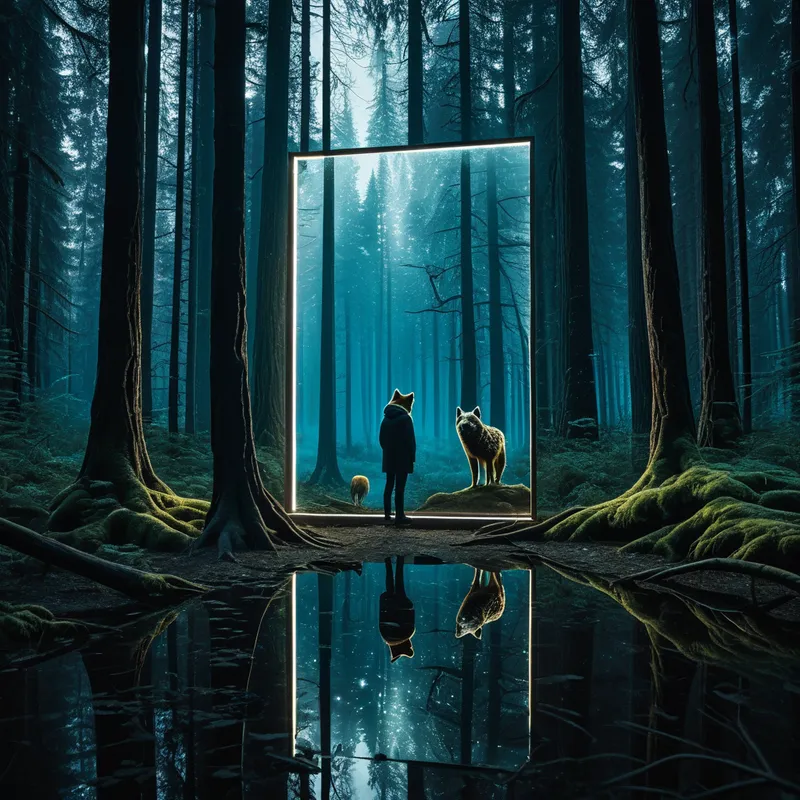
For the modern individual navigating the path of individuation—becoming the unique, whole self—the shape-shifter is a master archetype of psychic transmutation. The alchemical process is one of repeated dissolution and coagulation: breaking down fixed elements (the lead of our rigid persona) to recombine them into a more integrated, golden whole.
Individuation is not about building a stronger, static statue of a self, but about becoming a skilled navigator of your own inner wilderness, capable of wearing many skins of understanding without losing your core fire.
The myth models this precisely. First, there is the dissolution: the courageous or desperate decision to shed the old, confining identity (the human skin). This is the dark night of the soul, the nigredo. Then comes the transformation itself—the chaotic, often painful stretching into a new mode of being (the animal state). This is the albedo and citrinitas, the whitening and yellowing, where one learns the laws and gifts of this new perspective. Finally, there is the integration: not necessarily a return to the old form, but a return to the community (human or spiritual) with the hard-won knowledge of the other side. This is the rubedo, the reddening, where the transformed self contributes its unique wisdom to the whole.
The modern seeker’s journey is one of internal shape-shifting. We learn to access the nurturing Caregiver within, then shift to the assertive Hero, then to the discerning Sage, without any one becoming a permanent, tyrannical identity. The ultimate lesson of the shape-shifter tales is that wholeness lies not in choosing one true form, but in mastering the sacred art of fluid passage between them all, while remembering the original fire of the spirit that animates each one. We are, as these ancient stories have always known, a conversation between forms.
Associated Symbols
Explore related symbols from the CaleaDream lexicon: