
Shades in the Underworld Myth Meaning & Symbolism
The story of the insubstantial, memory-haunted dead in Hades' realm, a foundational reflection on identity, loss, and the nature of consciousness.
The Tale of Shades in the Underworld
Listen, and let the firelight cast the shadows. Beyond the swift rivers of Acheron and the groaning whirlpool of Cocytus, past the silent ferryman who demands his coin, lies a land untouched by the sun. This is the realm of [Hades](/myths/hades “Myth from Greek culture.”/), the Unseen One, and his queen, [Persephone](/myths/persephone “Myth from Greek culture.”/). But its true inhabitants are the eidola, the shades.
They are not the dead as they were, but whispers of them. Picture a vast, grey plain, the Asphodel Meadows, where pale flowers bloom without scent. Here, the shades drift, formless as smoke, their features blurred like a memory fading from a waking mind. They have the shape of men and women, heroes and cowards, but they are weightless, intangible. To touch one is to feel a chill mist; to speak to one, you must first give them a taste of life—the thick, dark blood of a sacrifice.
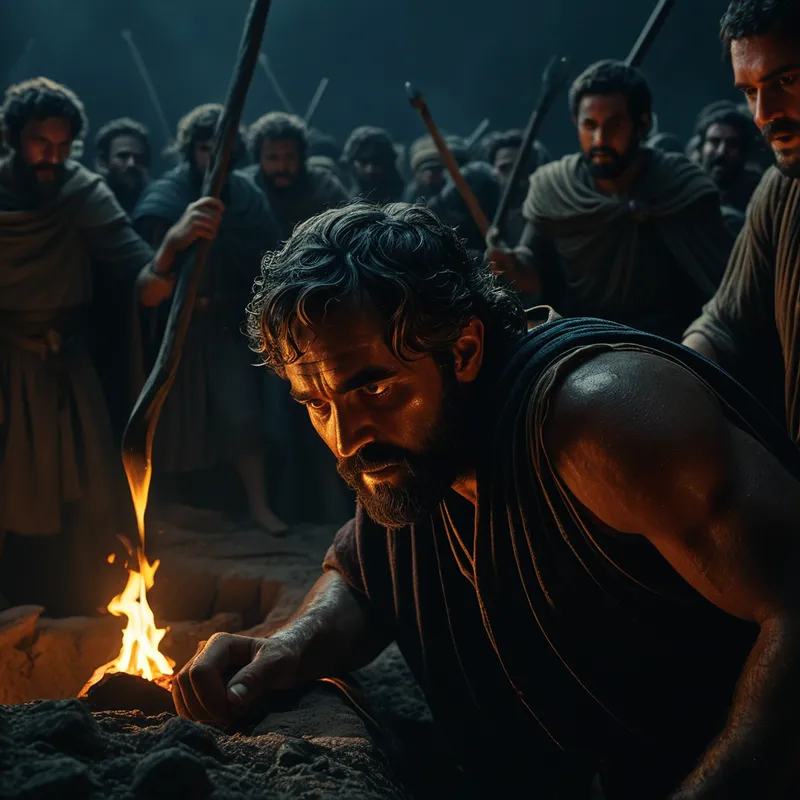
When the great [Odysseus](/myths/odysseus “Myth from Greek culture.”/) journeyed to [the world](/myths/the-world “Myth from Tarot culture.”/)’s edge to seek counsel from the dead, he dug a trench and filled it with the blood of a black ram. The scent, rich and metallic, pierced the stagnant air of that realm. And they came. From [the mist](/myths/the-mist “Myth from Celtic culture.”/) they swarmed, a countless, murmuring crowd, drawn by the vital essence they had lost. They fluttered at the trench’s edge, desperate to drink, but [Odysseus](/myths/odysseus “Myth from Greek culture.”/) held them at bay with his sword until the prophet [Tiresias](/myths/tiresias “Myth from Greek culture.”/) appeared to speak his fate.
Among them was the shade of his own mother, Anticlea. Three times he reached to embrace her, and three times her form passed through his arms like a shadow or a dream. She spoke, her voice a rustle of dry leaves, telling of his home and her death from longing for him. He wept, for here was the cruel truth of Hades: you may see those you loved, but you can never hold them. They are echoes, retaining only the faintest imprint of the life they lived, flitting mindlessly unless stirred by the blood of memory. This is the fate of most souls: not punishment, not reward, but a quiet, eternal diminishment—a becoming of smoke where once there was fire.
Cultural Origins & Context
This vision of the afterlife was not the product of a single priest or poet, but a collective cultural dream woven over centuries, from the oral traditions of the Dark Age to the epic poems of [Homer](/myths/homer “Myth from Greek culture.”/) and the later works of poets like Hesiod. It was a pragmatic, and in many ways, a deeply democratic vision. While heroes might go to the Elysian Fields and great sinners to [Tartarus](/myths/tartarus “Myth from Greek culture.”/), the vast majority of humanity—the farmers, the mothers, the soldiers, the merchants—were destined for the Asphodel Meadows.
This myth functioned as societal bedrock. It offered a explanation for the finality of death that was both terrifying and comforting in its egalitarian bleakness. It reinforced the critical importance of proper funeral rites—the coin under the tongue for Charon, the grave offerings—as the only way to ensure a soul’s passage to this shadowy rest. To be unburied was to be condemned to wander the shores of [the Styx](/myths/the-styx “Myth from Greek culture.”/) for a hundred years, a warning that bound the community to its duties. The myth taught that identity, will, and consciousness were fragile gifts of life, extinguished by death, leaving only a pale residue.
Symbolic Architecture
The shade is one of the most potent symbols in the [human](/symbols/human “Symbol: The symbol of a human represents individuality, complexity of emotions, and social relationships.”/) [psyche](/myths/psyche “Myth from Greek culture.”/). It represents the psyche stripped of its animating force, [the ego](/myths/the-ego “Myth from Jungian culture.”/)-[structure](/symbols/structure “Symbol: Structure in dreams often symbolizes stability, organization, and the framework of one’s life, reflecting how one perceives their environment and personal life.”/) after the [dissolution](/symbols/dissolution “Symbol: The process of breaking down, dispersing, or losing form, often representing transformation, release, or the end of a state of being.”/) of the [body](/symbols/body “Symbol: The body in dreams often symbolizes the dreamer’s self-identity, personal health, and the relationship they have with their physical existence.”/) and the libido. It is not the [soul](/symbols/soul “Symbol: The soul represents the essence of a person, encompassing their spirit, identity, and connection to the universe.”/) in its eternal [aspect](/symbols/aspect “Symbol: A distinct feature, quality, or perspective of something, often representing a partial view of a larger whole.”/), but the personal [memory](/symbols/memory “Symbol: Memory symbolizes the past, lessons learned, and the narratives we construct about our identities.”/)-complex that lingers.
The shade is the image left in the photo album of the cosmos, while the living subject is long gone.
The [Lethe](/myths/lethe “Myth from Greek culture.”/), the [river](/symbols/river “Symbol: A river often symbolizes the flow of emotions, the passage of time, and life’s journey, reflecting transitions and movement in one’s life.”/) of forgetfulness from which shades drank to be reincarnated, underscores this [symbolism](/symbols/symbolism “Symbol: The use of symbols to represent ideas or qualities, often conveying deeper meanings beyond literal interpretation. In dreams, it’s the language of the unconscious.”/). To become a shade is to begin the process of forgetting, of losing the specific, painful, beautiful details of a lived [life](/symbols/life “Symbol: The symbol of ‘Life’ represents a journey of growth, interconnectedness, and existential meaning, encompassing both the joys and challenges that define human experience.”/). The [Underworld](/symbols/underworld “Symbol: A symbolic journey into the unconscious, representing exploration of hidden aspects of self, transformation, or confronting repressed material.”/), therefore, is not merely a physical place but a psychological state: the [realm](/symbols/realm “Symbol: The symbol of ‘Realm’ often signifies the boundaries of one’s consciousness, experiences, or emotional states, suggesting aspects of reality that are either explored or ignored.”/) of forgotten memories, repressed traumas, and discarded aspects of [the self](/myths/the-self “Myth from Jungian culture.”/) that have “died” to our conscious [awareness](/symbols/awareness “Symbol: Conscious perception of self, surroundings, or internal states. Often signifies awakening, insight, or heightened sensitivity.”/). The desperate need of the shades for sacrificial [blood](/symbols/blood “Symbol: Blood often symbolizes life force, vitality, and deep emotional connections, but it can also evoke themes of sacrifice, trauma, and mortality.”/) symbolizes how these lost parts of ourselves crave [energy](/symbols/energy “Symbol: Energy symbolizes vitality, motivation, and the drive that fuels actions and ambitions.”/), [attention](/symbols/attention “Symbol: Attention in dreams signifies focus, awareness, and the priorities in one’s life, often indicating where the dreamer’s energy is invested.”/), and recognition—the “[life](/symbols/life “Symbol: The symbol of ‘Life’ represents a journey of growth, interconnectedness, and existential meaning, encompassing both the joys and challenges that define human experience.”/)-[blood](/symbols/blood “Symbol: Blood often symbolizes life force, vitality, and deep emotional connections, but it can also evoke themes of sacrifice, trauma, and mortality.”/)” of [consciousness](/symbols/consciousness “Symbol: Consciousness represents the state of awareness and perception, encompassing thoughts, feelings, and experiences.”/)—to be made whole again, if only for a [moment](/symbols/moment “Symbol: The symbol of a ‘moment’ embodies the significance of transient experiences that encapsulate emotional depth or pivotal transformations in life.”/).
The Dreamer’s Resonance
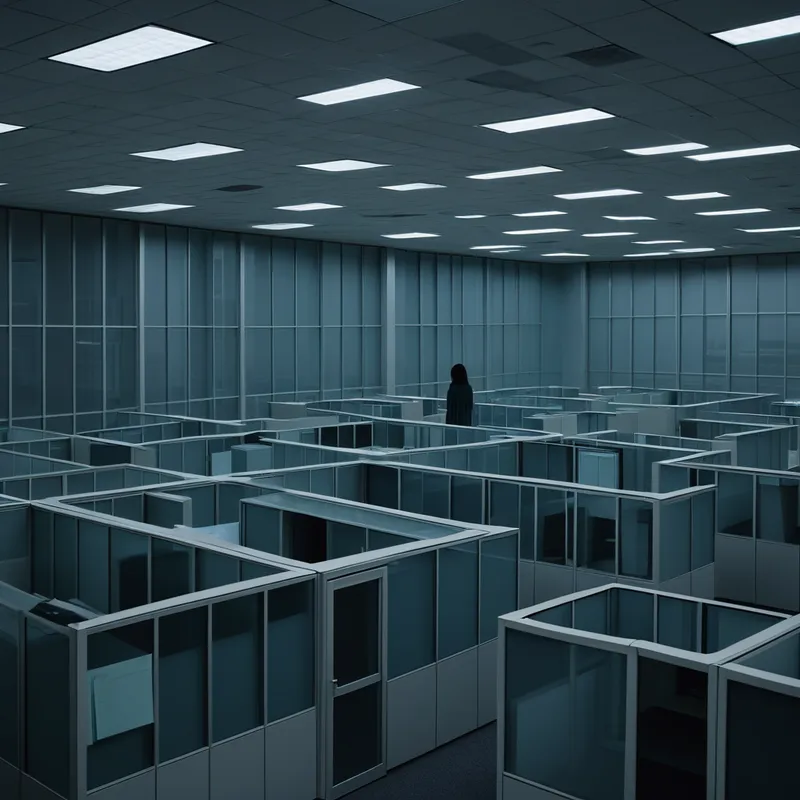
When this myth pattern surfaces in modern dreams, it seldom appears as a classical Greek tableau. Instead, we find ourselves in endless, grey, bureaucratic spaces—airport terminals that lead nowhere, vast, empty shopping malls at dawn, or corporate offices filled with people who look through us. The dream-ego wanders among faceless crowds or encounters loved ones who are distant, transparent, or unable to recognize us.
This is the somatic signature of a psychic process of mourning, disconnection, or depression. The dreamer may be processing a literal loss, or more often, an inner death—the loss of a passion, an identity (like “student,” “spouse,” or “caretaker”), or a future hope. The grey, liminal landscape mirrors an emotional flatness, a loss of psychic vitality. The encounter with a shade-like figure of someone known signifies grappling with a memory or an aspect of a relationship that has become static, a mental ghost that needs to be addressed, honored, or finally released. The dream is the psyche’s way of saying, “A part of you is here, in the land of the forgotten, and it is thirsty.”
Alchemical Translation
The journey to confront the shades is the quintessential journey of individuation. It is the nekyia, the night-sea voyage into [the underworld](/myths/the-underworld “Myth from Greek culture.”/) of the personal and collective unconscious. The modern individual must, like Odysseus, perform a ritual to call forth these shades—through therapy, active imagination, artistic expression, or deep reflection.
The blood of the sacrifice is the courageous act of turning one’s conscious attention toward the wounded, abandoned, or unlived parts of the self.
To give the shade your attention is to give it the “blood” it craves. You listen to the grief of your inner orphan, you acknowledge the repressed anger of your shadow, you honor the forgotten dreams of your younger self. This is not an embrace—the shade cannot be fully reintegrated as it was, for that life is past. But through this ritualized recognition, its energy is transmuted. The grey, murmuring memory gains definition, tells its story, and is laid to rest. Its essence is absorbed, enriching the psyche’s soil. The shade ceases to be a haunting ghost and becomes, instead, an ancestor—a part of your history that informs your wholeness without ruling you. The hero does not rescue the shades from Hades; he learns from them, weeps for them, and in doing so, reclaims the vitality they hold captive, allowing him to return to the world of the living more complete, and more human.
Associated Symbols
Explore related symbols from the CaleaDream lexicon: