Serket Myth Meaning & Symbolism
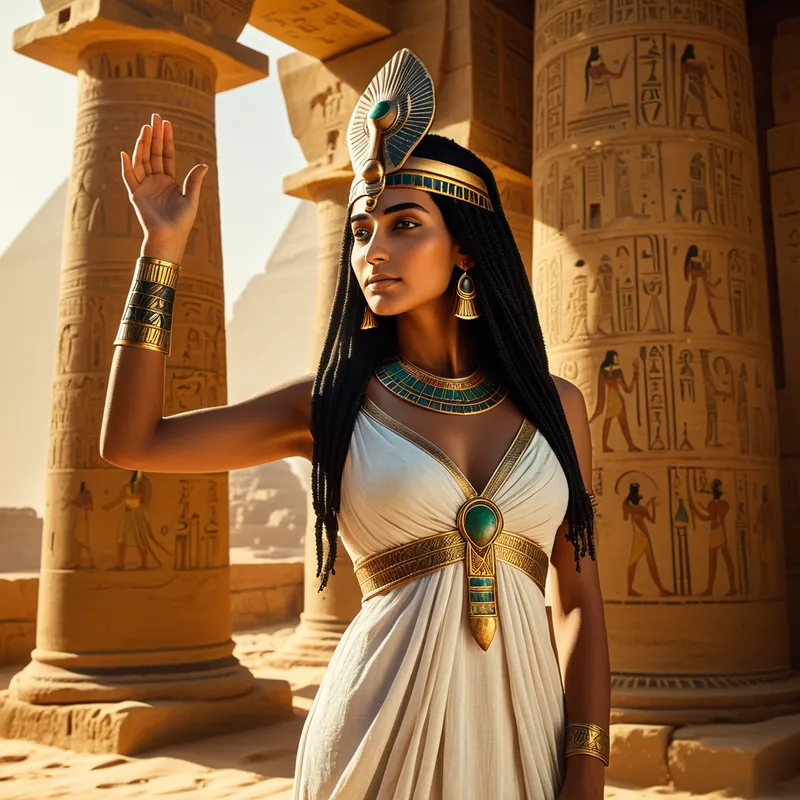
The goddess Serket, a fierce protector with a scorpion's sting, holds the power of venom and its antidote, guarding the vulnerable and the sacred dead.
The Tale of Serket
Hear now a tale whispered on the hot, dry wind that scours [the desert](/myths/the-desert “Myth from Biblical culture.”/), a story not of towering gods who shake [the sky](/myths/the-sky “Myth from Persian culture.”/), but of a quiet, fierce presence in the shadows. In the time when [the world](/myths/the-world “Myth from Tarot culture.”/) was young and the sun, Ra, sailed his barque through perilous realms, there existed a power both feared and beseeched.
Her name was Serket. She did not dwell in towering pylons but in the liminal spaces: under the sun-baked stone, in the cool dark of a burrow, in the hushed breath before a sting. She was the guardian of thresholds, her form a mystery—a woman of impossible grace, or a scorpion of formidable armor, or most often, a woman with the sacred scorpion poised upon her head, its tail curved like a question mark over [the crown](/myths/the-crown “Myth from Various culture.”/) of creation.
The great drama unfolded not in war, but in stillness. The infant Anubis, born of secret union, was hidden in the marshes of Khemmis. His mother, the goddess Isis, hunted by the jealous Set, could not always be at his side. Who would watch over the vulnerable one when the reeds whispered with unknown threats? The call went out, not to the thunderous ones, but to her of the silent step.
Serket came. She did not arrive with fanfare, but emerged from the very earth, a sentinel in the twilight. Her scorpions, her countless eyes and feelers, became the living perimeter. They tasted the air for malice. When a venomous snake, an agent of chaos, slithered toward the hidden child, it was met not by a sword, but by a precise, burning [justice](/myths/justice “Myth from Tarot culture.”/). Serket’s children acted, and the threat was neutralized. Her protection was not a shield, but a balance—the capacity to hold poison so the innocent would not have to.
Her greatest test was one of sacred guardianship. When the great god [Osiris](/myths/osiris “Myth from Global/Universal culture.”/) was slain and later restored, his canopic jars held his vital organs. The jar for the intestines, the seat of feeling and decay, was placed under the guardianship of Duamutef. But a protector was needed for the protector. Serket was summoned. She extended her power over Duamutef, her scorpion nature a ward against the spiritual corruption that could seep from such vulnerable viscera. She became the guardian of the guardian, the one who watches over the protectors themselves, ensuring that [the vessel](/myths/the-vessel “Myth from Alchemical culture.”/) of rebirth remained pure.
This was her realm: the moment of crisis, the hidden child, the vulnerable organ, the poisonous bite. She was the breath held, the sting withheld, the antidote administered in the nick of time. Her story is not of conquest, but of vigilant, unwavering presence in the places where life is most fragile and most precious.
Cultural Origins & Context
Serket, known as “She Who Tightens the Throat” or “She Who Causes the Throat to Breathe,” was a deity whose worship was deeply embedded in the practical and spiritual anxieties of daily Egyptian life. Unlike the state gods of major cult centers, Serket’s presence was felt in the home, the field, and the desert’s edge. Her priests were likely also healers and magicians, experts in the very real threat of scorpion stings and snake bites, which were common and often fatal.
Her myth was not a single, codified epic but a constellation of functions and associations passed down through magical texts, healing incantations, and funerary rituals. She appears prominently in the Book of the Dead, specifically in the spells to ward off serpents and other dangerous creatures of the Duat. This highlights her societal role: she was a crucial [psychopomp](/myths/psychopomp “Myth from Greek culture.”/), not guiding the soul, but protecting it during its most perilous transition.
Her association with the canopic jar of Duamutef cemented her role in the funerary cult. By protecting the intestines, she safeguarded the emotional and visceral core of the deceased, ensuring it would not become a source of spiritual poison or weakness in the afterlife. Thus, her cultural function was one of holistic protection—addressing physical venom, emotional corruption, and spiritual peril with the same potent, focused authority.
Symbolic Architecture
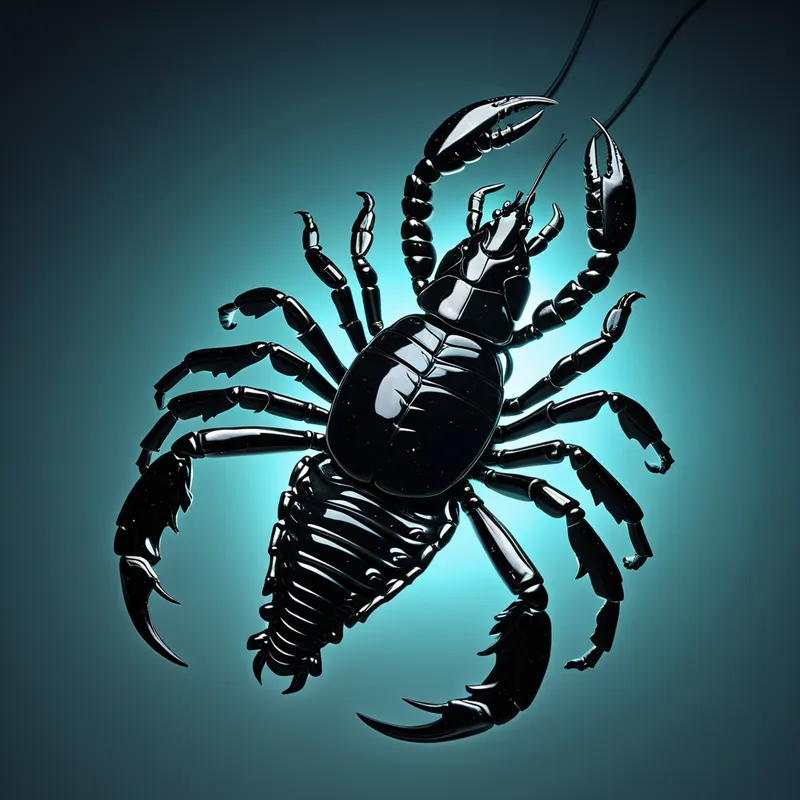
Serket embodies the profound [archetype](/symbols/archetype “Symbol: A universal, primordial pattern or prototype in the collective unconscious that shapes human experience, behavior, and creative expression.”/) of the Pharmakon—the substance that is both poison and cure. The [scorpion](/symbols/scorpion “Symbol: A venomous arachnid symbolizing danger, hidden threats, and potent transformation. Often represents repressed anger or deep-seated fears.”/) is her primary [symbol](/symbols/symbol “Symbol: A symbol can represent an idea, concept, or belief, serving as a powerful tool for communication and understanding.”/), a [creature](/symbols/creature “Symbol: Creatures in dreams often symbolize instincts, primal urges, and the unknown aspects of the psyche.”/) of stark duality: a bringer of agonizing [death](/symbols/death “Symbol: Symbolizes transformation, endings, and new beginnings; often associated with fear of the unknown.”/) and, in its [venom](/symbols/venom “Symbol: Venom represents a potent, often hidden, toxic influence that can cause harm or transformation. It symbolizes both danger and potential healing.”/), the potential key to antidotes and medicines. She represents the necessary, often feared, [aspect](/symbols/aspect “Symbol: A distinct feature, quality, or perspective of something, often representing a partial view of a larger whole.”/) of the [psyche](/myths/psyche “Myth from Greek culture.”/) that holds our own toxicity.
To integrate the shadow, one must first be able to hold its venom without being destroyed by it. Serket is the psychic capacity to contain our own destructive potential, thereby neutralizing its autonomous, harmful power and alchemizing it into a protective force.
She is not the [warrior](/symbols/warrior “Symbol: A spiritual archetype representing inner strength, discipline, and the struggle for higher purpose or self-mastery.”/) who fights external monsters, but the internal apothecary who knows every ingredient in the [cellar](/symbols/cellar “Symbol: A cellar represents the subconscious mind, hidden emotions, and unacknowledged aspects of the self; it is a place of storage, preservation, and sometimes decay.”/) of the [soul](/symbols/soul “Symbol: The soul represents the essence of a person, encompassing their spirit, identity, and connection to the universe.”/), from the most lethal to the most healing. Her guardianship of the [child](/symbols/child “Symbol: The child symbolizes innocence, vulnerability, and potential growth, often representing the dreamer’s inner child or unresolved issues from childhood.”/) [Horus](/myths/horus “Myth from Egyptian culture.”/) symbolizes the protection of the nascent, vulnerable Self (the divine child archetype) from the corrosive forces of the unconscious (the snakes of [chaos](/symbols/chaos “Symbol: In Arts & Music, chaos represents raw creative potential, uncontrolled expression, and the breakdown of order to forge new artistic forms.”/)). Her protection of Duamutef’s jar goes deeper: it is the guardianship of our deepest, most visceral feelings and instincts (the intestines), ensuring that our emotional core does not fester into self-poisoning patterns of [resentment](/symbols/resentment “Symbol: A deep-seated emotional bitterness from perceived unfairness or injury, often festering silently and poisoning relationships.”/), envy, or decay.
Serket’s power lies in her [relationship](/symbols/relationship “Symbol: A representation of connections we have with others in our lives, often reflecting our emotional state.”/) with the low, the creeping, the hidden. She signifies that protection does not always come from above, but often from below—from an [awareness](/symbols/awareness “Symbol: Conscious perception of self, surroundings, or internal states. Often signifies awakening, insight, or heightened sensitivity.”/) of the [underworld](/symbols/underworld “Symbol: A symbolic journey into the unconscious, representing exploration of hidden aspects of self, transformation, or confronting repressed material.”/) currents within and around us.
The Dreamer’s Resonance
When the pattern of Serket stirs in the modern dreamscape, it often manifests in dreams of hidden threats, small but potent creatures (insects, spiders, scorpions), or discovering a protected, vulnerable space or object within a dangerous environment. One might dream of finding a safe room in a collapsing house, of neutralizing a venomous bite with a sudden knowing, or of being accompanied by a silent, watchful animal.
Psychologically, this signals a process of somatic containment. The dreamer is likely grappling with a “poisonous” emotion or situation—a toxic relationship, a corrosive secret, a buried resentment, or a sharp betrayal (the sting). The emergence of Serket energy suggests the psyche is mobilizing its innate capacity to “hold” this venom. It is not about fighting it head-on, but about developing a vigilant, respectful awareness of its power and placing a boundary around it so it does not spread and paralyze the entire system.
The dream may feel tense, quiet, and focused rather than chaotic. It is the mind’s way of practicing guardianship over a fragile new insight or a recovering part of [the self](/myths/the-self “Myth from Jungian culture.”/) that has been wounded. The process is one of building internal antibodies—not by rejecting the poison, but by learning its nature so thoroughly that one can produce the antidote.

Alchemical Translation
The individuation journey modeled by Serket is the Alchemy of Containment. It is a profoundly non-heroic path. The [triumph](/myths/triumph “Myth from Roman culture.”/) is not slaying [the dragon](/myths/the-dragon “Myth from Chinese culture.”/), but learning to handle its venom and, in doing so, rendering the dragon less a threat and more a source of potent medicine.
[The first stage](/myths/the-first-stage “Myth from Alchemical culture.”/) is Recognition and Respect. One must acknowledge the “scorpions” in one’s own basement—the jealousies, rages, fears, and capacities for harm that we prefer to disown. Serket does not deny the scorpion; she wears it as her crown. This is the act of bringing [the shadow](/myths/the-shadow “Myth from Jungian culture.”/) to consciousness without being identified with it.
The second stage is Vigilant Holding. This is the difficult, patient work of containing the toxic material without acting it out or repressing it. It is sitting with the burning sensation of the sting—the pain of a betrayal, the heat of a justified anger—and not allowing it to dictate destructive action. This is Serket standing guard over [the child](/myths/the-child “Myth from Alchemy culture.”/) Horus, allowing the vulnerable new self to develop in safety.
The final transmutation is Antidote as Authority. The contained poison, once understood and integrated, loses its autonomous, malicious power. It becomes metabolized into wisdom, discernment, and the ability to protect oneself and others. The individual who has done this work becomes like Serket: a healer precisely because they know the nature of poison; a protector because they are not afraid of the dark. Their personal authority is born not from invulnerability, but from having survived their own venom and knowing the formula for the cure.
In this alchemy, one does not become “good” by eliminating “evil,” but becomes whole by mastering the duality within. The stinger remains, but it is now under the command of the protecting heart. One becomes the guardian of [the threshold](/myths/the-threshold “Myth from Folklore culture.”/) of their own soul, able to breathe life where there was constriction, turning the tightened throat into a conduit for healed and healing speech.
Associated Symbols
Explore related symbols from the CaleaDream lexicon: