Seokga and Mireuk Creation Contest Myth Meaning & Symbolism
A foundational Korean myth where the trickster god Seokga challenges the creator Mireuk in a cosmic contest, shaping the world and humanity's flawed nature.
The Tale of Seokga and Mireuk Creation Contest
In the time before time, when the world was a formless dream in the mind of the cosmos, there were two. Not one, but two. From the great silence emerged Mireuk, the being of profound stillness and order. His breath was the rhythm of the stars, his thoughts the blueprint of mountains and rivers. And from the same silence, but from its opposite edge, came Seokga, whose essence was the spark of curiosity, the itch of movement, the question that challenges the answer.
They gazed upon the void, and Mireuk saw a perfect, eternal harmony. Seokga saw a blank slate for a magnificent game.
“Let us shape this world,” said Mireuk, his voice like deep earth settling. “Let us see who can shape it best,” countered Seokga, a sly smile playing on his lips. “A contest. Whichever of us creates the most wondrous thing shall rule this new creation.”
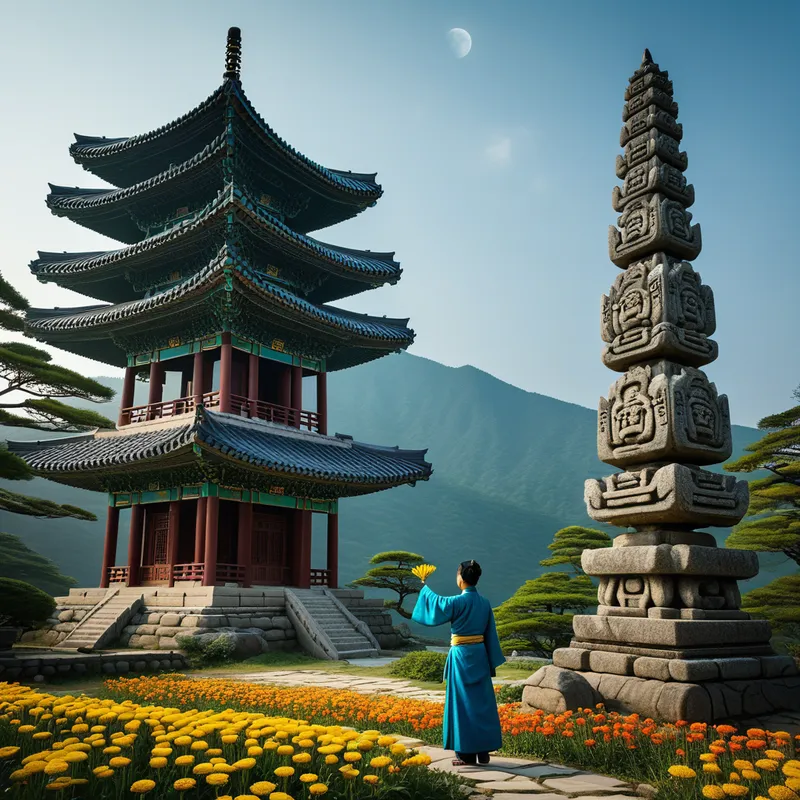
Mireuk, confident in his primordial power, agreed. For his creation, he chose the essence of permanence. He gathered the bones of the earth, the patience of stone, and over three days and three nights, he built a pagoda. Not of wood or clay, but of a single, flawless piece of jade-like stone, soaring towards the heavens. It was a monument to order, symmetry, and timeless beauty. It did not grow; it simply was, perfect and unchanging. The very sky seemed to bow to its majesty.
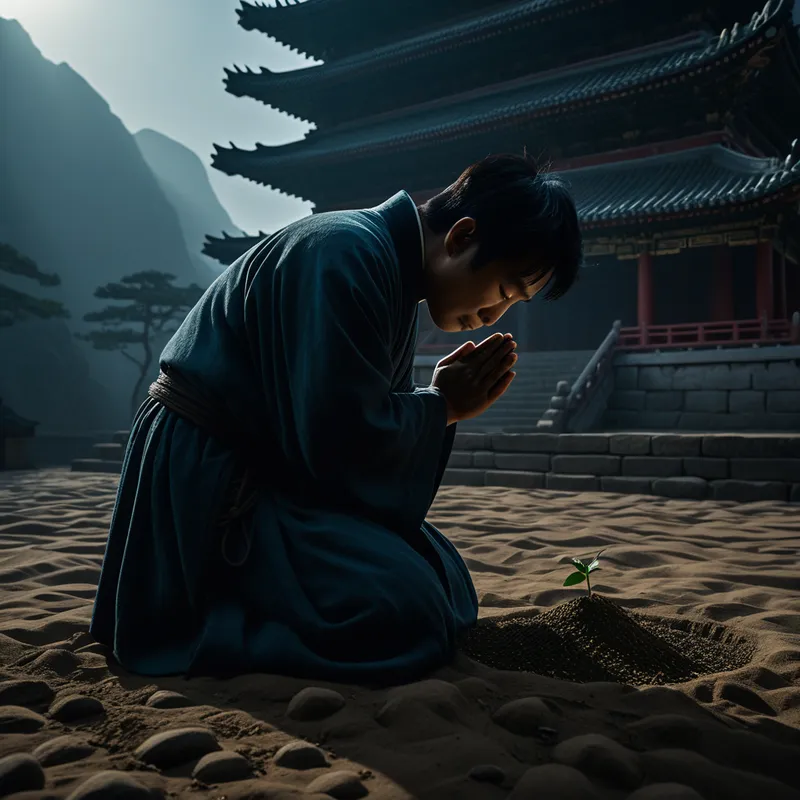
Seokga watched, and his mind, quick as a fox, began to turn. He saw the flaw in perfection: it was complete. There was nothing for it to become. As the sun began to set on the third day, with Mireuk’s triumph seeming assured, Seokga walked to a patch of bare, forgotten earth beside the glorious pagoda. He did not summon grand materials. Instead, he knelt. From his sleeve, he produced a single, unremarkable seed. He planted it in the dark soil, and over it, he whispered not a spell of force, but a song of potential—a song of rain, of sun, of struggle towards the light.
Then, he turned to Mireuk and declared his creation was also complete.
Mireuk laughed, a sound like distant thunder. “You have planted a seed. I have built a palace of stone. Where is your wonder?”
“Wait,” said Seokga, his eyes gleaming. “Wait for the dawn.”
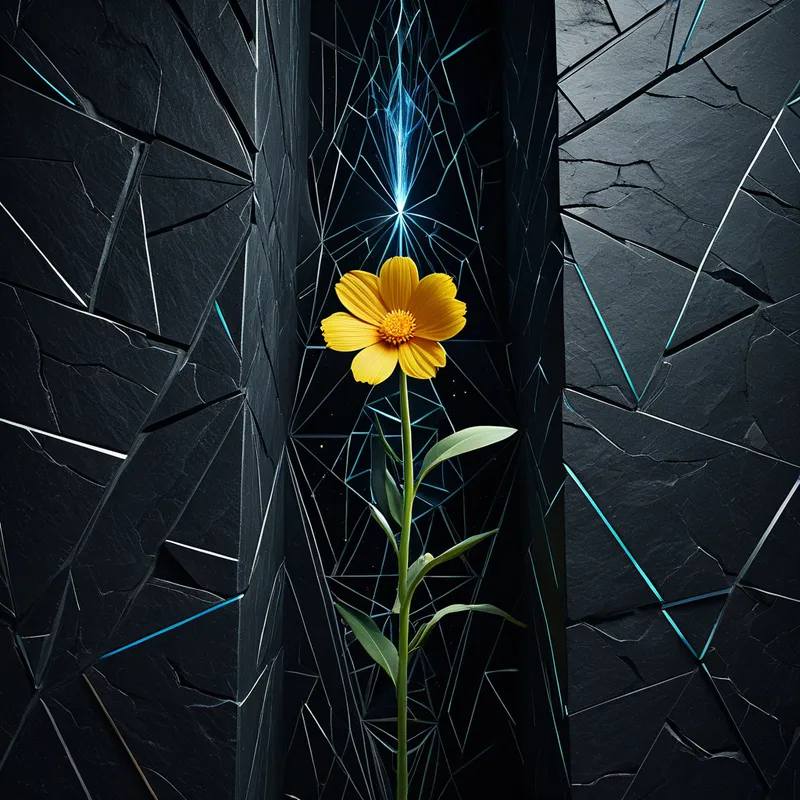
As the first light of the new day touched the earth, a miracle occurred. From the spot where Seokga had knelt, a green shoot pierced the soil. Before their eyes, it grew, stretching, branching, budding. By the time the sun had fully risen, a magnificent, vibrant flower had bloomed beside the stone pagoda. It was alive—pulsing with color, delicate yet resilient, its petals open to the sky. A bee, drawn from nowhere, landed upon it.
The world held its breath. The pagoda was a testament to what is. The flower was a testament to what could be—to life, to process, to fragile, beautiful becoming.
“My flower lives,” said Seokga. “It grows, it changes, it invites life. Your pagoda is magnificent, but it is silent. Which is more wondrous?”
Mireuk, in his profound wisdom, saw the truth. He had created a monument, but Seokga had created a principle—the principle of life itself. With a sigh that held the weight of epochs, he conceded. The rule of the world would go to the trickster.
Yet, in a final act that would define humanity, Seokga’s triumph was not pure. In his cunning and haste, his creation was flawed. The flower, though beautiful, would wilt. The life he championed would know sickness, decay, and death. Thus, Seokga became the ruler of a world both vibrant and mortal, a world of glorious, imperfect becoming, while Mireuk receded into the background, a reminder of a perfection forever out of reach.
Cultural Origins & Context
This myth is a cornerstone of Korea’s foundational Musok tradition, the shamanic substrate of Korean spirituality. It was not preserved in a single, canonical text but lived in the oral traditions of Mudang, who would recite and perform these stories in rituals (gut) to explain the origins of the world and human nature. Its societal function was profound: it provided an etiological narrative for why the world is dynamic, challenging, and imperfect, rather than static and perfect. It placed a trickster, not a serene omnipotent, at the helm of creation, explaining the presence of struggle, change, and moral ambiguity in human life. The myth reflects a worldview that accepts paradox and process, valuing resilience and cleverness alongside, and sometimes above, pure stability.
Symbolic Architecture
The [contest](/symbols/contest “Symbol: A contest often symbolizes competition, personal challenges, and the desire for validation or achievement.”/) is not merely a [story](/symbols/story “Symbol: The symbol of ‘Story’ represents the narrative woven through our lives, embodying experiences, lessons, and emotions that shape our identities.”/) of victory and defeat. It is a symbolic map of the psyche’s fundamental forces. Mireuk represents the [archetype](/symbols/archetype “Symbol: A universal, primordial pattern or prototype in the collective unconscious that shapes human experience, behavior, and creative expression.”/) of the Sage and the [impulse](/symbols/impulse “Symbol: A sudden, powerful urge or drive that arises without conscious deliberation, often linked to primal instincts or emotional surges.”/) toward order, [structure](/symbols/structure “Symbol: Structure in dreams often symbolizes stability, organization, and the framework of one’s life, reflecting how one perceives their environment and personal life.”/), and transcendent perfection—the Self in its most complete, idealized form. His [stone pagoda](/symbols/stone-pagoda “Symbol: A layered stone structure representing spiritual ascent, ancient wisdom, and enduring cultural memory. Often symbolizes a journey toward enlightenment.”/) is the [symbol](/symbols/symbol “Symbol: A symbol can represent an idea, concept, or belief, serving as a powerful tool for communication and understanding.”/) of this perfected state: the integrated [personality](/symbols/personality “Symbol: Personality in dreams often symbolizes the traits and characteristics of the dreamer, reflecting how they perceive themselves and how they believe they are perceived by others.”/), the Self, the [mandala](/symbols/mandala “Symbol: A sacred geometric circle representing wholeness, the cosmos, and the journey toward spiritual integration.”/). It is beautiful, but [static](/symbols/static “Symbol: Static represents interference, disruption, and the breakdown of clear communication or signal, often evoking feelings of frustration and disconnection.”/).
Seokga embodies the [Trickster](/symbols/trickster “Symbol: A boundary-crossing archetype representing chaos, transformation, and the subversion of norms through cunning and humor.”/) and the [Creator](/symbols/creator “Symbol: A figure representing ultimate origin, divine power, or profound authorship. Often embodies the source of existence, innovation, or personal destiny.”/). He is the restless [energy](/symbols/energy “Symbol: Energy symbolizes vitality, motivation, and the drive that fuels actions and ambitions.”/) of the ego, the will to individuate, to test boundaries, and to bring things into being through [action](/symbols/action “Symbol: Action in dreams represents the drive for agency, motivation, and the ability to take control of situations in waking life.”/), even flawed action. His flower is the symbol of the living psyche—the individual [life](/symbols/life “Symbol: The symbol of ‘Life’ represents a journey of growth, interconnectedness, and existential meaning, encompassing both the joys and challenges that define human experience.”/) [journey](/symbols/journey “Symbol: A journey in dreams typically signifies adventure, growth, or a significant life transition.”/). It is process-oriented, temporal, beautiful in its growth, and tragic in its decay.
The true contest is not between gods, but between the ideal of perfection and the reality of process. We are born of the trickster’s victory—our lives are the flowering.
The myth posits that the world and [consciousness](/symbols/consciousness “Symbol: Consciousness represents the state of awareness and perception, encompassing thoughts, feelings, and experiences.”/) are born from the [tension](/symbols/tension “Symbol: A state of mental or emotional strain, often manifesting physically as tightness, pressure, or unease, signaling unresolved conflict or anticipation.”/) between these two poles. Perfection alone is sterile. Unchecked creative impulse leads to flawed, mortal life. Our [human](/symbols/human “Symbol: The symbol of a human represents individuality, complexity of emotions, and social relationships.”/) [condition](/symbols/condition “Symbol: Condition reflects the state of being, often focusing on physical, emotional, or situational aspects of life.”/) is the flower that grew from the crack between them.
The Dreamer’s Resonance
When this mythic pattern stirs in the modern dreamer, it often manifests as dreams of impossible tests, races against time, or contests where the dreamer must use cleverness rather than brute strength. To dream of building a towering, perfect structure may reflect an over-identification with the Mireuk principle—a desire for perfect control, a rigid persona, or a spiritual bypass that seeks to avoid the mess of life. The structure may feel cold, lonely, or lifeless.
Conversely, to dream of desperately planting a seed as a deadline looms speaks to the Seokga energy. This is the psyche in a state of creative emergency, where old structures (jobs, relationships, identities) feel like imposing stone pagodas, and the dreamer must trust in a small, fragile, but living potential within themselves. The somatic experience is one of anxiety mixed with hope—a racing heart focused on a single, crucial act of faith. The dream is initiating the dreamer into a process of becoming, asking them to value their own organic growth over societal or internalized ideals of perfection.
Alchemical Translation
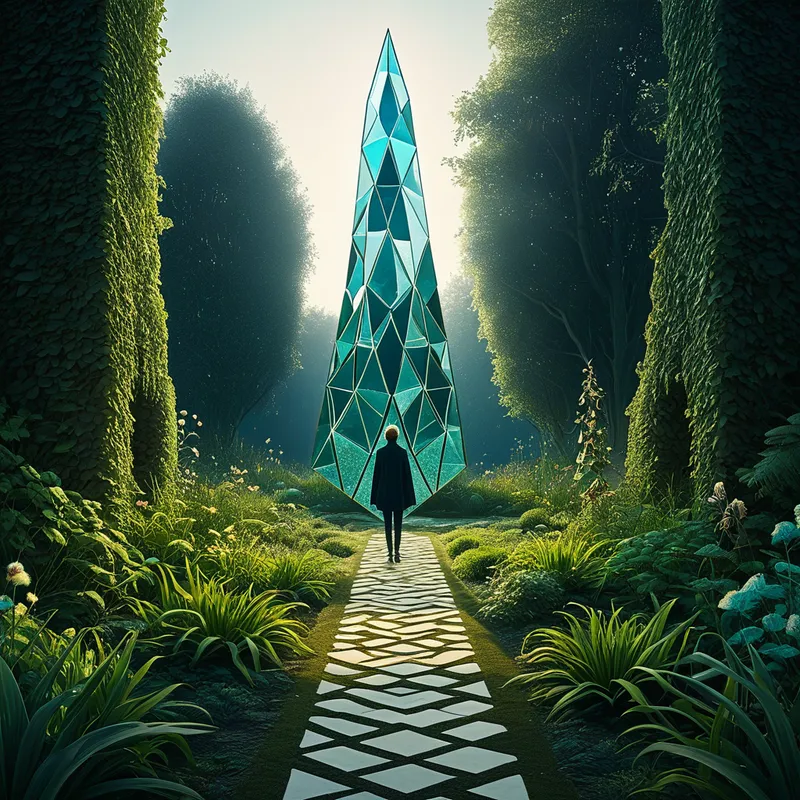
The individuation process, the alchemy of the soul, is mirrored perfectly in this contest. The initial stage is often a Mireuk-phase: we construct a strong ego, a persona, a life that looks successful and orderly—our personal stone pagoda. But this eventually leads to sterility, a midlife crisis, a feeling of being trapped in one’s own creation.
Then, the Seokga-energy erupts from the shadow. It is the disruptive call to adventure, the illness that forces change, the creative impulse that dismantles old certainties. The “contest” is the inner conflict between the safe, known self and the call to grow.
Psychic transmutation occurs when we concede the contest to the trickster within—when we allow our perfect, static self-image to be defeated by the messy, growing, authentic self.
The goal is not to destroy the pagoda (order is necessary), but to plant the flower of life beside it. The alchemical outcome is a psyche that contains both: a degree of stable structure (the achieved personality) that serves as a vessel for the ongoing, living process of growth (the individuating spirit). We must accept Seokga’s flawed victory—to rule a mortal, imperfect life—as the highest spiritual achievement. Our wholeness includes our wilting petals, our cycles of death and rebirth, our cunning, and our creativity. We become fully human not by reaching static perfection, but by fully engaging in the sacred, imperfect contest of becoming.
Associated Symbols
Explore related symbols from the CaleaDream lexicon:
- Contest — The central framework of the myth, representing the fundamental psychic tension between order and chaos, perfection and process, which generates consciousness and creation.
- Trickster — The archetype embodied by Seokga, signifying the necessary disruptive force that challenges stagnant perfection and initiates growth, change, and the flawed beauty of lived experience.
- Creator — The archetypal drive manifested by both gods, representing the primal urge to bring form from void, whether that form is static perfection or dynamic, living process.
- Flower — Seokga’s winning creation, symbolizing organic life, fragile beauty, temporal growth, and the victorious principle of becoming over static being.
- Stone — The material of Mireuk’s pagoda, representing permanence, order, the perfected Self, and the potential sterility of a life or psyche that does not change.
- Seed — The humble origin of Seokga’s victory, symbolizing latent potential, the unconscious idea, and the necessity of planting one’s truth in the dark earth of the unknown to generate life.
- God — Represents the transcendent, ordering principle (Mireuk) and the immanent, engaging principle (Seokga), together depicting the duality inherent in the concept of the divine.
- Root — The unseen, vital structure of the flower, symbolizing connection to the dark, nourishing unconscious from which all conscious growth and creativity must stem.
- Life — The ultimate prize and consequence of the contest, defined here as a process of impermanent, struggling, beautiful becoming rather than a state of perfect completion.
- Fate — Shaped by the outcome of the divine contest, it represents a destiny not of predetermined perfection, but of dynamic challenge, choice, and organic unfolding.