Selkie Myth Meaning & Symbolism
A myth of seal-people who shed their skins to walk on land, often captured by humans, speaking to the soul's longing for its primal, authentic home.
The Tale of Selkie
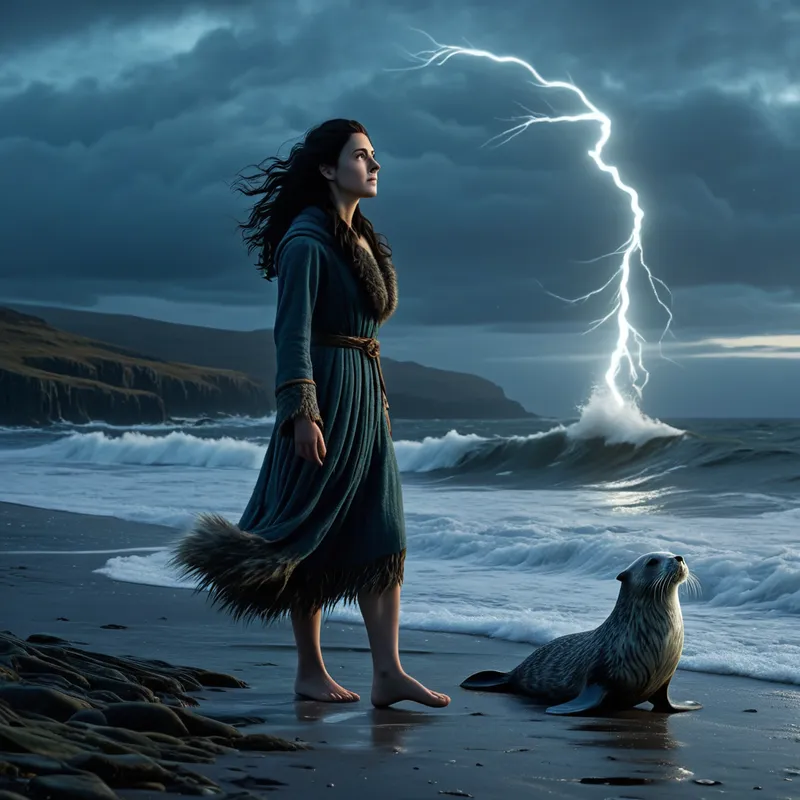
Hear now a tale whispered on salt-spray and carried on the winds that scour the bare bones of the isles. It begins not on land, but in the cold, clear deep, in the kingdom of the Sídhe beneath the waves. There, the Selkies dwell, folk of the sea, wearing the sleek, grey skins of the great seals. In their true form, they are creatures of profound grace, singing with the currents, dancing in the undersea forests of kelp.
But on nights when the moon is full and lays a quivering path of silver across the black water, a longing stirs in them. They would know the strange, solid world. One by one, they slip from their pelts on the rocky shore, the skin falling from them like a second shadow. Revealed are men and women of unearthly beauty, with eyes that hold the depth and melancholy of the ocean itself. They dance on the sand, their laughter a sound the land has never known, a fleeting touch of the otherworld.
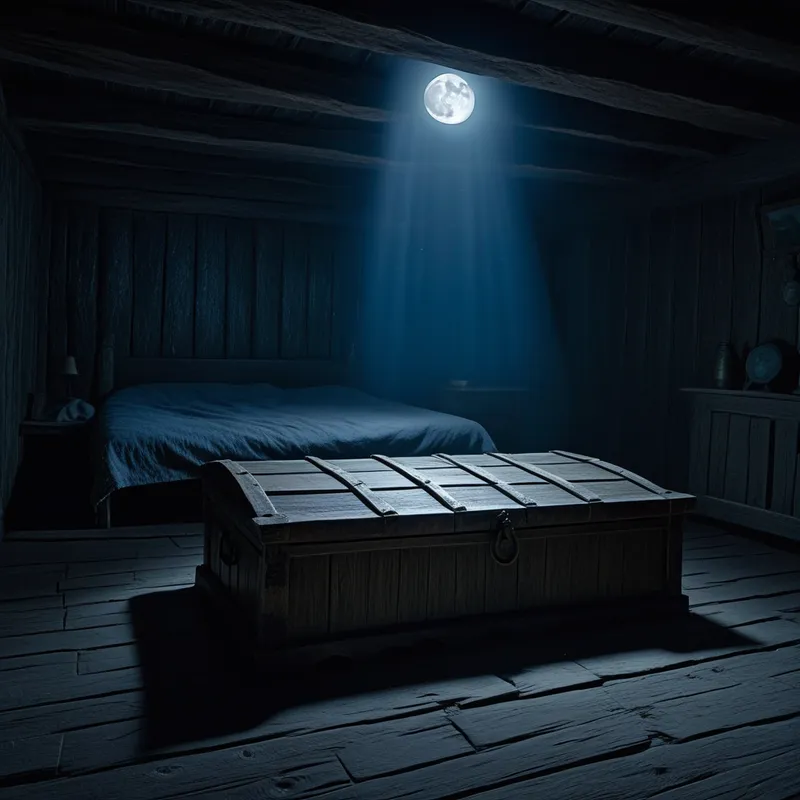
It was on such a night that a lonely fisherman, his heart hollowed by loss, walked the cliff path. He saw the dance, and among them, a woman whose grace stopped his breath. He saw, too, the glistening pelt she had left upon a rock. A desperate, covetous love seized him. While the Selkies reveled, he crept forward and stole it away, hiding the skin in a locked chest deep in his cottage.
When the dawn threatened, the Selkies returned to the sea, slipping back into their skins and vanishing beneath the waves. But one could not find hers. She searched the rocks in growing despair as the sky lightened. The fisherman approached then, offering shelter. With no way home, bound to the land without her skin, she had no choice but to go with him. She became his wife, a quiet, dutiful woman who would often stand at the window, gazing at the sea with an ache that never faded. She bore him children, whom she loved with a fierce, sorrowful tenderness, but a part of her remained forever distant, listening for a call only she could hear.
Years passed. One day, drawn by a memory she could not name, she searched the cottage while her husband was away. In the dust under the bed, she found the chest. The lock was old and rusted. With a heart hammering like a storm surge, she broke it open. There, folded, was her seal skin. It smelled of salt and deep ocean. The moment her fingers touched it, the memory of the waves, the song of her people, the weightless freedom of the deep—it all flooded back.
Her children found the chest open and empty. They ran to the shore and saw her, no longer their earth-bound mother, but a Selkie once more, the grey pelt clasped in her hands. She looked at them with infinite love and infinite sorrow. Then she turned, stepped into the surf, and as the water touched the skin, she transformed. A great seal dove into a wave, glanced back once with dark, knowing eyes, and was gone, returning forever to the sea.
Cultural Origins & Context
The Selkie myth is rooted in the coastal communities of Scotland, Ireland, and the Faroe Islands—places where life is dictated by the merciless, giving sea. These are not the grand myths of gods and heroes preserved by bards in halls, but folklore told by the hearth, shared by fishermen and crofters. The tales served as a profound psychological and cultural interface with an environment that was both provider and taker.
The storytellers were the people themselves, weaving narratives to explain the haunting beauty and inherent sadness of their world. The Selkie myth gave form to the mysterious, often tragic, connections between the human and natural worlds. It spoke to the perils of coveting what is not yours, the bittersweet reality of love across impossible divides, and the undeniable call of one’s essential nature. The sea was not just water; it was another realm, and its creatures, like the Selkies, were liminal beings who embodied its secret, sovereign life. To capture one was to attempt to domesticate the wild itself—a doomed endeavor that always ended in a return to the source.
Symbolic Architecture
At its core, the Selkie myth is a powerful allegory for the soul’s authentic nature and the trauma of its captivity. The seal skin is not a costume; it is the integrated self, the embodiment of instinct, freedom, and belonging. To lose it is to be severed from one’s core identity.
The stolen skin is the ultimate metaphor for the soul in exile, living a life of quiet desperation, loving yet never fully present, because its true home is elsewhere.
The human who steals the skin represents the forces—societal expectation, trauma, or our own choices—that compel us to lock away our wild, instinctual selves to fit into a constructed world. The marriage and children symbolize the life built from this compromise: it can be genuine in its affections, yet it rests on a foundational lie, a hidden, weeping wound of disconnection. The Selkie’s constant gaze seaward is the psyche’s enduring memory of, and longing for, wholeness.
The myth presents a stark duality: the boundless, unconscious freedom of the sea (the Self), and the structured, conscious captivity of the land (the Persona). The Selkie is the living tension between them.
The Dreamer’s Resonance
When the Selkie pattern emerges in modern dreams, it signals a profound somatic and psychological process: the stirring of the buried self. One may dream of finding a hidden, precious object (the skin), of being trapped in a house while longing for the ocean, or of a loved one transforming and leaving by water.
These dreams often arise during periods of deep dissatisfaction within a life that looks “correct” on the surface—a successful career, a stable family—but feels like a cage. The somatic experience is one of constriction, a tightness in the chest, a literal sense of being unable to breathe deeply (to be out of one’s element). Psychologically, it is the orphan archetype clamoring for recognition. The dreamer is going through the initial, often painful, awakening to the fact that a vital part of them has been negotiated away, hidden under the bed of consciousness. The longing felt is not for a literal ocean, but for the fluid, authentic state of being from which they have been divorced.
Alchemical Translation
The Selkie’s journey models the alchemical process of psychic transmutation, or individuation. The initial state is nigredo—the blackening. This is the Selkie’s captivity, a state of depression and alienation where the true self is hidden, and life is lived in shadow.
The discovery of the skin is the albedo—the whitening. It is the moment of lucid insight, where consciousness locates the lost part of the soul. This is not an intellectual understanding, but a visceral, transformative recognition. It is the “Aha!” that comes from deep introspection, therapy, or crisis, where one finally names the source of their lifelong melancholy.
The act of reclaiming the skin is the rubedo, the reddening. It is the courageous, often heartbreaking, integration. It demands a sacrifice of the old, captive life.
For the modern individual, this alchemical translation is not about abandoning responsibility or family. It is about daring to retrieve what was stolen or surrendered—one’s creative spark, one’s sensuality, one’s wild intuition, one’s core truth—and reintegrating it into conscious life. The return to the sea is not a literal flight, but an internal homecoming. The Selkie who glances back with love shows that the transformed self does not reject the past but carries it with compassion into a new, more authentic existence. One becomes, at last, a citizen of both realms: grounded in the human world, but forever connected to the deep, nourishing waters of the unconscious Self.
Associated Symbols
Explore related symbols from the CaleaDream lexicon: