
Sedna Myth Meaning & Symbolism
A betrayed woman becomes the fearsome, generative goddess of the sea, holding the balance of life and death in her cold, deep realm.
The Tale of Sedna
Listen, and hear the story that [the wind](/myths/the-wind “Myth from Various culture.”/) tells over the ice, the tale the waves whisper in the dark. It begins not with a goddess, but with a girl.
In a time when [the world](/myths/the-world “Myth from Tarot culture.”/) was hard and hunger was a constant companion, there lived a young woman of striking beauty and fierce will. Many hunters came to her father’s ice-house, bearing gifts of meat and fur, but she refused them all. “I will marry no man,” she declared, her voice like the crack of new ice. Her father, a man of pride and fear, grew angry. “You shame me,” he muttered. “You will take a husband.”
But the girl held her ground, until a mysterious bird-man came from across [the sea](/myths/the-sea “Myth from Greek culture.”/). He sang a song of a warm nest, of endless food, of a life without struggle. Seduced by the promise, or perhaps by her own defiance, she went with him in his kayak.
The promise was a lie. His nest was a stinking cliff-side, his food raw fish, and he was no man, but a fulmar in a stolen skin. She lived in misery, cold and alone, her spirit hardening like winter stone.
Seasons passed. One day, she saw her father’s umiak on [the horizon](/myths/the-horizon “Myth from Various culture.”/). He had come, perhaps from guilt, perhaps from longing. Seeing her wretched state, he killed the bird-husband and took her into the boat to flee home. But [the sky](/myths/the-sky “Myth from Persian culture.”/) darkened. The murdered fulmar’s kin rose in a shrieking, vengeful storm. The sea became a roaring, hungry mouth.
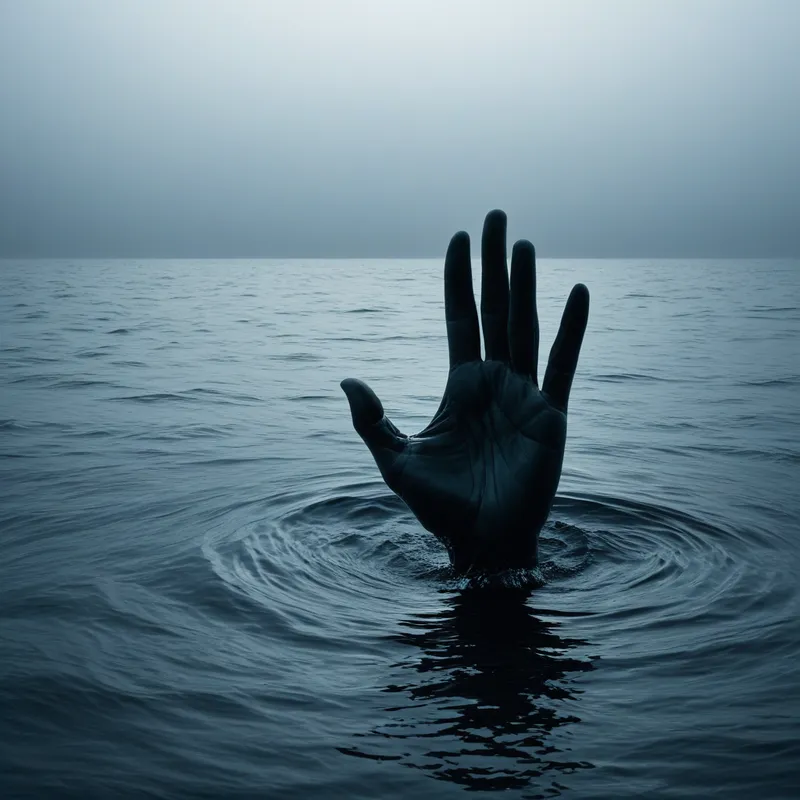
Terrified for his own life, the father made his choice. As the boat pitched and groaned, he seized his daughter and threw her over the side. She clung to the gunwale, her fingers white with cold and terror. “Father!” she cried. But survival had carved his heart to ice. He took his hatchet and struck her hands.
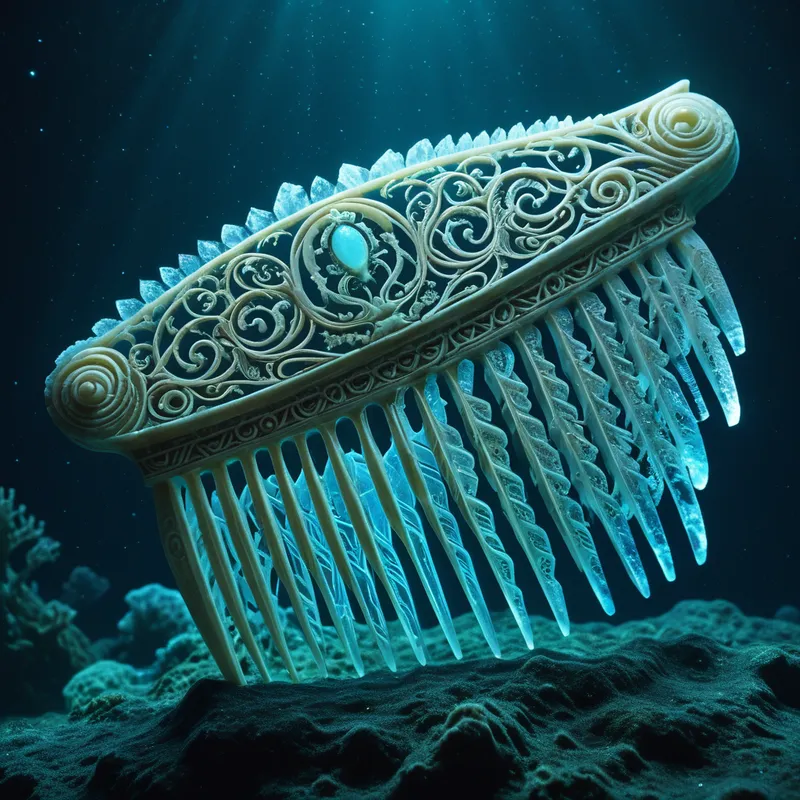
Once. Her fingers, severed, fell into the churning sea and became the first seals, swimming away into the deep. Twice. Her hands, gone, became the great walruses and whales. With nothing left to hold, Sedna sank. Down, down into the blackness, her hair streaming like seaweed, her rage and sorrow freezing into a new, terrible power. She did not die. She descended to Adlivun, and there, on the ocean bed, she became the one who holds all life within her. The mother who gives, and the mother who withholds. The goddess of the deep, whose tangled hair must be combed by shamans to calm her stormy heart and release the creatures so her children on the ice may live.

Cultural Origins & Context
This is a story of the coastal Inuit peoples, told in the long darkness of the Arctic winter, when the sea ice locked the world in silence and the hunt was impossible. It was not mere entertainment; it was a vital, living cosmology. Elders, often shamans (angakkuq), would recite the tale, their voices weaving the fate of the community into the fate of the goddess.
The myth functioned as sacred ecology. It explained the origin of sea mammals and the precariousness of human survival. More importantly, it prescribed the necessary ritual relationship between humanity and the non-human world. When the seals vanished and famine threatened, it was because Sedna was angered—by broken taboos, by human disrespect, by the impurity of the community’s soul. Only the angakkuq, through a perilous trance journey to her abyss, could comb the filth from her hair, appease her, and negotiate the release of the animals. The myth thus encoded environmental ethics, social order, and spiritual practice into one profound narrative.
Symbolic Architecture
At its core, the myth of Sedna is a brutal [allegory](/symbols/allegory “Symbol: A narrative device where characters, events, or settings represent abstract ideas or moral qualities, conveying deeper meanings through symbolic storytelling.”/) of the creation of the deep feminine [archetype](/symbols/archetype “Symbol: A universal, primordial pattern or prototype in the collective unconscious that shapes human experience, behavior, and creative expression.”/)—not as a gentle nurturer, but as a sovereign, chthonic power born of profound [betrayal](/symbols/betrayal “Symbol: A profound violation of trust in artistic or musical contexts, often representing broken creative partnerships or artistic integrity compromised.”/) and radical transformation.
Her severed fingers are the ultimate [symbol](/symbols/symbol “Symbol: A symbol can represent an idea, concept, or belief, serving as a powerful tool for communication and understanding.”/) of forced sacrifice and generative [loss](/symbols/loss “Symbol: Loss often symbolizes change, grief, and transformation in dreams, representing the emotional or psychological detachment from something or someone significant.”/). What is cut away from the [human](/symbols/human “Symbol: The symbol of a human represents individuality, complexity of emotions, and social relationships.”/) girl does not perish; it is transmuted into the very [source](/symbols/source “Symbol: The origin point of something, often representing beginnings, nourishment, or the fundamental cause behind phenomena.”/) of [life](/symbols/life “Symbol: The symbol of ‘Life’ represents a journey of growth, interconnectedness, and existential meaning, encompassing both the joys and challenges that define human experience.”/) for her people. The personal [trauma](/symbols/trauma “Symbol: A deeply distressing or disturbing experience that overwhelms the psyche, often manifesting in dreams as unresolved emotional wounds or psychological injury.”/) becomes the [foundation](/symbols/foundation “Symbol: A foundation symbolizes the underlying support systems, values, and beliefs that shape one’s life, serving as the bedrock for growth and development.”/) of cosmic function.
The deepest creativity is often born not from willed action, but from the unbearable moment when we are severed from all we once clung to, and fall into the abyss of our own becoming.
Her [father](/symbols/father “Symbol: The father figure in dreams often symbolizes authority, protection, guidance, and the quest for approval or validation.”/) represents the patriarchal principle in its most shadowy [aspect](/symbols/aspect “Symbol: A distinct feature, quality, or perspective of something, often representing a partial view of a larger whole.”/): the [logic](/symbols/logic “Symbol: The principle of reasoning and rational thought, often representing order, structure, and intellectual clarity in dreams.”/) of sacrifice that privileges the survival of the whole (or [the self](/myths/the-self “Myth from Jungian culture.”/)) over the individual, the betrayal of the intimate for the sake of a perceived greater good. His act is not heroic, but horrifically pragmatic, casting the feminine into the [realm](/symbols/realm “Symbol: The symbol of ‘Realm’ often signifies the boundaries of one’s consciousness, experiences, or emotional states, suggesting aspects of reality that are either explored or ignored.”/) of the unconscious, where it amasses untamed power.
Adlivun, her [kingdom](/symbols/kingdom “Symbol: A kingdom symbolizes authority, belonging, and a sense of identity within a larger context or community.”/), is the psychological [underworld](/symbols/underworld “Symbol: A symbolic journey into the unconscious, representing exploration of hidden aspects of self, transformation, or confronting repressed material.”/)—the realm of the repressed, the traumatized, the forgotten. She is its ruler. Her [tangled hair](/symbols/tangled-hair “Symbol: Tangled hair in dreams often symbolizes confusion, entanglement in emotions, or complexities in personal relationships.”/), which the [shaman](/symbols/shaman “Symbol: A spiritual mediator who bridges the human and spirit worlds, often through altered states, healing, and guidance.”/) must comb, symbolizes the knotted, neglected complexes and polluted emotions of the [community](/symbols/community “Symbol: Community in dreams symbolizes connection, support, and the need for belonging.”/). The act of combing is an act of psychic hygiene, of attending to what has been made messy and chaotic by collective [shadow](/symbols/shadow “Symbol: The ‘shadow’ embodies the unconscious, repressed aspects of the self and often represents fears or hidden emotions.”/).
The Dreamer’s Resonance
When this myth stirs in the modern dreamer, it often signals a profound encounter with the shadow of the feminine or a descent into one’s personal Adlivun. Dreams of drowning in dark [water](/myths/water “Myth from Chinese culture.”/), of being betrayed by a parental figure, or of one’s limbs transforming into something non-human are somatic echoes of Sedna’s journey.
The dreamer may be experiencing a real-life “betrayal”—not necessarily literal, but a fundamental failure of support, a cutting away of security or identity (a job loss, the end of a relationship, a health crisis). The [psyche](/myths/psyche “Myth from Greek culture.”/) is processing this “severance.” The feeling is one of sinking, of being cast into a cold, emotional deep where familiar ways of being no longer function.
This is not a nightmare to be simply escaped. It is the psyche initiating a necessary dissolution. The dreamer is in the kayak in the storm, being forced to let go of what they are clinging to, however painful the amputation. The somatic sense is one of deep cold, pressure, and isolation—the prelude to a terrifying but vital transformation.
Alchemical Translation
For the individual, the myth of Sedna maps the alchemical stage of [nigredo](/myths/nigredo “Myth from Alchemical culture.”/)—the blackening, the descent, the putrefaction. It is the process where the conscious personality (the beautiful, defiant girl) is utterly destroyed by betrayal and trauma, plunged into the solvent of the unconscious.
The [triumph](/myths/triumph “Myth from Roman culture.”/) is not in avoiding [the fall](/myths/the-fall “Myth from Biblical culture.”/), but in surrendering to its transformative logic. [The ego](/myths/the-ego “Myth from Jungian culture.”/)’s attachments—its “fingers” clinging to the boat of old identity, old relationships, old securities—must be cut away. This feels like annihilation.
Individuation requires the courage to be betrayed, and in that very betrayal, to discover the latent sovereignty that only the abyss can reveal.
But in the psychic ocean, nothing is lost. The severed parts undergo a sea-change. Our rejected wounds, our raw grief, our primal rage—these sink to the bottom of our being and become the foundational creatures of a new inner ecology. What was once a personal hurt becomes a source of depth, resilience, and generative power. We become the ruler of our own Adlivun.
The final, ongoing work is the shamanic practice of “combing.” This is the inner work of attending to the tangled, neglected, and polluted parts of our psyche. It is self-reflection, therapy, artistic expression, or mindful ritual—any practice that gently, respectfully, cleanses the knots of our complex history. We do not conquer our deep feminine power (our Sedna); we learn to care for it, to negotiate with its moods, so that the life-giving creatures of inspiration, compassion, and vitality can swim up from the depths and nourish our conscious life. We integrate the goddess of the deep.
Associated Symbols
Explore related symbols from the CaleaDream lexicon: