Secret Compartments & Hidden Rooms Myth Meaning & Symbolism
A tale of a forgotten room within a house, holding a dormant truth that demands to be found, heard, and integrated.
The Tale of Secret Compartments & Hidden Rooms
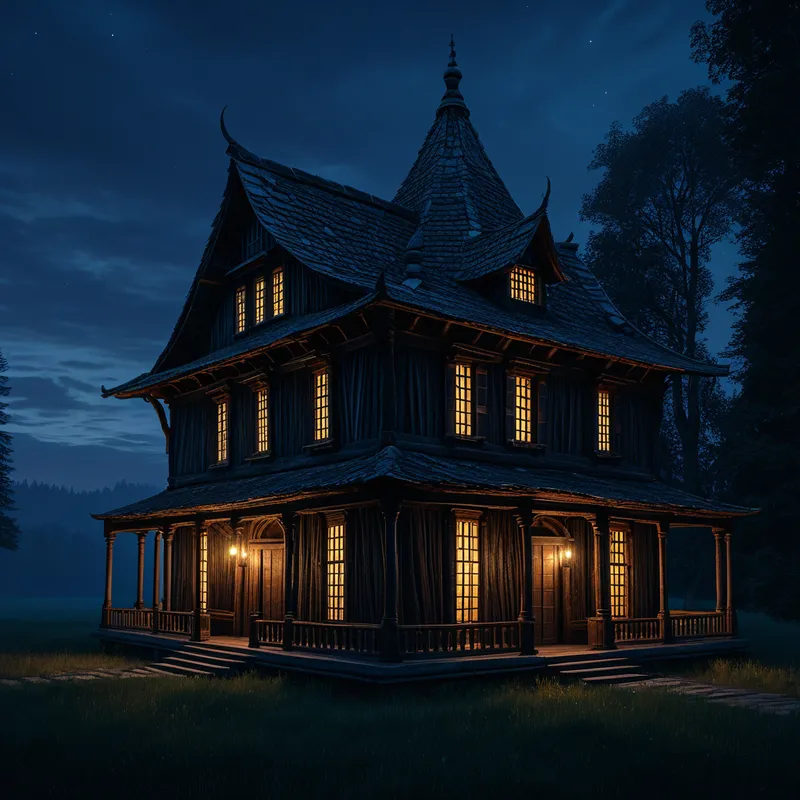
Listen, and let the firelight cast the shadows. There is a house—not yours, not mine, but the house. It stands at the edge of the village, where the cobbled paths give way to wild roots. It has always been there, passed from generation to generation, each family adding a room, a gable, a stair. Its walls are a patchwork of stone and timber, its roof a forest of chimneys. To all who look upon it, it is simply a large, old house. But in the whispers of the hearth, it is known by another name: the House of Unfinished Memory.
Within it lived a keeper, the latest in a long line. Let us call her Anya. She knew every creak of the floorboard, every sigh of the hinge. Yet, in her third year of tending its vast, quiet spaces, a silence began to speak to her. It was not the silence of absence, but of presence withheld. It lived in the stretch of wall between the kitchen larder and the grandfather clock—a stretch that, when she paced it outside, seemed shorter than the space inside should allow.
A subtle dissonance hummed in her bones. She began to measure, not with rulers, but with attention. She followed the drafts that had no source, the way the candle flames would lean toward the north wall of the library as if bowing to a secret king. The house resisted, as all living things resist revelation. Doors she knew well would stick; familiar corridors would seem to lengthen in the dusk.
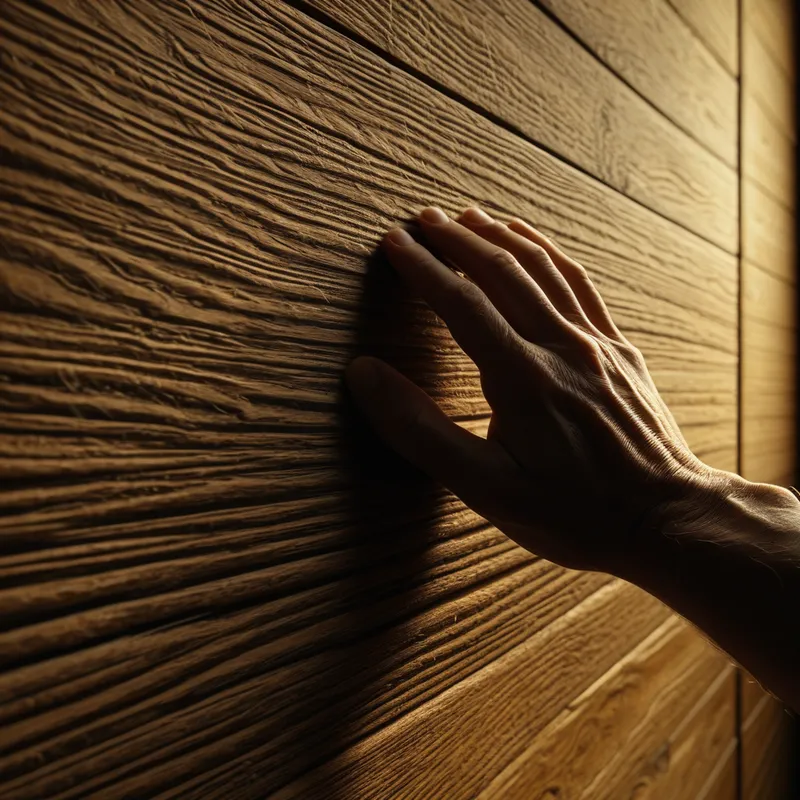
The climax came on the night of the great storm. Thunder shook the very stones, and in a flash of lightning, Anya saw it: a hairline crack in the library’s oak paneling, forming the faint, perfect outline of a small door. No latch, no handle. Heart drumming a counter-rhythm to the rain, she pressed her palm against the grain. She did not push, but remembered—the stories of her great-grandmother, the half-sung rhyme about the “heart-room.” With a sigh of released breath centuries held, the seam widened.
Beyond was not a space, but an atmosphere. A tiny, windowless room, no larger than a closet, thick with the scent of beeswax and old paper. In the center, on a simple pedestal, sat a closed, leather-bound book. It was not dusty. The air was warm, still, and expectant. This was no treasure vault of gold, but a chamber of quiet testimony. She opened the book. The pages were blank. Yet as her tears fell—tears of what, she knew not—script began to bloom, iron-gall ink rising to the surface, telling not a family history, but the history: the unspoken griefs, the joys too sharp to share, the loves that shaped the house’s very angles. The house had not been hiding a thing from her. It had been holding a truth for her, until she was ready to listen. The storm outside abated. The house settled, its hidden heartbeat now synced with her own.
Cultural Origins & Context
This tale exists in the marrow of global folklore, a migratory myth without a single point of origin. It is the story told by grandmothers in the Scottish Highlands about the “room between the walls,” the parable whispered in Japanese folklore of the “kakushibeya” that holds a family’s kami, and the persistent European legend of the priest’s hole or the alchemist’s concealed study. It belongs to an oral tradition of builders, homemakers, and storytellers—those who understand that a dwelling is not inert, but absorbs the psychic residue of its inhabitants.
Its societal function was multifaceted. Practically, it encoded knowledge of actual architectural quirks and safe spaces in times of strife. Psychologically, it served as a narrative container for the unintegrated aspects of a family or community: the shameful secret, the lost lineage, the repressed talent, or the unfulfilled promise. The myth taught that no structure, whether of wood or of society, is ever fully known; there is always a potential for discovery, a correction to the official record waiting in the wings. It was a story that validated intuition, teaching that a feeling of “something more” is not a fancy, but a clue.
Symbolic Architecture
The myth constructs a perfect symbolic map of the psyche. The house represents the conscious self—the persona we present, the organized structure of our known identity, skills, and memories. The secret compartment or room is the shadow, not as a dungeon of monsters, but as a sanctum of disowned potential and unprocessed experience.
The hidden room is not a flaw in the architecture of the self; it is its most sacred blueprint.
The hero, Anya, is the emerging consciousness, the ego weary of surface living. Her method is critical: she does not smash walls with brute force. She uses patient observation (noticing the draft), embodied knowledge (the rhyme), and a moment of catalytic emotion (the storm). The discovery is always anti-climactic in a material sense—a book, a mirror, a single candle—because the treasure is not an object, but meaning itself. The blank book that writes itself with her tears symbolizes the psyche’s capacity for revelation only when met with authentic feeling. Integration occurs not by removing the secret, but by bringing it into relationship with the whole house.

The Dreamer's Resonance
When this myth visits us in dreams, it signals a profound somatic and psychological process: the approach of the unknown self. Dreaming of finding a new room in your house, a hidden drawer in familiar furniture, or a secret basement, is the unconscious announcing that a compartment of your being is ready to be accessed.
The somatic experience is often one of mingled anxiety and awe—a quickening pulse alongside a deep, magnetic pull. The dream ego is undergoing a restructuring. The “house” of your identity is expanding to accommodate what was always there. If the dream involves being unable to open the door, or the room being empty, it speaks to a readiness not yet met with the necessary emotional key—often a willingness to feel grief, acknowledge a loss, or own a neglected power. These dreams are dispatches from the interior, telling us that our known world is incomplete, and that a journey inward, requiring subtlety and courage, is at hand.

Alchemical Translation
The myth’s narrative is a precise model for the alchemical individuation process. The initial state is the nigredo—the blackening, represented by Anya’s restless dissatisfaction with the known house, a sense of something missing. Her patient investigation is the albedo—the whitening, the careful distillation and purification of attention away from the noise of the everyday.
The storm is the citrinitas—the yellowing, the chaotic, emotional catalyst that forces a rupture in the ordinary. The opening of the door is the rubedo—the reddening, the sacred marriage of conscious ego and unconscious content. The blank book that writes itself is the lapis philosophorum—the philosopher’s stone, the achieved symbol of wholeness.
The ultimate transmutation is not of lead into gold, but of forgotten memory into living wisdom, of secret space into sacred center.
For the modern individual, the myth instructs us that healing and wholeness are not about adding something new from the outside, but about discovering the authentic, hidden architecture within. Our task is to become the keeper who listens to the drafts in our own soul, who has the courage to trace the seams in our personal history, and who, when the storm of emotion comes, can open the long-sealed door and finally read the story that has been waiting, patiently, for our tears to give it voice.
Associated Symbols
Explore related symbols from the CaleaDream lexicon: