
Sídhe Myth Meaning & Symbolism
The Sídhe are the ancient, luminous people of the mounds, guardians of the threshold between the mortal world and the eternal otherworld.
The Tale of Sídhe
Listen. The wind on the hill does not blow; it whispers a name older than the stones. Before the cross, before the iron, the land was alive with a different breath. They were the Sídhe. Not small, winged things of later fancy, but a tall, fierce, and radiant people. Their eyes held the light of a sun that does not burn, and their voices were the sound of streams running over deep places.
They walked the green hills of Éire when the world was soft and new, when every oak was a cathedral and every hill a throne. They were the Tuatha Dé Danann, the People of the Goddess Danu. They brought the arts: the mastery of the forge, the secret language of the harp, the laws that bind promise and fate. But a new wind came, carrying the scent of mortality and iron. The Sons of Mil, the ancestors of humankind, landed on the shores, and the earth shook with their coming.
A great battle was fought, not just of spear and shield, but of glamour and will. The land itself was the prize. And though the Tuatha Dé were mighty, the tide of the new age could not be turned back. So, a treaty was struck, not on parchment, but in the very bones of the earth. The great Dagda, the Good God, divided the land. To the children of Mil, he gave the surface—the fields for their ploughs, the rivers for their nets, the open sky. But for his own people, he called forth the secret heart of the island.
And the hills opened. Not with a quake of destruction, but with a sigh of profound transformation. One by one, the luminous ones turned from the sunlight and walked into the mounds—Brú na Bóinne, Dumha na nGiall, a thousand nameless rises across the land. The grass closed over them like a curtain. They did not vanish; they withdrew. They became the People of the Mounds, the Sídhe.
Now, they dwell in a world that is a mirror and a memory of our own, but perfected. Time flows like honey there; a feast lasts a century, and a century passes like a sigh. Their halls are lit by gems that hold captive starlight, and their music is the pattern of creation itself. But they are not gone from us. At the liminal hours—when dusk bleeds into night, when mist clings to the hollows—the mounds open. A faint, enchanting music drifts on the air. A figure might be seen on the hilltop, more beautiful and terrible than any mortal heart can bear. They are the guardians of the threshold, the keepers of the old ways, forever just beyond the edge of sight, in the corner of the world’s eye.

Cultural Origins & Context
The myth of the Sídhe is not a single story but a living stratum of Irish consciousness, woven from pre-Christian belief and post-Christian survival. Its primary vessels were the seanchaí, the traditional storytellers, who preserved the lore not as dry history but as a map of the invisible landscape. These tales were told at the hearth, not the lectern, and their function was profound: to explain the numinous presence felt in the land, to codify social taboos (respect for ancient sites, hospitality), and to navigate the psychological space between the known world and the overwhelming mystery that surrounded it.
The Sídhe are often interpreted as the folk memory of the Tuatha Dé Danann, the old gods who were euhemerized—transformed into a legendary, magical race—by a Christianizing culture that could not entirely erase the deep psychic imprint of the indigenous deities. The mounds themselves (sídhe in Old Irish) are real, physical Neolithic tombs, making the myth a literal topographical encoding of memory. The Sídhe represent the cultural unconscious of Ireland, the powerful, semi-repressed past that continues to inhabit and shape the present landscape, both physical and psychological.
Symbolic Architecture
At its core, the myth of the Sídhe is a master symbol of the liminal—the threshold state. They embody everything that exists in the borderlands: between the conscious and unconscious mind, between history and the present, between the human and the divine, between life and death. Their withdrawal into the mounds is not a defeat, but a strategic retreat into the interior, the underworld of the psyche.
The Sídhe represent the autonomous complexes of the psyche—those bundles of energy, memory, and potential that have a life of their own, residing just below the surface of ego-consciousness.
The Sídhe are custodians of what has been lost, repressed, or forgotten, but not destroyed. They hold the “otherworldly” gifts: artistic inspiration (the poet’s aisling), sudden psychic insight, and the raw, untamed forces of nature. They are ambivalent—capable of bestowing blessings or enacting cruel blows—mirroring the psyche’s own creative and destructive potentials. To encounter them is to stand at a psychic crossroads, where one’s fate is decided by one’s respect for the deep, often irrational, laws of the inner world.
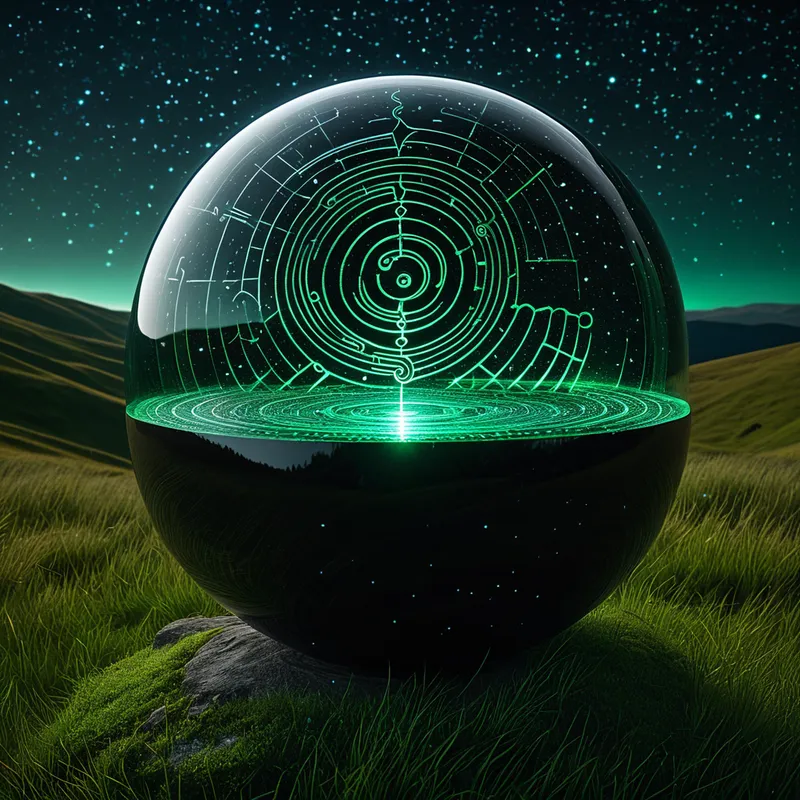
The Dreamer’s Resonance
When the motif of the Sídhe appears in modern dreams, it signals an activation of deep, ancestral layers of the personal and collective unconscious. The dreamer is not merely having a fantasy; they are being approached by an autonomous psychic content of great age and power.
Common scenarios include finding a hidden door in a familiar hillside, hearing irresistible music from a source unseen, or being led away by a captivating yet ominous figure. Somatically, this may correlate with feelings of being “spaced out,” enchanted, or of losing time—a literal experiencing of “fairy time.” Psychologically, it indicates a process of numinous invasion. A part of the psyche that has been safely buried (a talent, a trauma, a primordial drive) is now demanding recognition and integration. The dreamer is at the threshold of a profound inner reorientation, tempted by the beauty and terror of what they have excluded from their daylight self.

Alchemical Translation
The journey of the Sídhe—from sovereigns of the surface to dwellers in the sacred interior—is a perfect allegory for the alchemical process of individuation. It models the necessary retreat of psychic energy from identification with the conscious persona (the ruling ego) into the depths of the unconscious (the mound) for transformation.
The treaty with the Sons of Mil is the ego’s pact with the unconscious: you may govern the daylight world of adaptation, but you must acknowledge and respect the sovereign, hidden realm of the Self.
The modern individual’s “alchemical translation” of this myth involves several stages. First, Acknowledgment: recognizing that powerful, non-ego forces (moods, complexes, inspirations) inhabit one’s inner landscape. Second, Respectful Approach: engaging with these forces not with rational conquest, but with the careful etiquette of the hero in a fairy tale—listening, offering respect, avoiding crude literalism. Finally, Integration: the goal is not to live in the mound, but to bring back its gifts—the gealachán (fairy spark)—to the surface world. This is the transmutation: the ego, once ruler of a barren kingdom, becomes the steward of a land enriched by a living, dynamic relationship with its own depths. The individual no longer just walks on the land; they walk with the silent, watchful presence of the Sídhe within it, conscious of the eternal treaty between the visible life and the luminous, hidden one.
Associated Symbols
Explore related symbols from the CaleaDream lexicon: