Sand Mandala Myth Meaning & Symbolism
A sacred, intricate universe is painstakingly crafted from colored sand, only to be swept away upon completion, embodying the ultimate truth of impermanence.
The Tale of the Sand Mandala
Listen, and let your mind become still as a mountain lake. For I will tell you of a creation more beautiful than a thousand dawns, and a dissolution more certain than the setting sun. This is not a tale of gods battling on high, but of hands moving in sacred silence, crafting a universe from dust.
In the hallowed quiet of a temple, where the air is thick with the scent of incense and old wood, they gather. The Bodhisattvas of art, the monks with eyes that have seen beyond the veil of form. Before them lies only a flat, dark surface—an empty slate, a void awaiting the first breath of order. With a length of string, dipped in chalk, they snap a line. A single, resonant thwip echoes. The axis of the world is drawn.
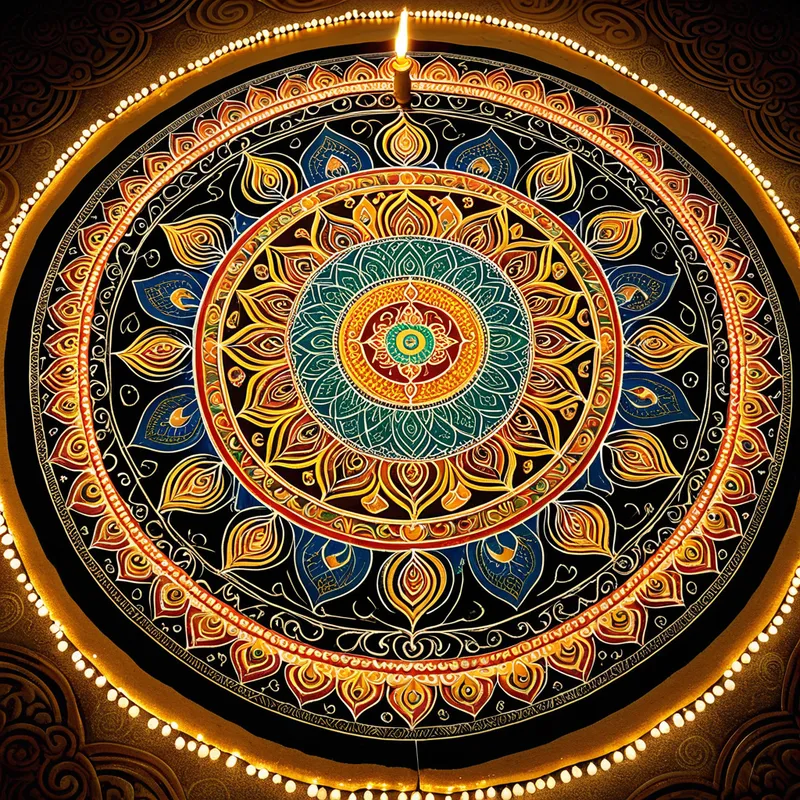
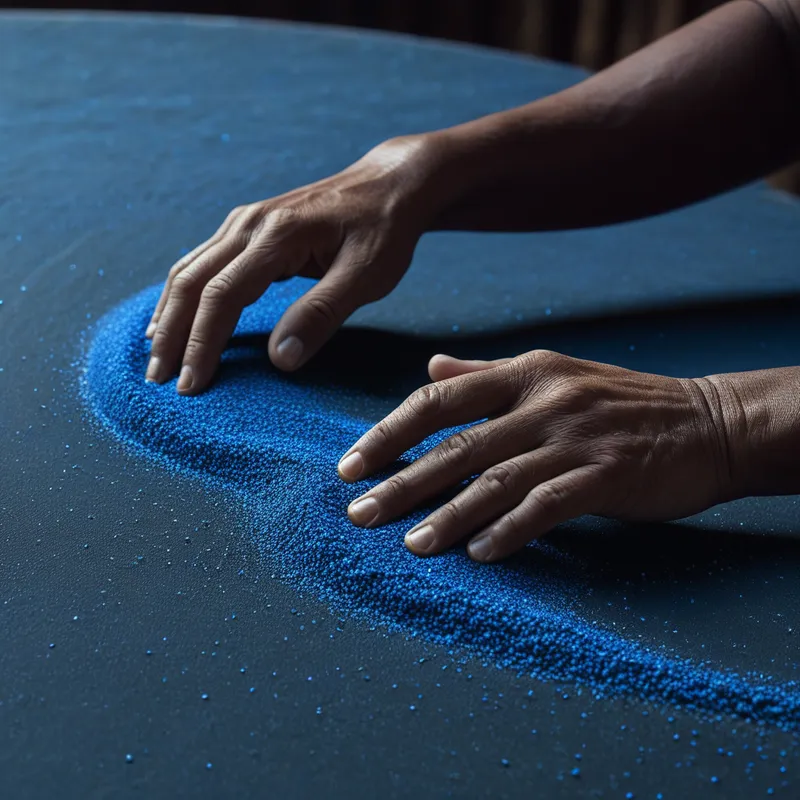
Then begins the great work. From metal funnels called chak-pur, they pour not paint, nor ink, but the crushed essence of the earth itself: malachite green, lapis lazuli blue, ochre yellow, and hematite red. Grain by grain, speck by speck, the universe unfolds. From the sacred center, the Buddha Vairocana manifests, seated in unshakable meditation. Around him, palaces of wisdom rise, their walls intricate with patterns older than language. Fierce Dharmapalas stand guard at the gates, while serene Dakinis dance in celestial courtyards. Every minute square, every flowing curve, is a syllable in a silent, visual mantra. For days, weeks, there is only the soft, rhythmic grating of metal on metal, the gentle hiss of sand finding its destined place. They breathe life into a cosmos made of mountain and jewel.
The moment of completion arrives not with a shout, but with a profound, collective exhale. The mandala is whole. A perfected realm. It glows with a terrible, fragile beauty—a map to enlightenment, a palace for the divine mind. Pilgrims come, their hearts aching at its perfection. They see their own potential mirrored in its flawless symmetry.
Then, the Lama lifts a ritual vajra. The ceremony begins. Chants fill the air, prayers of gratitude and release. And then, with a sweep of a hand, he brushes a corner of the palace wall into a blur of color. The dismantling has begun. What took weeks to build is undone in minutes. The fierce deities, the gentle Buddhas, the intricate gates—all are swept into a chaotic, beautiful pile. The ordered universe returns to colored dust. This dust is gathered in a silk cloth, carried to a flowing river, and poured into the current. The blessing is given back to the world, grain by grain, until nothing remains on the dark slate but a memory, and the empty, fertile silence from which it all began.
Cultural Origins & Context
This practice originates within the esoteric traditions of <abbr title=“The “Diamond Vehicle,” a major school of Buddhism emphasizing tantric practices and rituals”>Vajrayana Buddhism, particularly in the cultural spheres of Tibet and its diaspora. It is not a “myth” in the sense of a narrative about ancient times, but a living myth—a ritual performance that enacts a core cosmological and psychological truth. The knowledge is transmitted through unbroken lineages, from master to disciple, alongside sacred texts called Tantras.
The societal function is multifaceted. It is a profound teaching on Anicca (impermanence), made viscerally real. It is an act of immense generosity (Dana), offering beauty and spiritual power to the community before its release. It is also a advanced meditative and ritual technology. The monks who construct it are not merely artists; they are practitioners visualizing and embodying the divine architecture of the mandala, using it as a tool to purify their own minds and channel blessings into the environment.
Symbolic Architecture
The Sand Mandala is a symbolic hologram of reality. Its central deity represents the innate, luminous nature of the mind, often obscured but always present. The surrounding palaces and deities map out the entire spectrum of psychic energies—from wrathful, cutting wisdom to all-embracing compassion—that must be integrated on the path to wholeness.
The mandala is not a picture of a sacred place; it is the ritual construction of that place within the psyche of the practitioner and the shared space of the community.
The act of creation symbolizes the painstaking work of building a coherent self, a stable identity, and a meaningful world. We spend our lives assembling our palace: career, relationships, beliefs, a sense of who we are. The mandala shows this process as sacred, intentional, and beautiful. The dissolution, however, is the ultimate teaching. It represents the necessary death of the ego’s most cherished constructions. It is the recognition that all compounded things—including our self-concept—are in a state of graceful, inevitable collapse.
The sweeping away is not destruction, but the final, most generous act of non-attachment. It translates the concept of emptiness (Sunyata) from philosophy into embodied experience.
The Dreamer’s Resonance
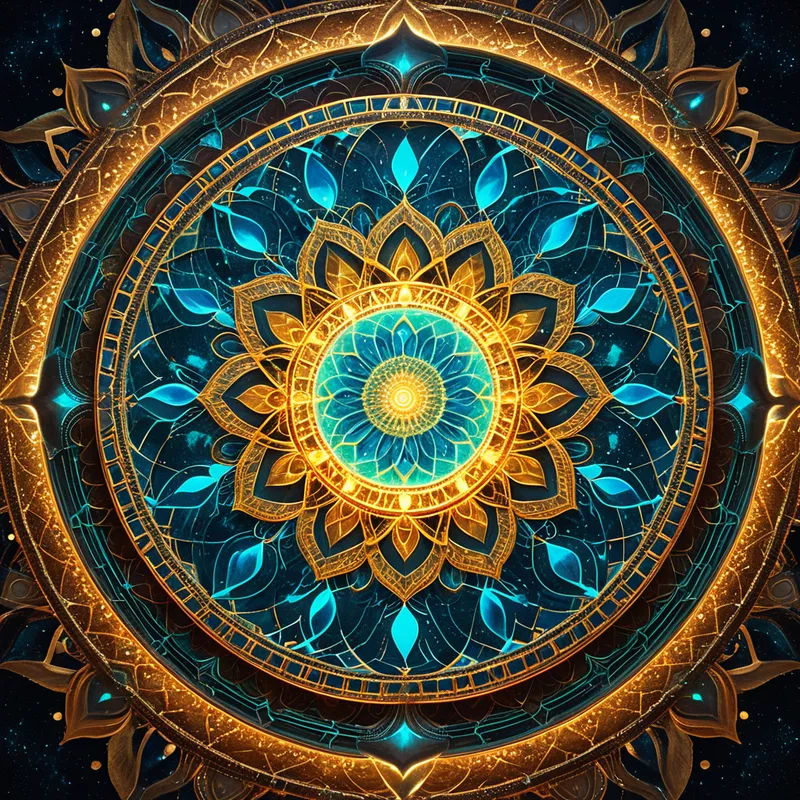
To dream of a sand mandala is to encounter the psyche in a state of profound, fragile integration. You may dream of meticulously building something of breathtaking complexity—a model, a system, a relationship—only to watch it crumble as you near completion. This mirrors the somatic process of the psyche consolidating a new level of understanding or a new “self,” testing its integrity, and then, for its own growth, allowing it to deconstruct.
Such dreams often arise during life transitions: the end of a major project, the closing of a chapter, or when one’s identity feels solid yet strangely suffocating. The emotion is key. If the dream carries anxiety, it may reflect a conscious resistance to necessary change. If it carries a serene melancholy or even awe, it suggests the unconscious is wisely orchestrating a sacred dissolution, making space for a new, more authentic pattern to emerge from the dust of the old.
Alchemical Translation
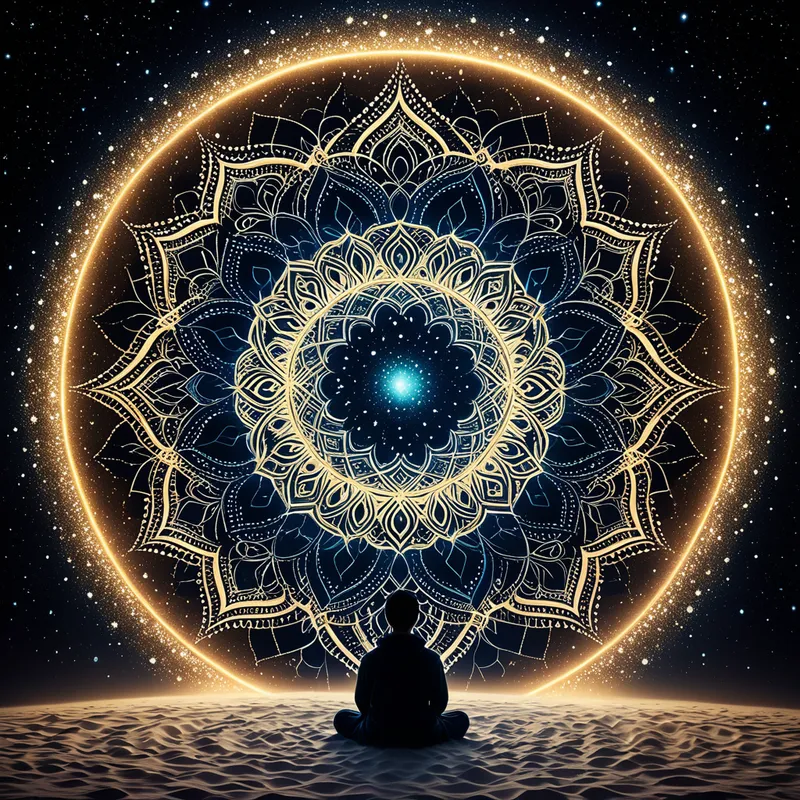
For the modern individual, the myth of the Sand Mandala models the alchemical process of individuation not as a linear ascent to a fixed goal, but as a cyclical rhythm of solve et coagula—dissolve and coagulate.
We are all mandala artists. The “sand” is the raw material of our lives: our experiences, memories, talents, and traumas. Our life’s work is to gather these scattered grains and, with conscious intention, arrange them into a coherent, beautiful, and functional pattern—a career, a family, a philosophy, a personality. This is the coagula, the coagulation. We must honor this creative, ego-building phase. It is sacred work.
The alchemical triumph, however, lies in the courageous solve, the dissolution. This is the voluntary de-identification from the very patterns we worked so hard to build. It is the midlife crisis navigated consciously; the willingness to let a long-held identity die; the acceptance that even our most cherished achievements are not our permanent self. This is not nihilism, but liberation.
The psyche’s health depends on this sacred cycle. To only build is to become rigid, identified with the palace, and terrified of time. To only dissolve is to remain in chaos. The mandala ritual teaches us to build with full-hearted devotion, and to release with open-handed grace.
The final offering of the sand to the river is the ultimate integration. It signifies that the wisdom gained from each constructed-and-dissolved “self” is not lost. It is metabolized, returned to the flow of the unconscious (the river), and becomes fertile silt for the next cycle of growth. The goal is not a perfect, eternal mandala, but the mastery of the process itself—the fluid, compassionate artistry of a self that can be both magnificently complex and joyously impermanent.
Associated Symbols
Explore related symbols from the CaleaDream lexicon: