Renenet Myth Meaning & Symbolism
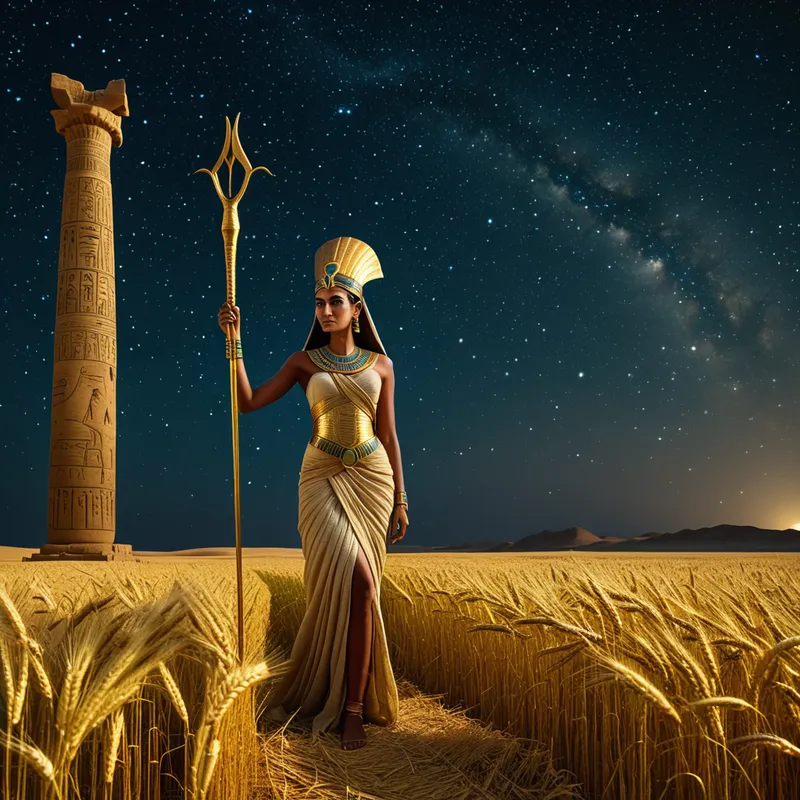
The goddess Renenet weaves fate and fortune, embodying the nourishing power of destiny that shapes both the harvest and the human soul.
The Tale of Renenet
Hear now the whisper of the fertile dark, the story that flows not in the roar of the river but in the silent swell of the seed. Before the first stone of the first temple was laid, in the time when the world was a field of potential waiting for a name, she was there.
They called her Renenet. You would not find her in the thunder of battle or the glare of the noon sun. Her domain was the intimate, the essential. She dwelled in the warm, sweet breath of a newborn, in the first cry that announced a ren—a name—to the world. As the midwife washed the child, it was Renenet who leaned close, her presence a soft hum in the air, weaving the invisible threads of that infant’s fortune into the very sound of its name.
Her touch was in the earth itself. When the Inundation receded, leaving the black soil gasping and rich, it was her sigh that stirred the farmer to cast his seed. She moved through the fields not as a goddess walking, but as the growth itself—the silent, unstoppable push of the green shoot through the mud, the slow, heavy bending of the wheat stalk under the weight of its own gift. She was the fullness of the granary, the tangible promise that the family would not just survive, but thrive. Her symbol was the cobra, coiled and watchful at the brow of the pharaoh, but also in the humble store-room, a protector of the bounty that meant life.
Her most sacred duty was at the moment of death. When the aspects of the soul trembled on the threshold of the Duat, it was Renenet who met them. Not as a judge, but as a nourisher. In the silent halls of the afterlife, she offered not a sword or a scale, but a cup and a loaf. She was the sustainer of the Akh, the one who ensured that the fortune woven at birth did not unravel in death, but transformed into an eternal sustenance. Her gift was the alchemy that turned a mortal destiny into an immortal name.
Cultural Origins & Context
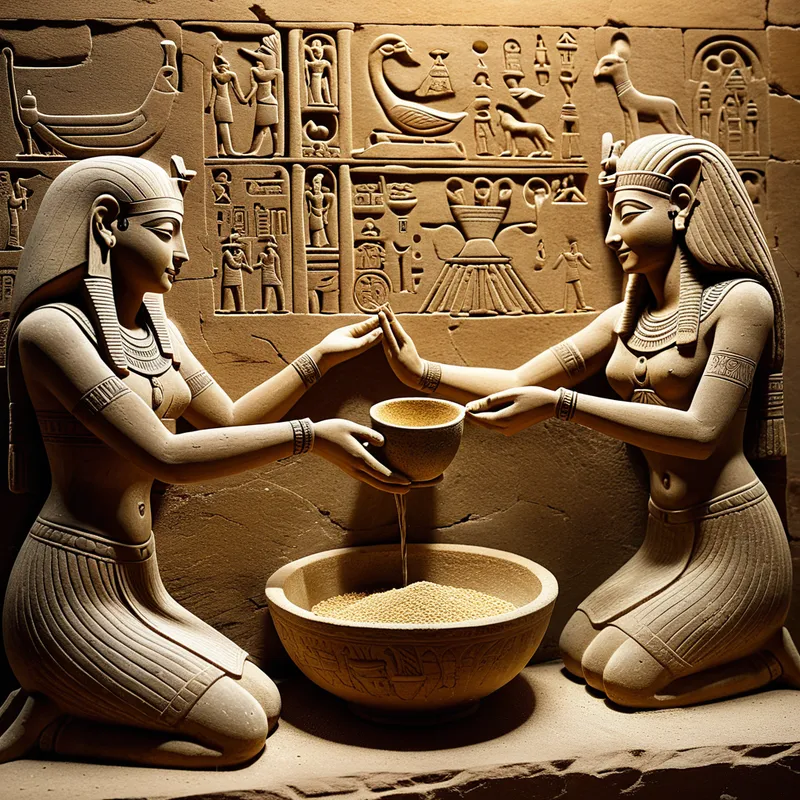
Renenet’s presence is woven into the very fabric of daily and eternal life in ancient Egypt. She is not the star of a grand, singular epic, but a constant, vital supporting character in the drama of existence. Her cult was diffuse, woven into household rituals, agricultural cycles, and state ceremony. She appears in the Pyramid Texts and the Book of the Dead, often in proximity to Osiris and Isis, as part of the divine committee ensuring safe passage and continued existence.
She was invoked at birth, her name perhaps whispered as part of the naming ceremony. She was thanked at harvest, her spirit in the first fruits offered at local shrines. And she was fervently prayed to in the tomb, her image and formulae inscribed to guarantee she would recognize and provision the deceased. This made her a profoundly personal goddess. While Ra ruled the sky and Pharaoh the land, Renenet governed the intimate space of the cradle, the pantry, and the sarcophagus—the spaces where fate becomes tangible as food, fortune, and future.
Symbolic Architecture
Renenet represents a profound and often overlooked archetype: the Nourisher of Destiny. She synthesizes two forces often considered in opposition: predetermined fate and cultivated fortune. She is not a blind spinner like the Moirai; she is the one who feeds what is spun.
Destiny is not a sealed decree, but a seed. Its potential is fixed, but its fulfillment depends entirely on the nourishment it receives.
Her primary symbol, the cobra (uraeus), is multifaceted. It is a protector of royal and divine power, but its coiled form also speaks of latent potential, stored energy, and the cyclical nature of life, death, and rebirth—the snake that sheds its skin. As a goddess of granaries, she is the guardian of stored life-force, the energy saved from today to create tomorrow. Psychologically, she represents the internal resources—the memories, the skills, the love, the resilience—that we store up and which later define our capacity to handle our fate.
Her link to the ren, the name, is crucial. In Egyptian thought, to speak a name was to summon its essence into being. Renenet thus presides over the moment our abstract potential receives its specific designation, its "name" in the world. She is the psychic function that takes the raw material of the Self and begins to give it form, identity, and a path to grow along.
The Dreamer's Resonance
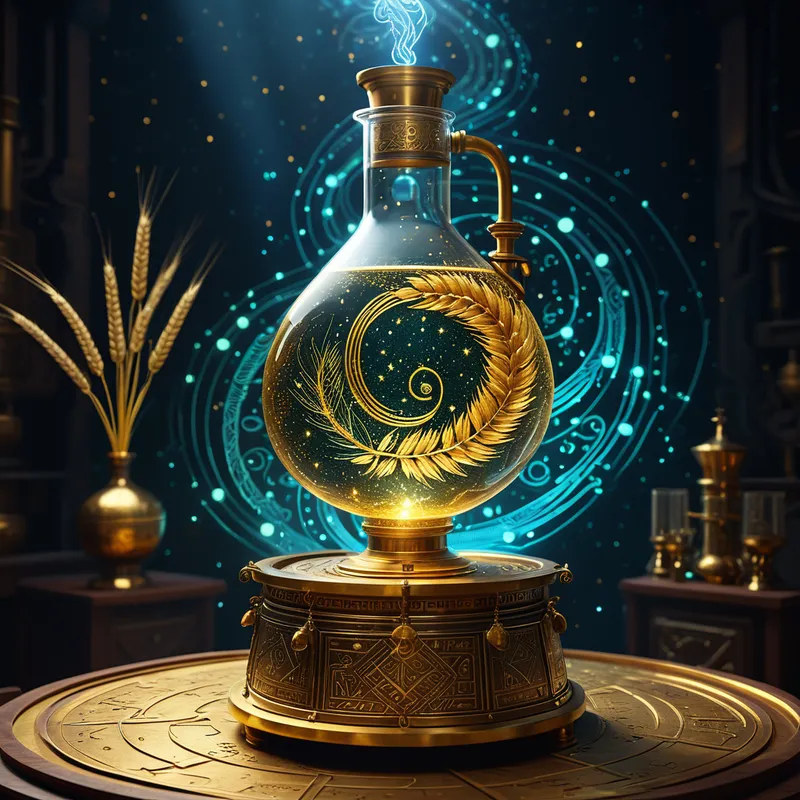
When the pattern of Renenet stirs in the modern unconscious, it rarely appears as a clear Egyptian goddess. Instead, one dreams of potent, nourishing spaces and moments of foundational provision.
You may dream of a forgotten pantry or cellar, suddenly discovered, filled with perfectly preserved, abundant food. This speaks to the dreamer tapping into unrecognized or long-stored inner resources—resilience, talent, or emotional sustenance—needed for a current life challenge. Conversely, a dream of an empty granary or a withered field points to a perceived depletion of these inner resources, a fear that one’s personal "fortune" or capacity has run out.
Dreams of naming a newborn, or struggling to find the right name, directly mirror Renenet’s domain. This often occurs during life transitions where a new identity is being formed—after a career change, a spiritual awakening, or the end of a major relationship. The dream highlights the psychic act of defining what this new phase of life is, of giving it its proper "name" so it can be nourished into being.
Sensations are key: the feeling of being fed a miraculous, energizing substance, or the tactile joy of handling ripe grain or fruit. These somatic experiences signal the unconscious providing direct nourishment to a psyche that may be starved for meaning, purpose, or simple emotional sustenance.

Alchemical Translation
The individuation process, the journey toward psychic wholeness, is not a heroic battle alone; it is also a profound act of self-nourishment and careful stewardship. Renenet’s myth provides the model for this alchemical stage.
The first operation is Naming the Seed. This is the difficult work of self-honesty: identifying the core pattern, the fundamental complex, or the innate potential within us. It is giving a "name" to our deepest wound or our highest calling. Renenet teaches that until we name it, we cannot feed it.
The second is The Coiled Guarding. After naming, we must protect this nascent Self. This is the discipline of setting boundaries (the protective cobra), of creating internal "granaries" through practices like reflection, journaling, or therapy where insights are stored and integrated, not lost.
The alchemy of the soul occurs not in the fire of conflict alone, but in the slow, patient fermentation of stored experience into wisdom.
The final, transcendent operation is Offering to the Eternal. Renenet feeding the Akh in the afterlife symbolizes the ultimate goal: to transmute our lived experience—our joys, our sufferings, our personal "fortune"—into something that sustains the eternal aspect of the psyche. It is the process of looking back on one’s life and seeing not just a series of events, but a harvested field whose yield now feeds the soul’s enduring meaning. Our personal destiny, fully nourished and lived, becomes the immortal sustenance of the Self.
In a world obsessed with chasing fortune, Renenet whispers an older, deeper truth: fortune is not caught; it is cultivated. It begins with the name you are given, and flourishes with the nourishment you, as your own divine gardener, choose to provide.
Associated Symbols
Explore related symbols from the CaleaDream lexicon: