Ran's Net Myth Meaning & Symbolism
The tale of the sea goddess Ran, whose golden net ensnares the drowned, symbolizing fate's inescapable grasp and the soul's journey into the depths.
The Tale of Ran’s Net
Hear now the tale sung not of fire, but of fathomless water. Where the Yggdrasil’s roots drink from deep wells, so too do the lives of men drink from the sea—and sometimes, the sea drinks them in return.
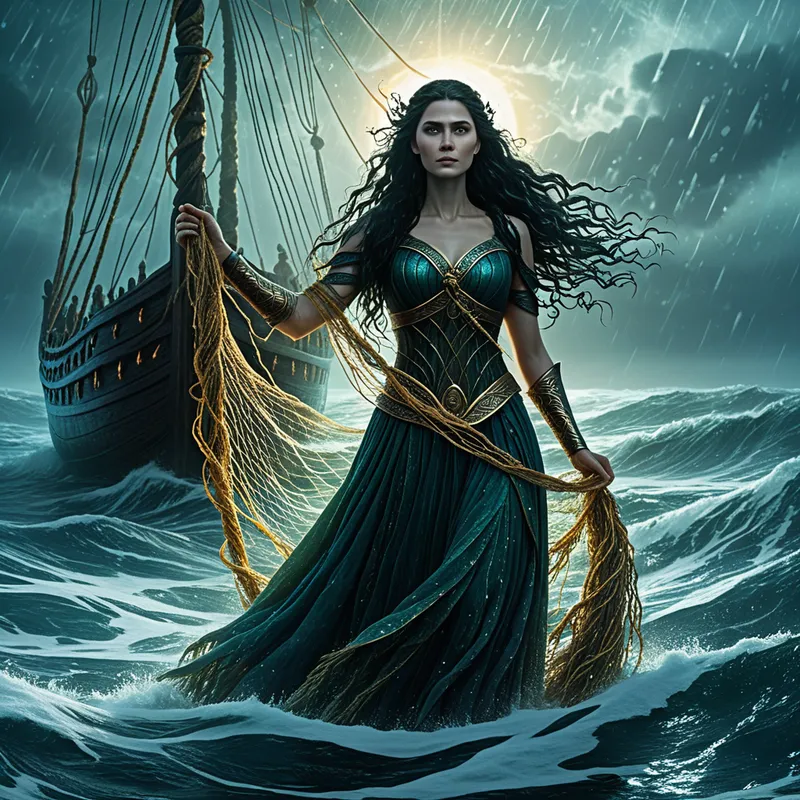
In her hall of Ægir, deep beneath the whale-road where no sun pierces, dwells Ran. She is not a gentle keeper of shores, but a queen of the storm’s heart and the crushing deep. Her hair is the black tangle of kelp forests, her eyes the grey of winter fog over a leaden sea, and her embrace is the final, cold pressure of the abyss. By her side is Ægir, her husband, who brews the ale for the gods from the very salt of the ocean.
But Ran’s true treasure is her net. Woven not from hemp, but from the captured light of drowned sunsets and the promise of lost returns, it is a web of spun gold and destiny. She and her nine daughters, the wave-maidens, do not hunt with spear or sword. They wait. They watch from the troughs of waves and the silent green gloom.
When the storm-god’s fury is unleashed and the Jörmungandr stirs in his coils, when the longship named Sea-Steed or Wave-Cutter is lifted high upon a watery mountain only to be plunged into a valley of foam—that is when Ran casts her net. It unfolds from the deep, not with a cast, but with an emergence, a rising web of fate. It does not snag wood or tear sail. It passes through these things like a ghost. It seeks the spark within the breast, the hugr, the soul-stuff of the sailor.
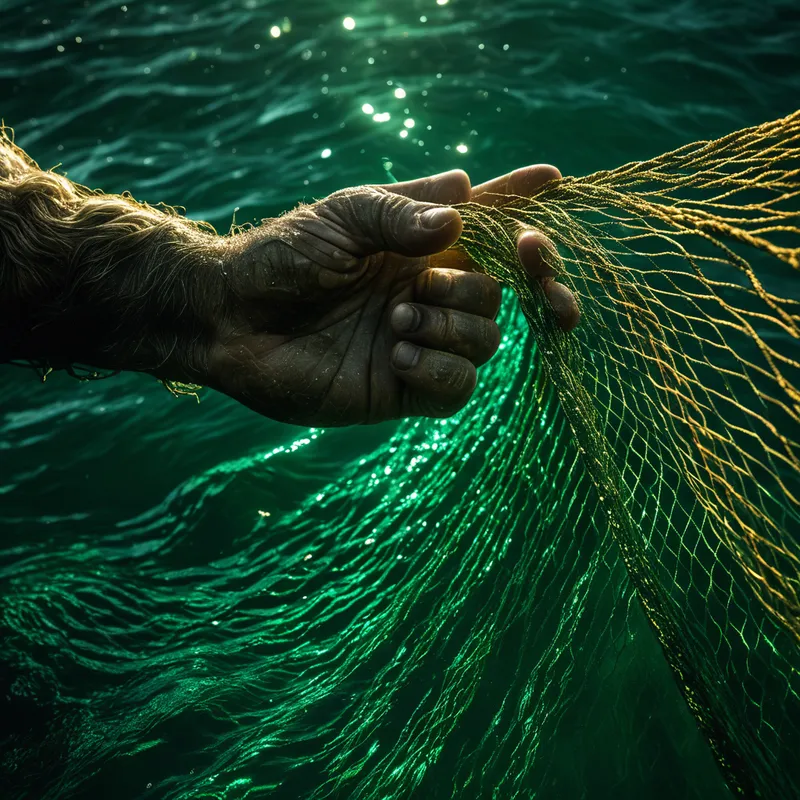
The man who feels the water fill his lungs feels another pull, a gentle, irresistible drawing. He sees, in the last bubbles of his breath, a glimmer of gold in the dark water. It is not cruel, but it is inexorable. The net wraps his essence, a soul now adrift from its flesh-anchor, and draws him down, down past the sinking wreckage, past the eyes of curious fish, to the coral-gated halls of Ægir.
There, in the silent grandeur of the deep, Ran receives her guests. The drowned do not sit as thralls, but are welcomed—for they come with a price. Gold is their passage, the naut paid for their ferry. A sailor who went to sea with a coin under his tongue, or whose kin made rich offerings, would find a seat at the bench, his spirit preserved in the cold, eternal feast of the sea-queen. Those who came empty-handed… their fate in her halls is less sung, lost to the murk.
So the skalds whispered: to die at sea was to be gathered. Not by Valkyrie to the roaring glory of Valhalla, but by Ran’s golden net to the quiet, profound kingdom of the drowned.
Cultural Origins & Context
The myth of Ran and her net is not the centerpiece of a grand epic like the tales of Thor or the doom of the Aesir. It is a piece of the maritime mosaic, a belief born from the visceral reality of a culture for whom the sea was both highway and graveyard. These stories lived in the skáld’s verses and the hushed warnings of old fisherwives, passed down not in great halls, but on rocking decks and by smoky hearths in coastal longhouses.
Her name itself is thought to mean “robber” or “plunderer,” a direct reflection of the sea’s capricious nature. She was a personification of the ocean’s deadly aspect, a necessary balance to the more benevolent, fertile concepts of the sea. The belief that the drowned were gathered served a crucial societal function: it provided a narrative, a structure, for a particularly terrifying and random form of death. It transformed a meaningless accident into a destined encounter with a divine power. The practice of carrying gold to sea was a practical ritual magic, an attempt to negotiate with this fate, to ensure a dignified reception in the afterlife even if one could not reach Valhalla.
Symbolic Architecture
Ran’s Net is one of the most potent symbols of inescapable fate in the Norse world-view, a liquid counterpart to the Norns and their weaving.
The net does not discriminate; it simply is. It is the pattern that emerges from chaos, the inevitable consequence that meets the unprepared soul.
Psychologically, Ran represents the aspect of the Self that is the unconscious in its absolute, impersonal form. She is not the nurturing mother of the depths, but the devouring mother, the mater natura who reclaims what she has given. Her hall is the realm of psychic contents that have been “drowned”—repressed memories, unresolved traumas, unlived potentials that have sunk below the threshold of consciousness.
The net, then, is the mechanism of this reclamation. It symbolizes the patterns—complexes, fateful repetitions, neuroses—that “catch” us when we are emotionally or psychologically shipwrecked. We are ensnared not by external events, but by the hidden architecture of our own psyche. The gold required for passage is a profound symbol of consciousness itself—the hard-won insight, the acknowledged truth, the accepted feeling that must be paid as a toll to integrate what has been lost to the depths.
The Dreamer’s Resonance
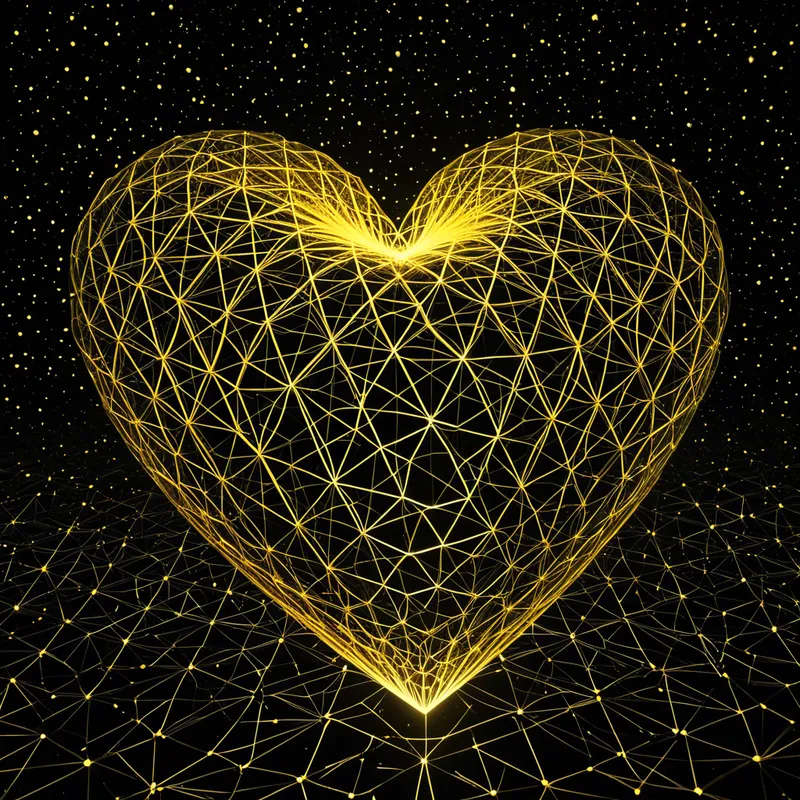
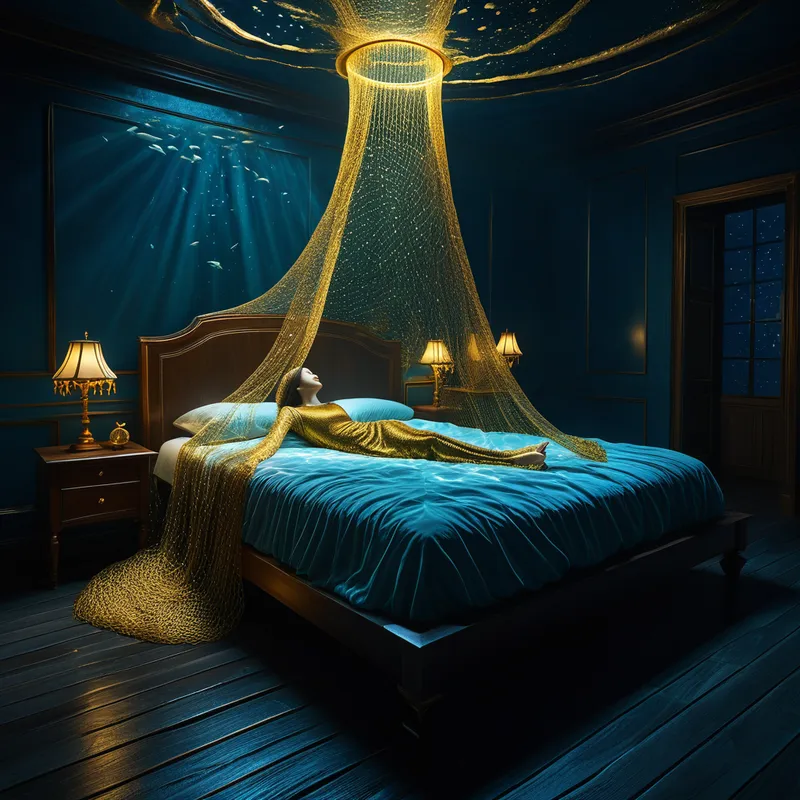
When the motif of Ran’s Net appears in modern dreams, it rarely manifests as a literal Norse goddess. The dreamer may find themselves in a vast, dark body of water—a pool, an ocean, a flooded city. They may see a glimmering grid or web beneath them, or feel an gentle, inescapable pull downward. There is often a sense of profound resignation, of fate, rather than panic.
This dream signals a powerful encounter with the unconscious. The dreamer is in a process of being “drawn down,” which in waking life correlates to depression, a major life transition, a period of intense introspection, or the onset of a complex that has finally gained enough energy to pull the ego into its orbit. The somatic feeling is one of weight, of being anchored or drawn. Psychologically, it is the moment when one stops fighting the current of a deep emotional or psychic process.
The dream asks: What is being reclaimed? What part of you has gone overboard in the storm of your life, and is now being gathered by a deeper, older intelligence? The net is not the enemy; it is the means of retrieval. The terror comes from the loss of ego-control, from the surrender to a process larger than the individual will.
Alchemical Translation
The journey through Ran’s Net models the nigredo of the soul—the blackening, the descent, the dissolution. In the alchemy of individuation, one must be “drowned” in the prima materia of the unconscious to be transformed.
To be caught in the net is to be selected by the Self for a necessary death. The ego-sailor must drown so that the soul-guest may be welcomed.
The first step is the storm: the crisis, the rupture in conscious life that breaks the ship of the persona. Then comes the net: the realization that one is in the grip of a pattern, a fate, a deep psychic truth that cannot be outrun. The drowning is the surrender of the ego’s illusion of control. This is not passive victimhood, but an active submission to the process.
The descent to Ægir’s hall is the journey into the core of the complex or the archetype. And here lies the alchemical gold: the requirement for payment. In psychological terms, this is the moment of insight, the conscious acknowledgment of what has been retrieved. What “gold” does the dreamer bring? A long-buried grief? A denied talent? A shadow aspect? Offering it—feeling it fully, naming it, accepting its place at the table—is what transforms the experience from one of traumatic capture to one of sacred hospitality.
The one who pays the toll does not return to the surface as the same sailor. They return, if they return at all, as someone who has feasted in the hall of the deep Self. They carry the salt of that depth within them, the knowledge that they have been gathered by a fate greater than themselves, and in that gathering, found a darker, colder, but profoundly authentic form of belonging. They have met Ran, and in her net, found the terrifying, golden threads of their own deepest nature.
Associated Symbols
Explore related symbols from the CaleaDream lexicon: