Quest for the Holy Grail Myth Meaning & Symbolism
A sacred quest undertaken by the knights of Camelot, testing purity and purpose, not for a worldly prize but for a vision of ultimate spiritual grace.
The Tale of the Quest for the Holy Grail
Listen, and hear the tale that broke the back of Camelot’s [golden age](/myths/golden-age “Myth from Universal culture.”/). It begins not with a fanfare, but with a silence that fell over the [Round Table](/myths/round-table “Myth from Arthurian culture.”/) like a shroud. The feast of [Pentecost](/myths/pentecost “Myth from Christian culture.”/) was underway, the hall loud with mead and boast, when a sound like thunder stilled every tongue. The great doors did not burst open; they were simply there, and within their frame stood a vision that stole the breath from every knight.
A [Holy Grail](/myths/holy-grail “Myth from Arthurian culture.”/), veiled in samite cloth of white, floated through the air of its own accord. A scent filled the hall—not of roast meat and ale, but of meadows in bloom and incense from a forgotten altar. It bestowed upon each knight and lady the food they most desired, a grace beyond understanding. Then, as silently as it came, it vanished.
But the silence it left behind was not of peace, but of a terrible, awakening hunger. A voice, whether from the air or from their own souls, spoke: a quest was ordained. The greatest knights must ride out, not to conquer land or slay a beast, but to seek the source of this vision, to behold [the Grail](/myths/the-grail “Myth from Arthurian culture.”/) unveiled. And so they swore their vows, their faces alight with a fervor that was already a kind of madness.
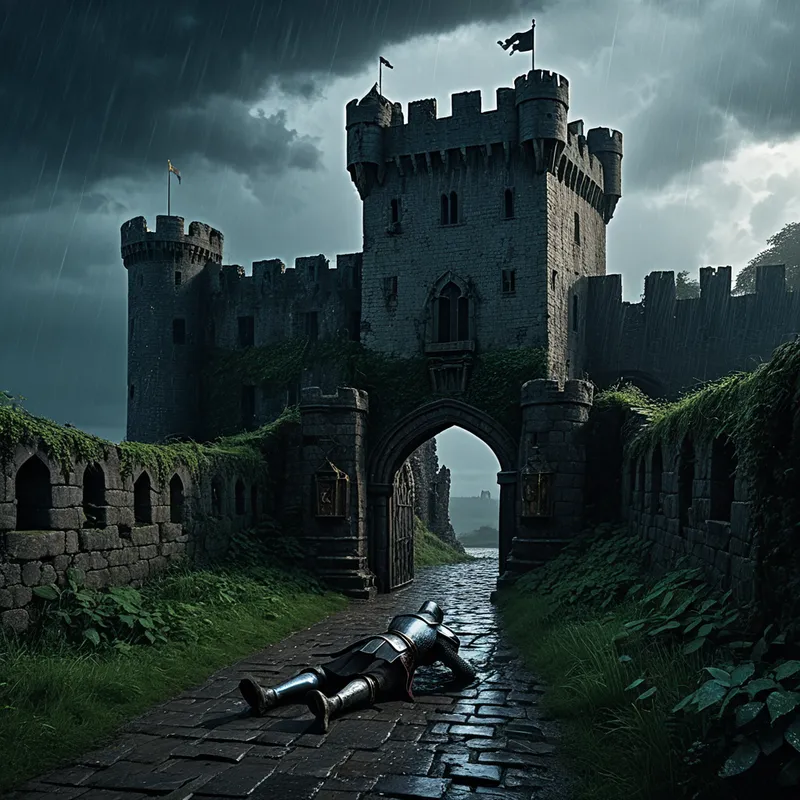
They rode out from Camelot into a world transformed. The familiar forests of Logres became the terre gaste, a land blighted and sorrowful. Paths that once led to friendly manors now wound into misty vales where bridges were guarded by cryptic hermits and towers held temptations of pride and lust. For each knight, the quest became a mirror. Sir [Lancelot](/myths/lancelot “Myth from Arthurian culture.”/), the flower of chivalry, was tormented by his adulterous love for Queen [Guinevere](/myths/guinevere “Myth from Arthurian culture.”/), finding only glimpses of the [Grail](/myths/grail “Myth from Christian culture.”/) through a window, barred from entering by his own sin. Sir Percival failed to ask the healing question at the Castle of [the Fisher King](/myths/the-fisher-king “Myth from Arthurian culture.”/), condemning the wounded king to further suffering and the land to barrenness.
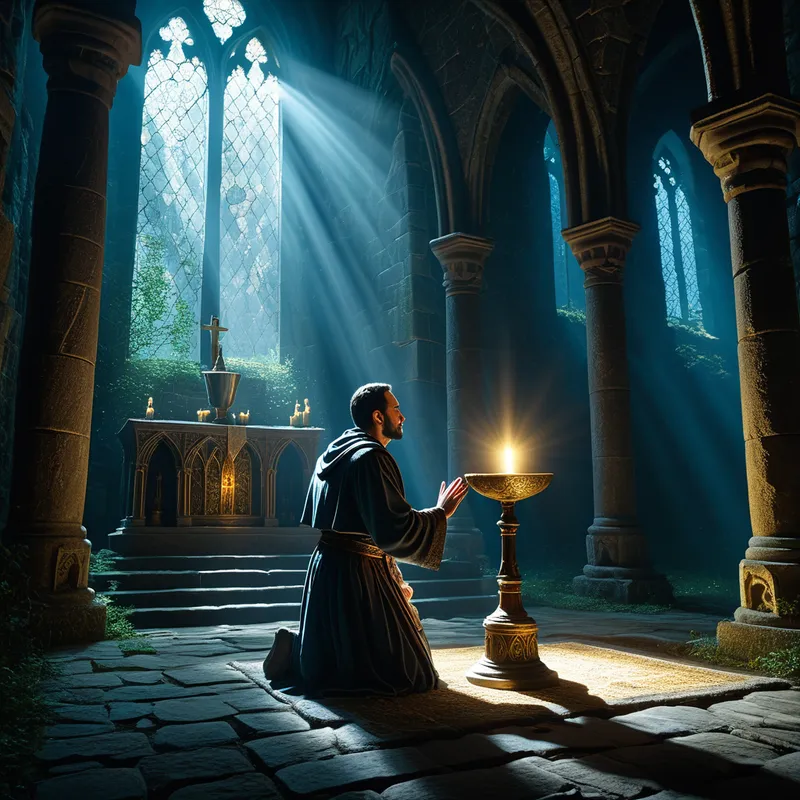
But one knight rode differently. Sir [Galahad](/myths/galahad “Myth from Arthurian culture.”/), whose shield bore the crimson cross, sought not adventure but sanctity. His path was one of relentless humility. He mended what was broken, answered riddles with silence, and turned from every worldly glory. His journey led him to a mystical ship and at last to the city of Sarras. There, in a stone chapel that seemed built of light itself, the culmination arrived. With his companions, the pious Sir Bors and the redeemed Sir Percival, he beheld the Grail unveiled. Angels descended. Christ Himself served them from [the sacred vessel](/myths/the-sacred-vessel “Myth from Various culture.”/). For [Galahad](/myths/galahad “Myth from Arthurian culture.”/), the quest’s end was [the world](/myths/the-world “Myth from Tarot culture.”/)’s end; having seen the ultimate mystery, his soul was released from its earthly coil, ascending to heaven. The Grail, its purpose fulfilled, was lifted from the mortal realm, leaving behind a world forever changed, and a brotherhood of knights scattered and bereft, who would never again gather whole at [the Round Table](/myths/the-round-table “Myth from Arthurian culture.”/).
Cultural Origins & Context
The Grail legend is a rich tapestry woven from many threads over centuries. Its earliest written forms appear in the 12th and 13th centuries, in the works of poets like Chrétien de Troyes ([Perceval](/myths/perceval “Myth from Arthurian culture.”/), ou le Conte du Graal) and later in the vast prose cycles like the Vulgate Cycle. It is a distinctly chivalric myth, emerging in a culture obsessed with the fusion of martial virtue and Christian piety. The Grail served as the ultimate object for this fusion, transforming the knight’s violent vocation into a sacred pilgrimage.
Told in courts and monasteries, the story functioned as both religious allegory and social critique. It presented an idealized, nearly impossible standard of purity (Galahad) against which every knight and noble could measure themselves, often finding themselves wanting like Lancelot. It also reflected the deep anxieties of its time: the spiritual “wasteland” paralleled concerns about societal decay, the need for spiritual healing, and the longing for direct, unmediated contact with the divine, beyond the failing institutions of the world.
Symbolic Architecture
The Grail [Quest](/symbols/quest “Symbol: A quest symbolizes a journey or search for purpose, fulfillment, or knowledge, often representing life’s challenges and adventures.”/) is not an [adventure](/symbols/adventure “Symbol: ‘Adventure’ signifies exploration, discovery, and the pursuit of new experiences in one’s life journey.”/) [story](/symbols/story “Symbol: The symbol of ‘Story’ represents the narrative woven through our lives, embodying experiences, lessons, and emotions that shape our identities.”/) but a profound map of the [soul](/symbols/soul “Symbol: The soul represents the essence of a person, encompassing their spirit, identity, and connection to the universe.”/)‘s [journey](/symbols/journey “Symbol: A journey in dreams typically signifies adventure, growth, or a significant life transition.”/) toward [integration](/symbols/integration “Symbol: The process of unifying disparate parts of the self or experience into a cohesive whole, often representing psychological wholeness or resolution of internal conflict.”/). Every element is symbolic [architecture](/symbols/architecture “Symbol: Architecture in dreams often signifies structure, stability, and the framing of personal identity or life’s journey.”/).
The Grail is not a thing to be found, but a state of being to be remembered.
The [Holy Grail](/symbols/holy-grail “Symbol: A revered object symbolizing the ultimate quest for spiritual fulfillment and enlightenment.”/) itself is the ultimate [symbol](/symbols/symbol “Symbol: A symbol can represent an idea, concept, or belief, serving as a powerful tool for communication and understanding.”/) of the unio mystica, the mystical union. It is the [vessel](/symbols/vessel “Symbol: A container or structure that holds, transports, or protects something essential, representing the self, emotions, or life journey.”/) of divine grace, the container of the ultimate spiritual nourishment. Psychologically, it represents [the Self](/myths/the-self “Myth from Jungian culture.”/) in Jungian terms—the central, organizing principle of the total [personality](/symbols/personality “Symbol: Personality in dreams often symbolizes the traits and characteristics of the dreamer, reflecting how they perceive themselves and how they believe they are perceived by others.”/), the point of [connection](/symbols/connection “Symbol: Connection symbolizes relationships, communication, and bonds among individuals.”/) between the individual and the cosmic. It is wholeness.
The terre gaste is the externalized [reflection](/symbols/reflection “Symbol: Reflection signifies self-examination, awareness, and the search for truth within oneself.”/) of an internal [condition](/symbols/condition “Symbol: Condition reflects the state of being, often focusing on physical, emotional, or situational aspects of life.”/). It is the psychic [landscape](/symbols/landscape “Symbol: Landscapes in dreams are powerful symbols representing the dreamer’s emotional state, personal journey, and the broader context of life situations.”/) of depression, [aridity](/symbols/aridity “Symbol: Aridity symbolizes emotional or spiritual barrenness, a lack of nourishment, and a state of profound dryness or emptiness.”/), and meaninglessness that results from a profound spiritual or emotional wound—embodied by the Fisher [King](/symbols/king “Symbol: A symbol of ultimate authority, leadership, and societal order, often representing the dreamer’s inner power or external control figures.”/). His unhealed wound (often in the thigh, a symbol of generative power) and the [sterility](/symbols/sterility “Symbol: Represents inability to create, grow, or produce, often linked to emotional barrenness, creative blocks, or existential emptiness.”/) of his [kingdom](/symbols/kingdom “Symbol: A kingdom symbolizes authority, belonging, and a sense of identity within a larger context or community.”/) are one and the same. The land and the [king](/symbols/king “Symbol: A symbol of ultimate authority, leadership, and societal order, often representing the dreamer’s inner power or external control figures.”/) are a single [psyche](/myths/psyche “Myth from Greek culture.”/), suffering.
The questing knights represent the various aspects of [the ego](/myths/the-ego “Myth from Jungian culture.”/) attempting to relate to the Self. Lancelot is the talented but conflicted ego, bound by [passion](/symbols/passion “Symbol: Intense emotional or physical desire, often linked to love, creativity, or purpose. Represents life force and deep engagement.”/) and [guilt](/symbols/guilt “Symbol: A painful emotional state arising from a perceived violation of moral or social standards, often tied to actions or inactions.”/). Percival is the naive, developing [consciousness](/symbols/consciousness “Symbol: Consciousness represents the state of awareness and perception, encompassing thoughts, feelings, and experiences.”/) that must learn wisdom and [compassion](/symbols/compassion “Symbol: A deep feeling of empathy and concern for others’ suffering, often involving a desire to help or alleviate their pain.”/) (“the asking of the question”). Galahad is the symbol of the transcendent function—that part of the psyche capable of surrendering [the ego](/myths/the-ego “Myth from Jungian culture.”/) entirely to the call of the Self, achieving integration through purity of intent, not through force.
The Dreamer’s Resonance
When this myth stirs in the modern dreamer, it rarely appears as knights and castles. Its pattern manifests as a profound, often frustrating, search for something vitally missing. You may dream of wandering through a labyrinthine institution (a hospital, a university, an endless office) seeking a lost document, a specific room, or a person who holds an answer. The setting feels barren, bureaucratic, and devoid of life—a modern terre gaste.
The somatic feeling is one of anxious pursuit coupled with deep fatigue. You are compelled to search but are perpetually thwarted by wrong turns, blocked doors, or the crushing indifference of the environment. This is the psyche signaling a state of spiritual or emotional malnutrition. The “Grail” in this dream is the missing nutrient: perhaps purpose, authentic connection, creative expression, or self-forgiveness. The dream highlights the ego’s frantic, often misguided efforts to find wholeness in external validation, career success, or relationships, while the true wound (the [Fisher King](/myths/fisher-king “Myth from Arthurian culture.”/)‘s ailment) remains unaddressed within.

Alchemical Translation
[The Grail Quest](/myths/the-grail-quest “Myth from Arthurian culture.”/) models the alchemical opus, [the great work](/myths/the-great-work “Myth from Alchemical culture.”/) of psychic transmutation. It is the journey of individuation in its most sacred form.
The knight does not conquer the Grail; he is dissolved and reconstituted by it.
[The first stage](/myths/the-first-stage “Myth from Alchemical culture.”/), the Call (the Grail’s appearance), is the eruption of the Self into conscious life. It shatters the comfortable, collective identity of Camelot (the [persona](/myths/persona “Myth from Greek culture.”/)) and imposes a sacred duty: to differentiate, to become who you truly are. The Journey through [the Wasteland](/myths/the-wasteland “Myth from Arthurian culture.”/) is the [nigredo](/myths/nigredo “Myth from Alchemical culture.”/), [the dark night of the soul](/myths/the-dark-night-of-the-soul “Myth from Christian Mysticism culture.”/). Here, the knight confronts his shadows: Lancelot’s lust, Percival’s ignorance, Gawain’s pride. Every failed adventure is a lesson in what the Self is not.
The pivotal moment at the Castle of the Fisher King is the critical operation of compassion. The healing question—“Whom does the Grail serve?”—is the key. It transmutes the quest from a selfish pursuit of glory into an act of service to the suffering Other (the wounded king, the barren land, the unconscious itself). This is the albedo, the washing clean.
Finally, the Achievement (Galahad at Sarras) represents the [rubedo](/myths/rubedo “Myth from Alchemical culture.”/), the reddening, the attainment of [the philosopher’s stone](/myths/the-philosophers-stone “Myth from Alchemical culture.”/). It is not a [triumph](/myths/triumph “Myth from Roman culture.”/) of the ego but its surrender. Galahad does not “possess” the Grail; he is taken by it. His bodily death and ascension symbolize the final integration: the ego-consciousness is fully assimilated into the reality of the Self. [The vessel](/myths/the-vessel “Myth from Alchemical culture.”/) is lifted away because the transformation is complete; the seeker has become the Grail, a vessel of grace. For the modern individual, the quest’s end is not a heavenly vision but a state of inner alignment where one’s life becomes a conduit for meaning, serving a purpose greater than one’s own desires, thereby healing the personal and collective wasteland.
Associated Symbols
Explore related symbols from the CaleaDream lexicon: