Pundjel the Creator Deity Myth Meaning & Symbolism
The story of Pundjel, the ancestral being who shaped the first humans from clay and gave them law, culture, and spirit in the time of the Dreaming.
The Tale of Pundjel the Creator Deity
In the beginning, there was the Dreaming. Not a time of sleep, but a time of awakening, when the world was soft and unformed, and the Ancestors walked the earth, singing it into being.
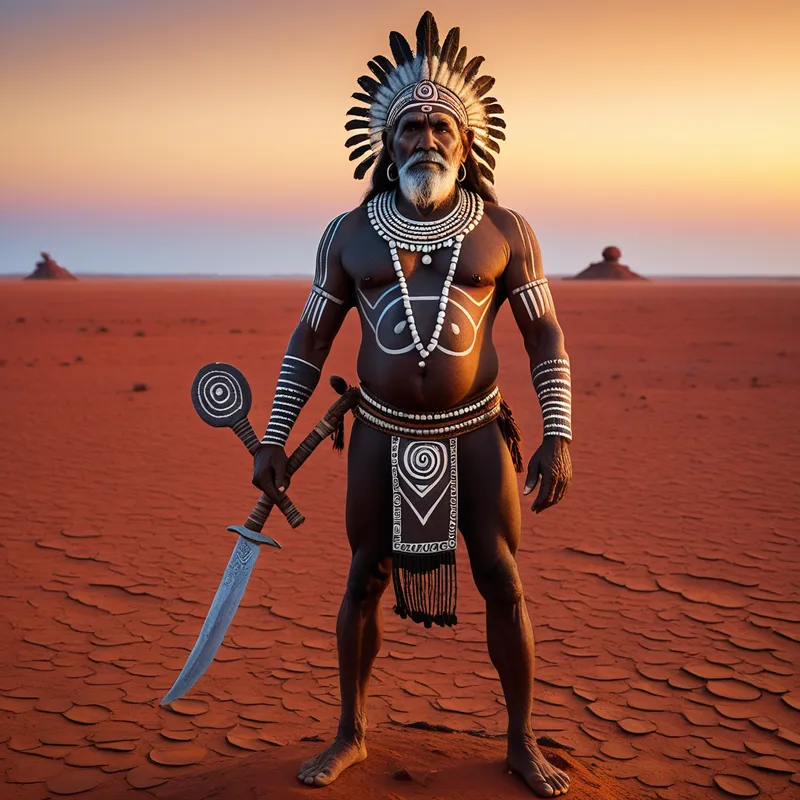
From the great, flat plain, he rose. Pundjel. His body was the color of the red earth, his eyes held the light of the not-yet-sun. He was alone, but not lonely, for the land itself was his kin. He walked, and where his feet pressed, the ground grew firm. He breathed, and the first mists gathered in the hollows. In his hands, he carried two things: a sharp stone knife, and a profound, restless thought.
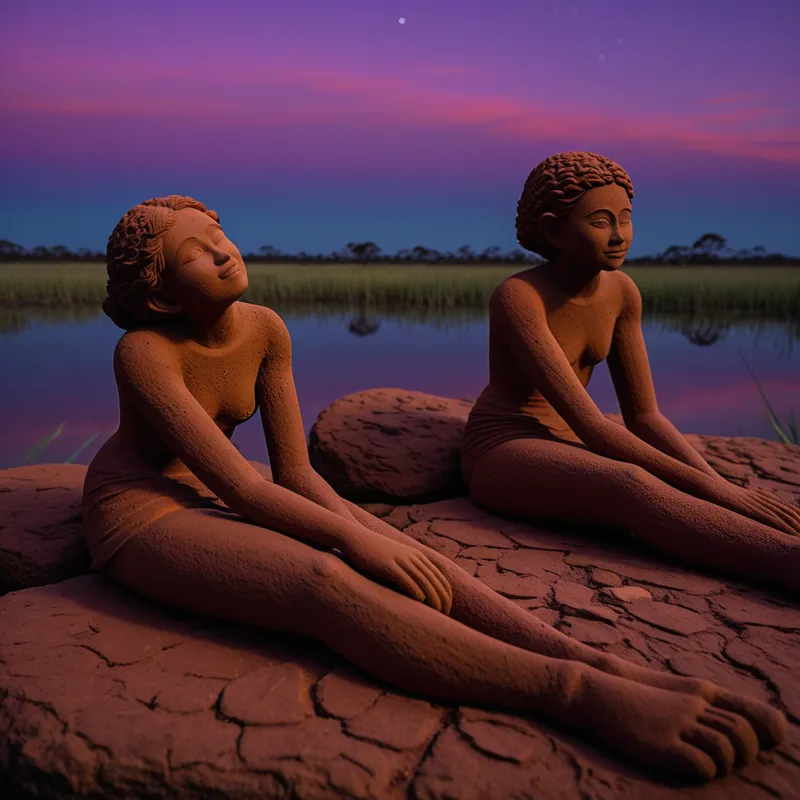
The thought was of company. Of voices other than the wind. He came to a place where the earth was rich and dark, where a billabong lay still as a mirror. Kneeling, he scooped the moist clay. It was cool and heavy, holding the memory of water. With his powerful fingers, he began to shape. First, a long form for the body. Then, limbs to walk and work. He carved the details with his stone knife—fingers, toes, the lines of a face looking up at the sky.
He made two. One he shaped with a strong, broad form. The other, with a softer curve. The clay figures lay on the flat rock, inert, waiting. Pundjel looked upon them, but they were silent. They were form without breath, body without spirit. A deep resolve settled in him. This was not enough.
From a nearby gum tree, he cut long strips of bark. These were not for shelter, but for ceremony. He laid the bark upon the ground, a sacred stage. Then, with a strength that was both physical and of the Dreaming, he began to dance. He stamped his feet, and the earth trembled. He moved his arms in great, sweeping circles, mimicking the flight of the Bunjil, the arching of the rainbow serpent. His dance was a vibration, a song without sound that stirred the very air.
He danced around the clay figures, his shadow falling over them like a blessing. As he danced, he sang. He sang the laws of kinship. He sang the names of the animals and plants. He sang the stories of the land and the paths of the stars. His voice was low and resonant, weaving the fabric of culture itself.
And as he sang his final, powerful note, he leaned over the first clay man. He breathed his own breath—the breath of the Dreaming—deep into the figure’s mouth. A shudder passed through the clay. Color flushed the form—the pink of life, the red of earth. The chest rose and fell. The eyes opened, seeing the world for the first time. Pundjel repeated the sacred breath for the woman. Life sparked, and she stirred.
They stood, unsteady on new legs, blinking in the new light. Pundjel did not speak to them with words they knew, for there were none. Instead, he showed them. He showed them how to use the stone knife to cut, to shape. He showed them the bark and how to fashion it. He gave them the dance he had performed, the very dance of creation, and told them to perform it always, to remember. He gave them their language, their moiety, their law. He watched as the first man and woman took their first steps into the world he had prepared for them, their hearts beating in time with the land. His work was complete. He turned and walked back into the landscape from which he came, his form dissolving into the shimmering heat, leaving behind the enduring echo of his creative breath.
Cultural Origins & Context
The myth of Pundjel belongs primarily to the Kulin nations and other Aboriginal groups of what is now southeastern Australia. This is not a story from a book, but a living narrative etched into the landscape itself, passed down orally for millennia through an unbroken chain of custodians. It was traditionally shared during ceremonies, initiations, and around campfires, not as mere entertainment, but as sacred instruction. The storyteller, often an Elder, was not an inventor but a conduit, their voice carrying the weight and truth of the Ancestors.
Its societal function was foundational. The myth established the ontological template for human existence. It answered the profound questions: Where did we come from? Why are we here? What is our relationship to the land and to each other? By detailing Pundjel’s actions—sculpting from local clay, breathing his own spirit, and imparting law and dance—the story inextricably linked people to their specific Country. It was a divine mandate for stewardship, a blueprint for social order through kinship (moiety) and law, and a perpetual reminder that human life is a gift sustained by ritual, memory, and correct relationship with the creative source.
Symbolic Architecture
At its core, the myth of Pundjel is a profound [allegory](/symbols/allegory “Symbol: A narrative device where characters, events, or settings represent abstract ideas or moral qualities, conveying deeper meanings through symbolic storytelling.”/) for the [emergence](/symbols/emergence “Symbol: A process of coming into being, rising from obscurity, or breaking through a barrier, often representing birth, transformation, or revelation.”/) of [consciousness](/symbols/consciousness “Symbol: Consciousness represents the state of awareness and perception, encompassing thoughts, feelings, and experiences.”/) from the primal unity of the Dreaming. Pundjel himself represents the archetypal [impulse](/symbols/impulse “Symbol: A sudden, powerful urge or drive that arises without conscious deliberation, often linked to primal instincts or emotional surges.”/) toward [differentiation](/symbols/differentiation “Symbol: The process of distinguishing or separating parts of the self, emotions, or identity from a whole, often marking a developmental or psychological milestone.”/)—the primal thought that breaks the silence of potential and initiates the act of making.
The creator does not summon life from nothing, but awakens it from the slumbering potential within the substance of the world itself.
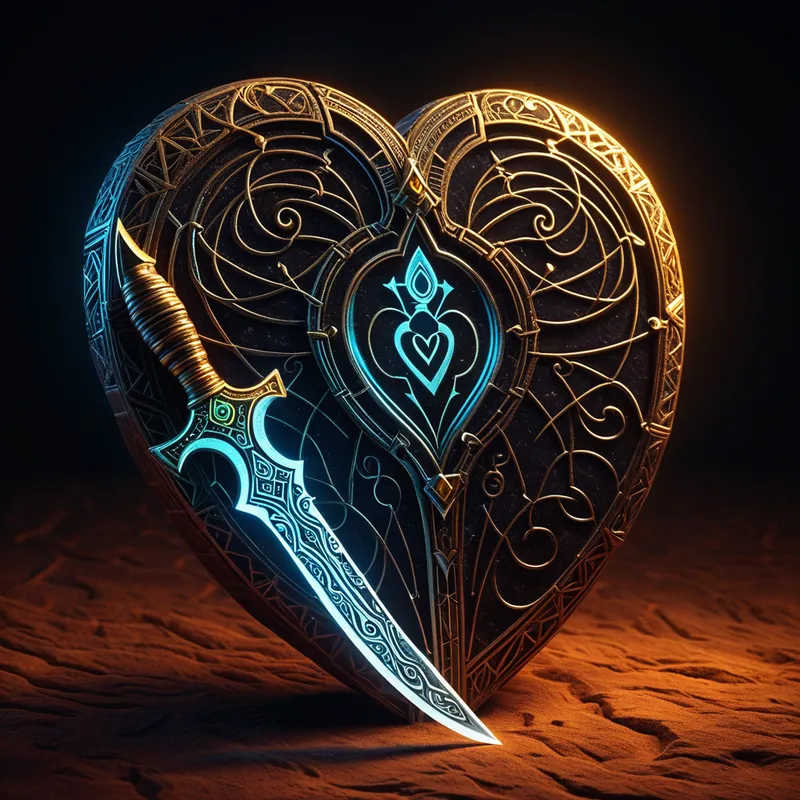
The billabong and [clay](/symbols/clay “Symbol: Clay symbolizes malleability, creativity, and the potential for transformation, representing the foundational aspect of life and the ability to shape one’s destiny.”/) symbolize the feminine, receptive principle—the [womb](/symbols/womb “Symbol: A symbol of origin, potential, and profound transformation, representing the beginning of life’s journey and the unconscious source of creation.”/) of the [earth](/symbols/earth “Symbol: The symbol of Earth often represents grounding, stability, and the physical realm, embodying a connection to nature and the innate support it provides.”/) from which form is taken. The [stone](/symbols/stone “Symbol: In dreams, a stone often symbolizes strength, stability, and permanence, but it may also represent emotional burdens or obstacles that need to be acknowledged and processed.”/) knife is the masculine, discriminating principle—the tool of [separation](/symbols/separation “Symbol: A spiritual or mythic division between realms, states of being, or consciousness, often marking a transition or loss of connection.”/), definition, and will that cuts form from formlessness. The dance is the crucial mediating force; it is the [ritual](/symbols/ritual “Symbol: Rituals signify structured, meaningful actions carried out regularly, reflecting cultural beliefs and emotional needs.”/), the ordered [vibration](/symbols/vibration “Symbol: A rhythmic oscillation or resonance, often representing energy, connection, or unseen forces. In dreams, it can signal awakening, disturbance, or spiritual communication.”/) that structures [chaos](/symbols/chaos “Symbol: In Arts & Music, chaos represents raw creative potential, uncontrolled expression, and the breakdown of order to forge new artistic forms.”/) and imbues the inert form with a dynamic [pattern](/symbols/pattern “Symbol: A ‘Pattern’ in dreams often signifies the underlying structure of experiences and thoughts, representing both order and the repetitiveness of life’s situations.”/). The [breath](/symbols/breath “Symbol: Breath symbolizes life, vitality, and the connection between the physical and spiritual realms.”/) is the pneuma, the [spirit](/symbols/spirit “Symbol: Spirit symbolizes the essence of life, vitality, and the spiritual journey of the individual.”/) or psychic [energy](/symbols/energy “Symbol: Energy symbolizes vitality, motivation, and the drive that fuels actions and ambitions.”/) that animates the physical [structure](/symbols/structure “Symbol: Structure in dreams often symbolizes stability, organization, and the framework of one’s life, reflecting how one perceives their environment and personal life.”/), transforming a psychological complex (the [clay](/symbols/clay “Symbol: Clay symbolizes malleability, creativity, and the potential for transformation, representing the foundational aspect of life and the ability to shape one’s destiny.”/) form) into a living part of the psyche.
The creation of two genders is not merely biological but symbolic of the inherent duality and complementarity required for a complete [system](/symbols/system “Symbol: A system represents structure, organization, and interrelated components functioning together, often reflecting personal or social order.”/)—conscious and unconscious, ego and [soul](/symbols/soul “Symbol: The soul represents the essence of a person, encompassing their spirit, identity, and connection to the universe.”/), culture and [nature](/symbols/nature “Symbol: Nature symbolizes growth, connectivity, and the primal forces of existence.”/). Pundjel’s subsequent [departure](/symbols/departure “Symbol: A transition from one state to another, often representing change, growth, or leaving behind the familiar.”/) signifies a fundamental [truth](/symbols/truth “Symbol: Truth represents authenticity, honesty, and the quest for knowledge beyond mere appearances.”/) of creation: the [creator](/symbols/creator “Symbol: A figure representing ultimate origin, divine power, or profound authorship. Often embodies the source of existence, innovation, or personal destiny.”/) must withdraw for the creation to live its own [life](/symbols/life “Symbol: The symbol of ‘Life’ represents a journey of growth, interconnectedness, and existential meaning, encompassing both the joys and challenges that define human experience.”/). The dependency is broken, and the [responsibility](/symbols/responsibility “Symbol: Responsibility in dreams often signifies the weight of duties and the expectations placed upon the dreamer.”/) for maintaining the sacred pattern (through dance, law, and [story](/symbols/story “Symbol: The symbol of ‘Story’ represents the narrative woven through our lives, embodying experiences, lessons, and emotions that shape our identities.”/)) is passed to the created.
The Dreamer’s Resonance
When this mythic pattern stirs in the modern dreamer, it often signals a profound process of self-creation or re-creation. To dream of sculpting a figure from earth or clay points to an active, hands-on engagement with shaping one’s identity or a new aspect of the psyche. The somatic feeling is often one of focused, tactile potency.
Dreams of performing a powerful, solitary dance in a vast space resonate with Pundjel’s ritual. This indicates the dreamer is attempting to structure a powerful but chaotic energy within themselves—to give rhythm and form to a rising emotion, a new idea, or a life transition. The feeling is one of cathartic release and intentional ordering.
Conversely, to dream of being a clay figure, inert and awaiting animation, speaks to a feeling of potential unrealized. One may feel molded by external forces (family, society, trauma) but not yet fully “breathed into”—lacking vital spirit, agency, or authentic voice. The resolution comes with the arrival of the animating breath in the dream, which often manifests as a sudden inspiration, a healing insight, or the courageous act of speaking one’s truth.
Alchemical Translation
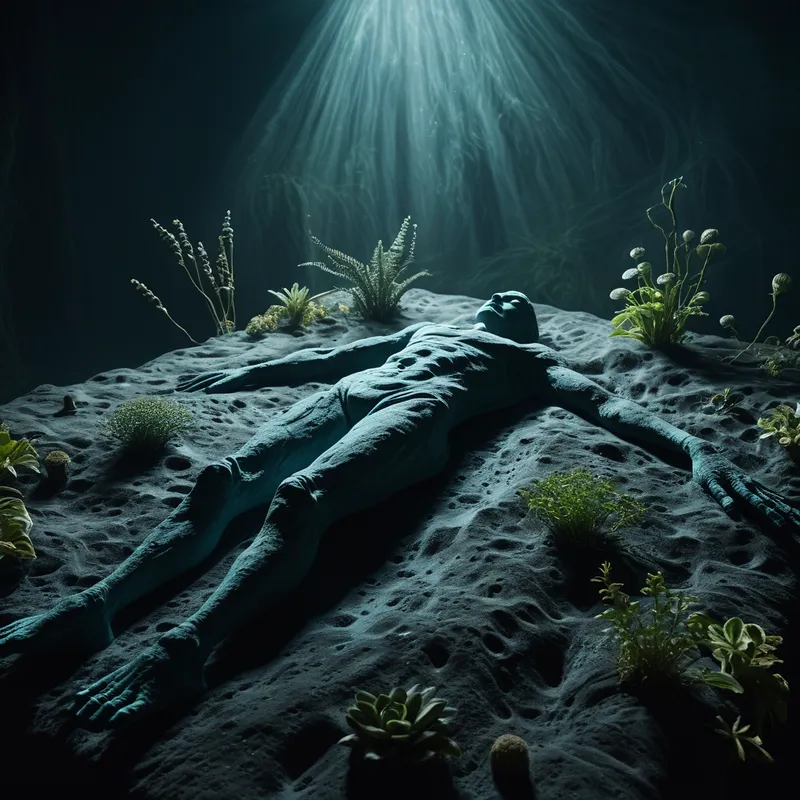
The alchemical journey mirrored in Pundjel’s myth is the opus of individuation, where the base materials of the inherited psyche (the clay of personal and ancestral history) are consciously worked into a unique, living form.
The first stage is separation (the knife). This is the difficult, often painful work of self-discrimination: cutting away false personas, outdated self-concepts, and complexes that bind us. It is wielding the knife of honest self-reflection. Next is formation (the sculpting). We actively shape our values, our work, our relationships—crafting a life that reflects our inner truth, not external expectations.
The ritual dance is the disciplined, daily practice that transforms intention into being. It is the meditation, the therapy, the art, the routine that structures the raw energy of life into a coherent pattern.
Finally, the animation (the breath) is the integration of spirit. This is the moment when the crafted form is vivified by connecting it to a source of meaning greater than the ego—the Self. It is the experience of vocation, of flow, of knowing one’s place in a larger order. Pundjel’s final act—giving the law and departing—translates to the mature stage of individuation where one internalizes the guiding principles (the inner law) and becomes the autonomous custodian of one’s own created life, responsible for its maintenance and its sacred connection to the whole.
Associated Symbols
Explore related symbols from the CaleaDream lexicon:
- Creator — The primordial impulse to bring form from chaos, representing the archetypal drive within the psyche to manifest, build, and establish order.
- Clay — The primal, malleable substance of potential and the physical body, symbolizing the raw material of the self that is shaped by experience, will, and ancestral patterns.
- Stone — The tool of definition and the foundation of law, representing the necessary hardness of discernment, boundary-setting, and enduring truth used in the act of creation.
- Dance — Sacred movement as generative ritual, symbolizing the dynamic process that structures energy, encodes memory, and bridges the gap between idea and animated form.
- Breath — The animating spirit or pneuma, representing the infusion of consciousness, life force, and soul into an otherwise inert structure or idea.
- Earth — The receptive, feminine source of all form and the body of the world, symbolizing the grounding, nurturing, and material basis from which all creation arises.
- Order — The cosmic and social law imparted by the creator, representing the necessary structures, rituals, and ethical frameworks that sustain a created world or a coherent psyche.
- River — The flow of life and time from the source, connecting to the billabong where clay is gathered and symbolizing the ongoing journey of the created beings.
- Tree — The source of bark for ceremony, representing the axis mundi connecting earth and sky, and the living resource from which cultural and ritual tools are fashioned.
- Spirit — The essential, non-material essence breathed into the clay, representing the irreducible core of consciousness and identity that transcends physical form.
- Origin — The foundational moment in the Dreaming, representing the psychic point of departure, the root of one’s being, and the template to which one can return for renewal.
- Dream — The eternal time of the Dreaming itself, symbolizing the unconscious, creative matrix from which all forms, stories, and possibilities emerge.