
Prana Myth Meaning & Symbolism
A myth where the five senses and mind quarrel, only to discover the supreme, silent life force that animates them all.
The Tale of Prana
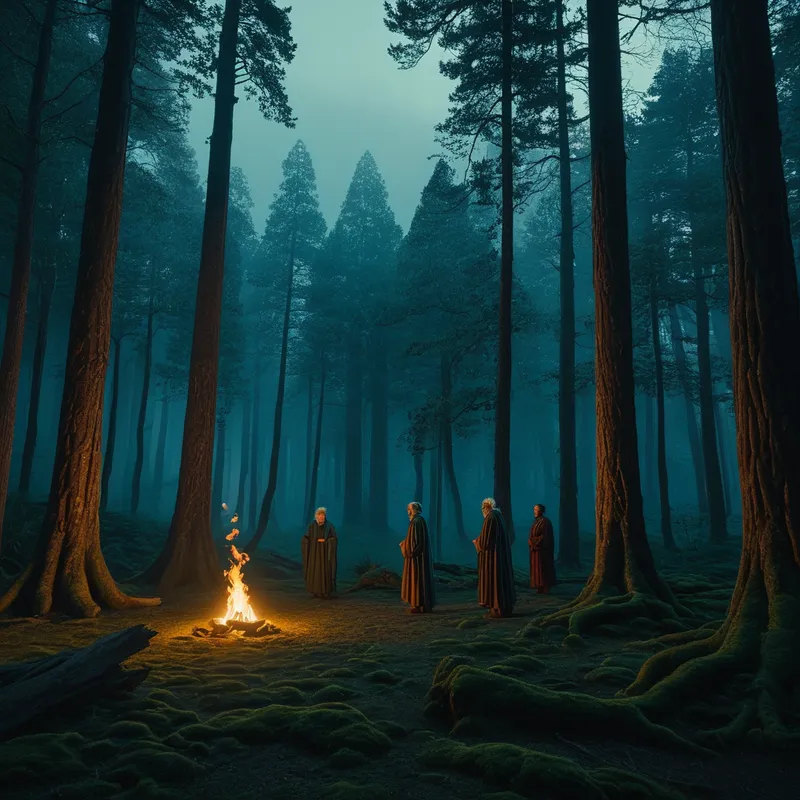
Listen. In the deep time before time, when the world was a whispered thought in the mind of the Brahman, there lived a great Rishi. His name is lost to the wind, but his hermitage was a cradle of silence, nestled where the forest met the mountains. Here, he dwelt with his five faithful servants and their master.
The servants were the Indriyas—the senses. Sight, who drank the world in colors. Hearing, who caught the song of every leaf. Smell, who knew the secret breath of flowers and earth. Taste, who savored the nectar of existence. And Touch, who felt the caress of the world itself. Their master was the Manas, the mind, who sat upon a throne of thought, ordering their reports.
For a time, there was harmony. The senses brought their treasures, and the Mind wove them into understanding. But pride, that subtle serpent, entered the grove. One evening, as the sun bled into the hills, a debate sparked.
"I am the greatest," declared Sight, his voice like shifting light. "For I reveal the splendor of the cosmos—the sun, the moon, the star-strewn night. Without me, all is darkness."
Hearing scoffed, a sound like rustling silk. "Nonsense! I capture the sacred mantras, the wisdom of the sages, the very voice of the divine. I am the gateway to truth."
Smell rose, carrying the scent of sacred smoke. "You perceive only surfaces. I know the essence of things—the purity of sandalwood, the warning of decay. I guide the soul."
Taste, sweet and sharp, interjected. "I deliver the very substance of life, the prasad, the nourishment. I translate the material into experience."
Touch, firm and steady, laid a hand upon the earth. "I am the foundation. I confirm reality. The chill of water, the warmth of fire, the embrace of a loved one—through me, the world is real."
The Mind listened, growing agitated. "Fools! You are but messengers. I am the king who receives, judges, and commands. Without my rule, you are chaotic, meaningless impulses. I am supreme!"
The quarrel grew fierce, shaking the peace of the hermitage. The Rishi, seated in unmoving silence, watched the storm of their arrogance. Finally, he spoke, his voice the calm at the eye of the hurricane. "Since each claims supremacy, let it be tested. Leave this body, this house of life. Whosoever can depart and yet allow this body to live and this soul to remain, that one shall be declared the greatest."
Eager to prove their worth, the senses and the mind agreed. Sight gathered its colors and departed. The body remained, breathing, but blind. Hearing took its songs and left. The body remained, breathing, but deaf. One by one, Smell, Taste, and Touch withdrew their essence. The body remained, breathing, but insensate. Finally, the proud Mind collected its thoughts and exited. The body remained, breathing… but still. A vacant vessel.
Yet, life persisted. A subtle, rhythmic hum held the form together. The senses and mind, hovering outside, watched in awe and dread. They could not re-enter. They were locked out, and the silent, living body began to wither.
In a panic, they rushed back to the Rishi. "We cannot return! The gates are shut! What force holds the house, that it lives without us?"
The sage smiled. "Behold the true sovereign."
As one, they turned. From the heart of the silent, breathing form emerged a radiance, a vibration so fundamental it was both sound and silence. It was Prana, the vital breath. Not the air of the lungs, but the first impulse of being, the thread upon which all the beads of existence were strung. At its approach, the doors of the senses flew open, and the throne of the mind was righted. Prana re-entered, and life flooded back in full glory.
The senses and the mind fell prostrate. "Forgive our ignorance. You, O Prana, are the greatest. You are the primal mover. We live only by your grace. You are the true king."
And Prana, the silent sovereign, resumed its eternal work, animating all, asking for no praise, sustaining every quarrel and every peace from within.
Cultural Origins & Context
This profound narrative is found in the ancient Upanishads, specifically the Prasna Upanishad and the Chandogya Upanishad. These were not texts for the masses but for earnest seekers (shishyas) gathered at the feet of a teacher (guru) in forest academies. The myth was transmitted orally, a living teaching tool to dismantle ego and point toward a non-conceptual truth.
Its societal function was deeply psychological and pedagogical. In a culture developing sophisticated systems of yoga and meditation, this story served as a direct map of the human being. It taught that our identified self—the thinking mind and its sensory entanglements—is not the master of the house. True power and life come from a subtler, foundational source. It was a story to humble the intellect and redirect attention inward, to the felt experience of life itself, preparing the student for deeper practices of samadhi.
Symbolic Architecture
The myth presents a perfect symbolic hierarchy of the human psyche. The five senses represent our engagement with the external, phenomenal world. The Mind (Manas) symbolizes the ego-consciousness, the "I" that claims ownership of experience. Their quarrel is the eternal human conflict: our faculties, and our identification with them, vie for supremacy, creating inner fragmentation and suffering.
Prana is the archetype of the Self, the central, unifying life principle that transcends and includes all partial identities.
Prana is not merely "breath" in a physiological sense. It is the psychosomatic life force, the energetic substrate of consciousness itself. Its victory is not a conquest, but a revelation of its primordial, sustaining presence. The story enacts a profound shift in identification: from the peripheral (senses, thoughts) to the central (the animating force). The senses and mind are not destroyed; they are re-contextualized. They become honored servants of a silent king, restoring order and holistic function.
The Dreamer's Resonance
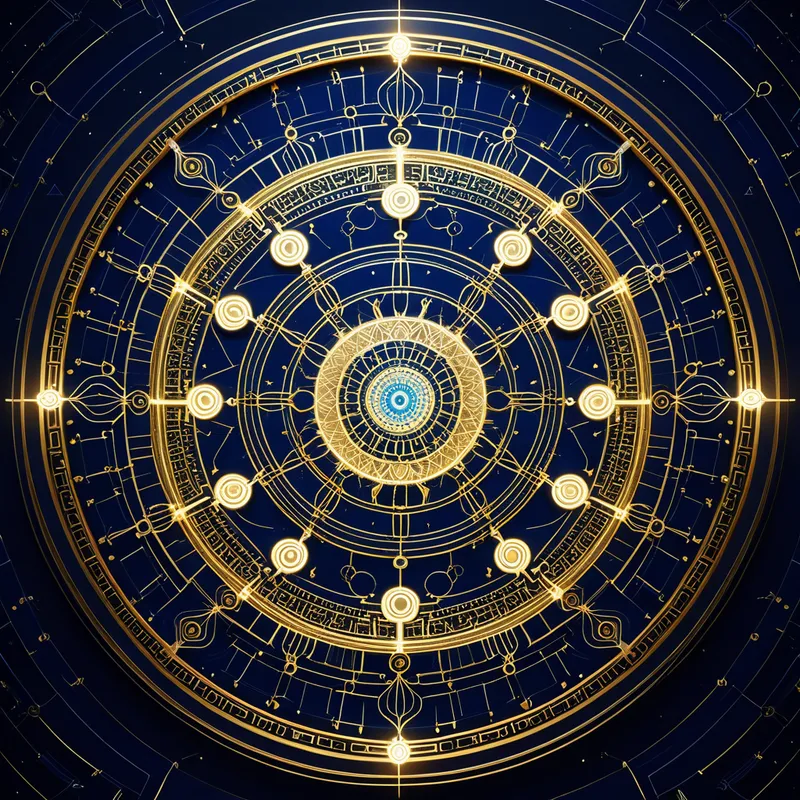
When this myth stirs in the modern unconscious, it often manifests in dreams of somatic revelation or ego dissolution. One might dream of a machine where all parts are arguing, while a faint, steady hum powers it all. Or a dream of being paralyzed yet acutely, peacefully aware. Another common pattern is searching for a "central control room" in a vast building (the body/psyche) only to find an empty, quiet chamber with a single, pulsing light.
Psychologically, these dreams signal a process where the ego's rigid control is being challenged. The dreamer may be experientially learning that their thoughts (the arguing committee) and their sensory overload are not the core of their being. There is a somatic process of "letting go" underway, where identity is being relocated from the content of consciousness to the ground of consciousness itself. It can feel like a crisis (the withering body) but resolves into a profound sense of peace and authentic power (the re-entry of Prana).
Alchemical Translation
The alchemical journey here is one of inversion and re-centering. The modern individual, identified with their mind's narratives and buffeted by sensory data, lives in a state of exiled fragmentation—they are like the senses arguing outside the body. The process of individuation, modeled by this myth, requires a voluntary, disciplined withdrawal.
The first step is not to acquire, but to relinquish the claim of supremacy held by every thought and sensation.
This is the via negativa—the path of negation. In psychological terms, it is the practice of observing thoughts without identifying with them, of feeling sensations without being consumed by them. As each "servant" (a dominant worry, a compelling desire, a cherished self-image) is seen and its absolute claim released, a space opens. Initially, this feels like emptiness, a stillness that the ego mistakes for death.
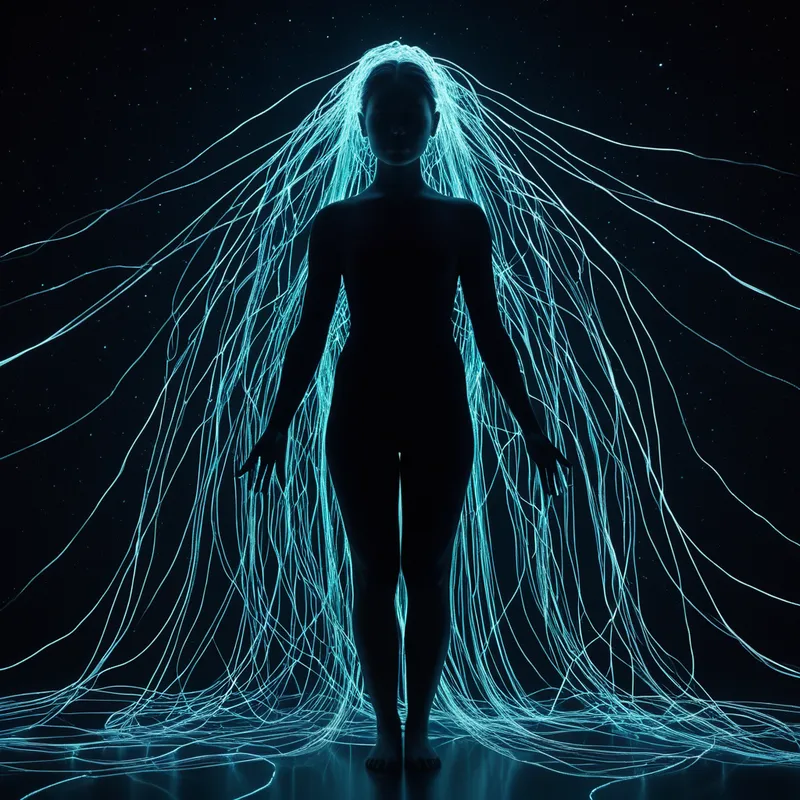
But in that quiet, the individual begins to sense the hum—the Prana. This is the discovery of the Self, the intrinsic vitality and organizing intelligence of the psyche that exists prior to ego. The final stage is not abandonment of the world, but a sacred return. The senses and mind, now in service to this deeper center, are reintegrated. Life is lived fully, but no longer as a chaotic reaction. It becomes a conscious expression of a unified, vital force. One becomes, in essence, a vessel animated by the breath of the cosmos, a conscious participant in the great, silent sovereignty of being.
Associated Symbols
Explore related symbols from the CaleaDream lexicon: