Power Animals Myth Meaning & Symbolism
A myth of the soul's journey into the wilderness to find a sacred animal ally, forging a bond that grants strength, vision, and wholeness.
The Tale of Power Animals
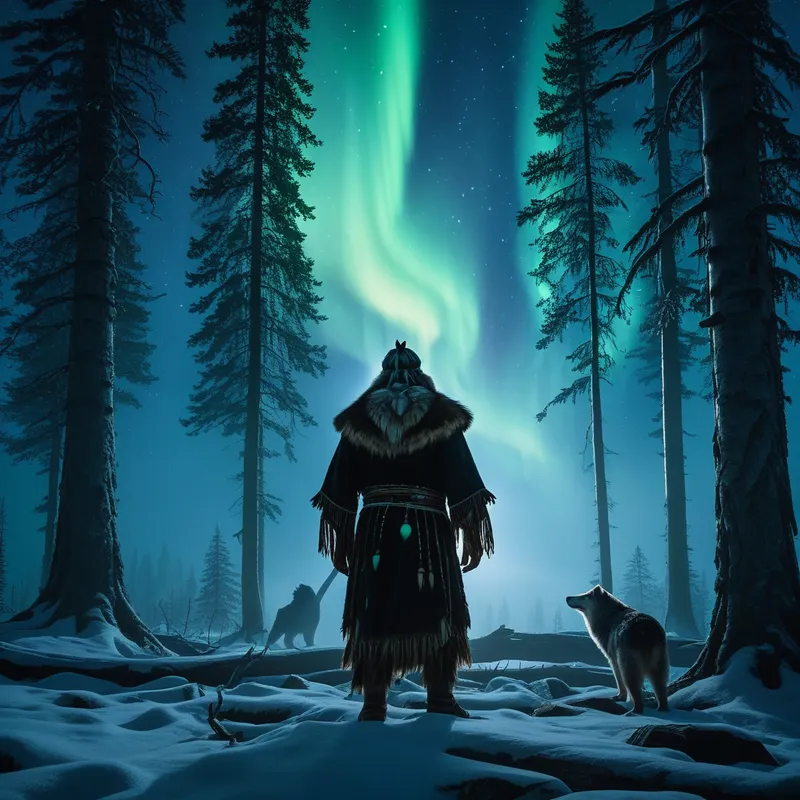
Listen. The world is not one, but two. There is the world of sun and stone, of fire and family. And there is the other world, the world behind the world. It is a place of whispering leaves and silent snow, where the wind carries voices that are not human. In the time before memory, when people knew their names were given by the land, a great forgetting fell. A chill entered the hearts of the people. They felt alone in a vast and watchful wilderness. Their strength waned; their hunts failed; their dreams became empty.
One among them, a soul marked by silence and seeing, felt this emptiness as a physical wound. We will call them the Seeker. Driven by a longing they could not name, the Seeker left the warmth of the hearth. They walked until the voices of the village faded, until the only path was made by hoof and paw. They entered the deep forest where the light fell in shattered pieces. Hunger became their companion. Fear, a cold cloak. In their exhaustion, they came to a clearing where an ancient tree, struck by lightning, pointed a blackened finger at the sky.
There, the Seeker made a bed of moss and despair. As the moon rose, a great shadow moved at the edge of sight. Not a bear, though it had the bear's immensity. Not a wolf, though it carried the wolf's piercing gaze. It was a presence, an intelligence older than the hills. It did not attack. It simply was, watching from the between-place. The Seeker’s fear did not subside; it transformed into a terrible, humming awe. They offered nothing, for they had nothing but their own fragile breath.
For three nights, the presence returned. On the first night, it was the Bear, teaching the Seeker the strength of the rooted mountain. On the second, it was the Eagle, gifting the vision that sees the serpent in the grass from the height of the clouds. On the third, it was the Wolf, moving with the patience of the pack and the wisdom of the trail. The Seeker did not sleep but journeyed in a waking dream, running on four legs, soaring on feathered wings, feeling the earth’s heartbeat through padded paws.
On the dawn of the fourth day, hollowed out and remade, the Seeker understood. The great presence spoke not in words, but in a knowing that flowed into their bones. "I am your strength where you are weak. I am your sight where you are blind. We are not two, but one journeying in two forms." A pact was forged, not in blood, but in breath and spirit. The Seeker returned to the people, not with game, but with a light behind their eyes and a new steadiness in their step. They carried a secret ally, a Power Animal, and the people, sensing the wholeness in them, felt their own loneliness begin to heal.
Cultural Origins & Context
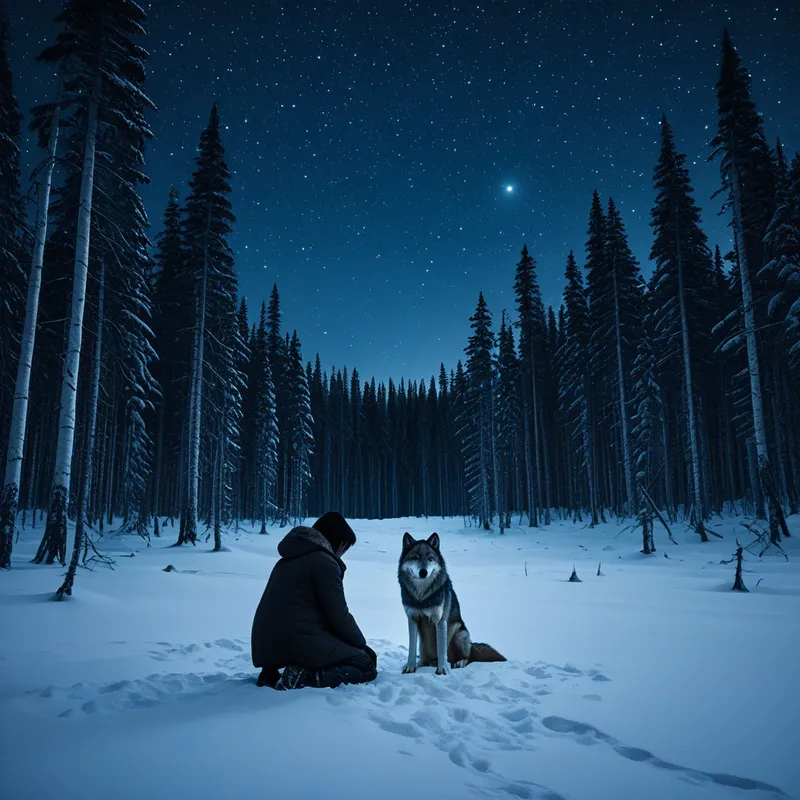
The concept of the Power Animal is not a single myth from a single text, but a living, breathing pillar of various shamanic worldviews across the globe—from the Siberian taiga and the Mongolian steppe to the Amazon rainforest and the North American plains. It belongs to the oral tradition, passed down not as a simple story but as an experiential truth embedded in ritual, song, and direct ecstatic journey.
The primary tellers of this "myth" were the shamans themselves, the designated voyagers between worlds. For the community, the myth explained the source of the shaman's unique abilities—their healing power, prophetic visions, and skill in hunting magic. It served a profound societal function: it encoded a fundamental ecological and psychological principle. It taught that humans are not separate from, or superior to, the animal kingdom, but exist in a web of reciprocal spiritual relationships. One's health and power depended on maintaining a right relationship with these non-human persons. The loss of one's Power Animal was considered a primary cause of soul loss, illness, and misfortune, making its retrieval a core shamanic healing practice.
Symbolic Architecture
At its heart, the myth of the Power Animal is a profound map of psychic integration. It addresses the human experience of fragmentation—the feeling of being incomplete, isolated, or lacking essential resources.
The Seeker represents the conscious ego, the part of us that feels the existential lack and ventures into the unknown (the unconscious) in search of wholeness. The wilderness is the untamed, undomesticated realm of the psyche, the collective unconscious, where instincts and archetypes roam free. The forgetting symbolizes our modern disconnection from instinctual wisdom and our innate belonging to the natural world.
The Power Animal is not a pet of the ego, but a sovereign spirit of the deeper Self. It represents the instinctual power, the innate genius, that the conscious personality has lost access to or never fully owned.
Each animal embodies a specific cluster of archetypal energies: the Bear’s grounded healing and introspection, the Eagle’s visionary clarity and perspective, the Wolf’s loyal intelligence and social intuition. The pact signifies the moment of integration, where these potent unconscious contents are not conquered, but allied with. The ego does not become the animal; it learns to partner with it, creating a more complete and resilient psyche. This is the restoration of the primal self, a state where human consciousness and animal instinct are in dialogue.
The Dreamer's Resonance
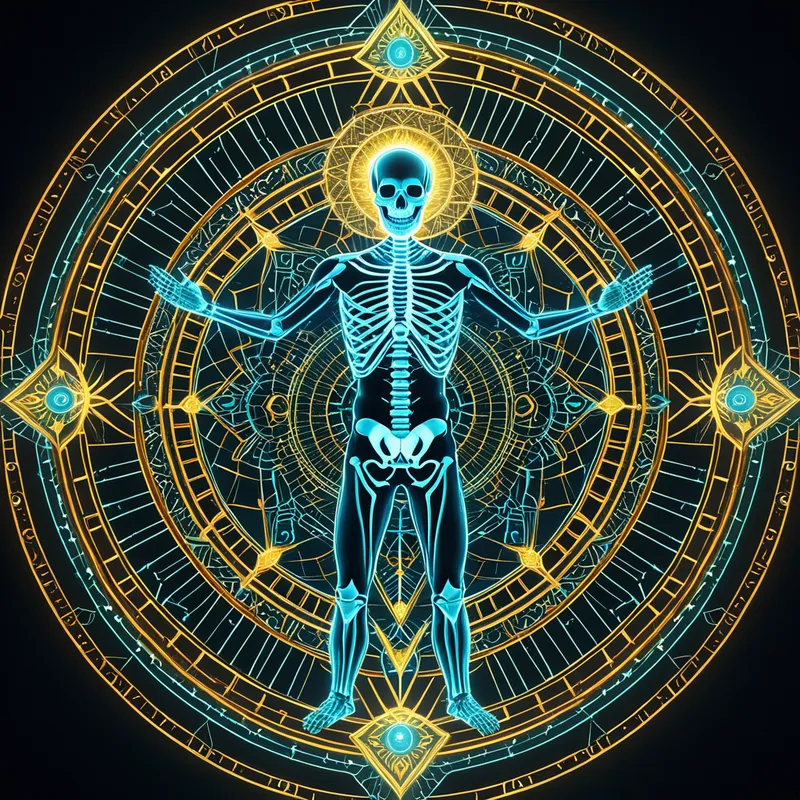
When this mythic pattern activates in the modern dreamer, it often signals a critical phase of psychological reorientation. Dreams of being chased or observed by a specific wild animal, of transforming into an animal, or of receiving aid from an animal guide are somatic messages from the deep psyche.
Such dreams suggest that an instinctual power is seeking recognition. The somatic process is one of recall. The body, through the dream, is remembering a strength or a mode of being that the conscious, perhaps overly civilized, mind has suppressed. A person feeling physically weak or ungrounded might dream of a bear. Someone facing a complex social dilemma might dream of a wolf pack. An individual needing a major life decision might be visited by an eagle. The psychological process is the unconscious presenting the very medicine needed for the dreamer’s current state of psychic imbalance.
The emotion in these dreams is key. Overwhelming fear indicates a fraught relationship with that inner power—it feels alien and threatening. Awe and curiosity, as in the myth, mark the beginning of a potential alliance. The dream is an invitation to the waking ego to begin its own journey into the interior wilderness, to confront what is wild and unknown within itself.
Alchemical Translation
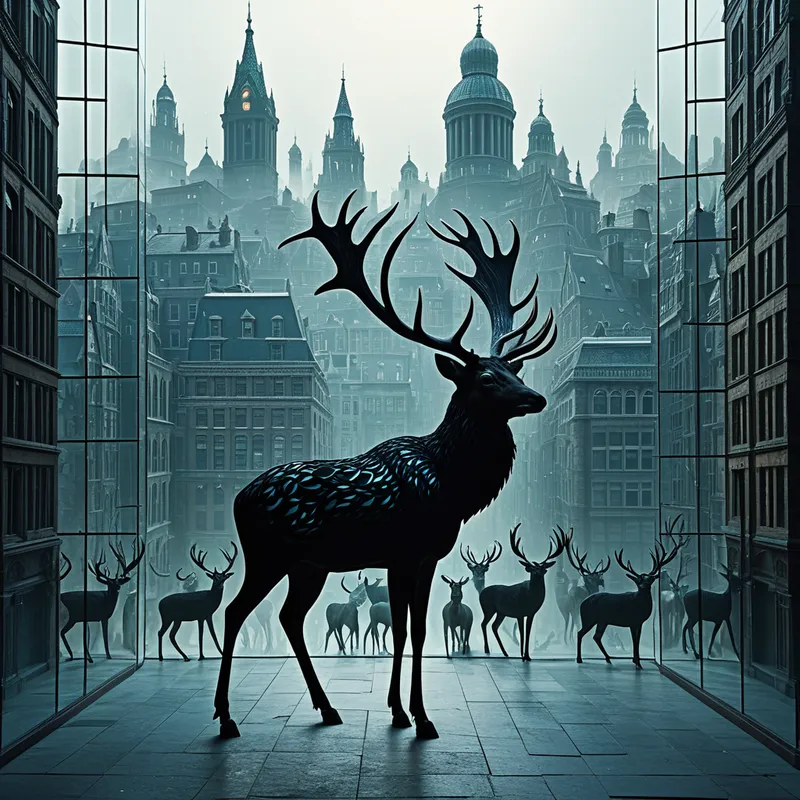
The myth models the alchemical process of individuation with elegant simplicity. The nigredo, the initial blackening and despair, is the Seeker’s loneliness and the feeling of emptiness that initiates the quest. The journey into the wilderness is the confrontation with the shadow—all the unlived life, the raw instinct, and the feared aspects of the self that have been banished to the psychic hinterlands.
The encounter with the Power Animal is the heart of the albedo, the whitening. It represents the discovery of the treasure in the darkness. The animal is not the shadow itself, but a guiding spirit that emerges from it—a positive, potent archetypal force that was hidden within the chaos. The three-night ordeal is the process of transmutation, where the base metal of the ego’s isolation is patiently exposed to the transforming influence of these primal energies.
The pact is the creation of the Philosopher's Stone—not a physical object, but a new, enduring psychic structure where consciousness and instinct are in sacred partnership.
For the modern individual, this translates to a disciplined inner practice. It is the work of identifying one’s core weaknesses and, instead of merely willing them away, journeying inward (through active imagination, deep reflection, or creative expression) to find the latent, instinctual power that compensates for it. It is learning to "consult your inner bear" for boundaries, your "inner fox" for adaptability, your "inner owl" for silent knowing. The triumph is not autonomy, but authentic, empowered relatedness—to the inner world, to the community, and to the living earth itself. One returns from this inner voyage, like the Seeker, carrying a quiet steadiness, having reclaimed a piece of their soul’s native wilderness.
Associated Symbols
Explore related symbols from the CaleaDream lexicon: