
Polyphemus Myth Meaning & Symbolism
Odysseus blinds the one-eyed giant Polyphemus to escape his cave, a primal encounter with the monstrous, isolated self.
The Tale of Polyphemus
Hear now the tale of a man who sailed too far, into the wine-dark sea where the maps of gods are drawn in storm and star. [Odysseus](/myths/odysseus “Myth from Greek culture.”/), breaker of cities, was adrift, his heart a compass needle pointing only toward rocky Ithaca. But [the Fates](/myths/the-fates “Myth from Greek culture.”/), those three spinners of shadow and light, had woven other threads into his journey’s cloak.
His ships, those weary wooden birds, found land where [the earth](/myths/the-earth “Myth from Hindu culture.”/) smelled of wild goat and [thyme](/myths/thyme “Myth from Greek culture.”/). A high cliff, and above it, the mouth of a cavern, wide as a yawning titan. They entered, finding not a home, but a larder of nightmares. Cheese wheels like millstones, pens of bleating lambs, and the thick, pastoral stink of a herdsman who was no man. This was the domain of Polyphemus</abyphemus, a shepherd whose flock was the mountain itself.
When the giant returned, the earth trembled. He was a piece of the living cliff, a being of one great, rolling eye and limbs like aged oak. With a grunt that shook dust from the ceiling, he sealed [the cave](/myths/the-cave “Myth from Platonic culture.”/) mouth with a slab of stone no twenty men could move. Then his eye fell upon the intruders. No words of [xenia](/myths/xenia “Myth from Greek culture.”/) passed his lips. In two brutal motions, he seized two men, dashed their heads upon the stone floor, and consumed them. The sound was a wet crack that echoed in the souls of the survivors. Night after night, he dined thus, reducing Odysseus’s crew to trembling meat.
But in the belly of the beast, cunning is born. Odysseus, the man of twists and turns, offered the giant a skin of powerful, dark wine. Polyphemus drank deep, grew warm, and asked [the stranger](/myths/the-stranger “Myth from Biblical culture.”/)’s name. “I am called Outis,” lied the king. “Then as a gift for your wine, Outis, I shall eat you last,” the giant laughed, and fell into a stupor.
Now was the hour. The men took a great stake of olive wood, hardened its point in the fire until it glowed like a star of vengeance, and with all their collective terror and might, they drove it into the single, sleeping eye of the monster. A hiss, a scream that tore the air, the smell of burning brine and blood. Blinded, roaring, Polyphemus flailed, but his cries brought no help. When his brother Cyclopes called from outside, “Who harms you, Polyphemus?” he could only bellow, “Outis harms me! Outis!” They heard “No one harms you,” and walked away, thinking it a divine affliction.
At dawn, as the giant rolled the stone aside to let his sheep out, he felt each beast’s back to ensure no man escaped. But Odysseus, the weaver of plans, had lashed his men beneath the shaggy bellies of the rams. He himself clung to the fleece of the largest, and so, suspended in the animal warmth, they passed under the groping, bloody hand and out into the blinding, liberating light of [the sea](/myths/the-sea “Myth from Greek culture.”/). As their ship pulled away, Odysseus’s pride broke its leash. He shouted his true name to the shore. And from the cliff, Polyphemus, weeping tears of blood and rage, lifted his hands and called upon his father, [Poseidon](/myths/poseidon “Myth from Greek culture.”/), to curse this Odysseus, to make his homecoming bitter, long, and drowned in sorrow. The god of the deep heard, and [the sea](/myths/the-sea “Myth from Greek culture.”/) grew heavier for it.

Cultural Origins & Context
This myth reaches us primarily through the epic song of the [Homer](/myths/homer “Myth from Greek culture.”/), a foundational pillar of Greek identity. It was not mere entertainment but a cultural compass. Performed at festivals and in the halls of the powerful, the Odyssey encoded core values and deepest fears. The encounter with Polyphemus sits at a crucial liminal point in Odysseus’s journey—it is his first major landing after [the Trojan War](/myths/the-trojan-war “Myth from Greek culture.”/), a violent transition from the collective heroism of battle to the solitary, psychological trials of the return.
The story functions as a brutal lesson in the consequences of both transgression and pride. Polyphemus represents the ultimate violation of xenia, the sacred guest-host relationship that was a cornerstone of civilized Greek life, a social contract with the gods themselves. His cannibalism marks him as the antithesis of the civilized human. Yet, Odysseus’s subsequent boast—his need to claim his deed—is also a transgression, a hubris that invites divine retribution. The myth thus explores the delicate, dangerous line between necessary cunning and destructive arrogance, a line every Greek navigating a world of gods, strangers, and political intrigue understood intimately.
Symbolic Architecture
At its core, the cave of Polyphemus is a psychic [chamber](/symbols/chamber “Symbol: A private, enclosed space representing the inner self, hidden aspects, or a specific stage in life’s journey.”/). It is the [womb](/symbols/womb “Symbol: A symbol of origin, potential, and profound transformation, representing the beginning of life’s journey and the unconscious source of creation.”/)-tomb of a stunted, monstrous [consciousness](/symbols/consciousness “Symbol: Consciousness represents the state of awareness and perception, encompassing thoughts, feelings, and experiences.”/). The giant is not merely a physical [threat](/symbols/threat “Symbol: A threat in dreams often reflects feelings of vulnerability, anxiety, or fear regarding one’s safety or well-being. It can indicate unresolved conflicts or the presence of external pressures.”/) but an embodiment of a certain kind of being: the utterly isolated, self-sufficient, and appetitive self.
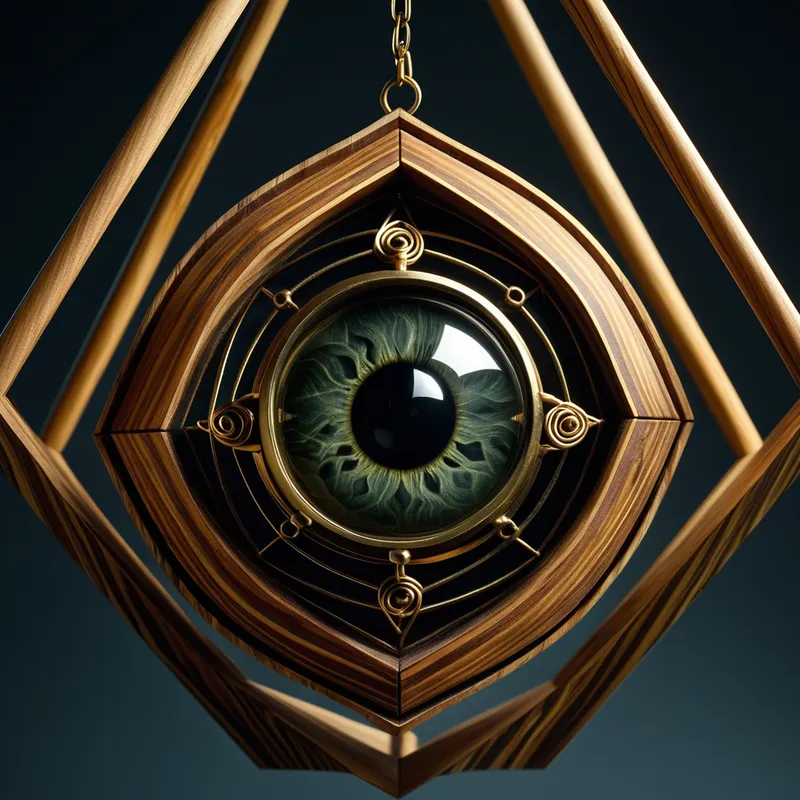
The one eye of the Cyclops is the eye of a singular, totalizing perspective. It sees only what is directly before it—gratification, possession, consumption. It cannot see laterally, cannot perceive nuance, relationship, or the other as anything but object.
He is the raw [shadow](/symbols/shadow “Symbol: The ‘shadow’ embodies the unconscious, repressed aspects of the self and often represents fears or hidden emotions.”/) of the pastoral ideal: the [shepherd](/symbols/shepherd “Symbol: A shepherd symbolizes guidance, protection, and the nurturing aspects of leadership, often reflecting the dreamer’s desire for direction or support.”/) who does not protect but devours. His cave, sealed by a [stone](/symbols/stone “Symbol: In dreams, a stone often symbolizes strength, stability, and permanence, but it may also represent emotional burdens or obstacles that need to be acknowledged and processed.”/), is a closed psychic [system](/symbols/system “Symbol: A system represents structure, organization, and interrelated components functioning together, often reflecting personal or social order.”/). Odysseus, the [shape-shifter](/myths/shape-shifter “Myth from Native American culture.”/), the man of many minds (polytropos), represents the penetrating force of differentiated consciousness. The blinding is not just an escape tactic; it is the violent introduction of complexity into a world of brutal simplicity. It is the shattering of a solipsistic [universe](/symbols/universe “Symbol: The universe symbolizes vastness, interconnectedness, and the mysteries of existence beyond the individual self.”/).
The brilliant trick of the name “Outis” (Nobody) is a masterstroke of symbolic [action](/symbols/action “Symbol: Action in dreams represents the drive for agency, motivation, and the ability to take control of situations in waking life.”/). By renouncing his heroic [identity](/symbols/identity “Symbol: Identity represents the sense of self, encompassing personal beliefs, cultural background, and social roles.”/), Odysseus becomes a psychological principle—the anonymous, cunning intelligence of the unconscious itself, which can wound the monolithic ego from within. The giant’s brothers, hearing his cries, are the outer world incapable of comprehending a wound inflicted by “No one.” The pain is utterly [interior](/symbols/interior “Symbol: The interior symbolizes one’s inner self, thoughts, and emotions, often reflecting personal growth, vulnerabilities, and secrets.”/), incommunicable.
The Dreamer’s Resonance
When this myth stirs in the modern dreamer, it often signals a profound experience of psychic entrapment. To dream of being in a vast, inescapable cave, watched or pursued by a singular, overwhelming presence, is to feel the weight of a monolithic complex. This could be a crushing depression that consumes all vitality (the devouring of the crew), an addiction that seals you away from life (the stone door), or a rigid, all-consuming belief system (the single eye) that blinds you to other possibilities.
The somatic feeling is one of visceral dread and claustrophobia, mixed with a desperate, cunning alertness. The dream-ego is not a muscular hero but a trapped, terrified, yet clever animal. The act of blinding the giant in a dream is rarely violent in a graphic sense; it may appear as turning off a blinding light, throwing paint over a lens, or suddenly understanding a fundamental flaw in a towering problem. It is the moment the dreamer’s [psyche](/myths/psyche “Myth from Greek culture.”/) finds the leverage point to disrupt a tyrannical, self-enclosed pattern. The escape, often clinging to something instinctual or animal (the rams), signifies a reliance on deeper, non-rational strengths to exit the complex.

Alchemical Translation
The alchemical journey is one of [solve et coagula](/myths/solve-et-coagula “Myth from Alchemical culture.”/)—to dissolve the fixed and coagulate the new. The myth of Polyphemus is a brutal allegory for the first, necessary stage of this psychic transmutation: the [nigredo](/myths/nigredo “Myth from Alchemical culture.”/), the blackening, the confrontation with the primal, undifferentiated shadow.
The cave is the [vas hermeticum](/myths/vas-hermeticum “Myth from Alchemical culture.”/), the sealed container where the old, monstrous form of [the self](/myths/the-self “Myth from Jungian culture.”/) must be broken down. Odysseus, the conscious will seeking individuation, must willingly enter this darkness. His men, his resources and former identities, are consumed. This is the painful dissolution of what one thought one was.
The blinding stake, hardened in fire, is the focused, incisive insight—the lumen naturae or light of nature—that must be applied to the single, glaring fixation of the undeveloped psyche. It is a cruel but necessary operation.
To become “Nobody” is the essential ego-death. The heroic [persona](/myths/persona “Myth from Greek culture.”/), the name we cling to, must be surrendered to perform the work. Only in anonymity can the complex be wounded. The escape, clinging to the belly of the beast (the rams), signifies that the energy of the very complex that trapped you can now carry you to freedom, if you can submit to it without being identified with it. The final curse, however, is the alchemical truth that no profound inner change comes without cost. The old god, the ruling principle (Poseidon), is angered. The transformed self must navigate a world now actively hostile to its old patterns, a sea of trials that will last for years. The blinding of the monster in the cave does not grant immediate peace; it initiates the long, arduous voyage of integration.
Associated Symbols
Explore related symbols from the CaleaDream lexicon: