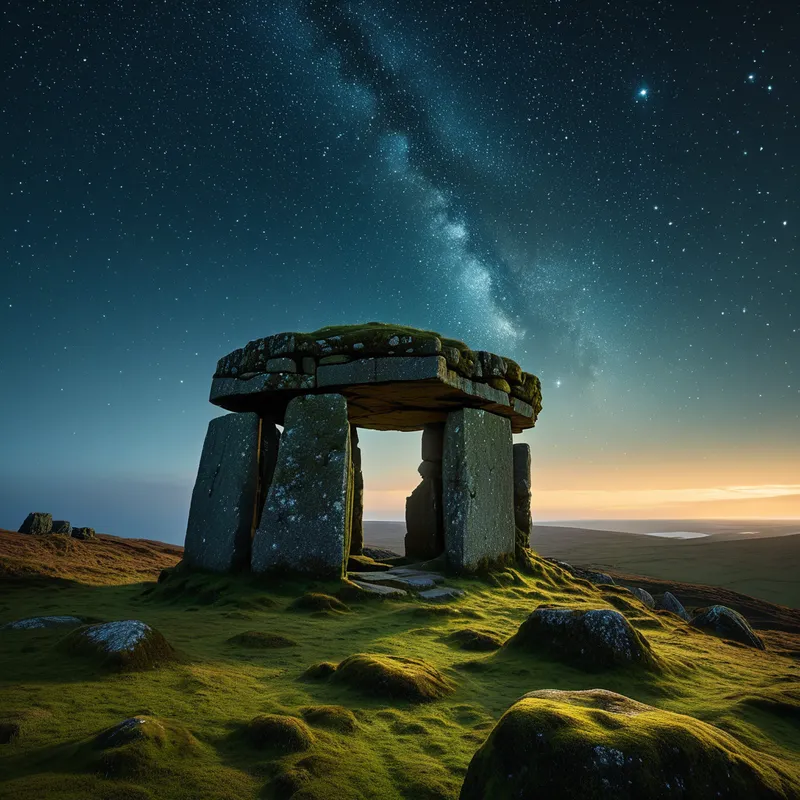
Pixies Myth Meaning & Symbolism
Ancient earth spirits of mischief and memory, guardians of the liminal wilds, whose pranks reveal forgotten truths and bind the human soul to the land.
The Tale of Pixies
Listen. Listen to the wind that whispers through the tors, and the sigh of the heather on the moor at dusk. This is their hour. Before the Romans named this land, before the stones were raised, they were here. They are the Piskies, the Pixies, the ancient ones of the hidden places.
Do not picture them as winged trinkets. See them as the land dreaming of itself. Their skin is the grey of rain-slicked granite, their hair the tangled gold of gorse, their eyes the deep, still green of forest pools. They dwell in the cracks between worlds: under the roots of the oldest oak, within the heart of a Neolithic burial mound, at the bottom of a forgotten well where the water never stirs.
They are not malevolent, nor are they kind. They are puckish. A farmer, sure of his boundaries, would walk his field at dawn to find every landmark stone moved, his path now leading in a bewildering circle back to his own door. A lone traveler on the moor, as the mist rolls in, hears laughter like tinkling bells and feels a sudden, irresistible tug on his cloak, leading him away from the safe track and into a dew-soaken hollow. This is being pixie-led.
But hear now of the girl, Anya, who lived at the edge of the wild wood. She was practical, sharp-tongued, her world bounded by hearth and harvest. She mocked the old tales. One evening, chasing a stray hen, she ventured too deep, until the trees closed ranks and the familiar sounds of home were swallowed. Panic, cold and sharp, set in. She ran, but every clearing looked the same. The twilight deepened into a velvet, starless dark.
Then, a light. Not a torch, but a soft, foxfire glow from a circle of toadstools. Within it, small figures danced a silent, intricate reel. Their movements were the fall of water over stone, the rustle of leaves in a breeze. Anya froze, her breath caught. One figure broke from the circle. It approached, no taller than her knee, its form shifting like dappled shadow. It held up a hand, and in its palm rested a single, perfect acorn cup, brimming with clear liquid.
“Drink,” its voice was the echo of a stream. “And remember the way.”
Trembling, Anya took the cup. The water tasted of cold stone and distant memory. In a flash, the wood rearranged itself. She didn’t see new paths; she remembered them. The gnarled oak that was her childhood climbing tree, the stream where she once lost a shoe, the view of her chimney smoke from the high ridge—all these memories, long buried under daily cares, rose up like landmarks. She knew the way home with a certainty deeper than sight.
She turned to thank them, but the circle was empty. Only a ring of darkened moss remained. From that night on, Anya was changed. She would sometimes leave a bowl of cream at the wood’s edge, not out of fear, but respect. And those who were truly lost, and whose hearts were not hardened by pride, would sometimes find their way to her door, guided by a whisper on the wind or a fleeting, moss-green light between the trees.
Cultural Origins & Context
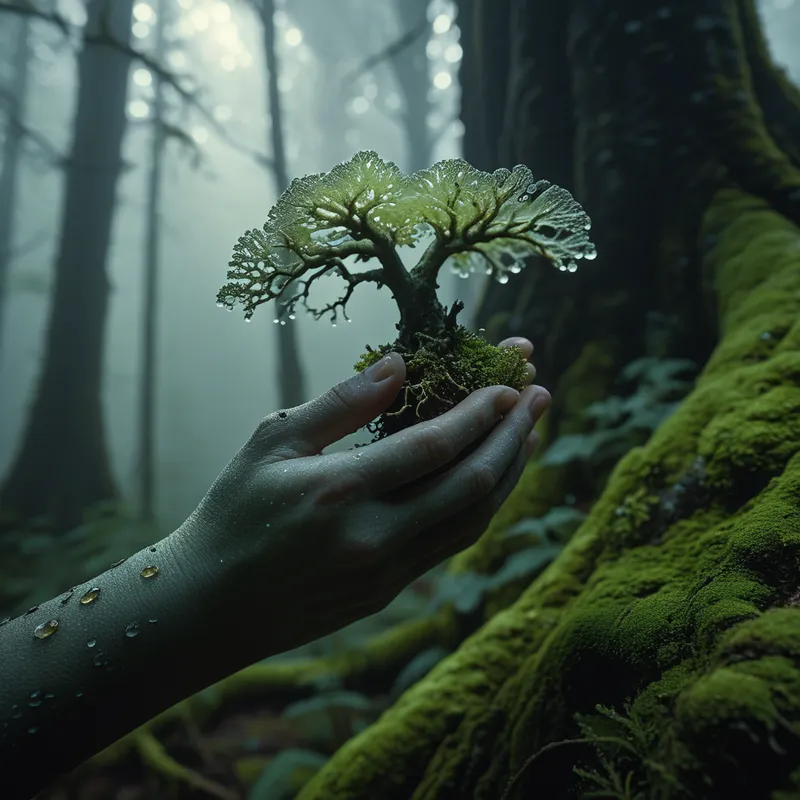
The Pixie belongs not to a unified “Celtic” pantheon, but to the rich, localized stratum of folk belief that survived in the southwestern reaches of Britain—Cornwall and Devon. These are the stories of the ploughman, the tin miner, the fisherman’s wife; oral tales passed by the hearth, not written in illuminated manuscripts. They are folkloric entities, closer to the land than to the gods of the Druids.
Their societal function was profound. In a world where the wild moor and the dense wood were ever-present and potentially lethal, the Pixie myth explained the unknown. Disorientation on the misty moor became “pixie-leading.” Strange lights at night were their lanterns. The myth enforced a psychological and social code: respect the ancient, wild places. Do not arrogantly assume you own or know the land. Leave offerings, acknowledge the unseen inhabitants. The Pixie was a guardian of ecological and psychic boundaries, a reminder that humanity is a guest in an older, wiser world.
Symbolic Architecture
The Pixie is the archetypal spirit of the liminal. They exist at the threshold between the cultivated human world and the untamed wild, between memory and forgetting, between mischief and guidance.
To encounter the Pixie is to have one’s conscious, directed mind—the ego’s map—declared insufficient. The path you knew vanishes, and you are thrust into the psyche’s native terrain.
Their “pranks” are not random cruelty but initiatory dismemberment. They dismantle the rigid structures of ego and certainty. The farmer who finds his boundary stones moved is confronted with the fluidity of what he claimed to own. The traveler led in circles is forced to stop striving and be lost. This is the necessary first step in any deep psychological process: the surrender of conscious control.
The offering of memory-water is the key. The Pixies do not give a new map; they restore access to the soul’s own innate, forgotten geography—the personal and ancestral memories buried beneath daily life. Anya’s salvation came not from an external magic, but from the reclamation of her own lived connection to the land. The Pixie facilitates a remembering of the Self.
The Dreamer’s Resonance
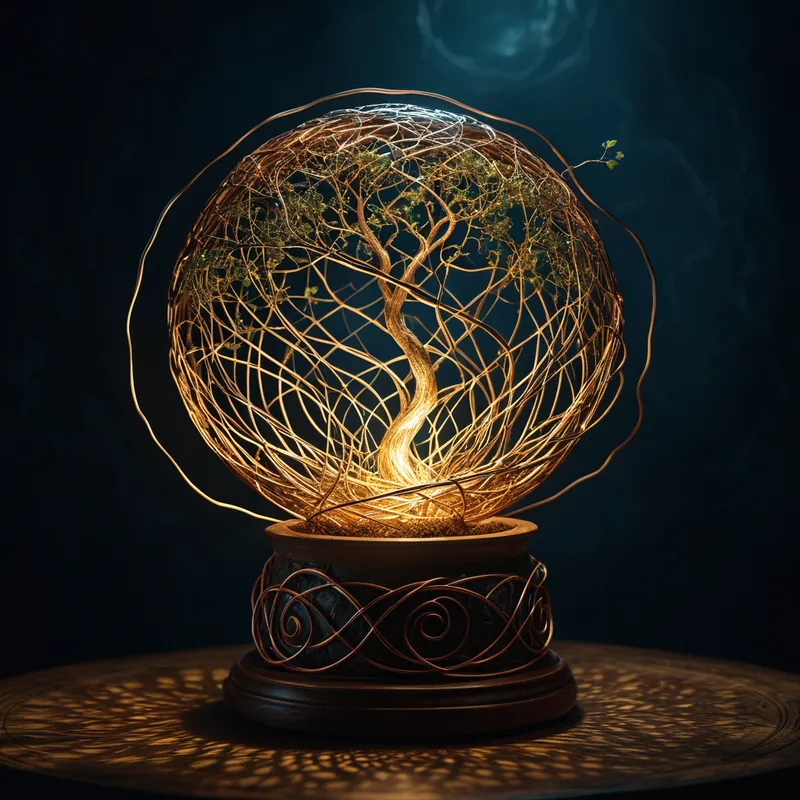
When the Pixie pattern stirs in the modern dreamer, it often manifests as dreams of bewilderment within familiar spaces: your house has unknown rooms, your workplace corridor leads to a forest, your city streets rearrange themselves. This is the somatic feeling of being “pixie-led” in your own life. Psychologically, it signals that the conscious persona—the identity you present to the world and to yourself—has become too rigid, too sure of its boundaries. The psyche’s innate trickster energy is acting to dissolve this calcification.
You may dream of small, elusive figures—not necessarily traditional pixies, but perhaps shifting shadows, scurrying rodents with intelligent eyes, or whispering voices from air vents. These represent autonomous, instinctual complexes breaking through from the unconscious. They are “making mischief” with your neatly ordered internal world. The emotional tone is crucial: fear indicates resistance to this process; curiosity or awe suggests a readiness to engage with the liminal guidance being offered.

Alchemical Translation
The Pixie myth models the alchemical stage of Nigredo, the necessary descent into confusion and the breakdown of old structures. The modern individual on the path of individuation often experiences this as a life crisis, a feeling of being profoundly lost, or a sense that one’s former goals and identities have become meaningless. This is the pixie-leading.
The triumph is not in fighting the disorientation, but in drinking from the offered cup—in accepting the dissolution and turning inward to the soul’s own forgotten memories and innate wisdom.
The “alchemical translation” is the transmutation of bewilderment into orientation-by-essence. The ego’s map (the career path, the social identity, the planned future) is dissolved. In its place, the psyche offers orientation through symbolic memory, intuition, and a re-animated connection to the inner and outer wild. One stops trying to find the path and begins to remember that they are, and always have been, of the path. The individual becomes, like Anya, a person who has integrated the trickster’s lesson. They hold a respectful relationship with the unconscious (the wild wood), and can thus become a guide for others in their own moments of fertile, transformative lostness. The Pixie’s final gift is not a return to the old, safe village, but the birth of a new consciousness that can dwell at the edge of wonders, forever connected to the ancient, dreaming earth.
Associated Symbols
Explore related symbols from the CaleaDream lexicon: