Pileus Myth Meaning & Symbolism
The Pileus, a simple felt cap, was a potent Roman symbol of manumission and liberty, marking the sacred transition from bondage to self-determined life.
The Tale of Pileus
Hear now, not of gods clashing on high Olympus, but of a transformation wrought here, in the dust and marble of the mortal world. The story begins not with a birth, but with a long, slow night. It begins in the shadowed corner of a peristyle, where a man—let us call him Lucius—knows the weight of the air before dawn. His hands, calloused from the loom or the ledger, move by habit, not will. His world is bounded by the master’s voice, the master’s gate, the master’s name. He is a body with a purpose not his own, a soul wearing the invisible, crushing pilleus of servitude.
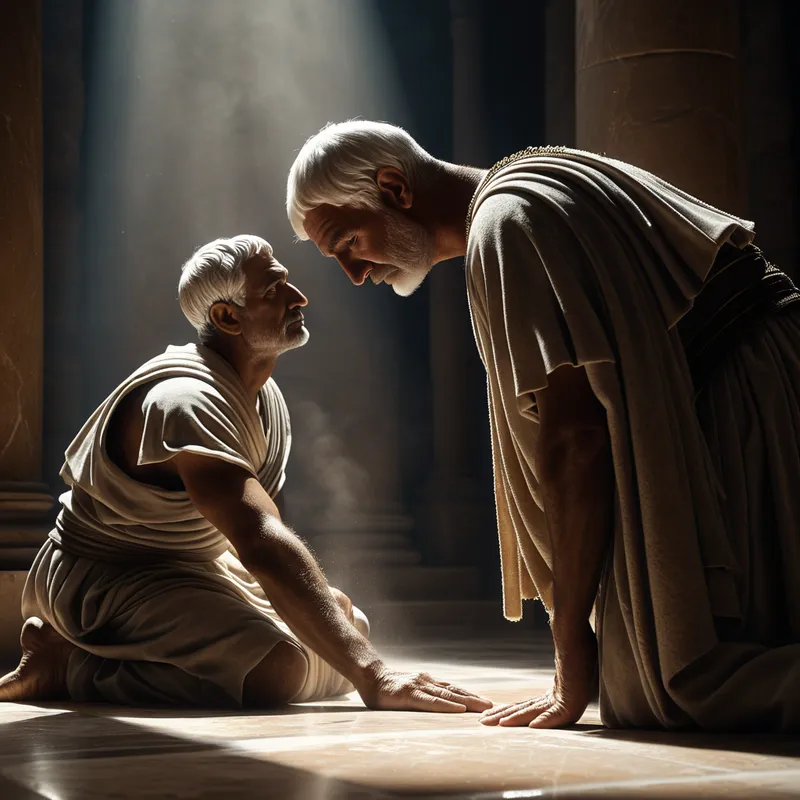
The change comes not with a [thunderclap](/myths/thunderclap “Myth from Various culture.”/), but with a word, spoken in the clear, public light of the forum. Perhaps for valor, perhaps for decades of silent fidelity, perhaps for a sum of bronze counted out. The master, now patron, stands before the magistrate. The air is still. The ritual words are uttered, dry and legal, yet they crack [the world](/myths/the-world “Myth from Tarot culture.”/) in two. A rod, the vindicta, is laid upon Lucius’s shoulder—not a blow, but a touch of liberation. Then, the moment of transmutation.
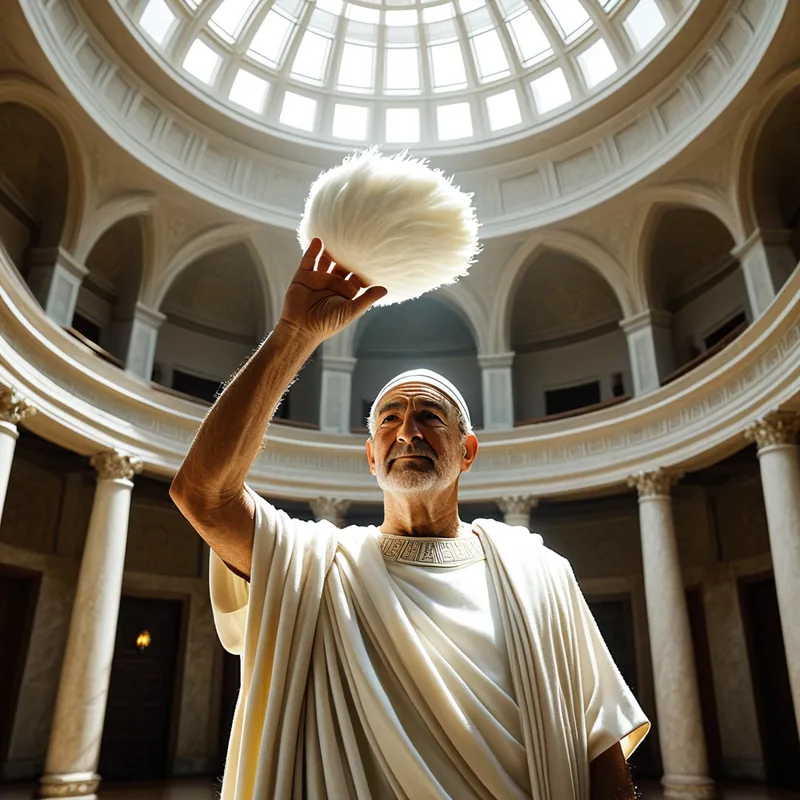
From the magistrate’s hands comes not a sword, not a scroll, but a cap. A simple [thing](/myths/thing “Myth from Norse culture.”/), of pressed white wool. The Pileus. It is placed upon Lucius’s shorn head. The touch is cool, the weight negligible, yet it carries the mass of a new sky. He rises. He is no longer servus. He is libertus. The crowd—a mix of citizens, slaves, and merchants—murmurs. Some faces show approval, others a flicker of unease at this alchemy of status. Lucius feels the sun on his brow in a way he never has before. The cap is not a crown of dominion, but a crown of self. He walks from the tribunal, and with each step, the man he was falls away like a shed skin. The city’s noise—the hawkers, the carts, the arguments—is now the soundtrack to his life, a life he must now author. The tale ends not with an ending, but with a first, trembling breath of a new and daunting dawn.
Cultural Origins & Context
The myth of the Pileus is not a narrative of the distant, heroic past, but a living ritual embedded in the pragmatic heart of Roman society. Its origins are humble, likely Etruscan, adopted and codified into the solemn legal ceremony of manumission. This was not mere folklore; it was civic and religious law in action. The ceremony, whether the formal manumissio vindicta before a magistrate or the simpler testamentary act, was a sacred boundary-crossing.
The story was told not by bards in halls, but by the act itself, performed in the forum for all to witness. It was a societal pressure valve and a engine of social mobility. By granting freedom, the master gained a loyal client, bound by the sacred ties of fides (good faith). The state gained a new, taxable citizen (or resident, in later periods). The myth’s function was profound: it provided a visible, tangible, and universally understood symbol for the most radical of human transformations—the shift from property to person. It made the intangible concept of libertas wearable. Every freedman wearing his Pileus was a walking testament to this possibility, a permanent, quiet rebellion against the fixed order of birth.
Symbolic Architecture
The Pileus is an [icon](/symbols/icon “Symbol: A sacred image or revered figure representing divine presence, artistic genius, or cultural authority, often serving as a focal point for devotion or identity.”/) of breathtaking symbolic [density](/symbols/density “Symbol: Represents the concentration of matter, energy, or meaning in a given space, often symbolizing complexity, weight, or substance.”/). Its very [material](/symbols/material “Symbol: Material signifies the tangible aspects of life, often representing physical resources, desires, and the physical world’s influence on our existence.”/) speaks volumes: felt, made from matted [wool](/symbols/wool “Symbol: A natural fiber representing warmth, protection, and connection to tradition. Often symbolizes comfort, labor, or spiritual purity.”/), is not woven on a loom with a predetermined [pattern](/symbols/pattern “Symbol: A ‘Pattern’ in dreams often signifies the underlying structure of experiences and thoughts, representing both order and the repetitiveness of life’s situations.”/). It is created through pressure, [agitation](/symbols/agitation “Symbol: A state of restless anxiety or nervous excitement, often manifesting physically as fidgeting or pacing, indicating unresolved internal tension.”/), and [cohesion](/symbols/cohesion “Symbol: The quality of sticking together or forming a unified whole, often representing unity, strength, and integrity in dreams.”/)—a perfect [metaphor](/symbols/metaphor “Symbol: A figure of speech where one thing represents another, often revealing hidden connections and deeper truths through symbolic comparison.”/) for the new [identity](/symbols/identity “Symbol: Identity represents the sense of self, encompassing personal beliefs, cultural background, and social roles.”/) of the freed individual, forged not from a pristine [blueprint](/symbols/blueprint “Symbol: A blueprint represents the foundational plan or design for something, often symbolizing potential, structure, and the mapping of one’s inner self or future.”/), but from the compressed and tangled experiences of a [life](/symbols/life “Symbol: The symbol of ‘Life’ represents a journey of growth, interconnectedness, and existential meaning, encompassing both the joys and challenges that define human experience.”/).
The cap is not a gift of freedom, but the emblem of a freedom that must now be worn, with all its weight and weather.
It symbolizes the head—the seat of reason, identity, and will—now claimed as one’s own sovereign territory. In the [ritual](/symbols/ritual “Symbol: Rituals signify structured, meaningful actions carried out regularly, reflecting cultural beliefs and emotional needs.”/), the slave was often shorn, a shedding of the old identity, before the Pileus was placed. This marks the transition from a state of being caput (a head counted as [property](/symbols/property “Symbol: Property often represents one’s personal value, possessions, or self-worth.”/)) to being sui iuris (under one’s own law). Psychologically, it represents the [moment](/symbols/moment “Symbol: The symbol of a ‘moment’ embodies the significance of transient experiences that encapsulate emotional depth or pivotal transformations in life.”/) [the ego](/myths/the-ego “Myth from Jungian culture.”/) ceases to be entirely subject to the inner “master”—be it parental complex, societal expectation, or traumatic past—and takes [responsibility](/symbols/responsibility “Symbol: Responsibility in dreams often signifies the weight of duties and the expectations placed upon the dreamer.”/) for its own governance. The Pileus is the [symbol](/symbols/symbol “Symbol: A symbol can represent an idea, concept, or belief, serving as a powerful tool for communication and understanding.”/) of conscious self-possession.

The Dreamer’s Resonance
When this myth stirs in the modern unconscious, it rarely appears as a literal Roman cap. Instead, one dreams of powerful, somatic transformations of the head and its coverings. A dreamer may find themselves in a solemn ceremony where a heavy helmet or tight band is removed, and a light, simple hat is given. They may dream their hair is being cut off in a ritualistic manner, followed by a feeling of shocking, cool air on the scalp—a somatic signal of exposure and new sensitivity.
The psychological process is one of manumission from an internal captor. The “master” in the dream could be the voice of a critical parent, the oppressive weight of a professional role that has consumed identity, or the shackles of an addiction or compulsive pattern. The rising action is the approach of the liberating ritual—often fraught with anxiety, for freedom entails terrifying responsibility. The resolution is the physical sensation of a new, lighter covering, symbolizing the nascent, fragile, but authentic self-structure that must now be inhabited. The dream is a signpost from the [psyche](/myths/psyche “Myth from Greek culture.”/): the long period of servitude to this complex is over; the ego is being summoned to stand upright in its own name.
Alchemical Translation
The alchemy of the Pileus myth models the individuation process of [separatio](/myths/separatio “Myth from Alchemical culture.”/) followed by coagulatio. The first phase is the brutal, necessary separation: the conscious recognition and severing of the psychic bonds that tie one’s sense of self to an outer authority or an inner, tyrannical complex. This is the vindicta touch, the legal and psychological declaration: “This is no longer mine to carry.”
The lead of the slave’s fate is not transformed into the gold of a king, but into the self-possessed integrity of a citizen of one’s own soul.
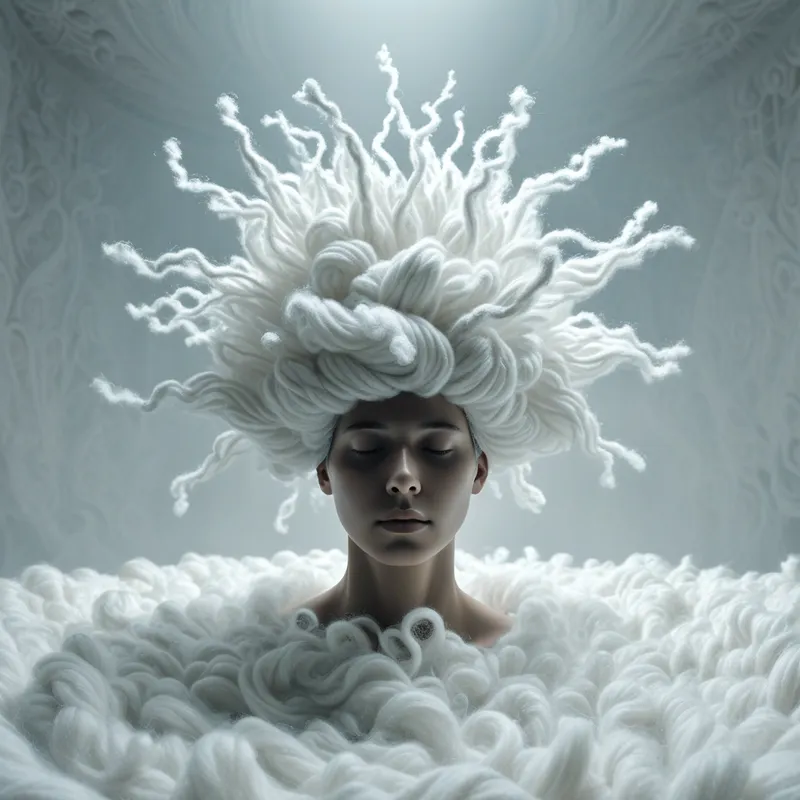
The second phase is the coagulation—the forming of the new. The white felt cap represents this new, self-authored identity. It is not a finished, glorious garment, but a simple, serviceable, and self-made one. The freedman does not become a hero-king; he becomes a responsible adult in the psyche’s community. The alchemical fire is the heat of conscious choice and the friction of navigating a world where one is no longer defined by a master. For the modern individual, this translates to the moment we stop blaming our history, our parents, or our circumstances for our being, and instead take up the Pileus of self-responsibility. We weave our own felt from the wool of our experiences, no longer waiting for permission to wear [the crown](/myths/the-crown “Myth from Various culture.”/) of our own life. The myth teaches that true liberty is not the absence of limits, but the sacred burden of defining one’s own.
Associated Symbols
Explore related symbols from the CaleaDream lexicon: