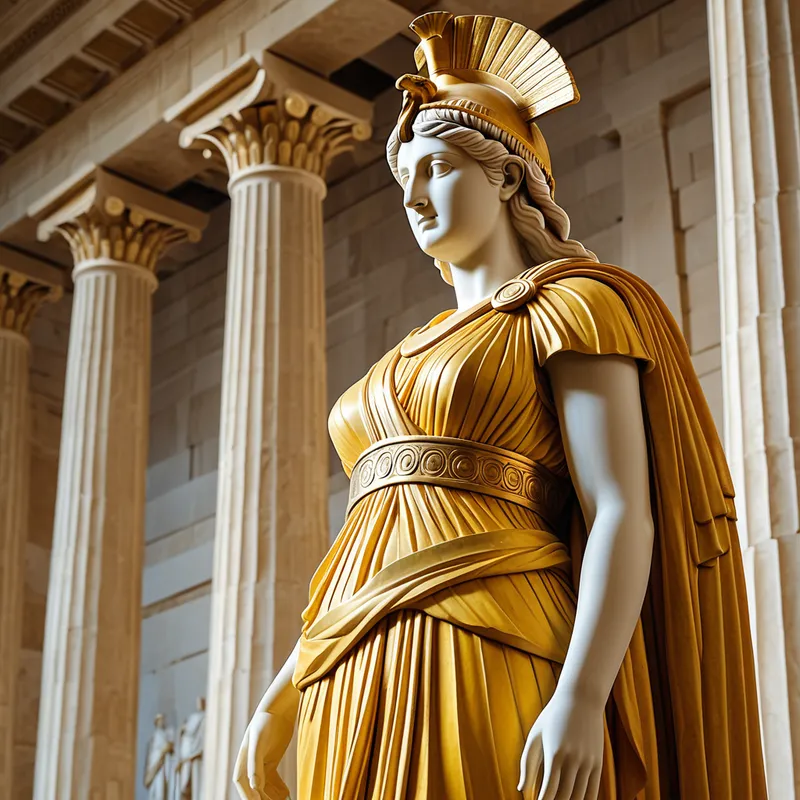
Peplos Myth Meaning & Symbolism
The sacred robe woven for Athena, embodying the city's soul, offered in a ritual of devotion that binds the mortal and divine realms.
The Tale of Peplos
Hear now the tale not of a hero, but of a garment. Not of a conquest, but of an offering. In the high, sun-baked citadel of the Acropolis, where the air smells of olive wood, crushed thyme, and the distant salt of the Aegean, the city holds its breath. It is the height of the Panathenaia. The great procession has wound its way from the Dipylon Gate, a river of citizens, metics, and maidens bearing baskets upon their heads. But all eyes, all yearning, are fixed on a single, folded cloth borne by the chosen noble maidens, the Arrephoroi.
This is the Peplos. For nine months, in a secret chamber near the temple of Hestia, the most skilled young weavers of Athens, daughters of the finest families, have labored. Their fingers, stained with saffron and sea-purple, have not crafted a mere tunic. They have woven the soul of Athens itself. Into the dense wool, they have threaded the victory of the gods over the giants, the Gigantomachy, a tapestry of order prevailing over primal chaos. Each stitch is a prayer, each color a hope: the gold of prosperity, the blue of wisdom, the deep red of the earth’s vitality.
The procession ascends. The drums are a heartbeat. The flute’s song is the wind in the sacred olive tree. They pass the Temple of Athena Nike, and finally stand before the towering doors of the Parthenon. Within, lit by a single shaft of midday sun, stands the colossal, awe-inspiring Athena Parthenos. Her ivory face is serene, her eyes of polished stone seem to see through time. In her hand, a statue of Nike awaits the offering.
The high priest steps forward. The folded Peplos is raised. This is the moment of sacred marriage, the hieros gamos of the polis and its protector. The old robe from the previous year, now faded and fragile from smoke and time, is carefully removed from the ancient, wooden Xoanon in the Erechtheion. The new one is draped upon it. It is an act of profound intimacy—dressing the goddess, renewing her bond with the city, wrapping Athens itself in the promise of another year of her shrewd counsel, her strategic might, her guarded peace. The ritual is complete. The city exhales. Athena is clothed, and thus, Athens is sustained.
Cultural Origins & Context
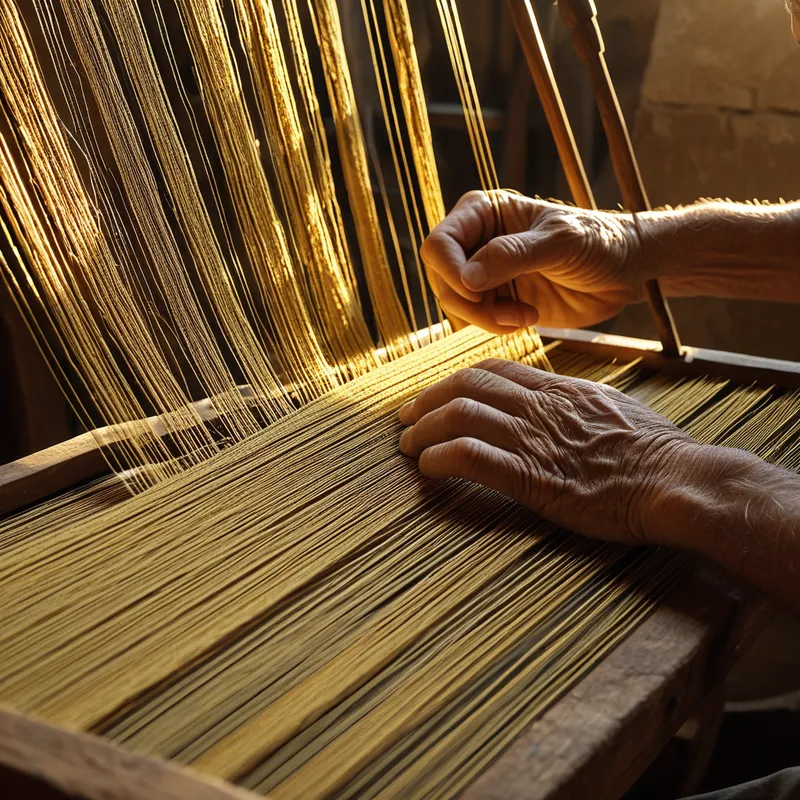
The myth-ritual of the Peplos was not a singular story from the epic cycle, but a living, breathing civic ceremony central to Athenian identity. Its origins are lost in the Mycenaean mist, likely stemming from ancient practices of renewing the garments of aniconic, wooden cult statues to ensure their continued potency. By the Classical period, under the visionary program of Pericles, it was elevated into the grand climax of the Panathenaic Festival, held every four years in its Great form.
The weaving was entrusted to the Arrephoroi and overseen by the priestesses of Athena, a sacred duty that removed these girls from their ordinary lives for a period of ritual service. The procession depicted on the Parthenon frieze is not merely art; it is a divine snapshot of this socio-religious contract. The myth was performed, not just narrated. It functioned as the city’s annual act of devotion and a powerful piece of political theology: Athena’s continued favor was not automatic but required this meticulous, beautiful, and costly labor of love from her people. It visually and ritually affirmed that the city’s fortune was woven, thread by thread, by its own citizens.
Symbolic Architecture
The Peplos is far more than ritual attire. It is a profound symbol of the interface between human endeavor and divine grace, the tangible manifestation of a relationship.
The woven garment is the made world; the act of offering is the soul recognizing its source.
The Loom represents human culture, technology, and order—the very principle of Metis that Athena embodies. To weave is to bring disparate threads into a coherent, beautiful, and functional whole, mirroring the goddess’s role in civilizing chaos. The Pattern of the Gigantomachy woven into the cloth is crucial. It is not a random decoration. By weaving the gods’ victory over chaos into the garment, the Athenians were literally clothing their protector in the symbol of the order she upholds, actively participating in the eternal maintenance of cosmic and civic harmony.
The Annual Renewal is the core psychic movement. The removal of the old, worn Peplos signifies the acceptance of time, decay, and the fading of past blessings. The offering of the new one is an act of hope, responsibility, and active participation in one’s own destiny. The goddess does not create the garment; the polis does. Her power is channeled and renewed through their devoted work.
The Dreamer’s Resonance
When the motif of the sacred Peplos appears in modern dreams, it seldom manifests as a literal robe. Instead, one may dream of a painstaking, lengthy craft project that feels vitally important, yet the purpose is obscure. There may be a profound sense of ritual obligation—preparing an elaborate meal, tending a garden with ceremonial care, or organizing a space with intense precision. The dreamer might be weaving, knitting, or mending something of immense, soul-level significance.
Psychologically, this signals a process of conscious devotion to an inner value or a higher principle—the Self. The somatic feeling is often one of focused, anxious, yet deeply meaningful labor. The dreamer is in the “workshop,” weaving the threads of their experiences, insights, and disciplines into a new pattern of identity to be offered to something greater than the ego. It is the psyche’s ritual of preparing an offering to its own deepest source of meaning and authority. The conflict arises if the dreamer feels they are weaving for an empty statue—a sign that their devotion is misplaced in an outworn ideal or external authority.

Alchemical Translation
The alchemical journey modeled by the Peplos myth is not one of slaying monsters, but of sacred service. Its core is the opus of meticulous, loving labor aimed at transubstantiating raw material (wool, life experiences) into a vessel for the divine (the robe, an integrated personality).
The first stage is Selection and Preparation (nigredo). The choosing of the wool and the weavers mirrors the conscious decision to engage in a process of inner work, to select which aspects of one’s life will be the material for transformation. The second is the Weaving Itself (albedo). This is the long, often monotonous, work of analysis, reflection, and integration—taking the disparate, colored threads of joy, trauma, success, and failure and consciously working them into a coherent narrative or pattern. The pattern one chooses to weave—perhaps one of reconciliation, creativity, or integrity—is crucial.
The ultimate sacrifice is not of a life, but of the ego’s claim to autonomy, offered up to the greater pattern of the Self.
The final, transcendent stage is the Ritual Offering (rubedo). This is the act of consciously presenting this hard-won, integrated self-structure—the “new peplos”—to the inner guiding principle, the inner Athena. It is the moment where one stops weaving for oneself and offers the garment up, draping it over the inner statue, saying, “This is for you. This is my part in our covenant.” The old, outgrown self is gently removed. The new one is assumed. In this psychic ritual, the individual achieves renewal not through conquest, but through devoted, skillful, and humble craftsmanship of the soul.
Associated Symbols
Explore related symbols from the CaleaDream lexicon: