
Penelope Myth Meaning & Symbolism
The queen who wove by day and unraveled by night, holding a kingdom and her soul intact through twenty years of faithful, cunning waiting.
The Tale of Penelope
[The sea](/myths/the-sea “Myth from Greek culture.”/) is a thief. It stole the king, the father, the husband, and left in his place a silence that grew teeth. In the great hall of Ithaca, the silence feasted. It wore the faces of one hundred and eight men—the suitors—who drank the kingdom’s wine, slaughtered its herds, and clamored for a prize they had not earned: the hand of Penelope, the queen.
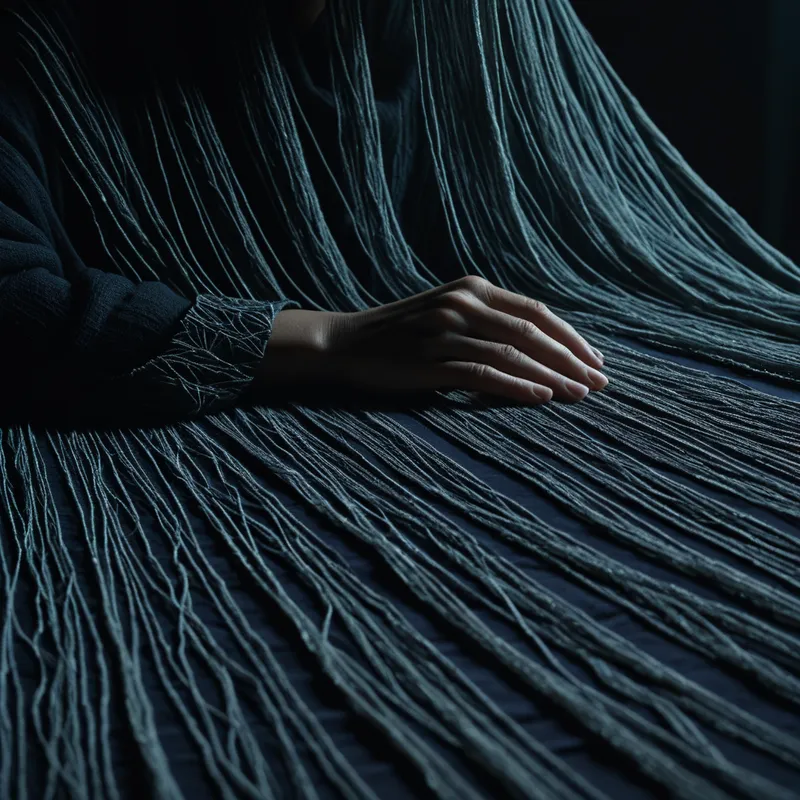
For twenty years, the loom was her kingdom. By day, she sat before the great warp and weft, her fingers flying like shuttle-birds. “I must finish the funeral shroud for my lord’s father, the noble Laertes,” she declared to the ravenous hall. “Only when the final thread is tied will I choose a new husband.” Her voice was a calm harbor in a storm of greed. The suitors, bloated with arrogance, agreed. They watched the tapestry grow: scenes of heroes and monsters, a promise of an ending.
But Penelope was a weaver of time, not cloth. Each night, when the torches guttered and the palace slept, she returned to the loom. By the faint, treacherous light of a single lamp, her hands performed a secret, sacred treason. She grasped the woven scenes and began to unpick them. Stitch by stitch, thread by thread, she unraveled the day’s labor. The heroes dissolved, the monsters faded back into chaos. By dawn, the shroud was as it had been, its completion a receding horizon. For three years, this was her silent war. The suitors, fools in their cups, saw only the promise of the weave, never the cunning of the unraveling.
Her son, [Telemachus](/myths/telemachus “Myth from Global/Universal culture.”/), grew from a boy into a man haunted by his father’s ghost. He sailed to seek news, leaving her alone with the wolves. The ruse was discovered. The pressure became a vise. The goddess Athena, who loved cunning above brute force, fortified her spirit but could not stay the final hour. Cornered, Penelope devised one last test. She brought forth the great bow of [Odysseus](/myths/odysseus “Myth from Greek culture.”/). “He who can string this bow and shoot an arrow through the axes,” she said, her heart a drum against her ribs, “shall have me as his wife.”
One by one, the suitors failed, their soft hands betraying them. Then a ragged beggar, washed ashore from the sea’s maw, stepped forward. The hall erupted in scorn. But his hands, scarred and knowing, took the bow. He strung it with the sound of a harp note. He drew it, a gesture older than the stones of the hall. The arrow flew true, through all twelve axe-helves, and its song was the ending of an age. The silence in the hall was new. It was the silence of recognition. The thief, the sea, had given back what it had stolen. The king was home.
Cultural Origins & Context
The story of Penelope is woven into the very fabric of the Odyssey, an oral epic that crystallized in the 8th century BCE. Sung by bards (aoidoi) in the halls of the aristocracy, it was not merely entertainment but a foundational narrative of Greek identity. It explored the tensions between oikos (the household, the domestic realm) and polis (the public, political realm), between wandering (nostos) and rootedness.
Penelope was the idealized anchor of the oikos. In a society where a woman’s highest virtues were fidelity, clever management, and the production of legitimate heirs, she was the ultimate exemplar. Yet, [Homer](/myths/homer “Myth from Greek culture.”/) grants her a rare agency. Her cunning (mêtis) is a match for her husband’s, a quality celebrated by the goddess Athena herself. Her story served as a cultural mirror: for men, it presented the ideal wife who preserves the homefront; for women, it offered a model of resilience and intellectual resourcefulness within strictly defined social boundaries. Her myth was a reassurance of order—that fidelity and cleverness could, against all odds, preserve the rightful line and see the kingdom restored.
Symbolic Architecture
Penelope is the [archetype](/symbols/archetype “Symbol: A universal, primordial pattern or prototype in the collective unconscious that shapes human experience, behavior, and creative expression.”/) of the [Animus](/symbols/animus “Symbol: In Jungian psychology, the masculine inner personality in a woman’s unconscious, representing logic, action, and spiritual guidance.”/) of the [Labyrinth](/symbols/labyrinth “Symbol: The labyrinth represents a complex journey, symbolizing the intricate path toward self-discovery and understanding one’s life’s direction.”/). She does not embark on a physical [journey](/symbols/journey “Symbol: A journey in dreams typically signifies adventure, growth, or a significant life transition.”/) but presides over an [interior](/symbols/interior “Symbol: The interior symbolizes one’s inner self, thoughts, and emotions, often reflecting personal growth, vulnerabilities, and secrets.”/) one, holding the center while [the world](/myths/the-world “Myth from Tarot culture.”/) around her descends into [chaos](/symbols/chaos “Symbol: In Arts & Music, chaos represents raw creative potential, uncontrolled expression, and the breakdown of order to forge new artistic forms.”/). Her symbols are profound:
The Loom: It represents the fabric of [reality](/symbols/reality “Symbol: Reality signifies the state of existence and perception, often reflecting one’s understanding of truth and life experiences.”/), [fate](/symbols/fate “Symbol: Fate represents the belief in predetermined outcomes, suggesting that some aspects of life are beyond human control.”/), and time itself. To weave is to create order, narrative, and social bonds (the [shroud](/symbols/shroud “Symbol: A cloth covering a corpse, symbolizing death, transition, concealment, and the unknown journey beyond life.”/) for Laertes). To unravel is to deconstruct, to buy time, to resist a false or premature [conclusion](/symbols/conclusion “Symbol: A conclusion can symbolize resolution, closure, and the finality of experiences or decisions.”/). It is the active, conscious management of [destiny](/symbols/destiny “Symbol: A predetermined course of events or ultimate purpose, often linked to spiritual forces or cosmic order, representing life’s inherent direction.”/).
The Unraveling: This is not destruction, but preservation. It is the ultimate act of psychological [resistance](/symbols/resistance “Symbol: An object or tool representing opposition, struggle, or the act of pushing back against external forces or internal changes.”/) against a collective pressure to conform, to surrender, to accept a narrative that is not one’s own.
The truest fidelity is not passive waiting, but an active, creative holding of the center. It is the daily re-weaving of the self against the erosions of despair.
The Shroud: Ostensibly for Laertes, it symbolically becomes the shroud for her own old [life](/symbols/life “Symbol: The symbol of ‘Life’ represents a journey of growth, interconnectedness, and existential meaning, encompassing both the joys and challenges that define human experience.”/), for the suitors’ ambitions, and finally, for the long [period](/symbols/period “Symbol: Periods in dreams can symbolize cyclical patterns, renewal, and the associated emotions of loss or change throughout life.”/) of mourning itself. Its completion is delayed until the true [life](/symbols/life “Symbol: The symbol of ‘Life’ represents a journey of growth, interconnectedness, and existential meaning, encompassing both the joys and challenges that define human experience.”/) can be resurrected.
The Final Test (The Bow): This is her ultimate act of [faith](/symbols/faith “Symbol: A profound trust or belief in something beyond empirical proof, often tied to spiritual conviction or deep-seated confidence in people, ideas, or outcomes.”/) and recognition. She does not simply accept the returned [king](/symbols/king “Symbol: A symbol of ultimate authority, leadership, and societal order, often representing the dreamer’s inner power or external control figures.”/); she creates a scenario that only the true essence of her [husband](/symbols/husband “Symbol: In dreams, the symbol of a husband often represents commitment, partnership, and the dynamics of intimate relationships.”/)—his unique skill, his [identity](/symbols/identity “Symbol: Identity represents the sense of self, encompassing personal beliefs, cultural background, and social roles.”/)—can fulfill. It is the [psyche](/myths/psyche “Myth from Greek culture.”/)’s final, elegant [mechanism](/symbols/mechanism “Symbol: Represents the body’s internal systems, emotional regulation, or psychological processes working together like a machine.”/) for discerning [truth](/symbols/truth “Symbol: Truth represents authenticity, honesty, and the quest for knowledge beyond mere appearances.”/) from illusion.

The Dreamer’s Resonance
When the pattern of Penelope emerges in modern dreams, the dreamer is in a state of active endurance. They are not passively stuck, but engaged in a subtle, often unseen, internal labor of preservation.
Dreaming of Weaving: This may indicate the dreamer is consciously trying to create coherence, to make sense of a complex situation, or to “piece together” a new identity or life project. There is a focus on patience, craft, and careful construction.
Dreaming of Unraveling or Unpicking: This is a crucial symbol. Far from a nightmare of failure, it often signifies the necessary deconstruction of a false promise, a social obligation, or a life path that is not authentic. The dreamer is buying psychological time, secretly undoing a commitment that feels like a death.
Dreaming of a Hall Full of Pressuring Figures (Suitors): This reflects the feeling of being besieged by external demands, social expectations, or internalized voices pushing for a premature decision—to marry a career, a relationship, or an identity that does not fit.
The somatic experience is one of deep, quiet tension held in the hands and the solar plexus—a feeling of working tirelessly on something that never seems to progress, yet knowing, intuitively, that this very act is what maintains integrity.
Alchemical Translation
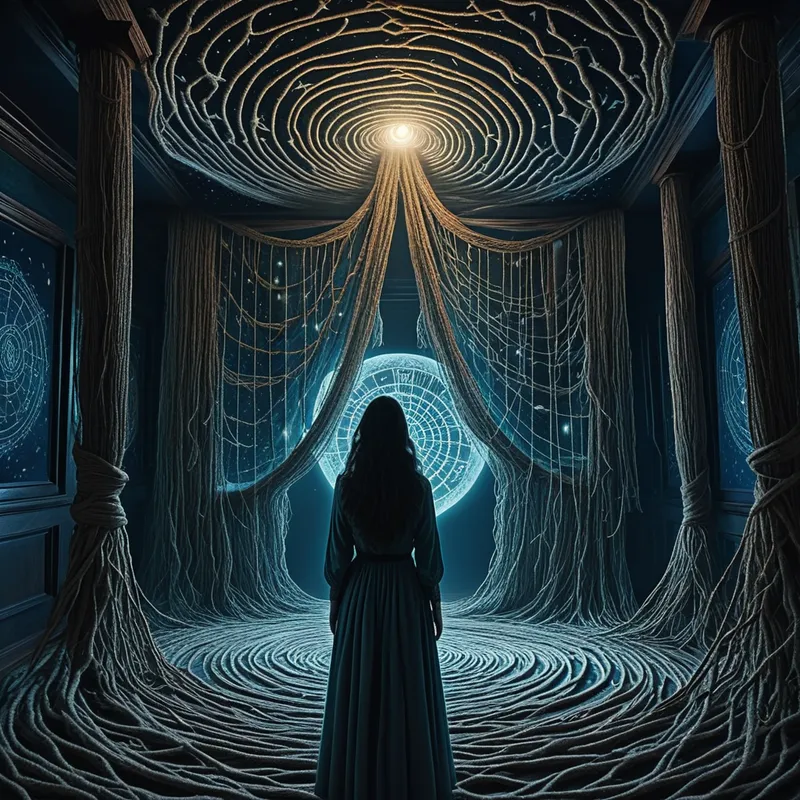
The alchemy of Penelope is the transmutation of chronos (linear, quantitative time) into [kairos](/myths/kairos “Myth from Global/Universal culture.”/) (the right, opportune, qualitative moment). Her twenty-year vigil is the [nigredo](/myths/nigredo “Myth from Alchemical culture.”/), the long, dark night of the soul where all seems lost, where one is surrounded by the shadowy “suitors” of despair, compromise, and cynicism.
Her daily weaving is the albedo, the repeated, purifying work of consciousness—maintaining hope, order, and intention. The nightly unraveling is the secret citrinitas, the yellowing, the internal work of discernment that refuses to let the work be co-opted by the inferior forces. It is the preservation of the [prima materia](/myths/prima-materia “Myth from Alchemical culture.”/) (the essential self) from corruption.
The psyche’s most profound work often looks like stasis from the outside. The true movement is an invisible, spiraling inward, a deepening of the center.
The final test with the bow is the [rubedo](/myths/rubedo “Myth from Alchemical culture.”/), the reddening, the culmination. It is not a passive reception, but an active creation of the conditions for recognition and union. She forces a confrontation between the authentic Self (the returned Odysseus) and the false, collective psyche (the suitors). Her fidelity was never to a mere person, but to the essence of the relationship and to her own sovereign center. The restored kingdom is the integrated psyche, where the feminine principle of containing wisdom (mêtis) and the masculine principle of directed action are reunited, having each been refined and proven in their separate, necessary ordeals. For the modern individual, her myth teaches that the journey home is sometimes achieved not by seeking, but by holding, with cunning and unwavering faith, the space for the true to return.
Associated Symbols
Explore related symbols from the CaleaDream lexicon:
- Cloth
- Rug
- Woolen Beanie
- Patchwork Jacket
- Frayed Denim
- Patchwork Quilt
- Wool Sweater
- Unraveling Fabric
- Floral Quilt
- Woven String Instrument
- Sweater Weather
- Pillowed Window Seat
- Intricate Headboard
- Handknit Mittens
- Rubber Band Ball
- Torn Fabric
- Labors of Love
- Weaved Grass Mat
- Textile Fragment
- Basket Weave Pattern
- Delay
- Cliffhanger
- Subplot
- Pining
- Buffering