Papa Earth Mother Hawaiian Myth Meaning & Symbolism
The primal myth of Papa, the Earth Mother, and Wākea, the Sky Father, whose sacred union and necessary separation birthed the Hawaiian islands and the human soul.
The Tale of Papa Earth Mother Hawaiian
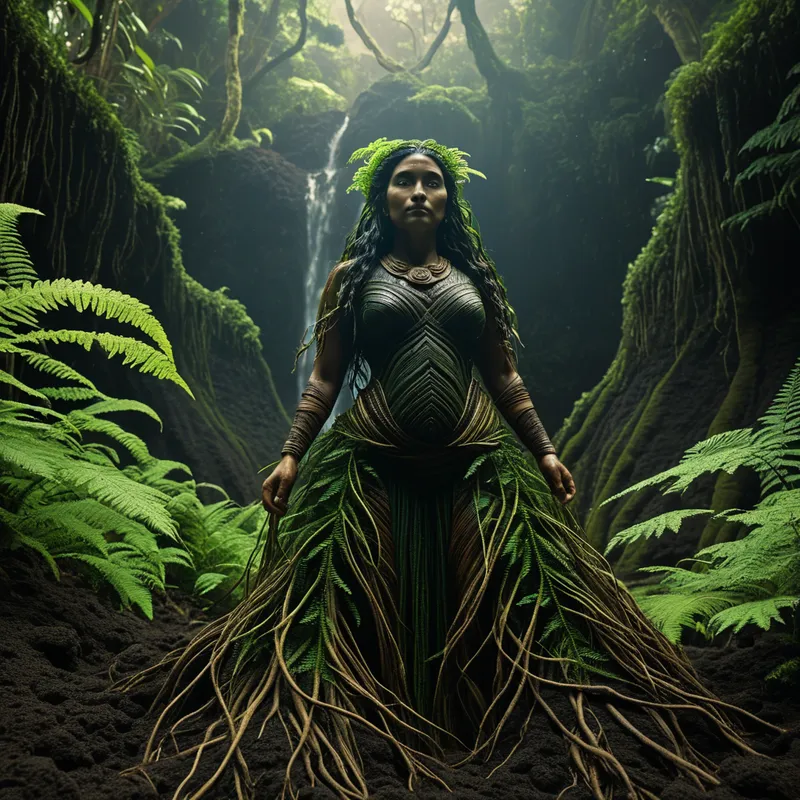
In the time before time, when the world was a dark, formless potential, there was only the deep, dreaming slumber of Po. From this profound darkness, the great forces stirred. And there was Papa. She was not born; she simply was—the solid, the receptive, the enduring. Her body was the rich, dark soil, her bones the volcanic rock, her hair the lush forests of Hawaiʻi. She was the silent, waiting ground of all existence.
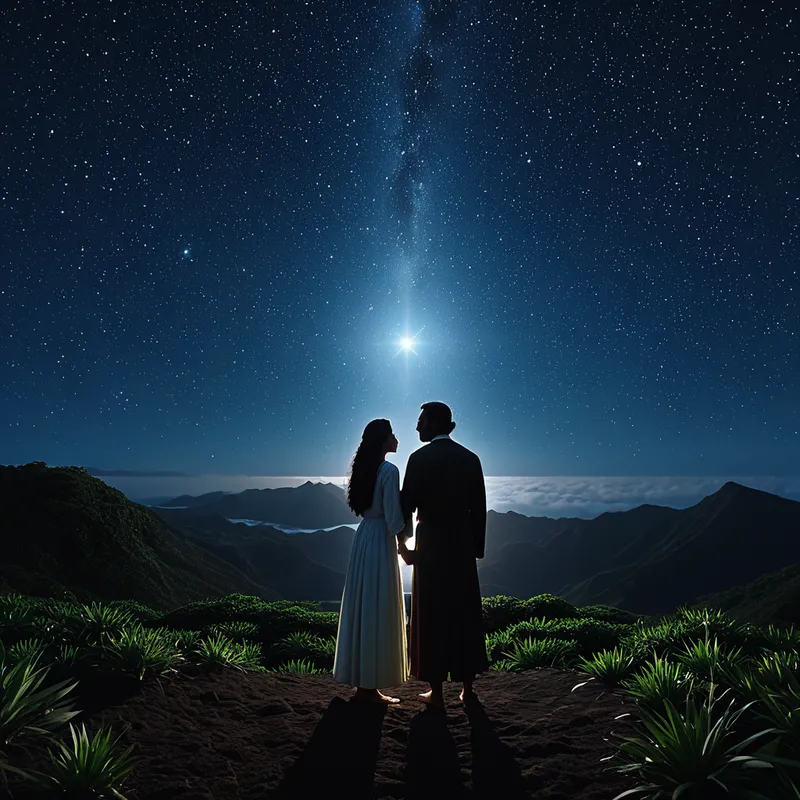
Then came Wākea, the endless, radiant sky. He was the light, the expanse, the active principle. Where Papa was depth, he was height. Where she was stillness, he was movement—the sweep of clouds, the arc of the sun, the glittering path of the stars. They beheld one another, and in that gaze was a recognition older than memory. Wākea descended. Papa reached up. Their union was not a gentle meeting, but a cosmic event—a sacred, creative collision.
From their embrace, life burst forth. But the firstborn was not as expected. It was a Hāloanakalaukapalili, a child born in the form of the sacred kalo, the taro plant. He was placed gently into the body of Papa, and from him sprouted the first green shoot, nourished by her tears. This was the first sacrifice, the first transformation of love into sustenance.
Their second union brought forth a human child, Hāloa, the ancestor of all Hawaiian people. But a shadow fell upon this sacred union. Wākea’s gaze, once fixed solely on Papa, began to wander. He desired another. In a act that fractured the primal unity, he took Papa’s own daughter, Hoʻohōkūkalani, as a mate. This was the great betrayal, the cosmic divorce.
Papa’s grief was tectonic. It shook the foundations of the world. In her profound sorrow and righteous anger, she withdrew. She turned her back on Wākea, descending into the underworld, Milu. She became the hidden foundation, the earth that supports but is no longer in intimate embrace with the sky. This separation was not an end, but a new ordering. The space that opened between them—the Ao—became the world we know: the air we breathe, the rain that falls, the islands that rise from the sea. Papa, though distant, remained the unwavering ground of being, the source from which all nourishment ultimately flows.
Cultural Origins & Context
This cosmogonic myth is the foundational genealogy, or kumulipo, of the Hawaiian people. It was not merely a story but a sacred framework for understanding existence, recited by kahuna and learned lineages. Its primary function was to establish pono—the sacred right order of the universe. By tracing human ancestry directly back to the Earth (Papa) and Sky (Wākea), the myth rooted the Hawaiian people in the very landscape they inhabited. It encoded a familial relationship with the land (ʻāina), making stewardship a sacred duty, not an economic activity. The story of the firstborn taro child established the spiritual and physical primacy of kalo, shaping agricultural practice, social structure, and spiritual life. This myth was the template that explained why the world is as it is: separate, yet interconnected; born of unity, sustained through respectful distance.
Symbolic Architecture
At its core, the myth of Papa and Wākea is a profound allegory for the principle of duality emerging from unity. Papa symbolizes the archetypal Mother in her most literal and cosmic sense: the container, the ground, the source of all tangible life. She is the unconscious, the body, the instinctual world. Wākea represents consciousness, spirit, and active agency—the force that gives form and name.
The first creation is not a perfected form, but a nourishing root. The psyche’s initial offering is often raw, primal, and meant to be returned to the earth of the soul for transformation.
The birth of the taro-child before the human child is a masterful symbolic stroke. It signifies that our primary relationship is not with our own kind, but with that which sustains us. The human is secondary, dependent, and must honor its "elder sibling." The betrayal and separation are not a moral failure but a cosmological necessity. For life to flourish in the middle world, the primal parents must separate. The tension between them creates the psychic space where individual consciousness can exist. Papa’s descent is not a defeat; it is her becoming the unshakable foundation, the psychological ground we must always return to for stability and nourishment.
The Dreamer's Resonance
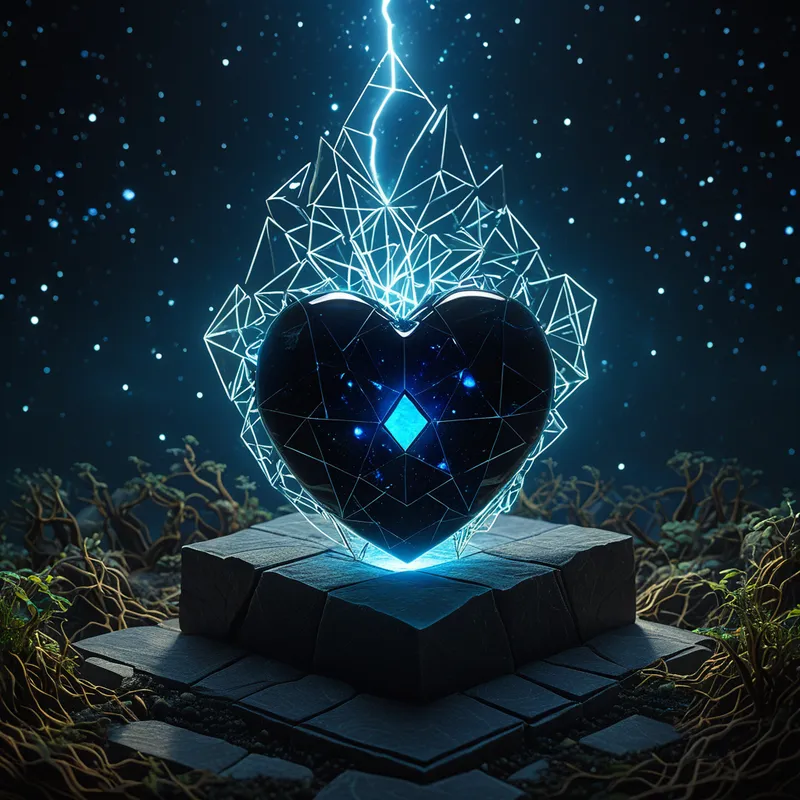
When this myth stirs in the modern dreamtime, it often manifests as dreams of profound grounding or terrifying rootlessness. To dream of rich, fertile soil, of sinking into the earth with a sense of peace, speaks to a psyche seeking reconnection with the Papa principle—a need for stability, nurture, and somatic awareness. It is the dream of the Body calling the spirit home.
Conversely, dreams of earthquakes, fissures in the ground, or being unable to find solid footing mirror Papa’s grief and withdrawal. This signals a rupture in one’s foundational sense of security, a betrayal (personal or systemic) that has severed the individual from their inner ground of being. The dreamer may be experiencing a Wound of abandonment, where the nourishing earth-mother aspect of their own psyche feels inaccessible. The dream is the psyche’s attempt to process this foundational trauma and initiate the slow work of re-establishing a conscious, respectful relationship with one’s own depths.
Alchemical Translation
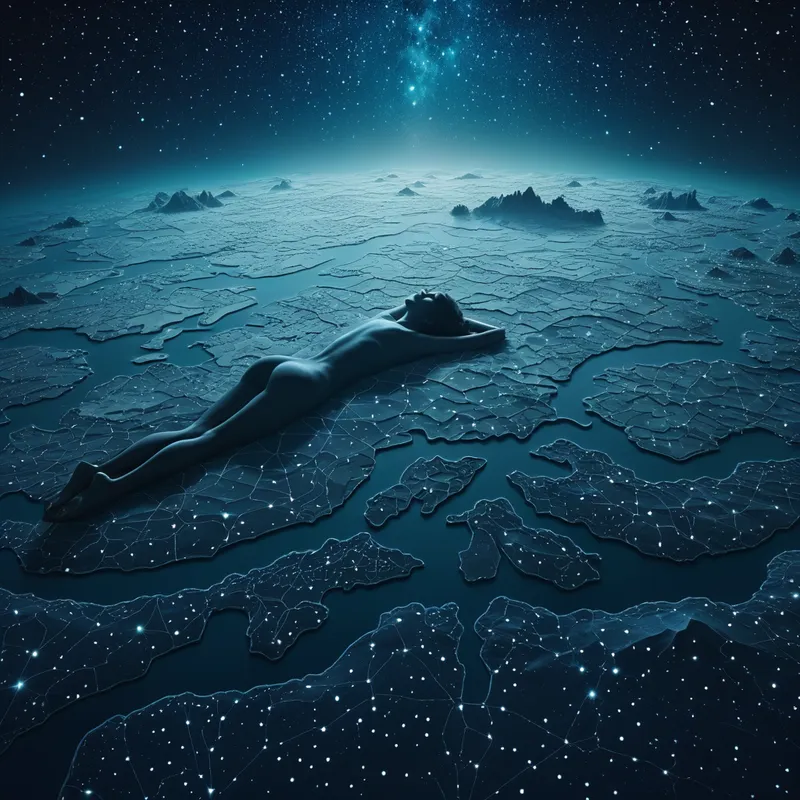
The myth models the individuation process as a sacred cycle of union, separation, and conscious re-relating. The initial, unconscious unity of Papa and Wākea is the pre-individuated state—a blissful but unconscious identification with one’s origins. The "betrayal" and separation are the inevitable crisis of consciousness: the ego (Wākea) must differentiate, must explore other potentials (symbolized by Hoʻohōkūkalani), even if it causes a rift with the primal, maternal unconscious.
Individuation is not about staying fused with the source, but about enduring the necessary separation in order to establish a conscious, reverent dialogue across the created space.
The alchemical work lies in Papa’s response. She does not annihilate Wākea; she becomes the foundation beneath his expanse. For the modern individual, this translates to the difficult task of grounding one’s soaring ambitions, spiritual seeking, and conscious ideals (Wākea) in the reality of the body, emotional history, and earthly limitations (Papa). The goal is not to return to unconscious unity, but to achieve a state of pono—where spirit honors matter, consciousness tends to its roots, and the individual, like the islands, stands firm in the sea, born of both earth and sky, sustained by the tension between them. This is the Rebirth into a grounded, authentic self.
Associated Symbols
Explore related symbols from the CaleaDream lexicon:
- Mother — The archetypal source of all life, nourishment, and containment; Papa is the ultimate expression of this symbol as the literal body of the world.
- Earth — The foundational element of stability, fertility, and the physical realm; the very substance of Papa and the ground of all being.
- Root — Symbolizes the primal, nourishing connection to source, as seen in the first taro-child, and the hidden structures that provide stability.
- Separation — The necessary, painful space that allows for individual consciousness and life to exist, born from the rift between earth and sky.
- Wound — The grief and betrayal of Papa that creates the foundational trauma of existence, out of which the conscious world is formed.
- Rebirth — The continuous cycle of life emerging from the union and separation of primal forces, as islands and humanity are born from sacred tension.
- Healing — The process of re-establishing a conscious, respectful relationship with the foundational earth-principle after a rupture.
- Mountain — The enduring, visible manifestation of Papa’s body, rising from the sea, a symbol of groundedness and connection to the ancestral.
- Ocean — The surrounding, mediating element that holds the islands (Papa’s children) and reflects the sky (Wākea), representing the emotional and unconscious medium.
- Sacrifice — The first act of creation, where the taro-child is returned to the earth, establishing the law that nourishment requires a reciprocal offering.
- Dream — The state akin to the primal Po, from which these archetypal forms emerge, and the realm where modern individuals reconnect with this foundational myth.
- Body — The personal, incarnate expression of the Papa principle, the ground of our individual experience that must be honored as sacred land.