
Pandora's Box- The seal Myth Meaning & Symbolism
A divine vessel, crafted as punishment, is opened by the first woman, releasing all evils but trapping Hope inside as humanity's final comfort.
The Tale of Pandora’s Box- The seal
Listen. This is not a story of a box. It is a story of a seal, a boundary between the known and the unknown, a lid placed upon [the abyss](/myths/the-abyss “Myth from Kabbalistic culture.”/) of what could be.
In the beginning, after the great war with [the Titans](/myths/the-titans “Myth from Greek culture.”/), [the world](/myths/the-world “Myth from Tarot culture.”/) was young and mankind was new. They lived in a kind of golden ease, untouched by toil or sorrow. But [Prometheus](/myths/prometheus “Myth from Greek culture.”/), the fore-thinker, loved his clay-born children too well. He dared to steal the bright, dancing seed of fire from the very hearth of Zeus and gave it to shivering humanity. The scent of that first cooked meat, the light of that first defiant flame, reached Olympus, and the air grew cold with divine wrath.
Zeus, whose mind holds thunder, conceived a punishment not for the thief, but for his beloved mortals. A gift that was a curse, beautiful and terrible. He summoned the divine artisans. [Hephaestus](/myths/hephaestus “Myth from Global/Universal culture.”/) took earth and [water](/myths/water “Myth from Chinese culture.”/) and, with breathless skill, shaped the first woman. Aphrodite bestowed upon her grace that could break hearts and desire that could start wars. Athena taught her to weave, clothing her in shimmering raiment. [Hermes](/myths/hermes “Myth from Global/Universal culture.”/) placed in her breast a dog-like mind and a thief’s heart, and gave her a voice of treacherous sweetness. They named her [Pandora](/myths/pandora “Myth from Greek culture.”/), “All-Gift,” for each god had given something.
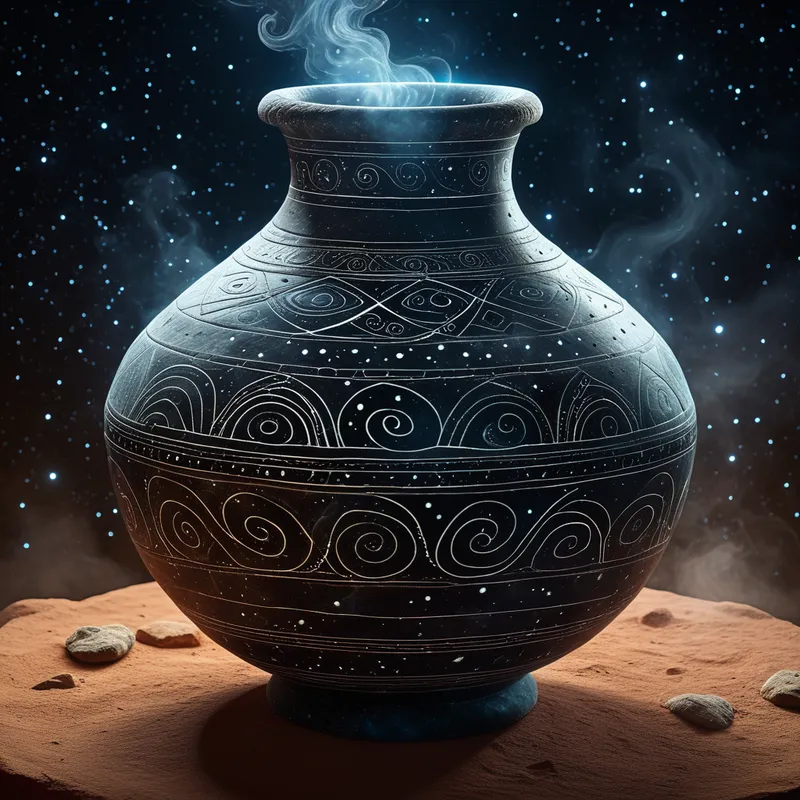
But the final gift came from Zeus himself. It was a great pithos, not a small box. Its clay was smooth, its shape perfect, and upon its mouth was fixed a massive, complex seal of wax and cord. “Do not open this,” Hermes whispered-sang as he led her to Epimetheus, the after-thinker. “This vessel is for you, and you alone. Guard it.” Epimetheus, forgetting his brother’s warnings, was dazzled by her beauty and welcomed her.
For days, Pandora lived in the house. The pithos sat in a corner, silent. But it was not silent. It hummed. It whispered. In the dead of night, she would hear faint scratchings from within, like the claws of a thousand tiny beasts. In the daylight, it seemed to pulse with a dark warmth. The seal became the center of her world. Who had made it? What was it keeping in? What was it keeping out? The divine command warred with the human heart Hermes had planted within her—a heart of curiosity, of need-to-know.
The tension grew unbearable. One afternoon, with the sun high and the house quiet, she approached it. Her fingers traced the ridges of the seal. It felt alive. The whispers became promises, threats, pleas. With a cry that was part despair, part defiance, she gripped the seal and pulled.
The sound was not a pop, but a sigh, a release of breath held since the world began. The seal broke. And from the mouth of the jar erupted a shrieking, formless cloud—a miasma of Geras and Ponos, of Lyssa and [Lethe](/myths/lethe “Myth from Greek culture.”/), of Limos and Algos. Every sickness, every sorrow, every envy and hatred and despair the gods had conceived swarmed into the air like locusts, biting, stinging, spreading into the world. Pandora screamed, stumbling back as the black tide filled the room, then [the sky](/myths/the-sky “Myth from Persian culture.”/).
Terrified, she slammed the lid back down. The storm ceased. The room was empty, but the world was forever changed. Mankind’s golden ease was gone, replaced by the struggle we know. As she wept on the floor, a final sound came from the jar. A gentle, fluttering beat. Cautiously, she lifted the lid one last time. From within, soft and warm and bright, flew Elpis. It did not escape into the world to mix with the evils. Instead, it settled on the rim of the jar, a fragile, radiant promise trapped under the very lid that had failed. The only [thing](/myths/thing “Myth from Norse culture.”/) left in [the vessel](/myths/the-vessel “Myth from Alchemical culture.”/). The only [thing](/myths/thing “Myth from Norse culture.”/) left for humanity.
Cultural Origins & Context
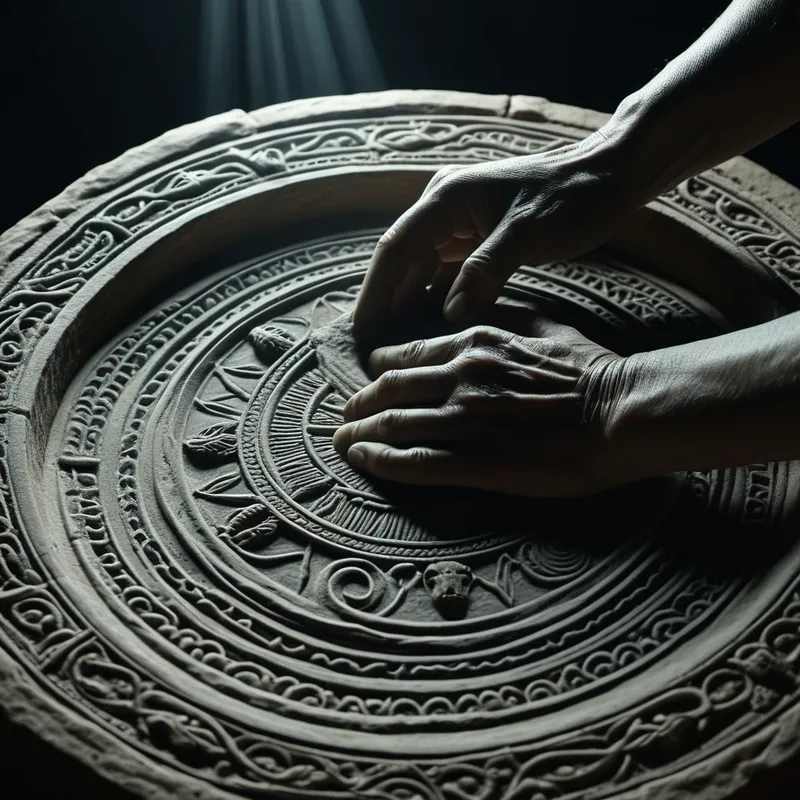
The tale of Pandora is a foundational etiology from ancient Greece, our primary source being the epic poem Works and Days by the poet Hesiod (c. 700 BCE). It is crucial to understand this is a myth told from a specific, patriarchal worldview. Hesiod uses it as a just-so story to explain the origin of evil and, pointedly, the “origin” of woman, whom he portrays as a beautiful calamity sent to punish men for Prometheus’s transgression.
The myth functioned as a societal cautionary tale. It reinforced the hierarchical order: obey the gods (Zeus), distrust curiosity (Pandora’s “gift”), and accept suffering as the divinely ordained human condition. The vessel itself, a pithos, was a common household item for storing grain, oil, or wine—a symbol of sustenance and the domestic sphere. By making it the source of all blight, the myth poignantly ties catastrophe to the heart of the home and the arrival of the feminine. It was passed down not as a playful fable, but as a serious, poetic explanation for why life is hard, embedding a deep cultural ambivalence towards knowledge, feminine power, and divine authority.
Symbolic Architecture
Psychologically, Pandora is not a [villain](/symbols/villain “Symbol: A character representing opposition, moral corruption, or suppressed aspects of self, often embodying fears, conflicts, or societal threats.”/), but the first [human](/symbols/human “Symbol: The symbol of a human represents individuality, complexity of emotions, and social relationships.”/) [actor](/symbols/actor “Symbol: An actor represents roles, transformation, and the performance of identity in dreams.”/). She represents the awakening of [consciousness](/symbols/consciousness “Symbol: Consciousness represents the state of awareness and perception, encompassing thoughts, feelings, and experiences.”/), specifically the consciousness that questions, probes, and seeks beyond prescribed boundaries.
The sealed vessel is the unconscious itself, containing all the unformed, chaotic potentials of the psyche—both destructive and generative.
The “evils” released are not merely external misfortunes but the internal contents of the [shadow](/symbols/shadow “Symbol: The ‘shadow’ embodies the unconscious, repressed aspects of the self and often represents fears or hidden emotions.”/): our latent capacities for [grief](/symbols/grief “Symbol: A profound emotional response to loss, often manifesting as deep sorrow, yearning, and a sense of emptiness.”/), rage, sickness, and [despair](/symbols/despair “Symbol: A profound emotional state of hopelessness and loss, often signaling a need for transformation or surrender to deeper truths.”/). Before the lid is opened, these exist in a potential, undifferentiated state within the collective human [soul](/symbols/soul “Symbol: The soul represents the essence of a person, encompassing their spirit, identity, and connection to the universe.”/). The act of opening is the [dawn](/symbols/dawn “Symbol: The first light of day, symbolizing new beginnings, hope, and the transition from darkness to illumination.”/) of self-[awareness](/symbols/awareness “Symbol: Conscious perception of self, surroundings, or internal states. Often signifies awakening, insight, or heightened sensitivity.”/), where these potentials become activated, experienced, and projected into the world as suffering. It is the inevitable pain of individuation—the process of becoming a conscious, separate self.
Elpis, remaining under the lid, is the most profound [symbol](/symbols/symbol “Symbol: A symbol can represent an idea, concept, or belief, serving as a powerful tool for communication and understanding.”/). Hope here is not cheerful [optimism](/symbols/optimism “Symbol: A hopeful outlook anticipating positive outcomes, often linked to emotional resilience and forward-thinking attitudes.”/). It is the [capacity](/symbols/capacity “Symbol: A measure of one’s potential, limits, or ability to contain, process, or achieve something, often reflecting self-assessment or external demands.”/) for endurance, the psychological [mechanism](/symbols/mechanism “Symbol: Represents the body’s internal systems, emotional regulation, or psychological processes working together like a machine.”/) that allows consciousness to bear the very sufferings it has unleashed. It is trapped with us, in the [vessel](/symbols/vessel “Symbol: A container or structure that holds, transports, or protects something essential, representing the self, emotions, or life journey.”/) of our embodied existence, a companion to our pain.
The Dreamer’s Resonance
When this myth stirs in the modern dreamer, it often manifests as dreams of forbidden containers: locked rooms, sealed envelopes, closed apps on a phone, or a childhood toy box in an attic. The dreamer feels a compulsive, anxious pull to open it, coupled with a dread of what will emerge.
Somatically, this can feel like pressure in the chest (the sealed vessel) or a tingling in the hands (the urge to act). Psychologically, this dream pattern signals that repressed contents of [the personal unconscious](/myths/the-personal-unconscious “Myth from Jungian Psychology culture.”/)—long-buried traumas, denied emotions, or unacknowledged talents—are demanding integration. The “evils” that fly out in the dream are the specific, personified forms of these repressed elements: a shadowy figure of grief, a buzzing swarm of anxieties, a cold mist of alienation. The dream is the [psyche](/myths/psyche “Myth from Greek culture.”/)‘s own Pandora, compelled to break the seal of repression, initiating a necessary, though painful, process of psychic honesty.
Alchemical Translation
The alchemical journey mirrored in this myth is the [Nigredo](/myths/nigredo “Myth from Alchemical culture.”/), the blackening. It is the necessary descent into the dark, chaotic contents of [the prima materia](/myths/the-prima-materia “Myth from Alchemical culture.”/)—the unrefined soul.
The triumph is not in preventing the opening, but in surviving it and discovering what remains sealed within the aftermath.
For the modern individual, the “Pandora moment” is any life event or inner realization that shatters our naive innocence: a profound loss, a personal failure, the confrontation with our own capacity for harm, or simply the crushing weight of existential awareness. This is the opening of the jar. The subsequent release of “evils” is the painful, often chaotic period of depression, grief, or identity crisis where these shadow elements roam freely in our lives.
The alchemical work begins after the lid is slammed shut. It is the slow, deliberate process of tending to Elpis, the hope that did not fly away. This is not about retrieving a lost innocence, but about forging a new, conscious relationship with what sustains us in the dark. It means looking into the very vessel that caused the catastrophe—our own psyche—and finding, amidst the emptiness, that single, fluttering source of endurance. We learn that Hope is not the absence of suffering, but [the thing](/myths/the-thing “Myth from Norse culture.”/) that makes suffering meaningful and endurable. We re-seal the vessel not to ignore the evils now loose in our world, but to protect the fragile, essential light that allows us to live with them. In doing so, we complete the arc from orphaned, suffering humanity to a vessel that contains its own paradoxical salvation.
Associated Symbols
Explore related symbols from the CaleaDream lexicon: