Panacea Myth Meaning & Symbolism
The myth of Panacea, daughter of Asclepius, embodies the universal remedy and the profound human longing for a single, perfect solution to all suffering.
The Tale of Panacea
Listen, and hear a story not of thunderous battles or epic voyages, but of a quieter, more desperate hope. It begins in the scent of crushed herbs and the cool touch of marble, in the hushed halls where the breath comes shallow and pain is a constant companion.
In the realm of mortals, suffering was the common tongue. Fevers burned, wounds festered, and the great mystery of the body was a dark forest where disease roamed like a beast. The people cried out, and their lament rose like smoke to Olympos. It was heard by Asclepius, the son of Apollo, whose hands had learned their craft from the wise centaur Chiron. Asclepius descended, not with a warrior’s shout, but with a healer’s calm. Where he walked, the air sweetened. With his staff, entwined by the sacred serpent, he could soothe agony and coax life back from the very brink.
Yet, for all his power, he was one god, and the world was vast with ache. His compassion was so great that it blossomed into family. From his union with Epione, the soother of pain, were born children who embodied the very facets of his art. There was Iaso, who presided over the slow, gentle return to strength. There was Hygieia, who taught that wellness is built daily through purity and care. Aceso governed the mending of flesh, and Aglaea the brilliance of a cure discovered.
But one daughter held a name that was a sigh, a prayer whispered in the darkest hour of the night: Panacea. Her name meant “All-Healing.” She was not merely a treatress of symptoms but the living embodiment of the ultimate fantasy: a single, universal remedy. It was said that while her sisters addressed the specific—the broken bone, the raging fever, the unclean wound—Panacea held the essence of wholeness itself. Her domain was the perfect cure, the one salve, the one potion that could resolve any and every ill. She was the answer to the question every sufferer eventually asks: “Is there not one thing that can make this stop?”
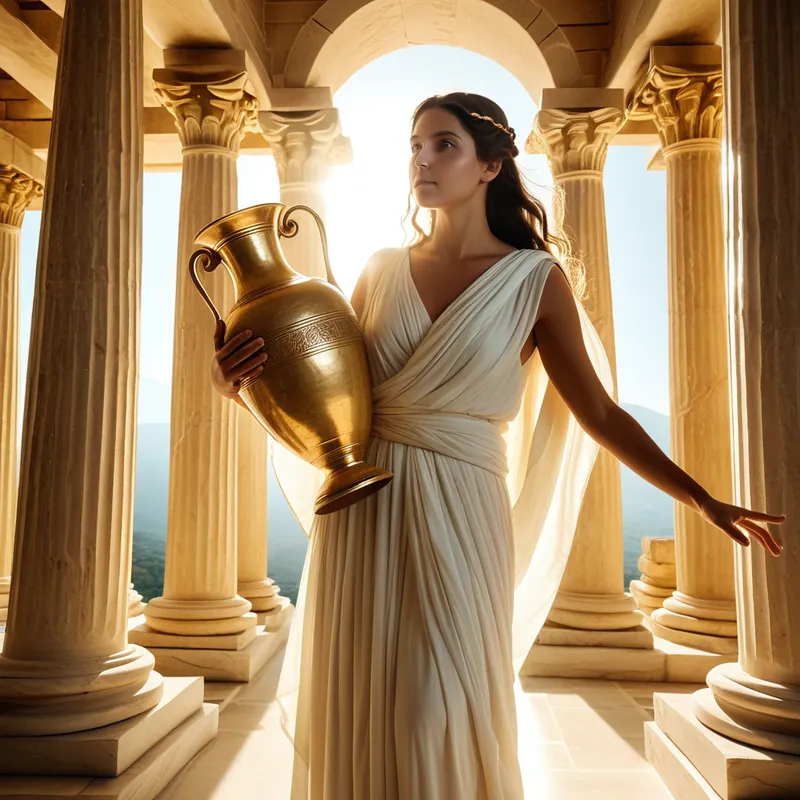
She moved through her father’s sacred Asclepieia, a gentle presence often felt rather than seen. Pilgrims would sleep in the abaton, hoping for a healing dream. Sometimes, in that liminal state, they would glimpse a woman with a gentle smile, bearing an amphora that glowed with a soft, inner light. The liquid within was not described, for it was beyond description—it was the idea of remedy made manifest. To dream of Panacea was to touch the hope that somewhere, beyond the reach of mortal hands, existed a solution so complete it rendered all others obsolete. Her story has no thunderous climax, no dragon to slay. Its tension lies in the silent space between the desperate need and the elusive, perfect answer. She is the myth of the cure that is always just beyond the horizon, forever defining our search by her very absence.
Cultural Origins & Context
The figure of Panacea emerges from the rich, practical, and deeply spiritual healing traditions of ancient Greece. She was not the subject of grand, standalone epics like the Iliad, but a vital component of a familial and cultic constellation centered on Asclepius. Her myth was lived and enacted, not merely recited. It was propagated within the Asclepieia, most famously at Epidaurus, Cos, and Pergamon, which functioned as the world’s first holistic medical centers.
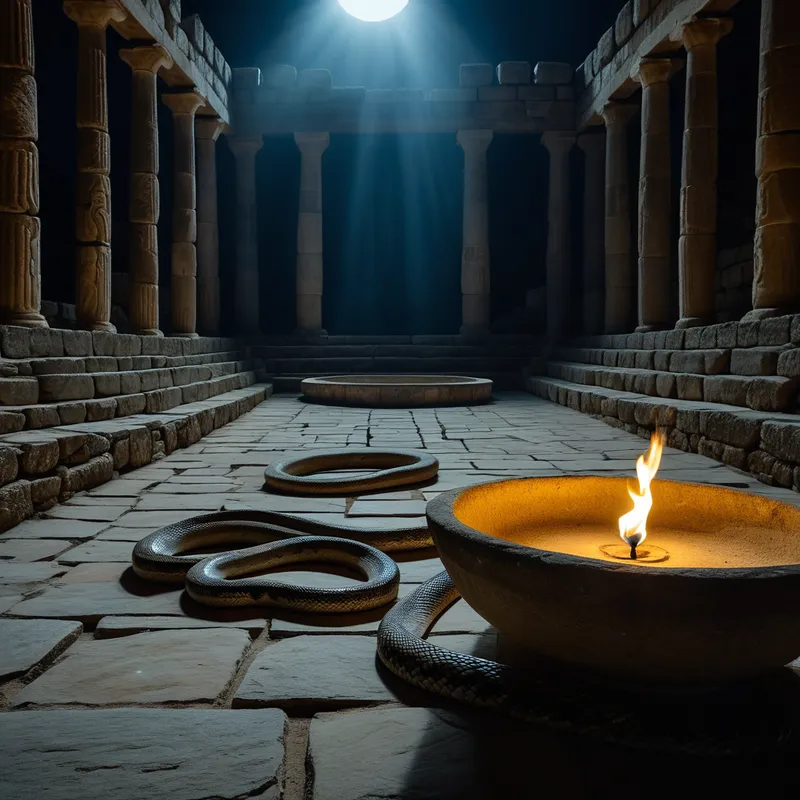
Here, healing was a sacred contract between the divine and the mortal. The rituals involved purification, sacrifice, and most importantly, incubation: the practice of sleeping within the temple precinct to receive a diagnostic or therapeutic dream from the god or his family. Priests (therapeutai) would interpret these dreams, which often featured the apparition of Asclepius, his serpent, or one of his daughters applying a treatment. Panacea’s presence in this context was profoundly symbolic. She represented the ideal outcome of the ritual—the total, divine cure that transcended the herbal poultices and surgical procedures (also practiced at the sites) administered by her siblings.
Her societal function was twofold. Firstly, she personified the ultimate goal of the medical art, inspiring both physicians and patients towards the ideal of complete restoration. Secondly, and perhaps more poignantly, she served as a theological comfort. For those with chronic, mysterious, or terminal ailments—cases where Asclepius’s earthly priests might fail—the belief in Panacea upheld the possibility that a higher, perfect form of healing existed in the divine order. She was the promise that kept faith alive when science, as it was then understood, reached its limit.
Symbolic Architecture
Panacea is not a goddess of action, but of potential. She is the archetypal symbol of the Universal Solution, the psychic representation of our deepest yearning to find a single key that unlocks every door of suffering.
She is the embodiment of the fantasy of simplicity in the face of life’s terrifying complexity.
Psychologically, Panacea represents the magical cure complex. In the individual psyche, this manifests as the search for the one perfect insight, the one transformative relationship, the one therapy, or the one spiritual practice that will finally “fix” everything and bring about permanent wholeness. She symbolizes the allure of the answer over the messy, nonlinear process. Her siblings—Hygieia (preventative care), Iaso (convalescence)—represent the necessary, daily work of healing. Panacea, by contrast, represents the tantalizing dream of bypassing that work entirely.
Her elusive nature is her core symbolism. The fact that she is never truly captured, never fully delivers her amphora’s contents in a definitive myth, is critical. She exists to motivate the search, not to end it. She is the horizon that recedes as we walk toward it. In this, she mirrors the soul’s journey toward individuation, which is never about finding a single, static state of perfection, but about engaging in the perpetual process of becoming whole. Panacea, therefore, is the symbol of the goal that, by remaining just out of reach, forces us to engage with the reality of the journey and the multifaceted nature of true healing.

The Dreamer’s Resonance
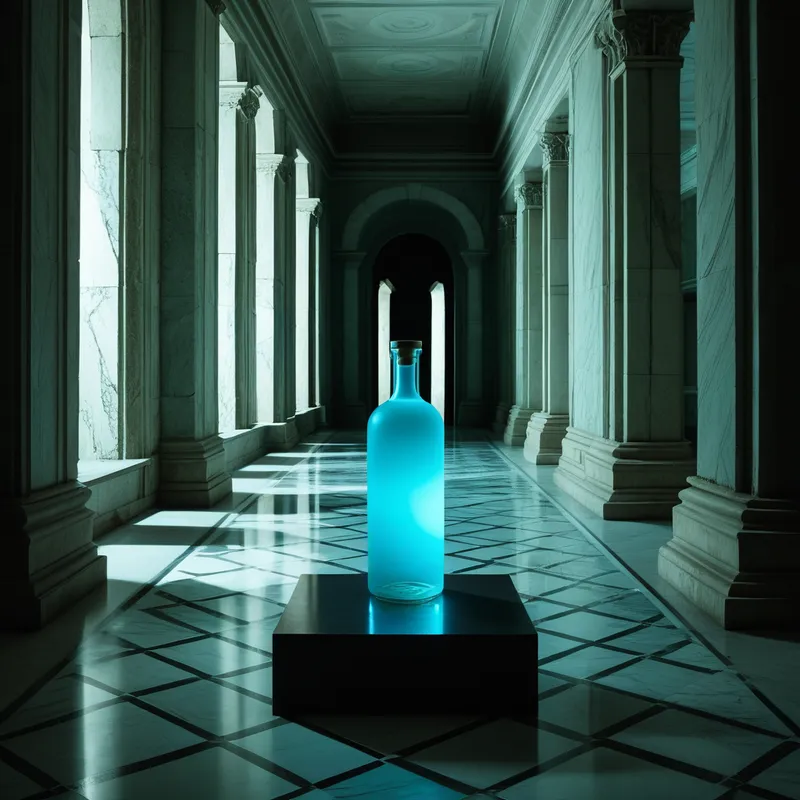
When the archetype of Panacea stirs in the modern unconscious, it often surfaces in dreams of seeking a singular, elusive object of healing. A dreamer might find themselves in a vast, labyrinthine pharmacy searching for the one correct bottle, only to have the label blur when they reach for it. They may be offered a glowing elixir by a serene figure, but the glass slips from their hands, or the liquid turns to sand in their mouth. These are not dreams of healing achieved, but of healing potential that remains frustratingly unrealized.
Somatically, these dreams may coincide with periods of illness, burnout, or a profound sense of psychic fragmentation—a feeling that something is fundamentally “broken” inside. The psyche is signaling a desperate desire for integration, but it is couching that desire in the fantasy of a quick, total fix. The dream of Panacea highlights the dreamer’s impatience with the slow, often painful work of psychological mending. It can also point to a reliance on external “cures”—a savior complex in relationships, a blind faith in a new ideology, or an addictive pursuit of a single modality to the exclusion of all others.
The emotional tone is key: it is a mix of profound hope and acute frustration. This resonance indicates that the dreamer is confronting the gap between their idealized fantasy of wholeness (Panacea) and the complex, multi-system reality of their actual wounds, which require the attention of many “siblings”—different parts of the self, different approaches, and time.
Alchemical Translation
The myth of Panacea provides a crucial map for the alchemical work of psychic transmutation, specifically by warning against the illusion of the single operation. In psychological alchemy, the goal is the creation of the Lapis Philosophorum or Philosopher’s Stone—the ultimate symbol of wholeness and perfection. The novice might believe this is achieved through one magnificent, secret formula. Panacea is that seductive formula. But the true alchemical process, like true individuation, is the Opus Circulatorium, a cyclical labor involving multiple, often opposing, stages: nigredo (descent into darkness), albedo (purification), citrinitas (illumination), and finally rubedo (integration and completion).
To seek Panacea alone is to attempt to jump directly to rubedo without enduring the necessary dissolution of nigredo. It is the ego’s attempt to avoid the shadow.
The alchemical translation of this myth instructs us that the “universal remedy” is not a substance we find, but a capacity we develop through the full, cyclical process. Panacea’s amphora does not contain a finished potion; it contains the potential for all potions, which can only be activated by engaging with the specific healing arts of her siblings. Psychologically, this means our wholeness is not found in one brilliant insight, but in the laborious integration of all our parts—the wounded orphan, the critical parent, the playful child, the wise elder.
Thus, Panacea’s ultimate gift is paradoxical. By forever withholding her perfect cure, she forces the seeker to turn back to the messy, specific, and ongoing work represented by Hygieia, Iaso, and the others. The true “panacea” is revealed to be the resilient, adaptable, and fully engaged Self that emerges from committing to the process itself, not from grasping at its illusory end product. She is the divine reminder that healing is a verb, not a noun.
Associated Symbols
Explore related symbols from the CaleaDream lexicon: