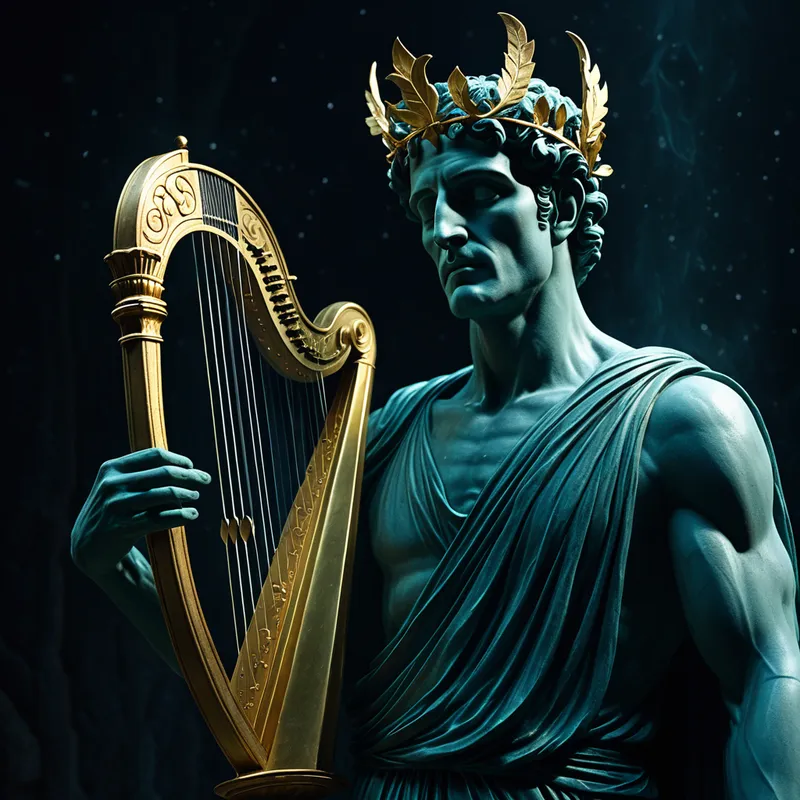
Orpheus' Lyre Myth Meaning & Symbolism
A poet's music charms gods and stones to retrieve his love from death, but a single doubt shatters the miracle, leaving only his song.
The Tale of Orpheus’ Lyre
Hear now the song of the one who made the stones weep and the rivers stand still. His name was [Orpheus](/myths/orpheus “Myth from Global/Universal culture.”/), and the music that fell from his fingers was not his own, but a gift stolen from the dawn of [the world](/myths/the-world “Myth from Tarot culture.”/). His mother, a Muse, gave him voice; his father, a mortal king, gave him a heart that could break. And break it did, for he loved Eurydice, a spirit of the woods, with a love that was a quiet, perfect chord.
But the world is tuned to discord. On their wedding day, fleeing a lustful pursuer, Eurydice trod upon a nest of vipers in the tall grass. The bite was a cold, silent note. She was gone, her life not ended, but translated—down, down the dark path to the realm of [Hades](/myths/hades “Myth from Greek culture.”/), where shades drink from [the river](/myths/the-river “Myth from Buddhist culture.”/) of forgetfulness.
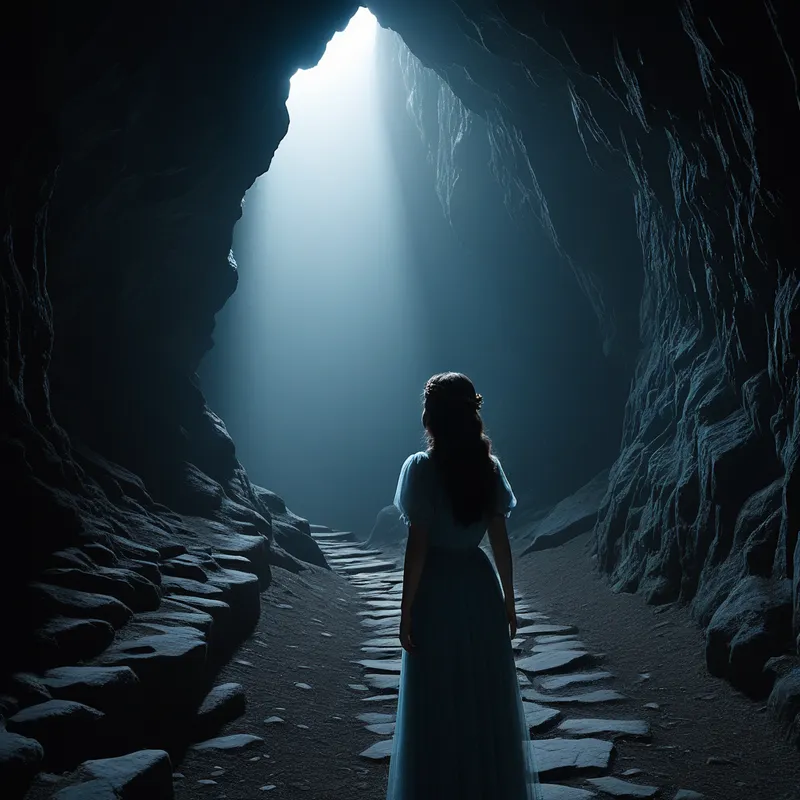
Orpheus’s grief was a silence more terrible than any sound. His lyre lay dormant. Then, from that profound silence, a resolve was born, fiercer than any hero’s quest for glory. He would not storm the gates of death with a sword. He would walk there, alone, with only his lyre and his lament. Down through the Taenarum he descended, where sunlight fears to tread. He passed the ghostly ferryman, not with a coin, but with a melody so full of longing that the oars themselves stilled. He walked through the fields of asphodel, where the gray shades milled in silent despair.
And then he played.
He stood before the obsidian thrones of Hades and his queen, [Persephone](/myths/persephone “Myth from Greek culture.”/). He did not plead. He sang. He sang of love, not as a fire, but as the very gravity that holds the world together. He sang of Eurydice’s footsteps in the grass, of the emptiness of a sunlit world without her shadow. He sang until the very stones of that sunless realm grew damp with a moisture that was not [water](/myths/water “Myth from Chinese culture.”/). He sang until the stern judges of the dead wept tears of iron. He sang until the wheel of [Ixion](/myths/ixion “Myth from Greek culture.”/) ceased its groaning turn.
The Lord of the Dead, whose heart was believed to be granite, was moved. A pact was offered, a miracle born from a song: Orpheus could lead Eurydice back to the world of light. But on the long ascent, he must not turn to look upon her. He must walk ahead, trusting she followed, until both stood fully in the sun.
Hope, that most treacherous of gifts, filled him. He turned and began the climb, the silence behind him a terrifying void. Was she there? Was it a cruel trick? With every step, doubt, the serpent of the mind, coiled tighter. The light of the upper world began to filter down—a faint, gray hint of dawn. In an agony of love and fear, at the very threshold of life, he turned. For a single, shattering moment, he saw her—his Eurydice, her eyes filled with a love as vast as [the abyss](/myths/the-abyss “Myth from Kabbalistic culture.”/), and then with a soft sigh that was his name, she was pulled back, dissolving like mist in the newfound light.
He was alone. The lyre remained, but the song that could move death itself could not now move the living. He had won her back from eternity, only to lose her to a moment’s human frailty.
Cultural Origins & Context
The myth of Orpheus is one of the most layered and enduring in the Greek tradition. Unlike the tales of Olympian feuds or heroic labors, it is fundamentally a poet’s myth, emerging from the ecstatic, mystical religious movements of the 6th and 7th centuries BCE, particularly Orphism. Orphic initiates sought liberation of the divine soul trapped within the mortal body, and Orpheus was their prophet. His descent was not just a love story, but a map of the soul’s journey.
The story was perpetuated by poets—from the fragmented epic The Orphic Argonautica to its most famous treatments in Virgil’s Georgics and Ovid’s [Metamorphoses](/myths/metamorphoses “Myth from Greek culture.”/). It was performed, not just read. One can imagine it sung by a rhapsode, the collective breath of the audience held at the moment of the fatal glance. Its function was multifaceted: it was a meditation on the transcendent, ordering power of art (mousikē); a cautionary tale about the limits of human endurance and the conditions of the divine; and a foundational narrative for mystery cults that promised initiates a better fate in the afterlife than the gloomy Hades of common belief.
Symbolic Architecture
At its core, the myth is an anatomy of [consciousness](/symbols/consciousness “Symbol: Consciousness represents the state of awareness and perception, encompassing thoughts, feelings, and experiences.”/) torn between two worlds. Orpheus represents the creative, ordering principle of the [psyche](/myths/psyche “Myth from Greek culture.”/)—the [logos](/myths/logos “Myth from Christian culture.”/). His [lyre](/symbols/lyre “Symbol: The lyre symbolizes harmony, creativity, and the connection between the divine and human experiences.”/) is the [instrument](/symbols/instrument “Symbol: An instrument symbolizes creativity, communication, and the means by which one expresses oneself or influences the world.”/) that harmonizes [chaos](/symbols/chaos “Symbol: In Arts & Music, chaos represents raw creative potential, uncontrolled expression, and the breakdown of order to forge new artistic forms.”/), whether in [nature](/symbols/nature “Symbol: Nature symbolizes growth, connectivity, and the primal forces of existence.”/), in the [underworld](/symbols/underworld “Symbol: A symbolic journey into the unconscious, representing exploration of hidden aspects of self, transformation, or confronting repressed material.”/) of the unconscious, or in society.
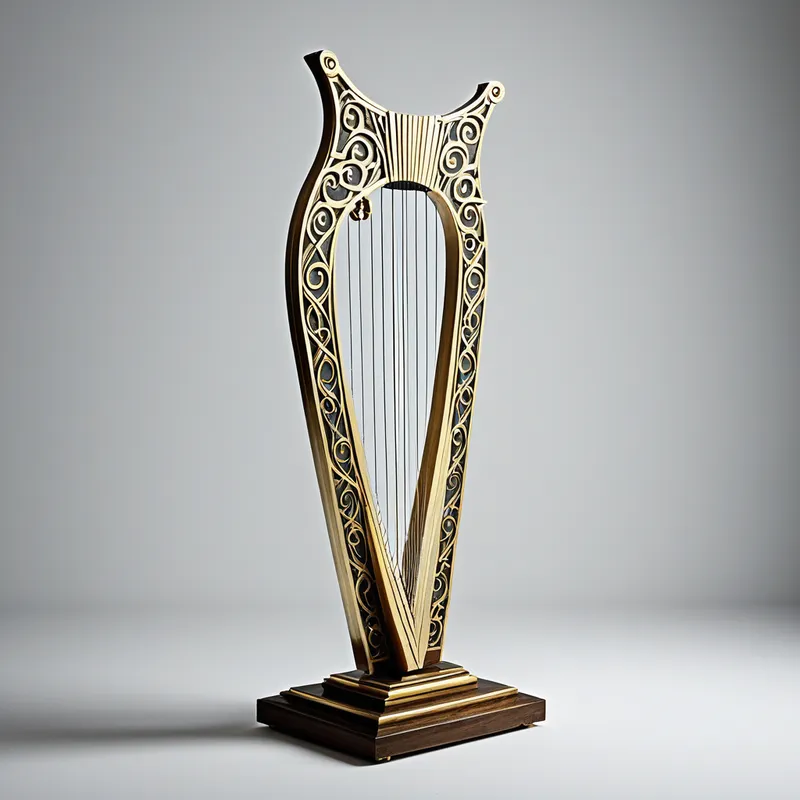
The lyre is the soul itself, its frame the structure of the body, its strings the tensile forces of emotion and spirit. To play it is to integrate.
Eurydice symbolizes the [anima](/symbols/anima “Symbol: The feminine archetype within the male unconscious, representing soul, creativity, and connection to the inner world.”/), the [soul](/symbols/soul “Symbol: The soul represents the essence of a person, encompassing their spirit, identity, and connection to the universe.”/)-[image](/symbols/image “Symbol: An image represents perception, memories, and the visual narratives we create in our minds.”/), and the lost, essential [connection](/symbols/connection “Symbol: Connection symbolizes relationships, communication, and bonds among individuals.”/) to the instinctual and natural world. Her [death](/symbols/death “Symbol: Symbolizes transformation, endings, and new beginnings; often associated with fear of the unknown.”/) is not an end, but a descent into the unconscious. [The Underworld](/myths/the-underworld “Myth from Greek culture.”/) is not merely a place of the dead, but the vast, autonomous [realm](/symbols/realm “Symbol: The symbol of ‘Realm’ often signifies the boundaries of one’s consciousness, experiences, or emotional states, suggesting aspects of reality that are either explored or ignored.”/) of the psyche where forgotten memories, complexes, and primal patterns reside.
The central commandment—do not look back—encapsulates the most delicate psychic [operation](/symbols/operation “Symbol: An operation signifies a process of change or transformation that often requires deliberate effort and planning.”/): the [integration](/symbols/integration “Symbol: The process of unifying disparate parts of the self or experience into a cohesive whole, often representing psychological wholeness or resolution of internal conflict.”/) of unconscious content into consciousness. It cannot be achieved by [the ego](/myths/the-ego “Myth from Jungian culture.”/)’s direct, scrutinizing gaze (“looking back”), which seeks to possess and control. It must be led forth by [faith](/symbols/faith “Symbol: A profound trust or belief in something beyond empirical proof, often tied to spiritual conviction or deep-seated confidence in people, ideas, or outcomes.”/), by the pull of the creative drive, and allowed to emerge in its own time. The [glance](/symbols/glance “Symbol: A brief, often unspoken visual connection between people, suggesting fleeting attention, hidden interest, or social assessment.”/) is [the ego](/myths/the-ego “Myth from Jungian culture.”/) reasserting its doubt, its need for proof, and in that [moment](/symbols/moment “Symbol: The symbol of a ‘moment’ embodies the significance of transient experiences that encapsulate emotional depth or pivotal transformations in life.”/) of reflexive control, the nascent connection to the deeper self is shattered.
The Dreamer’s Resonance
When this myth patterns a modern dream, the dreamer is navigating a profound process of retrieval and loss within their own psyche. To dream of walking a dark path, leading someone or something unseen, speaks to an attempt to recover a lost part of [the self](/myths/the-self “Myth from Jungian culture.”/)—a forgotten passion, a stifled creativity, a buried trauma, or a sense of soul (the Eurydice element).
The somatic feeling is often one of acute tension in the shoulders and neck—the bodily seat of bearing a burden and the literal mechanism of wanting to turn one’s head. The dream may be saturated with anxiety, a palpable fear that the fragile thread of progress will snap. The moment of “looking back” in the dream might manifest not as a visual turn, but as a sudden intrusion of analytical thought (“Is this working?” “Am I doing this right?”), a phone ringing (the call of the mundane world), or the path simply ending in a blank wall. The dreamer awakens with a sense of heartbreaking near-success, a poignant grief for something they feel they almost had, which is the signature of the Orphic wound.

Alchemical Translation
The myth models the alchemical opus of individuation in its most tragic, and therefore most human, form. The descent (nekyia) is non-negotiable. One must willingly enter the darkness of one’s own [underworld](/myths/underworld “Myth from Greek culture.”/)—the repressed memories, the shame, the grief—with only one tool: one’s authentic voice, one’s “song” (which could be therapy, art, meditation, or any sincere mode of self-expression).
The triumph is not in the final retrieval, but in the movement of the soul itself. The music that pacifies Cerberus is the same that later fails to bring Eurydice fully to life; the art that transforms the world cannot always save the artist. This is the paradox of the work.
The failed return is not a failure of the journey. It is the critical second stage of the alchemical process: [nigredo](/myths/nigredo “Myth from Alchemical culture.”/). The shattering of hope against the stone of human limitation. Orpheus emerges alone, but he is irrevocably changed. He has seen the architecture of death and moved it with his sorrow. This experience transmutes the base metal of personal grief into the universal gold of poetic truth. His subsequent songs, born from this compounded loss, are of a different, deeper order. His final fate—dismemberment by the [Maenads](/myths/maenads “Myth from Greek culture.”/)—is a brutal symbol of the creative principle scattered into the world, his head still singing as it floats down the river. The individual ego is sacrificed, but the voice, [the logos](/myths/the-logos “Myth from Biblical culture.”/), the harmonic principle, endures and propagates.
For the modern individual, the myth advises: Go into your darkness. Sing your song there. You may not retrieve your Eurydice whole. You may lose her again at the very threshold. But you will return with a music that can, henceforth, make the very stones of your life resonate with a meaning that was not there before. The lyre remains, and it is yours to play, not to win, but to attune.
Associated Symbols
Explore related symbols from the CaleaDream lexicon: