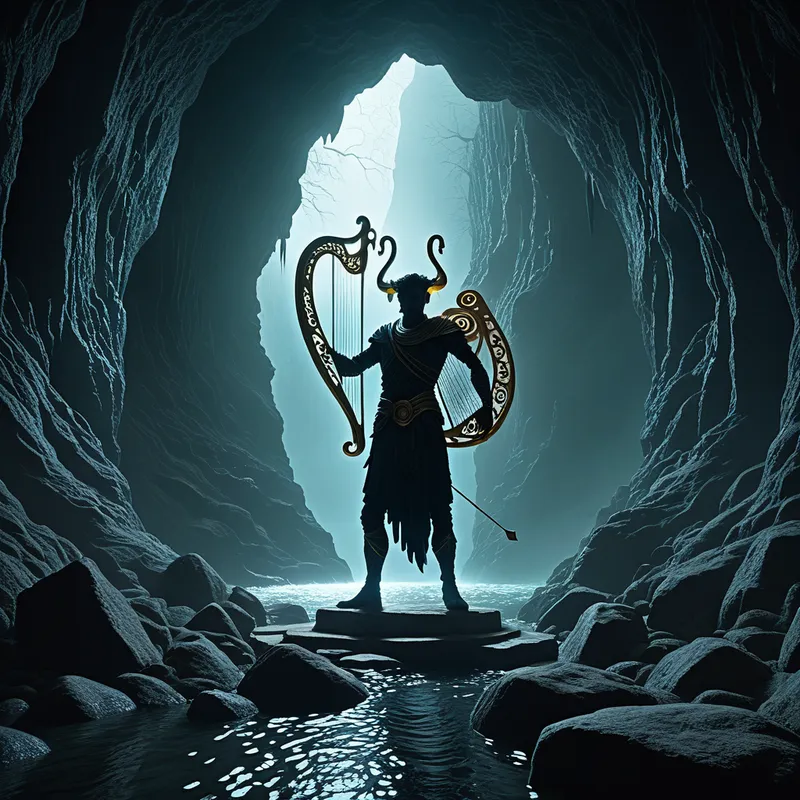
Orpheus in the Underworld Myth Meaning & Symbolism
A poet descends to the land of the dead to reclaim his lost love, armed only with music, but fails at the final moment by looking back.
The Tale of Orpheus in the Underworld
Hear now the song of the poet who walked where the living dare not tread. His name was [Orpheus](/myths/orpheus “Myth from Global/Universal culture.”/), whose music could charm the stones to weep and the oaks to dance. His heart belonged to Eurydice, a spirit of the woods whose laughter was like sunlight on [water](/myths/water “Myth from Chinese culture.”/). But fate is a serpent in the grass. On their wedding day, fleeing an ardent pursuer, Eurydice trod upon a viper. Its bite was cold, its poison swift. Her light was extinguished, and her shade was drawn down the long, dark road to the realm of [Hades](/myths/hades “Myth from Greek culture.”/).
A silence fell upon [the world](/myths/the-world “Myth from Tarot culture.”/), a silence born of Orpheus’s grief. No lyre was plucked, no song was sung. His sorrow was a chasm, and at its bottom burned a single, mad ember of hope. He would go to the land of the dead and bring her back. Armed with nothing but his tortoiseshell lyre and the love that was both his strength and his fatal flaw, he found a fissure in the world, a cave that breathed the cold air of eternity. He descended.
The path was a throat of shadow. He passed the Charon, a silent wraith in his leaky boat, and lulled him with a melody of such profound loneliness that the oar slipped from his grip. He stood before Cerberus, the beast whose bark freezes blood. Orpheus played a lullaby of forgotten dreams, and the monstrous heads drooped, whining softly, as the poet stepped between them.
Into the vast, echoing hall of Pluto he walked, where the air was thick with the sighs of ghosts. Upon obsidian thrones sat the dread king and his queen, [Persephone](/myths/persephone “Myth from Greek culture.”/), her face pale as a winter moon. The skeletal court watched. Orpheus did not plead. He sang. He sang of Eurydice’s hands, of the emptiness of the sun without her, of a love that defied the very order of the cosmos. He sang until the dust remembered it was flesh, until the Erinyes themselves wept black tears, until the heart of stone that beat in Pluto’s chest cracked.
A stillness deeper than silence followed the last note. Persephone placed her hand on her husband’s arm. Moved by a grace not known in that lightless place, Hades spoke. Eurydice would be returned. But on one condition: as Orpheus led her back to the world of light, he must not turn to look upon her until they both stood fully under the sun. If he glanced back, she would be lost to him forever.
Hope, a treacherous and fragile [thing](/myths/thing “Myth from Norse culture.”/), bloomed in Orpheus’s chest. He turned and began the ascent, hearing only the faintest whisper of a step behind him. Was it her? Was it a trick of the echoing cavern? The climb was agony, each step a lifetime. Doubt, that serpent of the mind, coiled tight around his heart. As the first grey hint of mortal light filtered down, as he felt the warmth on his face, the terror that she was not there became unbearable. He had to know. At the very threshold, he turned.
And there she was. His Eurydice, beautiful and whole, her eyes meeting his with a love as deep as [the abyss](/myths/the-abyss “Myth from Kabbalistic culture.”/) he had traversed. But in that glance, the pact was broken. A soft cry escaped her lips, not of anger, but of infinite sorrow. “Farewell,” she whispered, and like smoke caught in a sudden wind, she was drawn back into the darkness, her form dissolving before his outstretched hand. This time, there was no song that could call her back. The gates of hell are opened by art, but sealed shut by human doubt.
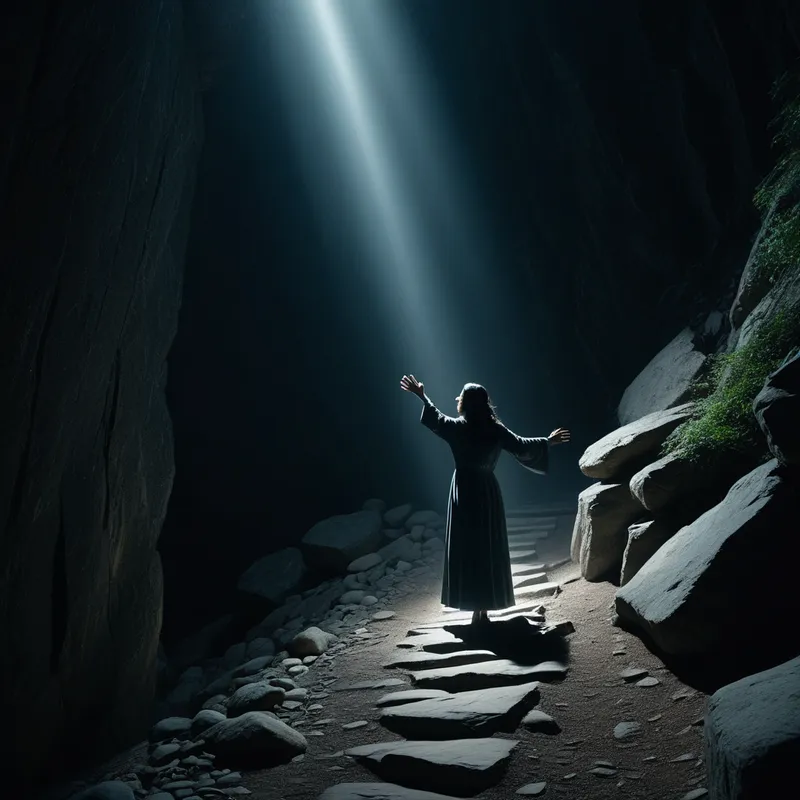
Cultural Origins & Context
The myth of Orpheus is one of the most enduring and complex in the Greek tradition, with roots likely stretching back into pre-Homeric Thracian bardic cultures. Our primary sources are fragmentary but powerful, found in the works of poets like Hesiod and, most famously, in the Roman poet Ovid’s [Metamorphoses](/myths/metamorphoses “Myth from Greek culture.”/) and the late antique Orphic Argonautica. It was never a single, canonical text, but a fluid narrative performed by rhapsodes and later elaborated upon by playwrights and philosophers.
The myth functioned on multiple societal levels. On one hand, it was a foundational etiological tale for the Orphic Mysteries, a secretive religious movement that promised initiates a better fate in the afterlife through purity and knowledge. Orpheus, as the poet who had seen the beyond and returned, was their prophet. On a more universal level, it was a master narrative about the power and limits of art, the existential confrontation with mortality, and the human [psyche](/myths/psyche “Myth from Greek culture.”/)’s negotiation with absolute loss. It was a story told to explore the darkest questions: Can love conquer death? What is the price of doubt? What remains when hope is annihilated?
Symbolic Architecture
The myth is a perfect, tragic map of the [soul](/symbols/soul “Symbol: The soul represents the essence of a person, encompassing their spirit, identity, and connection to the universe.”/)‘s [journey](/symbols/journey “Symbol: A journey in dreams typically signifies adventure, growth, or a significant life transition.”/) into its own [depths](/symbols/depths “Symbol: Represents the subconscious, hidden emotions, or foundational aspects of the self, often linked to primal fears or profound truths.”/). Orpheus represents the conscious ego, the artistic and ordering principle, venturing into the [shadow](/symbols/shadow “Symbol: The ‘shadow’ embodies the unconscious, repressed aspects of the self and often represents fears or hidden emotions.”/) [realm](/symbols/realm “Symbol: The symbol of ‘Realm’ often signifies the boundaries of one’s consciousness, experiences, or emotional states, suggesting aspects of reality that are either explored or ignored.”/) of the unconscious (the [Underworld](/symbols/underworld “Symbol: A symbolic journey into the unconscious, representing exploration of hidden aspects of self, transformation, or confronting repressed material.”/)) to retrieve a lost value, an [anima](/symbols/anima “Symbol: The feminine archetype within the male unconscious, representing soul, creativity, and connection to the inner world.”/) figure (Eurydice) who has been swallowed by a spontaneous, unconscious [event](/symbols/event “Symbol: An event within dreams often signifies significant life changes, transitions, or emotional milestones.”/) (the [serpent](/symbols/serpent “Symbol: A powerful symbol of transformation, wisdom, and primal energy, often representing hidden knowledge, healing, or temptation.”/) bite).
The descent is always an act of supreme courage, for it requires facing the unformed, the forgotten, and the feared without the armor of rationality.
His [weapon](/symbols/weapon “Symbol: A weapon in dreams often symbolizes power, aggression, and the need for protection or defense.”/) is not a sword but [music](/symbols/music “Symbol: Music in dreams often symbolizes the harmony between the conscious and unconscious mind, illustrating emotional expression and communication.”/)—the [language](/symbols/language “Symbol: Language symbolizes communication, understanding, and the complexities of expressing thoughts and emotions.”/) of the soul itself, which can temporarily harmonize the chaotic contents of the unconscious (soothing [Cerberus](/symbols/cerberus “Symbol: The three-headed hound guarding the underworld’s entrance, symbolizing boundaries, protection, and the unconscious mind’s threshold.”/), moving [the Erinyes](/myths/the-erinyes “Myth from Greek culture.”/)). The [condition](/symbols/condition “Symbol: Condition reflects the state of being, often focusing on physical, emotional, or situational aspects of life.”/) set by [Hades](/symbols/hades “Symbol: Greek god of the underworld, representing death, the unconscious, and hidden aspects of existence.”/)—“do not look back”—is the central, impossible commandment of inner work. It symbolizes the necessity of [faith](/symbols/faith “Symbol: A profound trust or belief in something beyond empirical proof, often tied to spiritual conviction or deep-seated confidence in people, ideas, or outcomes.”/) in the process of [integration](/symbols/integration “Symbol: The process of unifying disparate parts of the self or experience into a cohesive whole, often representing psychological wholeness or resolution of internal conflict.”/). One cannot forcibly inspect the emerging, fragile [connection](/symbols/connection “Symbol: Connection symbolizes relationships, communication, and bonds among individuals.”/) to the unconscious as it is being restored; to analyze it with the doubting, scrutinizing eye of the conscious ego is to kill it. Eurydice’s second [death](/symbols/death “Symbol: Symbolizes transformation, endings, and new beginnings; often associated with fear of the unknown.”/) is not a [punishment](/symbols/punishment “Symbol: A dream symbol representing consequences for actions, often tied to guilt, societal rules, or internal moral conflicts.”/) from the gods, but the inevitable [dissolution](/symbols/dissolution “Symbol: The process of breaking down, dispersing, or losing form, often representing transformation, release, or the end of a state of being.”/) of a psychic content when it is seized upon by [consciousness](/symbols/consciousness “Symbol: Consciousness represents the state of awareness and perception, encompassing thoughts, feelings, and experiences.”/) too soon, before it has fully crossed [the threshold](/myths/the-threshold “Myth from Folklore culture.”/) into being.
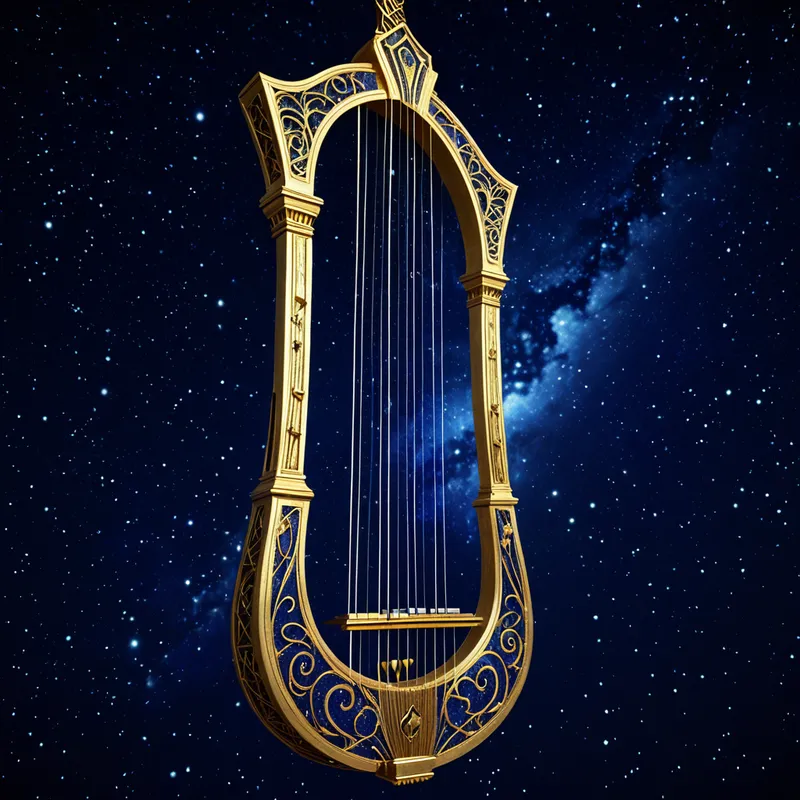
The Dreamer’s Resonance
When this myth stirs in the modern dreamer, it often manifests as a profound somatic experience of almost. You may dream of climbing a staircase towards a light, sensing a beloved presence behind you, only to wake with a gasp just before the top. You may dream of finding a precious, lost object, only to have it crumble to dust as you pick it up. The setting is frequently liminal: airport terminals where flights are perpetually cancelled, hallways that lead back to where they started, doors that will not open despite having the key.
Psychologically, this is the dream-ego processing a nascent insight, a healing, or a reclaimed part of [the self](/myths/the-self “Myth from Jungian culture.”/) that is not yet ready to be fully realized. The “look back” in the dream is [the ego](/myths/the-ego “Myth from Jungian culture.”/)’s anxiety, its need for proof and control, its inability to trust the autonomous healing processes of the psyche. The resulting loss upon waking is not just sadness, but a deep, intuitive understanding that one’s own doubt was the active agent of failure. The myth plays out in the therapy room when a client has a breakthrough but then immediately undermines it with rationalization, or in the creative process when an artist kills an embryonic idea by judging it before it has fully formed.

Alchemical Translation
The journey of Orpheus is the alchemical [Nigredo](/myths/nigredo “Myth from Alchemical culture.”/), the blackening, the descent into the primal matter of the soul to retrieve the Anima as the Lapis. It is a model for individuation, but a tragic and necessary one. The [triumph](/myths/triumph “Myth from Roman culture.”/) is not in the retrieval of Eurydice, but in the transformation of Orpheus himself through the attempt.
The work is not in the winning, but in the willing. The poet who has heard the silence of hell and sung against it is forever changed, even in his failure.
His subsequent wandering and eventual dismemberation by [the Maenads](/myths/the-maenads “Myth from Greek culture.”/) (a later part of his myth) speak to the final stage: the conscious ego, scarred by its journey, must ultimately be dissolved and sacrificed to a power greater than itself. For the modern individual, the “alchemical translation” is this: we must have the courage to descend into our grief, our trauma, our unconscious shadows, armed with our unique art (whether that be writing, painting, relationship, or introspection). We will be given a condition—to have faith in the process without demanding premature certainty. We will likely fail this condition, because the human heart looks back. Yet, in that very failure, we gain something irrevocable: self-knowledge. We learn the shape of our own doubt, and in that learning, the next descent may be undertaken with a quieter, more trusting step. The goal shifts from possessing the lost beloved to becoming the person capable of the journey. The music that failed to bring Eurydice back forever alters the one who played it.
Associated Symbols
Explore related symbols from the CaleaDream lexicon: