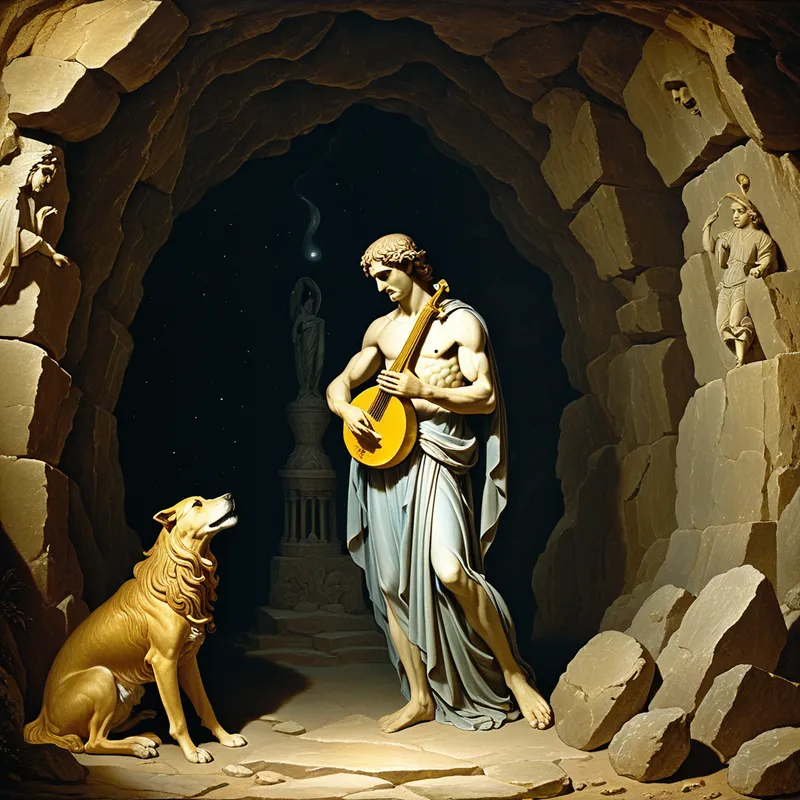
Orpheus and his lyre from Gree Myth Meaning & Symbolism
A poet whose music charmed all creation descends into death to retrieve his love, but is undone by a single, human glance back.
The Tale of Orpheus and his lyre from Gree
Hear now the song of the one who made [the world](/myths/the-world “Myth from Tarot culture.”/) listen. Before his birth, the Muse Calliope whispered poetry to the winds, and the god Apollo himself placed a lyre in the cradle of destiny. Thus was [Orpheus](/myths/orpheus “Myth from Global/Universal culture.”/) born, not with a cry, but with a chord that hushed the room. His fingers on the lyre did not merely play notes; they unwove the fabric of stubborn reality and re-knit it into a tapestry of pure feeling. Rivers ceased their flow to hear him. Oak trees, ancient and gnarled, tore their roots from [the earth](/myths/the-earth “Myth from Hindu culture.”/) to shuffle closer. Savage beasts lay down their fangs, their eyes soft with forgotten dreams.
His own heart was conquered by the nymph Eurydice, whose beauty was a silent melody. Their union was the perfect harmony—his sound, her silence. But fate is a discordant string. On their wedding day, fleeing a lustful pursuer, Eurydice trod upon a viper in the tall grass. Her life fled not with a scream, but with a sigh, down to the sunless kingdom of [Hades](/myths/hades “Myth from Greek culture.”/).
Orpheus’s world became a vacuum of silence. His grief was a soundless scream. Then, that grief forged a resolve of impossible daring. He would go where no living soul had walked and return: he would descend to the [Underworld](/myths/underworld “Myth from Greek culture.”/) itself. His passport would be his song.
Down he went, past the groaning dead, across [the river](/myths/the-river “Myth from Buddhist culture.”/) Acheron. Before the gate, Cerberus, all frothing jaws and rage, lowered his heads and whimpered like a pup as a lullaby of loss washed over him. The boatman Charon, his face a permanent stone, felt a phantom tear and rowed him without payment. In the very throne room of death, before the pale king Hades and his queen [Persephone](/myths/persephone “Myth from Greek culture.”/), Orpheus played.
He did not play a song of demand, but of testimony. He sang of the emptiness of a sunlit world without its shadow, of the cruelty of a spring that blooms for a love now dust. He sang of Eurydice’s step, lighter than a leaf, now stilled. The music was so pure, so utterly devoid of guile, that it performed the ultimate alchemy: it made the dead remember life. The shades ceased their endless wandering to weep. [The Furies](/myths/the-furies “Myth from Greek culture.”/), tormentors of the damned, covered their bloody faces. For the first and only time, the iron heart of Hades cracked. Persephone, who knew the ache of seasonal loss, touched her husband’s arm.
Hades spoke, his voice like shifting stones. Eurydice would be returned. But one condition bound the miracle: Orpheus must walk ahead, and not look back until both had reached the upper world. Faith, not sight, must be his guide.
The ascent was an agony of hope. He heard only the faintest rustle—was it her footfall, or just the echo of his own desperate heart? The darkness began to thin; a whisper of real air touched his cheek. He saw a crack of daylight, the green of the world above. In that moment, a terror more vast than [the underworld](/myths/the-underworld “Myth from Greek culture.”/) seized him. Was she there? Had the gods tricked him? Was he leading only a phantom? The human doubt, the need for proof, exploded the divine pact.
He turned.
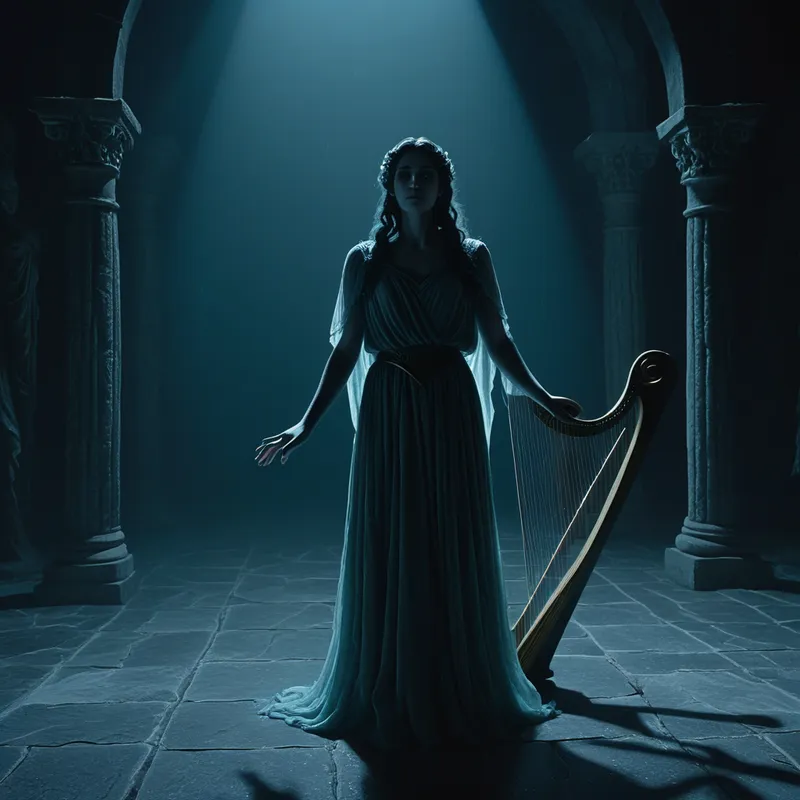
For a fraction of a second, he saw her—not the vibrant nymph, but a form of tender shade, her eyes filled with a love now mingled with infinite sorrow. “Farewell,” she breathed, a sound fainter than a moth’s wing, and was drawn back into [the abyss](/myths/the-abyss “Myth from Kabbalistic culture.”/), not once, but forever.
This time, there was no song. The man who had moved the underworld could not even move his own feet. He had won her back from death, only to lose her a second time, and by his own hand. The silence that followed was the true sound of hell.
Cultural Origins & Context
The myth of Orpheus is a foundational stratum of Greco-Roman mythology, with its most complete surviving version in the epic [Metamorphoses](/myths/metamorphoses “Myth from Greek culture.”/) by the Roman poet Ovid, and a key account in Virgil’s Georgics. Its roots, however, dig far deeper into the pre-classical soil of Thrace, a region north of Greece often associated with shamanism, ecstatic rites, and a mystical relationship with nature and the afterlife. Orpheus is thus a liminal figure from the start: part Greek hero, part Thracian mystic.
The myth was not merely entertainment; it was a sacred narrative performed by bards and later explored in the rituals of Orphism, a religious movement. Orphism taught doctrines of the soul’s divine origin, its imprisonment in the body, and its potential for purification and liberation through asceticism and ritual knowledge. In this context, Orpheus’s descent is not just a love story, but an [katabasis](/myths/katabasis “Myth from Greek culture.”/)—a ritual journey to the underworld and back that grants the traveler profound, transformative knowledge. The myth served as a societal vessel for exploring the most profound human anxieties: the power of art, the finality of death, the conditions of faith, and the tragic flaws that make gods of us all, and then break us.
Symbolic Architecture
Orpheus represents the archetypal power of the creative, ordering principle—[Logos](/myths/logos “Myth from Christian culture.”/)—in the form of art and [music](/symbols/music “Symbol: Music in dreams often symbolizes the harmony between the conscious and unconscious mind, illustrating emotional expression and communication.”/). His [lyre](/symbols/lyre “Symbol: The lyre symbolizes harmony, creativity, and the connection between the divine and human experiences.”/) is the [instrument](/symbols/instrument “Symbol: An instrument symbolizes creativity, communication, and the means by which one expresses oneself or influences the world.”/) of cosmic [harmony](/symbols/harmony “Symbol: A state of balance, agreement, and pleasing combination of elements, often associated with musical consonance and visual or social unity.”/), capable of temporarily reconciling opposites: wild and civilized, [life](/symbols/life “Symbol: The symbol of ‘Life’ represents a journey of growth, interconnectedness, and existential meaning, encompassing both the joys and challenges that define human experience.”/) and [death](/symbols/death “Symbol: Symbolizes transformation, endings, and new beginnings; often associated with fear of the unknown.”/), [consciousness](/symbols/consciousness “Symbol: Consciousness represents the state of awareness and perception, encompassing thoughts, feelings, and experiences.”/) and the unconscious.
The artist’s task is not to describe the world, but to re-tune it, making the stones of fate resonate with the frequency of the soul.
Eurydice symbolizes the [soul](/symbols/soul “Symbol: The soul represents the essence of a person, encompassing their spirit, identity, and connection to the universe.”/)’s animating, instinctual, and elusive counterpart—the [anima](/symbols/anima “Symbol: The feminine archetype within the male unconscious, representing soul, creativity, and connection to the inner world.”/), or the essential beloved who dwells in the [realm](/symbols/realm “Symbol: The symbol of ‘Realm’ often signifies the boundaries of one’s consciousness, experiences, or emotional states, suggesting aspects of reality that are either explored or ignored.”/) of the unseen. She is the content of the unconscious that the conscious ego (Orpheus) seeks to integrate. The [Underworld](/symbols/underworld “Symbol: A symbolic journey into the unconscious, representing exploration of hidden aspects of self, transformation, or confronting repressed material.”/) is the vast, autonomous [realm](/symbols/realm “Symbol: The symbol of ‘Realm’ often signifies the boundaries of one’s consciousness, experiences, or emotional states, suggesting aspects of reality that are either explored or ignored.”/) of the unconscious [psyche](/myths/psyche “Myth from Greek culture.”/), populated by the shades of unlived potentials, repressed memories, and ancestral patterns.
The central, catastrophic command—do not look back—encapsulates the [paradox](/symbols/paradox “Symbol: A contradictory yet true concept that challenges logic and perception, often representing unresolved tensions or profound truths.”/) of integrating unconscious content. It must be approached with [faith](/symbols/faith “Symbol: A profound trust or belief in something beyond empirical proof, often tied to spiritual conviction or deep-seated confidence in people, ideas, or outcomes.”/) and peripheral [awareness](/symbols/awareness “Symbol: Conscious perception of self, surroundings, or internal states. Often signifies awakening, insight, or heightened sensitivity.”/), not with the direct, grasping, analytical gaze of [the ego](/myths/the-ego “Myth from Jungian culture.”/). To “look back” is to objectify the soul, to demand proof instead of holding [space](/symbols/space “Symbol: Dreaming of ‘Space’ often symbolizes the vastness of potential, personal freedom, or feelings of isolation and exploration in one’s life.”/) for [mystery](/symbols/mystery “Symbol: An enigmatic, unresolved element that invites curiosity and exploration, often representing the unknown or hidden aspects of existence.”/), thereby causing it to recede. The myth is a perfect map of a psychological [truth](/symbols/truth “Symbol: Truth represents authenticity, honesty, and the quest for knowledge beyond mere appearances.”/): [the ego](/myths/the-ego “Myth from Jungian culture.”/), even with the supreme power of art and [intention](/symbols/intention “Symbol: Intention represents the clarity of purpose and direction in one’s life and can symbolize motivation and commitment within a dream context.”/), cannot forcibly retrieve and control the soul. It can only create the conditions for its following.
The Dreamer’s Resonance
When this myth patterns a modern dream, the dreamer is navigating a profound process of retrieval and loss within their own psyche. Dreaming of being Orpheus often signals an active, conscious effort (the descent) to recover a lost part of [the self](/myths/the-self “Myth from Jungian culture.”/)—a forgotten passion, a buried trauma, a creative spark, or a sense of soulful connection (Eurydice). The dreamer may feel they are using their talents or intellect (the lyre) to negotiate with inner demons or depressive states (the underworld).
The somatic feeling is one of intense, fraught anticipation, often in a labyrinthine or descending landscape. The crucial moment—the turn, the glance—manifests not as a simple mistake, but as an overwhelming, irresistible compulsion born of deep-seated doubt or a core wound of mistrust. To dream of being Eurydice, fading away, is to experience the feeling of one’s own vitality or an emerging insight being snuffed out by the ego’s premature scrutiny or self-sabotage. The dream is a somatic rehearsal of the psyche’s warning: some treasures can only be integrated indirectly, with a faith that surpasses understanding.

Alchemical Translation
The alchemical journey of individuation mirrors Orpheus’s quest precisely. [The first stage](/myths/the-first-stage “Myth from Alchemical culture.”/), [nigredo](/myths/nigredo “Myth from Alchemical culture.”/), is the death of Eurydice—a crushing loss, a depression, a confrontation with [the shadow](/myths/the-shadow “Myth from Jungian culture.”/) that plunges the individual into the opus contra naturam. Orpheus’s decision to descend is the courageous, active engagement with this darkness, the nekyia.
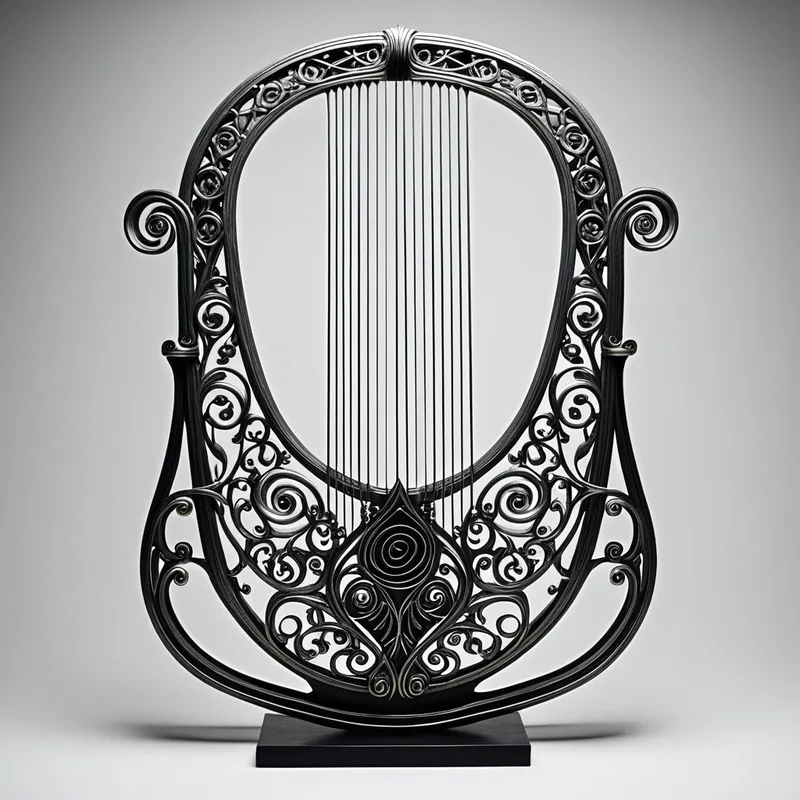
The lyre is the disciplined ego, the crafted tool that can resonate with the chaos of the unconscious and momentarily produce meaning, but it is not the Self.
His music in Hades represents the albedo—a moment of sublime clarity and emotional purification where the opposites (life/death) are reconciled. The condition set by Hades is the supreme test of the alchemical vessel: the ability to contain the tension of opposites without collapsing into literalism or doubt. The failure to do so—the backward glance—is not a mere error, but a necessary, tragic part of the process for many. It represents the ego’s ultimate inability to complete the union by force of will.
Yet, the alchemy does not end there. The shattered Orpheus who emerges is no longer the naive enchanter of nature. He has been initiated. His subsequent death—torn apart by [Maenads](/myths/maenads “Myth from Greek culture.”/)—symbolizes the final dissolution of the old, heroic ego. From this [rubedo](/myths/rubedo “Myth from Alchemical culture.”/), his severed head, still singing, floats to Lesbos to become an oracle. This is the final transmutation: the conscious personality (head) is destroyed, but its essence, now wedded to the deep, instinctual currents (the river and sea), becomes a source of prophetic wisdom. The individual is no longer the player of the lyre, but has become the song—a timeless, fragmented, yet eternally resonant voice speaking from the junction of life and death, consciousness and the deep, unfathomable soul.
Associated Symbols
Explore related symbols from the CaleaDream lexicon: