Origami Myth Meaning & Symbolism
The tale of a kami of potential, born from a single sheet of sacred paper, whose journey reveals the hidden forms within the soul's flat expanse.
The Tale of Origami
In the beginning, there was a single, perfect square.
It lay upon the kami-dana of the universe, a field of pristine white, bounded yet boundless. This was not mere paper, but the kami of potential itself, asleep in its two-dimensional slumber. It knew only flatness, the silent hymn of the plane.
Then came the Breath of Intention. It was not a wind, but a will—a whisper from [the void](/myths/the-void “Myth from Buddhist culture.”/) that asked, “What sleeps within you?” [The square](/myths/the-square “Myth from Platonic culture.”/) shuddered, not in fear, but in recognition. A crease appeared, a lightning bolt of decision scored across its blank soul. It was a line of destiny, dividing what was from what could be. Pain flared, the sharp, clean pain of a new idea being born.
The Breath persisted, a patient, guiding force. Fold met fold. Mountain ridges rose where there was once only plain; valleys plunged into shadow. The kami contorted, compressed, its infinite surface area collapsing into a secret, three-dimensional language. It became a chrysalis of angles and planes, a prison of its own making that felt strangely like freedom. For within that tight, geometric fist, a new shape dreamed.
With a final, gentle pressure—a touch as light as a sunbeam—the last fold locked into place. The clenched form relaxed. And from the hands of the unseen folder, it was released.
It flew.
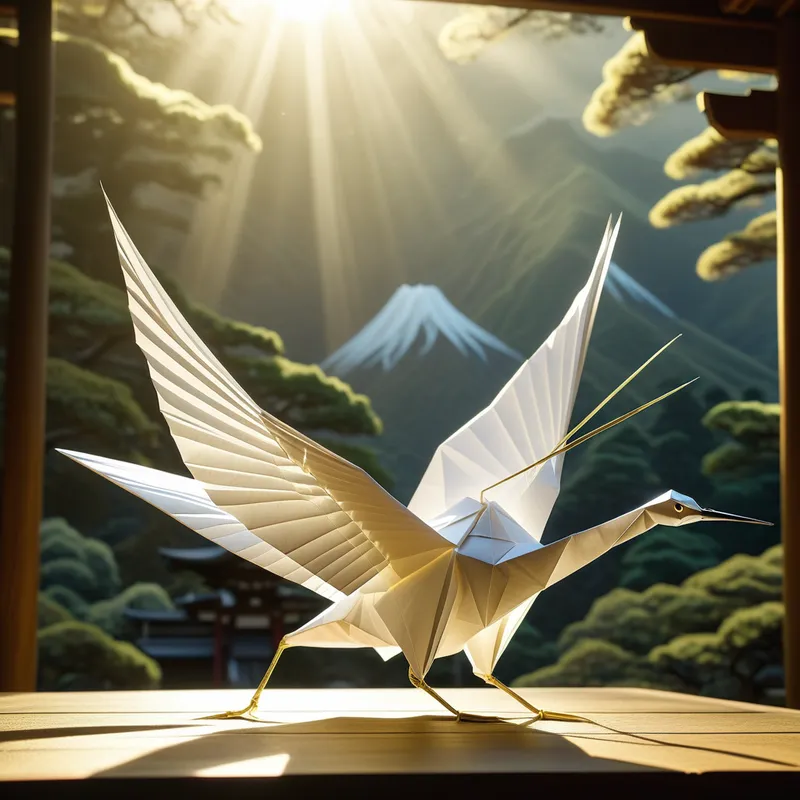
Wings, born from the memory of flatness, caught the updraft of astonishment. It was a [tsuru](/myths/tsuru “Myth from Japanese culture.”/), a crane, its neck a graceful curve of realized prayer, its tail feathers sharp promises. It circled once, a white sigil against the blue, its shadow tracing the very square from which it had emerged. Then, with a call that was the sound of a page turning in the book of creation, it ascended, leaving behind the ghost of its flat beginning, carrying the map of its transformation in every fold.
Cultural Origins & Context
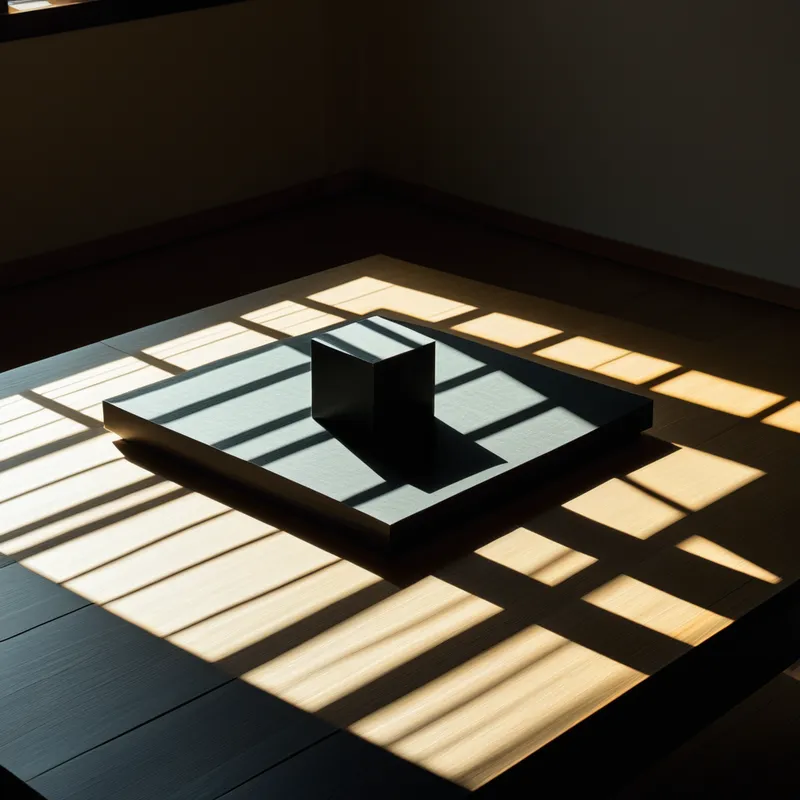
The myth of Origami finds its roots not in a single, codified epic, but in the spiritual and practical heart of Japanese culture. Its origins are woven into the very introduction of papermaking from China during the Nara period. Initially, folded paper (katashiro) served as potent ritual substitutes in Shinto ceremonies, representing deities or absorbing impurities. The act of folding was, and is, a form of harae, a way of inviting a kami to inhabit a form.
This practice evolved through the centuries, moving from the solemnity of the shrine to the elegance of the [samurai](/myths/samurai “Myth from Japanese culture.”/) class, where it became part of ceremonial gift-giving (noshi), and later into the playful, creative realm of the common people. The myth was never written down as a standard narrative; it was passed down through the hands. Each grandmother teaching a child to fold a crane, each master demonstrating a complex model, was recounting the myth anew—the story of imposing beautiful, purposeful order on a humble, blank beginning. The societal function was dual: to teach patience, precision, and respect for material, and to embody the philosophical principle that profound beauty and function arise from simple elements and disciplined transformation.
Symbolic Architecture
At its core, the Origami myth is a profound [allegory](/symbols/allegory “Symbol: A narrative device where characters, events, or settings represent abstract ideas or moral qualities, conveying deeper meanings through symbolic storytelling.”/) for the [soul](/symbols/soul “Symbol: The soul represents the essence of a person, encompassing their spirit, identity, and connection to the universe.”/) and the process of actualization. The perfect square represents the [prima materia](/myths/prima-materia “Myth from Alchemical culture.”/) of [the self](/myths/the-self “Myth from Jungian culture.”/)—seemingly blank, yet containing all latent possibilities within its [uniform](/symbols/uniform “Symbol: A uniform often signifies authority, conformity, or a role within a group, reflecting one’s identity and societal expectations.”/) boundaries.
The first fold is the crisis that initiates the journey, the necessary violation of the innocent plane that introduces the dimension of depth.
The crease is the indelible [mark](/symbols/mark “Symbol: A ‘mark’ often symbolizes identity, achievement, or a defining characteristic in dreams.”/) of experience, of [choice](/symbols/choice “Symbol: The concept of choice often embodies decision-making, freedom, and the multitude of paths available in life.”/), of [trauma](/symbols/trauma “Symbol: A deeply distressing or disturbing experience that overwhelms the psyche, often manifesting in dreams as unresolved emotional wounds or psychological injury.”/) or [insight](/symbols/insight “Symbol: A sudden, deep understanding of a complex situation or truth, often arriving unexpectedly and illuminating hidden connections.”/). It cannot be fully erased; it becomes part of the structural [memory](/symbols/memory “Symbol: Memory symbolizes the past, lessons learned, and the narratives we construct about our identities.”/) of the soul. The [sequence](/symbols/sequence “Symbol: The symbol of ‘sequence’ often signifies the order of events and the progression towards a desired outcome or goal.”/) of folds represents the trials, disciplines, and conscious decisions that shape a [life](/symbols/life “Symbol: The symbol of ‘Life’ represents a journey of growth, interconnectedness, and existential meaning, encompassing both the joys and challenges that define human experience.”/). The intermediate, often awkward, collapsed stages symbolize the periods of [confusion](/symbols/confusion “Symbol: A state of mental uncertainty or disorientation, often reflecting internal conflict, lack of clarity, or overwhelming choices in waking life.”/), depression, or intense introspection where the final form is not yet visible—where one feels compressed by [life](/symbols/life “Symbol: The symbol of ‘Life’ represents a journey of growth, interconnectedness, and existential meaning, encompassing both the joys and challenges that define human experience.”/)’s pressures into an unrecognizable wad.
The final form—the [crane](/symbols/crane “Symbol: A majestic bird symbolizing longevity, wisdom, and spiritual ascension across many cultures, often seen as a messenger between earthly and divine realms.”/), the boat, the flower—is the individuated Self. It is the unique, functional, and beautiful [identity](/symbols/identity “Symbol: Identity represents the sense of self, encompassing personal beliefs, cultural background, and social roles.”/) that was always implicit within the original square. The [flight](/symbols/flight “Symbol: Flight symbolizes freedom, escape, and the pursuit of one’s aspirations, reflecting a desire to transcend limitations.”/) of the [crane](/symbols/crane “Symbol: A majestic bird symbolizing longevity, wisdom, and spiritual ascension across many cultures, often seen as a messenger between earthly and divine realms.”/) symbolizes liberation, not from the paper, but through it. The soul does not escape its [material](/symbols/material “Symbol: Material signifies the tangible aspects of life, often representing physical resources, desires, and the physical world’s influence on our existence.”/) (its experiences, its [history](/symbols/history “Symbol: History in dreams often represents the dreamer’s past experiences, lessons learned, or unresolved issues that continue to influence their present.”/)); it transcends by fully embodying the form those experiences created.
The Dreamer’s Resonance
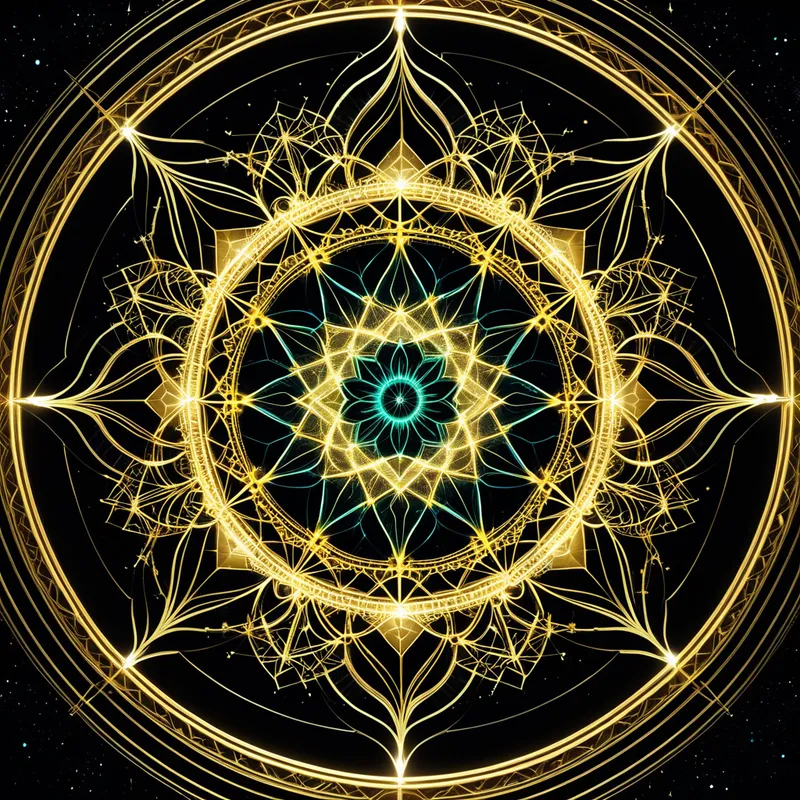
When the myth of Origami surfaces in modern dreams, it signals a profound somatic and psychological process of unfolding. To dream of endless, compulsive folding suggests a [psyche](/myths/psyche “Myth from Greek culture.”/) engaged in over-structuring, imposing rigid control on the fluid self, perhaps to manage anxiety. The dreamer may feel “creased” by life’s demands.
Conversely, to dream of a beautiful origami form coming to life and flying away can indicate a readiness for a new phase of expression, the successful integration of a complex life lesson into a cohesive part of the personality. To dream of being the paper itself, feeling the folds being made, is a direct somatic metaphor. The sharp crease might correlate with a recent decisive event; the gentle, shaping fold might reflect therapeutic insight or nurturing influence.
Most powerfully, dreams of unfolding—of a complex origami model slowly relaxing back into a flat, scarred square—point to a process of psychic archaeology. The dreamer is revisiting their foundational traumas and joys (the crease pattern) to understand the architecture of their current Self. It is shadow-work, tracing the lines back to their origin to comprehend, not to erase.
Alchemical Translation
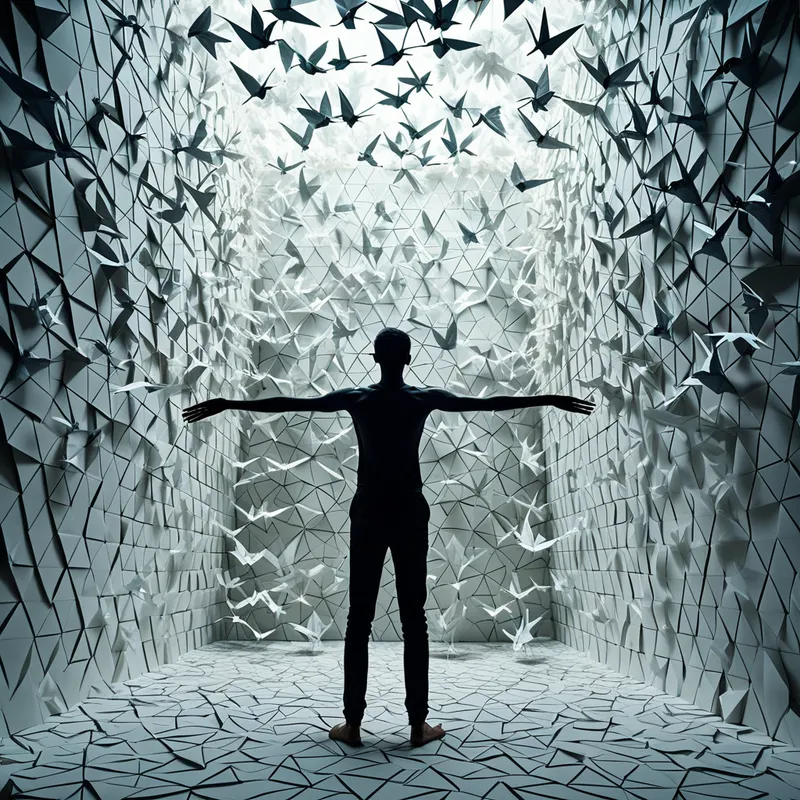
The alchemical journey mirrored in the Origami myth is a flawless map of psychic transmutation. It begins with the [Nigredo](/myths/nigredo “Myth from Alchemical culture.”/): the blank, undifferentiated square—the lead of the soul, full of potential but unmanifest. The first fold is the Mortificatio, the necessary “killing” of the innocent state, introducing the conflict and tension that will fuel the transformation.
The sequential folding is the Albedo, the whitening, a stage of purification and meticulous work. Here, consciousness applies disciplined attention (the precise folds) to the unconscious material (the paper). Mistakes are not failures; a mis-fold must be integrated or patiently corrected, teaching resilience and adaptability—key aspects of the creator archetype.
The final release into form is the Rubedo, the reddening, the culmination where the spiritual gold is revealed. The Self, now fully realized, is both artifact and living entity.
For the modern individual, the myth teaches that constraints (the square’s edges, the laws of folding) are not the enemies of creativity, but its very source. Our limits—of body, history, circumstance—are the fixed boundaries within which our unique shape must be found. The process is non-additive; you do not add glue or tape. You only transform what is already there through a series of committed, irreversible actions. The goal is not to become something other than paper, but to become the most sublime expression of what paper can be. In the end, the myth whispers that our deepest fulfillment lies not in escaping our flat beginnings, but in mastering the sacred geometry hidden within them, until we, too, take flight on wings we folded ourselves.
Associated Symbols
Explore related symbols from the CaleaDream lexicon: